Master German Noun Genders in Malayalam – Free Course

Skills You’ll Learn

Understanding Grammatical Gender
Correct Usage of Articles
German Noun Gender Rules & Patterns
German Sentence Structure & Agreement

About Course

Speak German Confidently – Let Our Experts Guide You!

Learn from expert instructors, immerse yourself in real-world conversations, and master German with confidence. Secure your spot today and start your journey to fluency! 🌍

Know More

Requirements

No prior German needed – Beginners welcome! Basic English understanding (since German terms are often compared to English).

Gender of Nouns in German

How to Find Gender of Nouns?

  • Video

Placement Oriented Programs by Entri

Know more about placement oriented programs at Entri


    FAQ About German Noun Genders in Malayalam

    How to know the gender of German nouns?
    How to Know the Gender of German Nouns German nouns have three genders: masculine (der), feminine (die), and neuter (das). While there are exceptions, these rules help predict gender: 1. By Noun Ending Masculine (-er, -el, -ling): der Lehrer (teacher), der Schlüssel (key) Feminine (-ung, -heit, -keit): die Zeitung (newspaper), die Freiheit (freedom) Neuter (-chen, -lein, -ment): das Mädchen (girl), das Instrument (instrument) 2. By Meaning Masculine: Male persons (der Vater), days/months (der Montag), alcoholic drinks (der Wein) Feminine: Female persons (die Mutter), most flowers (die Rose), rivers (die Donau) Neuter: Young beings (das Baby), metals (das Gold), continents (das Afrika) 3. Memorize with Articles Always learn nouns with their articles (der/die/das) to internalize gender.
    Are there shortcuts to guess noun genders?
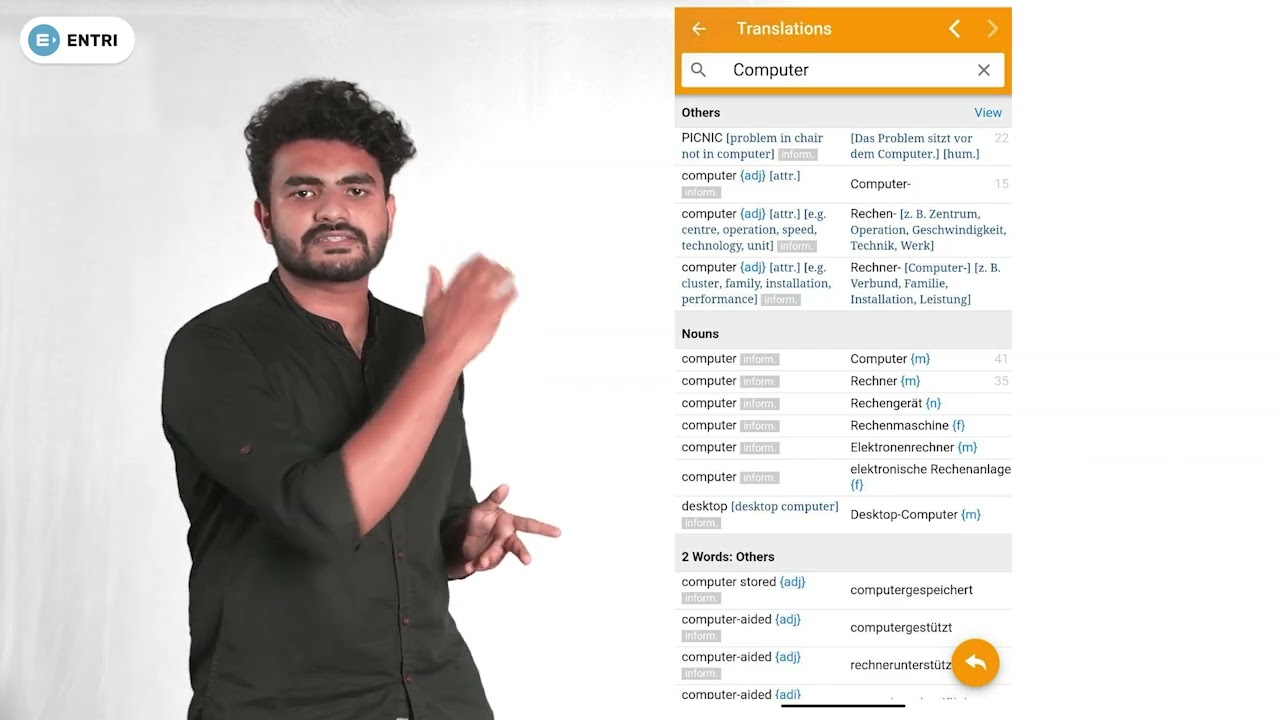
    Yes! Common endings predict gender: Masculine: -er (der Computer), -ig (der Honig), -ismus (der Optimismus) Feminine: -e (die Lampe), -schaft (die Freundschaft), -tät (die Universität) Neuter: -chen (das Mädchen), -um (das Museum), -nis (das Ergebnis)
    Which nouns are always feminine?
    Female beings (die Mutter), flowers (die Tulpe), rivers (die Elbe), aircraft (die Boeing).

    Why choose this course?

    • A clear, Malayalam‑based explanation of how German noun gender works and why der/die/das are so important for correct sentences.

    • Practical patterns, examples, and grouped word lists that make it easier to guess or remember gender instead of random memorization.

    • Real A1‑level sentence samples showing how wrong gender changes articles and adjective endings, and how to avoid common mistakes.

    • Gender controls not just articles but also adjectives, pronouns, and many grammar rules; getting it right makes your German much clearer.

    • Exams and real‑life communication both expect correct der/die/das, especially from A1 onwards, so strong gender skills improve scores and confidence.

    • Learning gender properly from the beginning saves time later when you study cases and more advanced grammar topics

    • Free Malayalam mini‑course focused only on German noun gender and der/die/das, ideal to pair with vocabulary and sentence‑formation modules.

    • Uses rules, examples, and memory tricks specifically adapted for Malayalam learners who often struggle with gender.​​

    • Acts as a foundation for higher‑level Entri German courses (A1–B2) where correct gender is required in almost every task.

    • Beginners who keep forgetting whether a word is der, die, or das and want a structured way to fix this problem.

    • A1–A2 students preparing for exams or visa processes who need cleaner grammar and fewer article mistakes.

    • Nurses, students, and professionals from Kerala moving to German‑speaking countries who want solid basics before advanced study.

    • Anyone using apps or YouTube for German who wants a Malayalam explanation specifically about noun gender.