Mutual Funds Return Calculator

Calculate your mutual fund returns and make smarter investment decisions.

Total Investment(INR)
₹5K ₹1Cr
Expected return rate/Anuum(%)
1% 50%
Duration(Years)
1Y 40Y

What is Mutual Fund Returns?

Mutual fund returns represent the profit or loss generated from your investment over a period of time. These returns are based on changes in the fund’s Net Asset Value (NAV) and the growth of your invested money.

How It Works

1. You Invest Money

You invest either as: Lump sum (one-time) or SIP (monthly investment)

2. Your Money Gets Invested in Markets

The fund invests your money in assets like: Stocks, Bonds, Other securities

3. NAV Changes Daily

The value of your investment changes based on market performance through NAV (price per unit).

4. Your Returns Are Calculated

Returns are calculated based on: Investment amount, Time period, Growth in NAV

5. Compounding Drives Growth

Over time, returns are reinvested, helping your money grow faster through compounding.

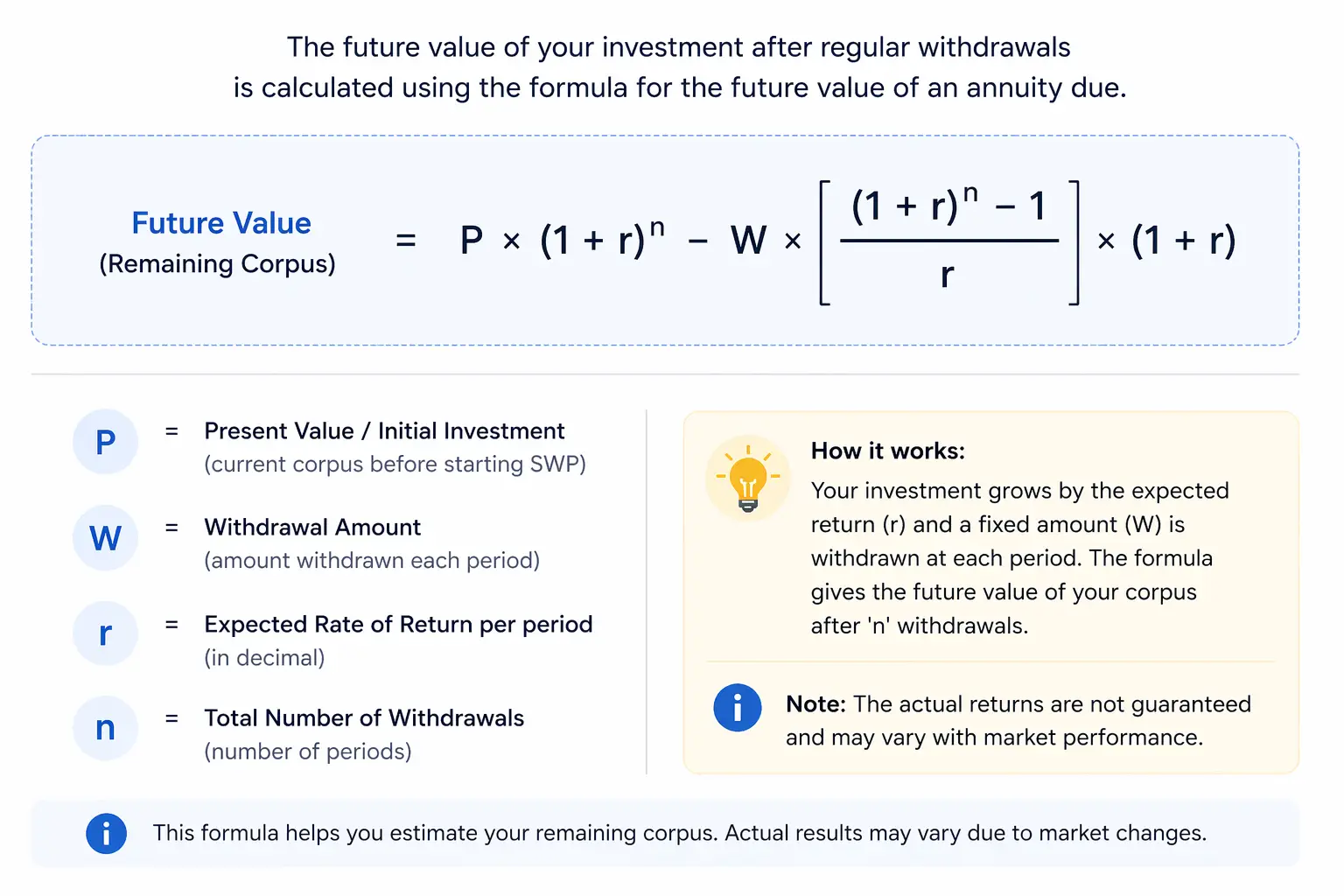
Mutual Funds Returns Formula

Key Benefits of Understanding Mutual Fund Returns

Track Investment Performance

Helps you clearly see how your money is growing over time.

Compare Different Funds

You can evaluate which mutual fund is performing better using metrics like CAGR.

Better Financial Planning

Helps estimate future value for goals like retirement or education.

Understand Risk vs Return

Shows how market movements impact your investment returns.

Why Mutual Fund Returns Help Create Wealth

Mutual fund returns play a key role in wealth creation by combining the power of compounding with market-driven growth. As your investment generates returns, those returns are reinvested, allowing your money to grow at an accelerating pace over time. Since mutual funds invest in market-linked assets like stocks and bonds, they offer the potential for higher long-term returns compared to traditional fixed-return options. Regular investing, especially through methods like SIP, builds discipline and helps you stay invested without worrying about market timing. Over the long term, this approach helps smooth out market fluctuations and steadily grow your investment into a meaningful corpus.

Frequently Asked Questions

How are mutual fund returns calculated?

Returns are calculated using methods like absolute return, CAGR, or SIP returns based on your investment amount, duration, and growth.

What is CAGR in mutual funds?

CAGR (Compound Annual Growth Rate) shows the average yearly return of your investment over time.

Are mutual fund returns guaranteed?

No, mutual fund returns are market-linked and can go up or down.

What affects mutual fund returns?

Returns depend on:

  • Market performance
  • Fund type
  • Investment duration
  • Economic conditions
Which is better: SIP or lump sum?

Both have their use:

  • SIP helps in disciplined investing
  • Lump sum works well in favorable market conditions
Can mutual funds give negative returns?

Yes, especially in the short term if markets fall.

How long should I stay invested in mutual funds?

Long-term investing (5+ years) is generally considered better to handle market fluctuations.