

Introduction
Logistics is the process of planning, moving, storing, and managing goods, materials, and information from one point to another. The four main types are inbound logistics, outbound logistics, reverse logistics, and third-party logistics (3PL); each supports a different stage of the supply chain.
For example, when a clothing brand buys cotton, manufactures T-shirts, ships them to customers, and accepts returns, it uses all four types of logistics. Understanding these categories helps businesses reduce delays, control costs, improve delivery accuracy, and create a better customer experience.
What Is Logistics?
Logistics covers the coordinated movement and storage of goods from the point of origin to the final destination. It includes procurement, transportation, warehousing, inventory control, packaging, order fulfilment, delivery, and returns management.
In a simple supply chain, raw materials move to a factory, finished goods move to customers, and returned products move back to the seller or manufacturer. Logistics ensures that each of these movements happens at the right time, in the right condition, and at a manageable cost.
Also read: Logistics vs Supply Chain Management
Types of Logistics at a Glance
| Type of Logistics | Main Direction | Primary Purpose | Common Activities |
|---|---|---|---|
| Inbound logistics | Suppliers to business | Bring materials or products into the company | Sourcing, purchasing, receiving, warehousing, inventory management |
| Outbound logistics | Business to customer | Deliver finished products to buyers | Order processing, picking, packing, shipping, last-mile delivery |
| Reverse logistics | Customer to business | Manage returns, repairs, recycling, and disposal | Return collection, inspection, refurbishment, recycling |
| Third-party logistics | Outsourced logistics support | Let specialists manage logistics operations | Warehousing, transportation, fulfilment, tracking, returns support |
Inbound Logistics
Inbound logistics manages the flow of raw materials, components, packaging, equipment, and finished goods from suppliers into a business. It focuses on the supply side of operations, ensuring that a company has the materials it needs for production, storage, or resale.
For a smartphone manufacturer, inbound logistics includes sourcing screens, batteries, chips, and casings; transporting them to the factory; receiving and inspecting them; and storing them until production begins. For a retailer, it may include receiving stock from vendors and moving it into a warehouse or store.
Key Activities in Inbound Logistics
- Sourcing and procurement: Identifying reliable suppliers and purchasing the required goods or materials.
- Transportation: Selecting carriers and routes to move goods from vendors to warehouses or production facilities.
- Receiving and inspection: Unloading deliveries and checking quantity, quality, and order accuracy.
- Warehousing: Storing materials safely until they are needed.
- Inventory management: Tracking stock levels to avoid shortages, overstocking, and production delays.
Example of Inbound Logistics
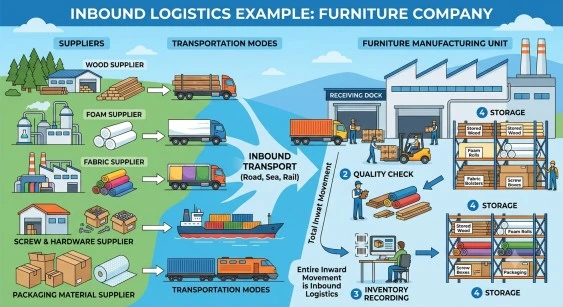
A furniture company orders wood, foam, fabric, screws, and packaging material from different suppliers. These items are transported to its manufacturing unit, checked for quality, recorded in the inventory system, and stored until production begins. This entire inward movement is inbound logistics.
Outbound Logistics
Outbound logistics manages the movement of finished goods from a company to distributors, retail stores, fulfilment centres, or end customers. It focuses on the demand side of the supply chain and directly affects delivery speed, order accuracy, and customer satisfaction.
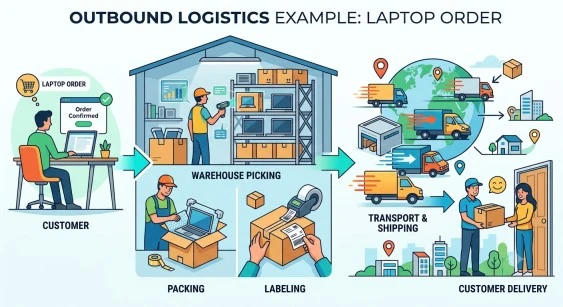
When a customer places an online order, outbound logistics begins with order processing. The product is picked from the warehouse, packed, labelled, handed to a carrier, and delivered to the customer’s address.
Key Activities in Outbound Logistics
- Order processing: Confirming customer orders and preparing them for fulfilment.
- Picking and packing: Selecting the correct products and packaging them securely.
- Shipping and transportation: Choosing the right carrier, route, and delivery method.
- Warehousing and distribution: Storing finished goods and moving them through distribution channels.
- Last-mile delivery: Delivering the order to the final customer.
- Delivery tracking and customer service: Sharing shipment updates and resolving delivery issues.
Example of Outbound Logistics
An online electronics store receives an order for a laptop. Staff pick the laptop from the warehouse, pack it with protective material, generate a shipping label, and send it through a courier partner. The courier delivers it to the customer’s home. These steps form outbound logistics.
Reverse Logistics
Reverse logistics handles products, packaging, or materials moving backward through the supply chain—from customers to businesses, or from businesses to suppliers and recycling partners. Product returns are the most common example, but reverse logistics also includes repairs, refurbishment, recycling, and disposal.
A strong reverse logistics process helps companies recover value from returned goods, reduce waste, and maintain customer trust. It is especially important for e-commerce businesses, where easy returns can influence purchase decisions.
Key Activities in Reverse Logistics
- Return authorisation: Approving a customer’s return request and issuing instructions.
- Return transportation: Collecting or receiving the returned product.
- Inspection and sorting: Checking whether the item can be restocked, repaired, refurbished, recycled, or discarded.
- Repair and refurbishment: Restoring usable products to sellable condition.
- Recycling and disposal: Managing products that cannot be resold in an environmentally responsible way.
- Refunds, replacements, or exchanges: Completing the customer-facing part of the return process.
Example of Reverse Logistics
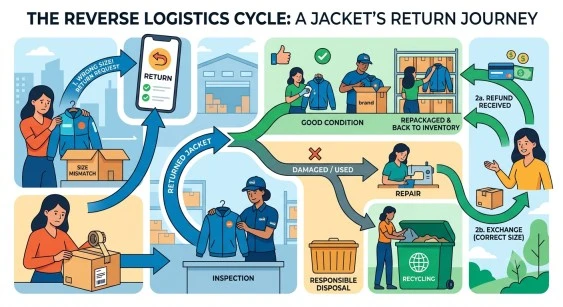
A customer buys a jacket online but receives the wrong size. They request a return, ship the jacket back, and receive a refund or exchange. The company inspects the jacket, repackages it if it is in good condition, and returns it to sellable inventory. If the jacket is damaged, it may be repaired, recycled, or disposed of responsibly.
Third-Party Logistics (3PL)
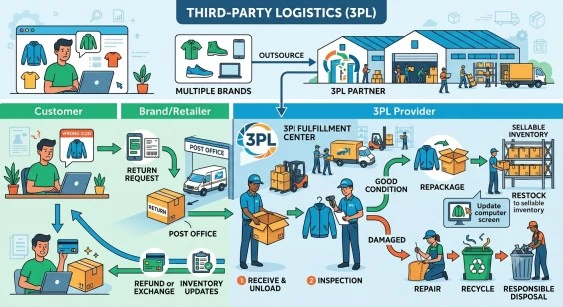
Third-party logistics, commonly called 3PL, is when a business outsources some or all of its logistics operations to an external specialist. Instead of managing warehouses, transport, fulfilment, and returns in-house, the company partners with a 3PL provider that has the infrastructure, technology, and expertise to handle these functions.
A 3PL provider may manage inbound shipments, store inventory, pick and pack orders, arrange delivery, provide tracking, and process returns. This allows businesses to focus on product development, marketing, sales, and customer service.
Services Offered by a 3PL Provider
- Warehousing and inventory storage
- Order fulfilment, picking, and packing
- Transportation and carrier management
- Freight forwarding and customs support
- Order tracking and reporting
- Returns management and reverse logistics
- Technology integration with e-commerce platforms and inventory systems
Example of Third-Party Logistics
A growing D2C skincare brand receives hundreds of daily orders but does not want to operate its own warehouse. It sends its inventory to a 3PL provider. The provider stores the products, processes online orders, packs parcels, ships them through courier partners, and manages customer returns. The brand focuses on sales and product innovation while the 3PL manages fulfilment.
Inbound vs Outbound vs Reverse vs Third-Party Logistics
| Factor | Inbound Logistics | Outbound Logistics | Reverse Logistics | Third-Party Logistics |
|---|---|---|---|---|
| Main goal | Receive materials or goods | Deliver finished goods | Handle returns and recovery | Outsource logistics operations |
| Direction of goods | Supplier to business | Business to customer | Customer to business | Depends on the service required |
| Focus | Supply and production readiness | Customer delivery and fulfilment | Value recovery and customer service | Operational efficiency and scalability |
| Typical users | Manufacturers, retailers, wholesalers | E-commerce brands, retailers, distributors | E-commerce brands, electronics companies, retailers | Businesses of all sizes that need logistics support |
| Key challenge | Supplier delays and inventory shortages | Delivery delays and high shipping costs | High return volumes and product recovery | Choosing a reliable and cost-effective partner |
Why Understanding Logistics Types Matters
Each type of logistics affects a different part of the supply chain. Inbound logistics prevents production delays, outbound logistics ensures timely delivery, reverse logistics protects customer trust, and 3PL helps companies scale without heavy operational investment.
Businesses that manage these functions well can improve inventory accuracy, reduce shipping errors, lower operational costs, and deliver a smoother experience for customers.
Conclusion
Logistics is not a single process but a connected system that keeps products moving efficiently through every stage of the supply chain. Inbound logistics ensures businesses receive the materials they need, outbound logistics delivers finished products to customers, reverse logistics manages returns and value recovery, and third-party logistics provides expert support for companies that want to scale without managing every operation in-house.
Understanding these four types helps businesses identify gaps, reduce delays, control costs, and improve the overall customer experience. Whether a company manages logistics internally or partners with a 3PL provider, a well-planned logistics strategy can turn supply chain operations into a competitive advantage.
