

A balanced diet is an eating pattern that ensures adequate intake of all required nutrients in the appropriate amounts needed by the body. This includes the consumption of the appropriate amount of food, colors, and macronutrients. A balanced diet requires 50 percent of fruits and vegetables, 25 percent of lean protein, and 25 percent of whole grains and/or. A balanced diet requires the intake of the appropriate amount of carbohydrates, proteins, fats, vitamins, minerals, and water for development, energy, protection from disease, and good health.
KEY TAKEAWAYS
- A balanced diet provides carbohydrates, proteins, fats, vitamins, minerals, and water in the right proportions.
- Fill half your plate with fruits and vegetables, one quarter with protein, and one quarter with whole grains.
- Choose whole grains over refined ones and include lean protein sources like chicken, fish, eggs, beans, and lentils.
- Limit foods high in added sugar, salt, and unhealthy fats like sugary drinks, processed snacks, and red meat.
- Stay hydrated with at least 6–8 glasses of water daily, and limit fruit juice to 150ml per day.
- A balanced diet looks different for everyone depending on age, gender, activity level, and health conditions.
Introduction
Wander into any supermarket and you’re instantly surrounded by choices – thousands of products all vying for your attention. Low-fat, high-protein, zero-sugar, superfood – the labels scream at you promising the world. Better health, more energy and a slimmer waistline – the noise is almost deafening.
The reality though is much more straightforward. A healthy diet doesn’t need to involve expensive superfoods or complicated recipes. It doesn’t require cutting out everything you actually enjoy eating or dictating strict, bone-headed rules. All it really requires is balance, some variety and a bit of moderation.
This guide is going to try and help you get a clear idea of what a balanced diet really looks like. You’ll learn what the components of a healthy eating plan look like, how much of each food group you should be aiming for and even get a sample meal plan to get you up and running. No extremes, no gimmicks just practical advice you can actually make use of.
What is a Balanced Diet?
A balanced diet is basically just a wholesome and nutritionally sound way of eating that makes sure your body gets all the nutrients it needs to function properly. The Indian Council of Medical Research (ICMR) defines it as a diet that contains all the different types of food you need in specific amounts and proportions depending on how many calories you burn on a daily basis.
Put simply a balanced diet is about getting a good mix of foods from all the major food groups. You need carbs to give you energy, proteins to help your muscles repair and grow, fats to help your cells work properly and sort out vitamin absorption, vitamins and minerals to keep your immune system going and your body generally healthy, and plenty of water to keep you hydrated and stop you overheating.
The goal is to make sure your body gets everything it needs to keep you going – growth, repair, energy and all that other stuff – and at the same time reducing your risk of diet-related diseases.
Why a Balanced Diet Is Important
Nutritional Adequacy: A balanced diet makes sure you get all the nutrients your body needs to keep growing, repairing and functioning properly. Without it, you can end up with a bunch of deficiencies that can lead to serious health issues like anaemia, brain fog and a weakened immune system.
Prevention of Diseases: Eating whole grains, fruits, vegetables and healthy proteins can really help stop nutrition-related diseases like heart disease, strokes, type 2 diabetes and some cancers.
Energy and Well-being: The foods that are full of nutrients give you stable energy levels, a better mood and improved brain function. Omega-3 fatty acids from fish and B vitamins are really important for brain health especially.
Long-term Health: A balanced diet helps support healthy weight management, strong bones and a robust immune system throughout your life.
Components of a healthy balanced diet
A well-balanced diet is a good start to keeping you healthy – & its all about getting the right mix of the good stuff. A balanced diet – to put it simply – includes six key factors that work together to keep you going.
Carbohydrates – they’re your body’s main source of energy – and should mostly come from whole grains like brown rice, oats, whole wheat bread, and starchy veggies such as spuds (yes – with the skins on). Stick with whole grains over the processed ones – that way you get loads more fibre, vitamins & minerals.
Protein is key for repairing & building tissues, including muscles, organs, and skin – and you can get it from loads of different sources including lean meats, chicken, fish, eggs, beans, lentils, chickpeas, tofu, nuts & seeds. Try to have at least two portions of fish a week, with one of them being oily fish like salmon.
Fats are important for keeping your cells in one piece & helping your body absorb some of the fat-soluble vitamins (A, D, E & K) . So ideally choose unsaturated fats from things like olive oil, nuts, seeds & avocados – over the saturated fats from butter, ghee & fatty meats. Just bear in mind that all fats are high in calories, so keep an eye on how much you have.
Vitamins do loads for your body, including helping with your immune system, healing, and hormones. There are thirteen basic vitamins, including A, B complex, C, D, E & K . You’ll find them in all sorts of foods, like fruit & veg, whole grains & lean proteins.
Minerals are vital for keeping your hair, skin, nails, blood & soft tissues in good nick. Some key ones to watch out for are iron, iodine, zinc, and calcium. You can usually get plenty from dark leafy greens, beans, and lean meats.
And finally – water – which does loads for hydration & temperature regulation. Most of us need around 6-8 glasses a day, with plain water being your best bet.
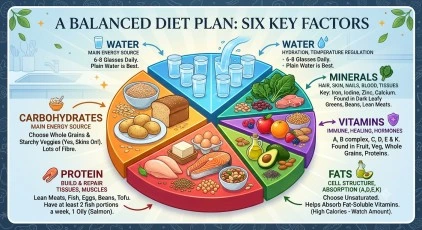
Healthy Balanced Diet Guide
A helpful way to think about a balanced diet is to use the plate method. Fill your plate up with :
- Half of your plate with a colourful mix of fruit and vegetables (try to vary it as much as possible)
- One quarter of your plate with lean protein (chicken, fish, eggs, beans, lentils – whatever you fancy)
- One quarter of your plate with whole grains (brown rice, whole wheat roti, oats)
This is a pretty simple principle that lots of health authorities around the world recommend. Its all about getting a good mix of nutrients in the right amounts.
Foods to Include Every Day
Fruits and veggies should be your staple every day – five portions a day is the target. Try to mix it up – loads of green leafy greens, red tomatoes, carrots that are orange, purple cabbage… the lot – it’s not rocket science, just get a variety of colours on the plate to ensure you’re getting a decent spread of vitamins and minerals. A medium-sized fruit counts as a portion, or you could do three tablespoons of cooked veggies, or a handful of salad.
Whole grains and starchy carbs should be about a third of your plate. When you’re at the shops, stick with brown rice over white, whole wheat roti instead of the refined stuff and so on. Oats, millet and quinoa are good options too.
Eat some protein with every meal. Adding eggs, chicken, fish, beans, lentils, tofu or paneer is all good, just try to keep the red meat to a minimum – if you have to have it, opt for a lean cut.
We reckon dairy or dairy substitutes are a good idea to get some calcium and protein in. If you can, go for low-fat stuff like semi-skimmed milk, low-fat yoghurt, reduced-fat cheese or even fortified soya milk.
A bit of healthy fat here and there is fine; cooking with veg oil, olive oil or rapeseed oil is still okay. A few nuts, seeds and the occasional avocado are not going to hurt.
Foods to Limit or Avoid
Now, you don’t have to completely cut out all the foods you love when you’re trying to eat a balanced diet – it’s just about eating a bit more wisely.
Those sugary drinks, juices and sweets might be tasty but they’re essentially useless calories – cut down on them if you can. The World Health Organization reckons you should limit your free sugars to less than 10% of your daily energy intake, and that includes all the added sugars in processed foods and treats.
Try to cut down on saturated and trans fat – think of all that butter, ghee, palm oil, red meat and sausages and the like. The UK NHS recommends men should not eat more than 30g of saturated fat a day and women should limit it to 20g.
Processed foods and salty snacks are the other thing to think about – try to eat less than five grams of salt a day to keep your blood pressure in check and avert some other nasty health problems. That’s about one teaspoon of salt.
And then there’s alcohol… to be fair, it’s just empty calories and a whole host of other problems to boot. Be sensible and cut back or better still, cut it out altogether.
Sample Balanced Diet Meal Plan
Here’s an example of what a one-day Indian meal plan looks like in practice – not rocket science, just a good mix of everything, no fuss.
| Time | Meal | Example Foods |
| Early Morning (6:30–7:00 AM) | Hydration | 1 glass warm water (plain or with soaked jeera), 4–5 soaked almonds or 2 walnuts |
| Breakfast (8:00–9:00 AM) | Healthy Start | Vegetable poha/upma with a bowl of curd; or 2 eggs with multigrain toast and fruit; or moong dal chilla with mint chutney |
| Mid-Morning (11:00 AM) | Snack | 1 seasonal fruit (apple, guava, orange, papaya, or banana) |
| Lunch (1:00–2:00 PM) | Main Meal | 2 whole wheat rotis (or brown rice), 1 bowl dal/rajma/chole, seasonal vegetable sabzi, bowl of curd, fresh salad |
| Evening (4:00–5:00 PM) | Snack | Roasted chana, sprouts chaat, or green tea with roasted nuts/seeds |
| Dinner (7:00–8:30 PM) | Light Meal | 1–2 rotis (or small rice portion), light sabzi, protein source (dal, paneer, or chicken), salad. Dinner should be lighter than lunch |
Conclusion
You dont have to go over the top or start eating fancy foods , you just need to make sure you’re eating a bit of everything . You know, a good mix of foods from all the different groups – in the right ball park , of course . Get half your plate piled high with fruits and veggies , a quarter of it is filled with lean protein and the last quarter should be whole grains . Try to go for whole foods most of the time rather than the usual junk food . And dont forget to cut back on the sugar and salt.
Healthy eating is more about making a few tiny changes over time rather than trying to flip your whole diet on its head with some latest fad . Start small – like adding a bit more veg to your lunchbox or giving white rice the boot for brown.
The key to a balanced diet is being healthy – but there are other things to consider as well , like how old you are , whether you’re a bloke or a lass, how much exercise you get, and any health issues you may have. If you’ve got diabetes, thyroid or kidney problems or anything else – get some advice from your doctor or dietitian – they’ll be able to help you out.
