

ANSWER
Compute your calorie intake requirements by calculating your Basal Metabolic Rate (BMR), which is the number of calories burned by the body at rest through the use of the Mifflin St Jeor equation. Multiply the BMR by the activity factor (1.2) (1.375 for the sedentary, 1.55 for the moderately active, 1.725 for the very active, and 1.9 for the extra active) to compute the Total Daily Energy Expenditure (TDEE). Your TDEE represents the amount of calories that your body requires to maintain its present weight each day.
KEY TAKEAWAYS
- Your daily calorie needs are made up of BMR (basal metabolic rate) plus the calories you burn through activity and digestion.
- The Mifflin-St Jeor equation is the most accurate formula for calculating BMR, validated by the American Dietetic Association.
- Choose your activity level honestly; most people overestimate how active they are.
- For fat loss, subtract 300–500 calories from your TDEE; for muscle gain, add 200–300 calories.
- Calories are not the whole picture—protein, fat, and carbohydrate balance matter for body composition.
- Track your progress for 2–3 weeks and adjust based on real results.
INTRODUCTION
You’ve probably been hearing the phrase “calories in, calories out” for ages. But what on earth does that really mean? Or better yet, how do you even know how many calories you need on a daily basis? The answer to those questions is the foundation of any half-decent weight management plan.
To be honest, the vast majority of people have no idea how many calories they should be eating each day. They’ll just make a wild guess. Follow some generic weight loss plan. Eat what their mate eats. And then wonder why they’re not seeing any results whatsoever. This total confusion leads to nothing but frustration and wasted time – and before you know it, many people just give up on their goals entirely.
This guide is about to change all that. We’ll show you exactly how to calculate your daily calorie needs. You’ll get a solid understanding of what calories are, how your body uses ’em, and how to determine the right intake for your specific goals. By the time you’re done reading this, you’ll have the tools and knowledge to make informed decisions about your nutrition – and actually start seeing some real results.
WHAT ARE CALORIES?
Without doubt, what a calorie is all about is that it measures energy. It represents the energy required for the heating of 1 gram of water by 1 degree Celsius. Calories supply energy to the body. There are calories that the body consumes in almost any action, whether breathing, circulating, digesting, or walking. Calories are gotten from food and help us survive.
Every food group has calories that differ in amount. Dietary content has 9 calories per gram, Proteins have 4 calories per gram, Carbohydrates have 4 calories per gram, and Alcohol has 7 calories per gram. The kind of food we take will determine the kind of energy we obtain.
More calories are consumed than burnt, the more weight is gained, and when more calories are burned than consumed, the more weight is lost. This is the relationship of weight management.
WHAT IS A CALORIE CALCULATOR?
A calorie calculator is a tool that attempts to calculate how many calories you need to consume per day based on information about you. It uses some pretty solid and reliable formulas to convert age, height, weight, gender, and level of activity into daily calories to consume.
The calculators aren’t magic, obviously. They won’t give you the exact number you need for your particular situation. There are just too many variables. But they should give you a rough idea of what to expect – much better than guessing. Most people will find that their actual calorie needs to be within 10% of the estimate from the calculator.
Formulation most commonly used and advanctively accepted by all calorie calculators: Mifflin-St Jeor. Yes, that’s a mouthful! The equation was first created in 1990 and proven, time and time again, to be the most accurate among all of the equations for healthy adults.

WHY KNOWING YOUR DAILY CALORIE NEEDS REALLY MATTERS
Knowing your daily caloric intake is not only helpful for losing weight; rather, it has much more practical applications, which will influence your life positively from a health perspective.
Weight loss and weight gain: No matter whether your target is to burn excess fat or build muscles or stay healthy, knowing your caloric needs is essential since each step will begin with the calculation of your basal metabolic rate.
Energy: by consuming the correct amount of calories regularly, you will have enough energy throughout the day. By underconsuming calories, you will feel tired most of the time. On the other hand, by overconsuming calories, you will feel sluggish all day long.
Health: underconsumption of calories leads to muscle atrophy and other health problems due to the lack of nutrients and slow metabolism. However, overconsumption of calories also causes health problems, such as excess weight gain.
And for the record: generic advice just doesn’t cut it. Everyones calorie needs are super unique – and depend on a bunch of factors including body composition, daily habits, age and fitness goals. That’s why a calorie calculator will give you a number that’s tailored just to you – and no one else.
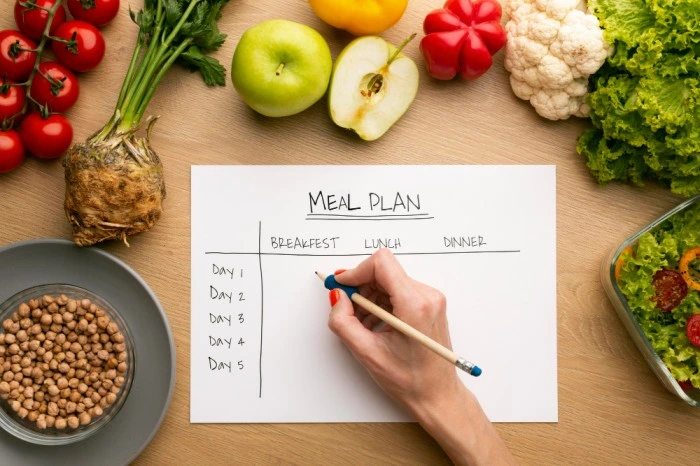
HOW TO WORK OUT YOUR DAILY CALORIE NEEDS
There are four basic steps to figuring out your daily calorie target. Each one builds on the last one.
Step 1: Work Out Your Basal Metabolic Rate (BMR)
Your BMR is the number of calories your body burns just to keep you going – even when you’re lying in a dark room fast asleep. It’s the energy you need to keep your heart ticking over, your blood flowing, your body temperature stable and all the other vital functions happening in the background. For most of us, our BMR accounts for around 60-75% of our total energy expenditure.
To work it out, use the Mifflin-St Jeor equation (don’t worry – it’s not as scary as it sounds)
- For blokes: (10 x weight in kg) + (6.25 x height in cm) – (5 x age in years) + 5
- For girls: (10 x weight in kg) + (6.25 x height in cm) – (5 x age in years) – 161
So, for example, a 30 year old woman who weighs 70 kg and is 165 cm tall would have a BMR of (10 x 70) + (6.25 x 165) – (5 x 30) – 161 = 1431 calories per day. (Which is pretty handy to know)
Step 2: Figure Out What Your Activity Level Actually Is
Now that you’ve got your BMR, you can multiply it by an activity factor that actually matches your lifestyle.
| Activity Level | Multiplier | Description |
| Sedentary | 1.2 | Little to no exercise, desk job |
| Lightly active | 1.375 | Light exercise 1–3 days per week |
| Moderately active | 1.55 | Moderate exercise 3–5 days per week |
| Very active | 1.725 | Hard exercise 6–7 days per week |
| Extra active | 1.9 | Very hard exercise, physical job, or twice-daily training |
Choose your level honestly. Most people overestimate their activity. If you are unsure, pick the lower option because it is better to adjust up than to overestimate .
Step 3: Finding Your Total Daily Energy Expenditure (TDEE)
First you multiply your Basal Metabolic Rate (BMR) by your activity multiplier. TDEE is literally the result of that calculation – BMR × Activity Multiplier.
This number is your maintenance calorie target. It’s how much you need to consume each day if you want to keep your weight exactly as it is.
Step 4: Setting Your Goal
Now that you’ve got your TDEE in front of you, you can make it work for your specific goal.
- For a maintenance diet: You just eat at your TDEE, easy peasy.
- For fat loss: You want to subtract around 300 – 500 calories per day from your TDEE. A fairly moderate cutback of 300 – 500 calories is likely to lead to a weekly weight loss of 0.5-1 pound – or 0.25-0.5 kg.
- For muscle gain: On the other hand, you need to add 200 – 300 calories to your TDEE each day. A surplus of 200 – 300 calories will pretty much guarantee muscle growth while keeping fat gain to a minimum. Just be aware that going beyond 500 calories per day isn’t going to magically make you build more muscle, it’ll just add extra pounds to the scales.
MACRONUTRIENT BALANCE – When Calories Just Aren’t Enough
Well, you have figured out how many calories you need, but the next thing you need to consider is the source of those calories, divided into proteins, fats, and carbohydrates.
Proteins: As a sedentary individual, the ideal range should be 1-1.2 grams of proteins per kilogram of body weight. This can be increased to 1.4-2.2 grams if you are active. Proteins are very important for building muscle as well as satiety.
Fats: There are fats as well; you should have around 1 gram of fats per kilogram of body weight or at least 20-35% of your total daily caloric intake. Fats are essential in making hormones as well as nutrient absorption. The thing about fats is they contain 9 calories per gram.
Carbohydrates: Finally, you’ve got leftovers – which should work out to be 45-65% of your total daily calories. Carbs are essentially your body’s preferred fuel source – they contain 4 calories per gram.
CONCLUSION – Why You Need to Get Your Calorie Target Right
Before you do anything else, determine your daily calorie needs. It’s going to set the foundation for everything else in your plan so you can make decisions about what your body needs. Without a calorie goal, you are doing it all in the dark.
In order to figure out your TDEE, you need to find your BMR using Mifflin-St Jeor, then multiply that by the amount you are doing to get your TDEE. Change the number according to what you want to achieve: eat at TDEE to maintain your health, cut 300-500 calories off to lose fat, or add 200-300 calories to build muscle. You may divide this number by protein, fat, and carbohydrates to make sure you are getting all of your protein, fat, and carbohydrates.
Remember, these numbers are only an approximate – your body is not a calculator. Just follow your weight and progress for 2-3 weeks, and then adjust your calorie intake by 100-200 calories either up or down. See how you react. Note that what counts is what your body is doing, not what a formula tells you should be doing.
Now that you have the tools, go out there and use them wisely – and you will get the results you want with confidence.
