

The poverty line is the minimum level of spending a person needs to meet basic needs like food, clothing and shelter. People who spend less than this amount are counted as poor. India has used many different poverty lines over the years, and the numbers often make news. Questions on the poverty line, poverty committees and poverty estimates come up often in SSC, banking, railway and Kerala PSC exams. This article explains what the poverty line is, how India measures it, the key committees and the latest poverty estimates.
What is the Poverty Line?
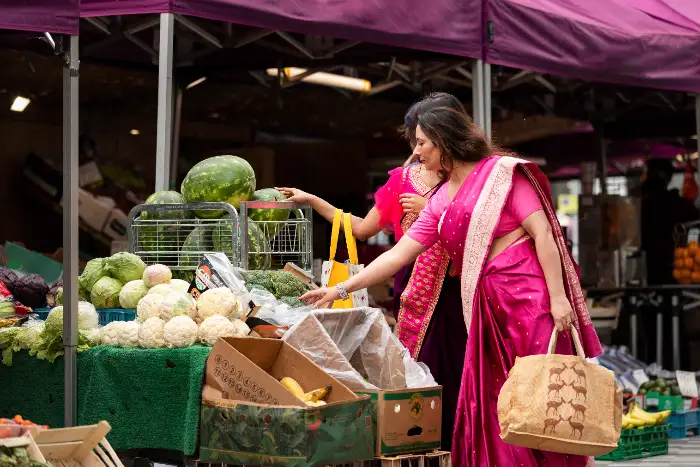
The poverty line is a cut-off level of income or spending. A person or family below this level cannot afford the minimum basic needs. In India, the poverty line has mostly been based on monthly per capita consumption expenditure (MPCE), that is, how much a person spends on goods and services in a month.
The share of people living below the poverty line is called the Poverty Ratio or Headcount Ratio (HCR). People living below the line are often referred to as BPL (Below Poverty Line).
Poverty Line in India: Quick Facts
| Particulars | Details |
|---|---|
| Basis in India | Monthly per capita consumption expenditure (MPCE) |
| Earlier estimating body | Planning Commission (now replaced by NITI Aayog) |
| Data source | Household Consumption Expenditure Survey (HCES) by the National Statistics Office (NSO), MoSPI |
| First official working group | 1962 (Planning Commission) |
| Last official poverty estimate | 2011-12 (Tendulkar method): 21.9% |
| Tendulkar poverty line (2011-12) | ₹816 per month (rural), ₹1,000 per month (urban) |
| Rangarajan poverty line (2011-12) | ₹972 per month (rural), ₹1,407 per month (urban) |
| World Bank extreme poverty line | $3 per person per day (2021 PPP), revised in June 2025 |
| Other measure | NITI Aayog’s National Multidimensional Poverty Index (MPI) |
Types of Poverty
- Absolute poverty: A person cannot meet basic needs like food, clothing and shelter. India’s poverty line measures this type.
- Relative poverty: A person is poor compared to others in society. It shows inequality.
- Extreme poverty: The World Bank uses this term for people living on less than $3 a day.
- Multidimensional poverty: Poverty measured by lack of health, education and living standards, not just income.
History of Poverty Estimation in India
Many committees have worked on how to draw the poverty line in India. Here are the important ones:
| Committee / Body | Year | Key Recommendation |
|---|---|---|
| Dadabhai Naoroji | 1867–1901 | First to estimate a poverty line in his book Poverty and Un-British Rule in India |
| Planning Commission Working Group | 1962 | First official poverty line: ₹20 per capita per month (at 1960-61 prices) |
| Y. K. Alagh Task Force | 1979 | Calorie-based line: 2,400 calories (rural) and 2,100 calories (urban) per person per day |
| D. T. Lakdawala Expert Group | 1993 | Separate state-wise poverty lines; updated using CPI-AL (rural) and CPI-IW (urban) |
| Suresh Tendulkar Expert Group | 2009 | Moved away from calories; included spending on health and education; single line basket for rural and urban |
| C. Rangarajan Expert Group | 2014 | Raised the poverty line; included food and non-food needs; estimated poverty at 29.5% for 2011-12 |
Tendulkar Committee vs Rangarajan Committee
| Particulars | Tendulkar Committee | Rangarajan Committee |
|---|---|---|
| Year of report | 2009 | 2014 |
| Rural poverty line (2011-12) | ₹816 per month (about ₹27 per day) | ₹972 per month (about ₹32 per day) |
| Urban poverty line (2011-12) | ₹1,000 per month (about ₹33 per day) | ₹1,407 per month (about ₹47 per day) |
| Poverty ratio (2011-12) | 21.9% | 29.5% |
| Status | Last officially used method | Report was not formally adopted by the government |
After the Rangarajan report, the government did not adopt any new official poverty line. The Household Consumption Expenditure Survey 2011-12 was followed by the HCES 2022-23 and 2023-24, but no official poverty estimate has been released based on them.
Multidimensional Poverty Index (MPI)
The NITI Aayog publishes the National Multidimensional Poverty Index. It measures poverty using three equally weighted dimensions:
- Health: nutrition, child and adolescent mortality, maternal health
- Education: years of schooling, school attendance
- Standard of living: cooking fuel, sanitation, drinking water, electricity, housing, assets and bank account
NITI Aayog’s January 2024 discussion paper estimated that multidimensional poverty fell from 29.17% in 2013-14 to 11.28% in 2022-23. About 24.82 crore people moved out of multidimensional poverty in these nine years. Kerala has the lowest share of multidimensionally poor people among Indian states.
World Bank Poverty Lines
The World Bank uses international poverty lines based on Purchasing Power Parity (PPP). In June 2025, it revised the lines using 2021 PPP:
| Country Group | Old Line (2017 PPP) | New Line (2021 PPP) |
|---|---|---|
| Extreme poverty (International Poverty Line) | $2.15 per day | $3.00 per day |
| Lower-middle-income countries (like India) | $3.65 per day | $4.20 per day |
| Upper-middle-income countries | $6.85 per day | $8.30 per day |
Latest Poverty Estimates for India
- World Bank (June 2025): At the $3 a day line, extreme poverty in India fell from 27.1% in 2011-12 to 5.3% in 2022-23. About 26.9 crore people moved out of extreme poverty in this period.
- World Bank Poverty and Equity Brief (October 2026): Extreme poverty fell to 2.6% in 2023. At the higher $4.20 a day line, poverty fell from 57.7% in 2011 to 16.1% in 2023, with about 49.6 crore people moving above this line. The share is projected to fall from 14.2% in 2026 to 12.1% by 2028.
- SBI Research (2025): Using HCES 2023-24 data, it estimated India’s poverty at about 4–4.5%.
- NITI Aayog MPI: Multidimensional poverty at 11.28% in 2022-23.
Note that these are not official government poverty lines. Different methods give different numbers, so always mention the source and the poverty line used when you quote a figure.
Poverty and Kerala
Kerala has long had one of the lowest poverty rates in India. This is due to its strong record in health, education, land reforms and public distribution. On 1 November 2025 (Kerala Piravi day), Kerala declared itself the first state in India free of extreme poverty, after an Extreme Poverty Eradication Project that identified and supported over 64,000 extremely poor families.
Government Schemes to Reduce Poverty
- Mahatma Gandhi National Rural Employment Guarantee Act (MGNREGA): Guarantees 100 days of wage employment to rural households
- Pradhan Mantri Garib Kalyan Anna Yojana (PMGKAY): Free food grains to about 81 crore people
- Deendayal Antyodaya Yojana – National Rural Livelihoods Mission (DAY-NRLM): Supports self-help groups of rural poor women
- Pradhan Mantri Awas Yojana (PMAY): Housing for the poor in rural and urban areas
- Pradhan Mantri Jan Dhan Yojana (PMJDY): Bank accounts for the unbanked
- Ayushman Bharat – PM-JAY: Health cover of ₹5 lakh per family per year
- Pradhan Mantri Ujjwala Yojana: Free LPG connections to poor households
Criticism of the Poverty Line
- India has had no official poverty estimate since 2011-12.
- Critics say the Tendulkar line of about ₹27–33 per day was too low to meet basic needs.
- Different methods and survey designs make it hard to compare figures across years.
- A household just above the line may still be very vulnerable to shocks like illness or job loss.
- Consumption-based lines ignore access to services like health, education and clean water. This is why measures like the MPI are also used.
Key Facts About Poverty Line for Exams
- Dadabhai Naoroji was the first to estimate a poverty line in India.
- The first official poverty line was set by a Planning Commission working group in 1962.
- The Alagh Task Force (1979) used 2,400 calories (rural) and 2,100 calories (urban).
- The Lakdawala Expert Group (1993) recommended state-wise poverty lines.
- The Tendulkar Committee (2009) estimated poverty at 21.9% in 2011-12.
- The Rangarajan Committee (2014) estimated poverty at 29.5% in 2011-12.
- Poverty estimates are based on the Household Consumption Expenditure Survey by the NSO under MoSPI.
- NITI Aayog publishes the National Multidimensional Poverty Index.
- The World Bank’s extreme poverty line is $3 per day (2021 PPP), revised in June 2025.
- Kerala declared itself free of extreme poverty on 1 November 2025.
Conclusion
The poverty line helps the government decide who needs support the most. India’s poverty line has changed from calorie-based measures to broader consumption baskets, and now multidimensional measures are also used. Recent estimates by the World Bank and NITI Aayog show a sharp fall in poverty, though experts still debate the methods. For SSC CGL, IBPS PO and Kerala PSC LDC aspirants, this is an important economy topic. Revise the key facts above before your exam.
Our Offerings
Preparing for a government job? Explore Entri’s exam coaching programmes in Malayalam:
| Exam Category | Our Offerings | Popular Exams |
|---|---|---|
| SSC Exams | SSC Coaching | SSC CGL, SSC CHSL, SSC GD, SSC MTS |
| Railway (RRB) Exams | RRB Coaching | RRB NTPC, RRB Group D, RRB Station Master |
| Bank Exams | Bank Exam Coaching | IBPS PO, SBI PO, IBPS Clerk, SBI Clerk |
| Kerala PSC Exams | Kerala PSC Coaching | LDC, LGS, 10th Level, Degree Level |
| Kerala Teaching Exams | Kerala Teaching Exam Coaching | KTET, SET, HSST, HSA, LP/UP Assistant |
| Kerala Technical Exams | KPSC Technical Exam Coaching | Civil, Mechanical, Electrical, Electronics, Overseer |
