

Planning to invest in mutual funds in India? A common mistake committed by many is picking a fund just due to the reason that it topped last year’s charts.
However, once you learn how to analyse mutual funds properly, it helps you choose schemes that match your goals and risk appetite, rather than chasing short-term returns.
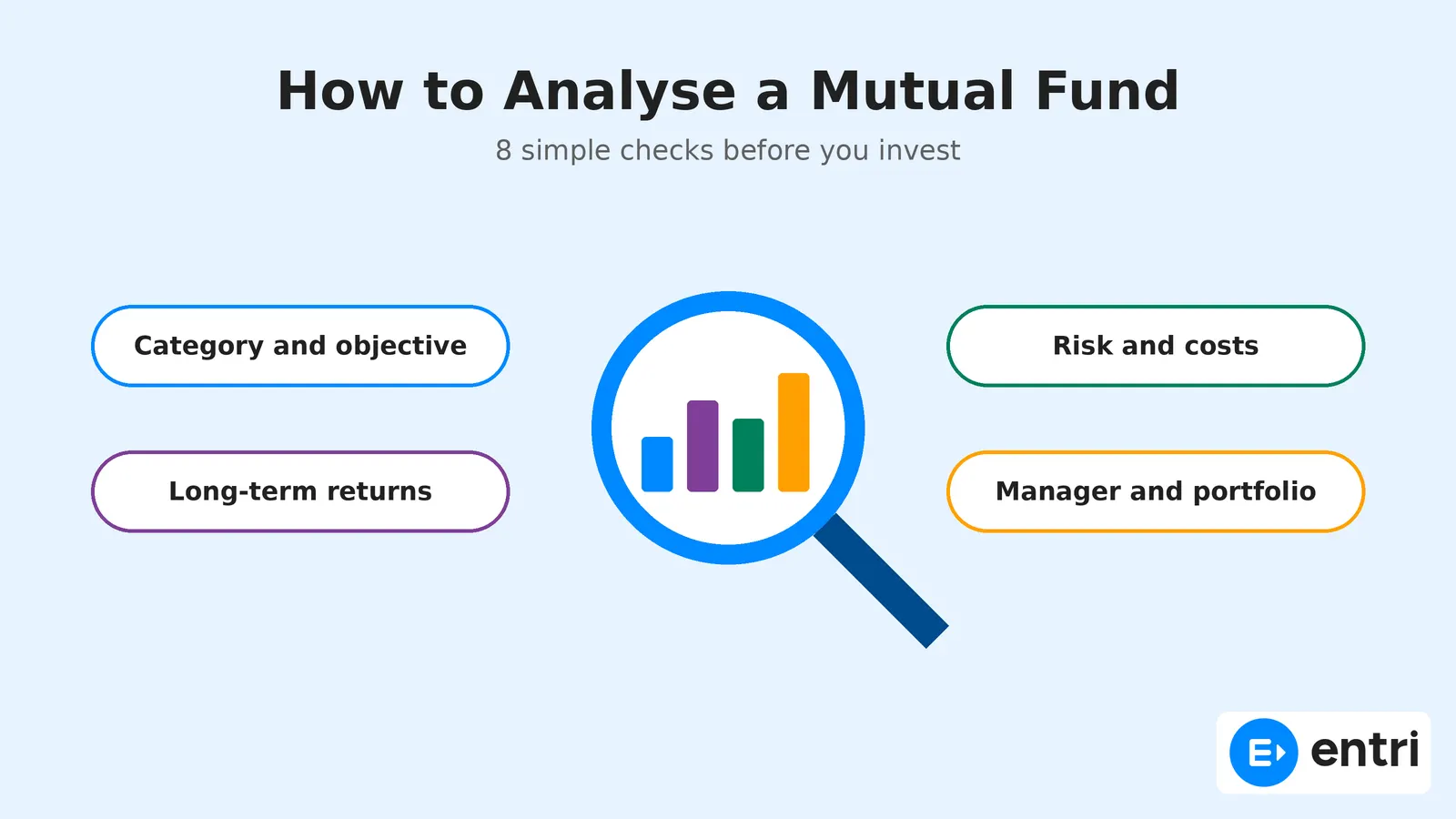
1. Check the Fund’s Category and Objective
First try to understand what the fund actually invests in.
A large-cap equity fund behaves very differently from a small-cap or debt fund.
- Match the category to your goal such as retirement, child’s education, short-term savings etc.
- Check whether that fund is actively managed or an index fund
- Read the investment objective in the scheme document
2. Check for Long-Term Performance, Not Just Recent Returns
A fund that performed well in one year may not repeat that performance.
Instead, compare returns over multiple time frames.
| Time Period | Why It Matters |
| 1 year | Shows recent momentum, but can be misleading |
| 3 years | Reflects performance across market cycles |
| 5–10 years | Best indicator of consistency and fund management quality |
Always compare the fund’s returns with its benchmark index and with other funds in the same category, not with the market in general.
3. Understand Risk-Adjusted Returns
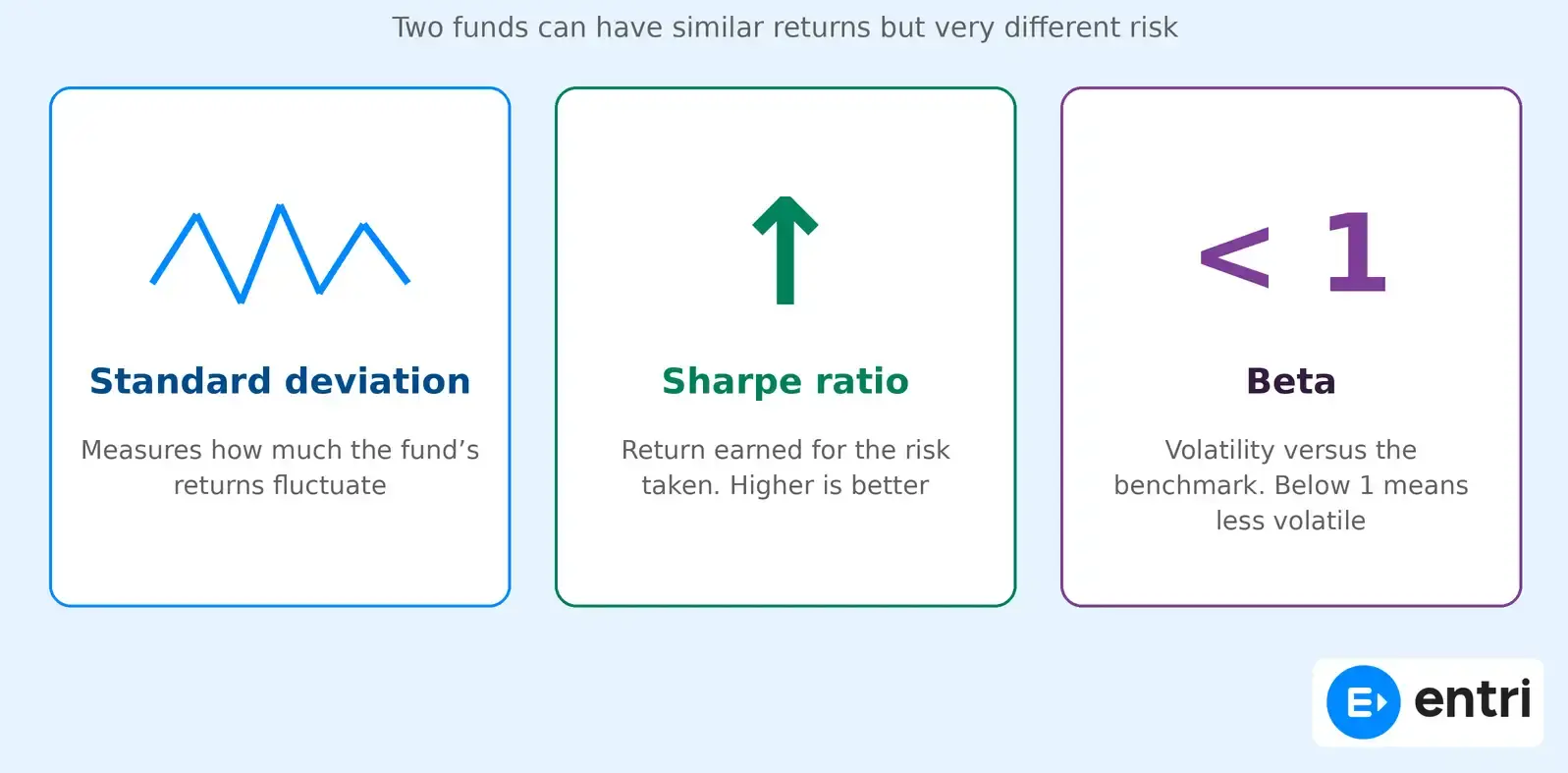
Two funds can have similar returns but very different risk levels.
This is where how to analyse mutual funds effectively becomes important — you must look beyond just the return percentage.
Key ratios to check:
- Standard Deviation – measures how much the fund’s returns fluctuate
- Sharpe Ratio – tells you how much return you’re getting for the risk taken (higher is better)
- Beta – shows how volatile the fund is compared to its benchmark (below 1 means less volatile
4. Study the Expense Ratio
This is the annual fee charged by the fund house, deducted directly from your returns.
- Lower expense ratios mean more of your money stays invested
- Direct plans have lower expense ratios than regular plans
- Even a 1% difference can significantly impact returns over 15–20 years
5. Check the Fund Manager’s Track Record
The person managing the fund plays a big role in its performance.
- How long have they managed this fund?
- What’s their performance history across other funds they manage?
- Has there been frequent fund manager turnover? (a red flag)
6. Evaluate Portfolio Quality
Look inside the fund to see what it actually holds.
- Top holdings – are they concentrated in a few stocks or well diversified?
- Sector allocation – is the fund overly dependent on one sector?
- Credit quality (for debt funds) – check the ratings of the bonds held. Avoid funds with too much exposure to low-rated papers
7. Assess Fund Size (AUM)
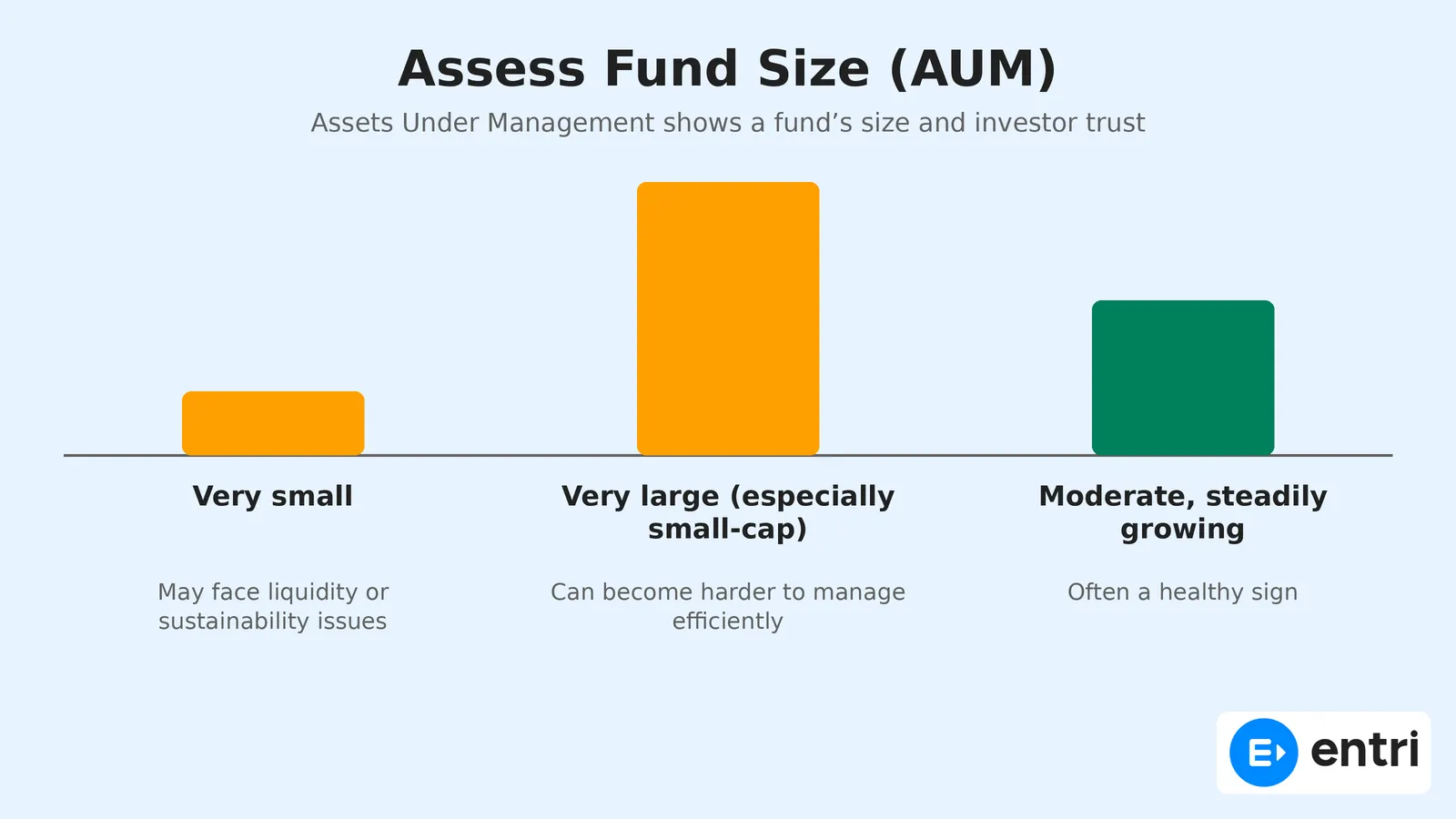
Assets Under Management (AUM) indicates the fund’s size and investor trust.
| AUM Size | Consideration |
| Very small | May face liquidity or sustainability issues |
| Very large (especially small-cap) | Can become harder to manage efficiently |
| Moderate, steadily growing | Often a healthy sign |
8. Consider the Exit Load and Lock-in
- Check if there’s an exit load for withdrawing early (typically within 1 year)
- ELSS funds have a mandatory 3-year lock-in
- Factor this into your liquidity planning
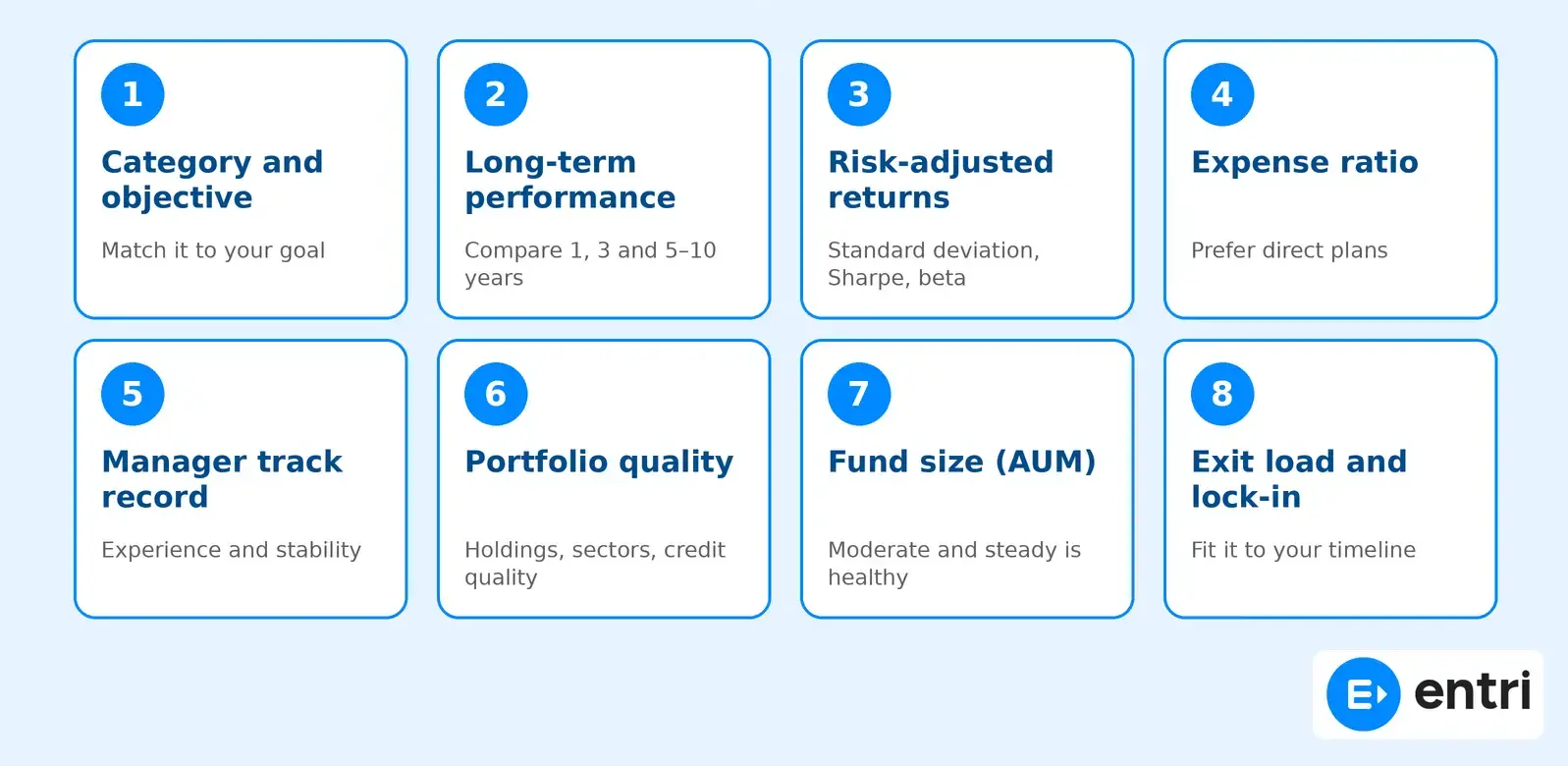
Quick Checklist
- Fund category matches my goal
- Consistent 5+ year performance vs benchmark
- Reasonable Sharpe ratio and beta
- Low expense ratio (prefer direct plan)
- Experienced, stable fund management
- Well-diversified portfolio
- Healthy AUM size
- Exit load and lock-in suit my timeline
Knowing how to analyse mutual funds isn’t about finding the “best” fund overnight. On the other hand, it’s about consistently applying these checks before you invest.
It’s equally important to review your portfolio at least once a year.
A disciplined, informed approach will serve you far better than relying on past returns alone.
This lesson is for education only and is not investment advice.
|
ALSO READ |
|
| Introduction to Indian Stock Market | |
| How to Choose a Stock Broker | |
| What is Leverage and Margin Trading? | |
