

Investing in the stock market is one of the most popular options for Indians to grow their wealth over time.
Once you learn how to buy shares and sell them at the right time, it can help you build long-term financial security.
It does not matter whether you are a student, a salaried professional, or a business owner.
What are Shares?
To keep it simple, shares are a small ownership stake in a company. On buying a share, you become a part-owner of that business.
If the company grows and performs well, the value of your shares typically increases.
In addition to that, you may also receive dividends i.e. a portion of company profits.
Documents You Need to Get Started
Before you can trade in the stock market, you need a few essential documents:
- PAN Card – Mandatory for all financial transactions in India
- Aadhaar Card – Used for identity and address verification
- Bank Account – Linked account for fund transfers
- Cancelled Cheque or Bank Statement – For account verification
Step-by-Step Process to Buy Shares
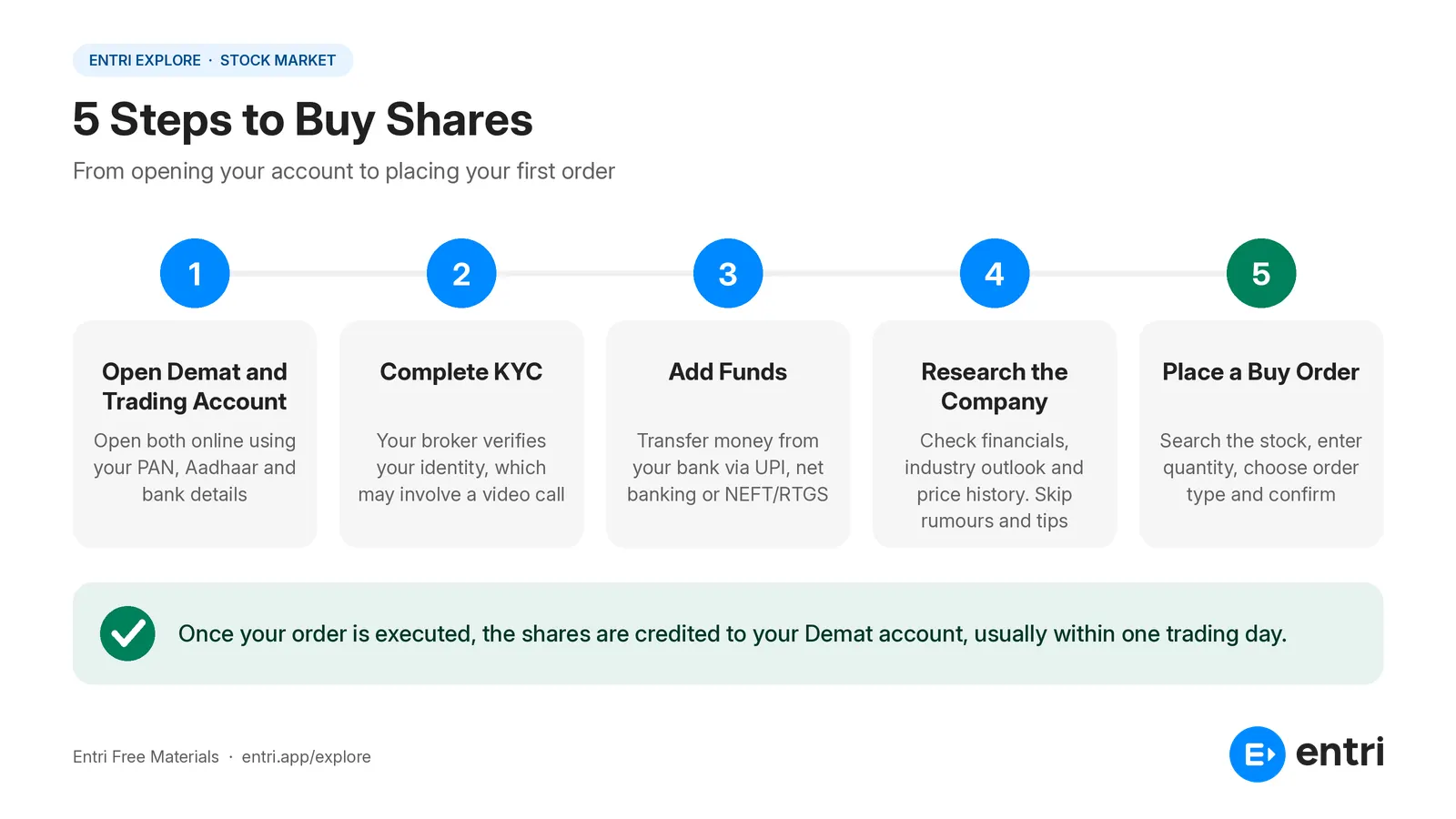
1st Step: Open a Demat and Trading Account
To buy or sell shares in India, you need two accounts:
| Account Type | Purpose |
| Demat Account | Holds your shares in electronic form |
| Trading Account | Used to place buy/sell orders on the stock exchange |
Most stockbrokers today offer both accounts together. It is to be noted that the process can be completed online within a day or two using your PAN, Aadhaar, and bank details.
2nd Step: Complete KYC Verification
Assume that you have submitted your documents. Now the broker will verify your identity through a KYC (Know Your Customer) process. This may involve a video verification call or an in-person verification, as required by regulations.
3rd Step: Add Funds to Your Trading Account
Transfer money from your bank account to your trading account. It can be done via UPI, net banking, or NEFT/RTGS. This amount will be used to purchase shares.
4th Step: Research Before You Invest
Before buying, spend time researching the company:
- Check the company’s financial performance and growth trends
- Understand the industry and its future prospects
- Look at the price history and current valuation
- Avoid investing based on rumours or tips
5th Step: Place a Buy Order
This is where you actually purchase shares. Log in to your broker’s app or website and:
- Search for the stock symbol of the company
- Key in the number of shares you want to buy
- Choose the order type i.e. Market Order or Limit Order
- Confirm and place the order
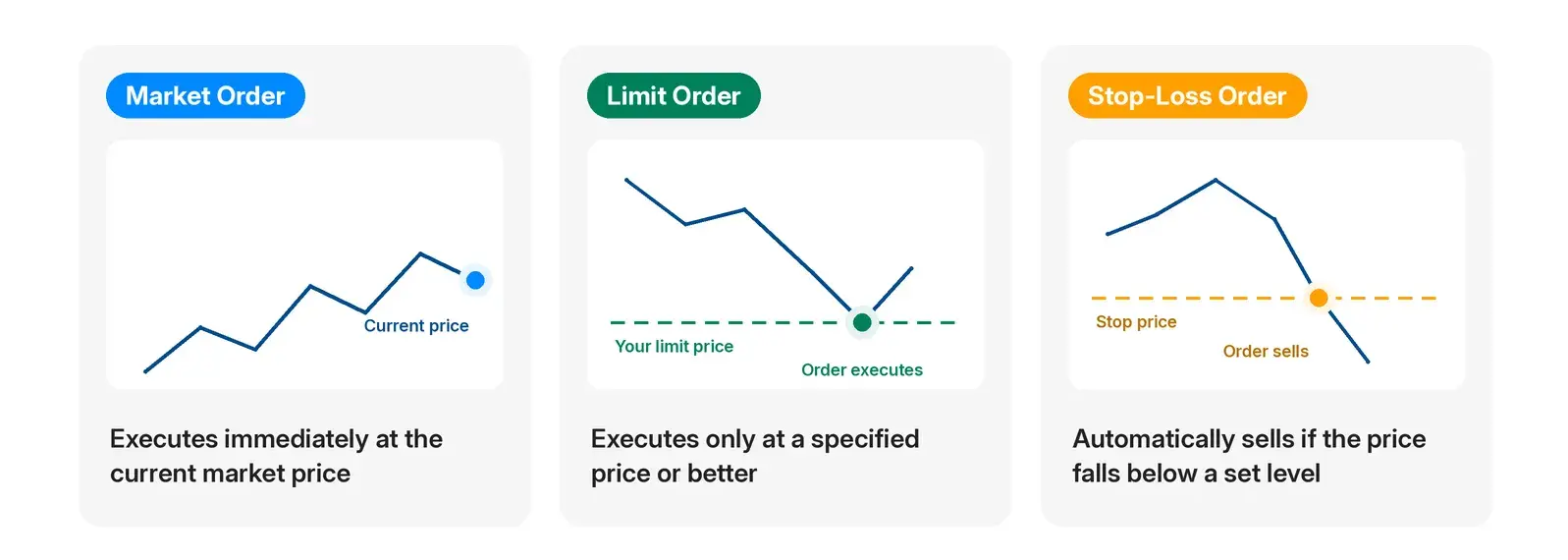
Market Order: Buys shares instantly at the current price
Limit Order: Buys shares only at a price you specify
Once the order is executed, the shares are credited to your Demat account, usually within one trading day.
How To Sell Shares – Step-by-Step Process
Selling shares follows a similar process:
- Log in to your trading account
- Select the stock you wish to sell from your holdings
- Enter the quantity you want to sell
- Choose Market Order or Limit Order
- Confirm the sell order
Once executed, the shares are debited from your Demat account. Also, the sale proceeds are credited to your linked bank account. This happens typically within one to two working days.
4 Important Points to Remember
| Market Timings | Indian stock exchanges operate from 9:15 AM to 3:30 PM, Monday to Friday |
| Brokerage Charges | Every transaction may attract brokerage fees, transaction charges, and taxes such as STT (Securities Transaction Tax) |
| Volatility | Share prices fluctuate daily due to market conditions, so avoid emotional decision-making |
| Diversification | Don’t invest all your money in a single stock; spread your investments across sectors |
Common Order Types Explained
| Order Type | Description |
| Market Order | Executes immediately at current market price |
| Limit Order | Executes only at a specified price or better |
| Stop-Loss Order | Automatically sells if price falls below a set level |
Conclusion
It takes practice and patience to learn how to buy shares correctly, and knowing when to sell.
Start with small investments, focus on solid research, and gradually build your confidence that comes with gaining experience in the stock market. Always remember that disciplined investing can be a powerful tool for achieving your financial goals in the long run.
|
Also Read |
|
| Types of Market Structure | |
