

Absolutely clueless about how to choose the right broker? It is one of the first big decisions every new investor in India faces.
Starting from traditional full-service firms to modern discount platforms, there are countless options available in the market. Hence, the choice can feel overwhelming.
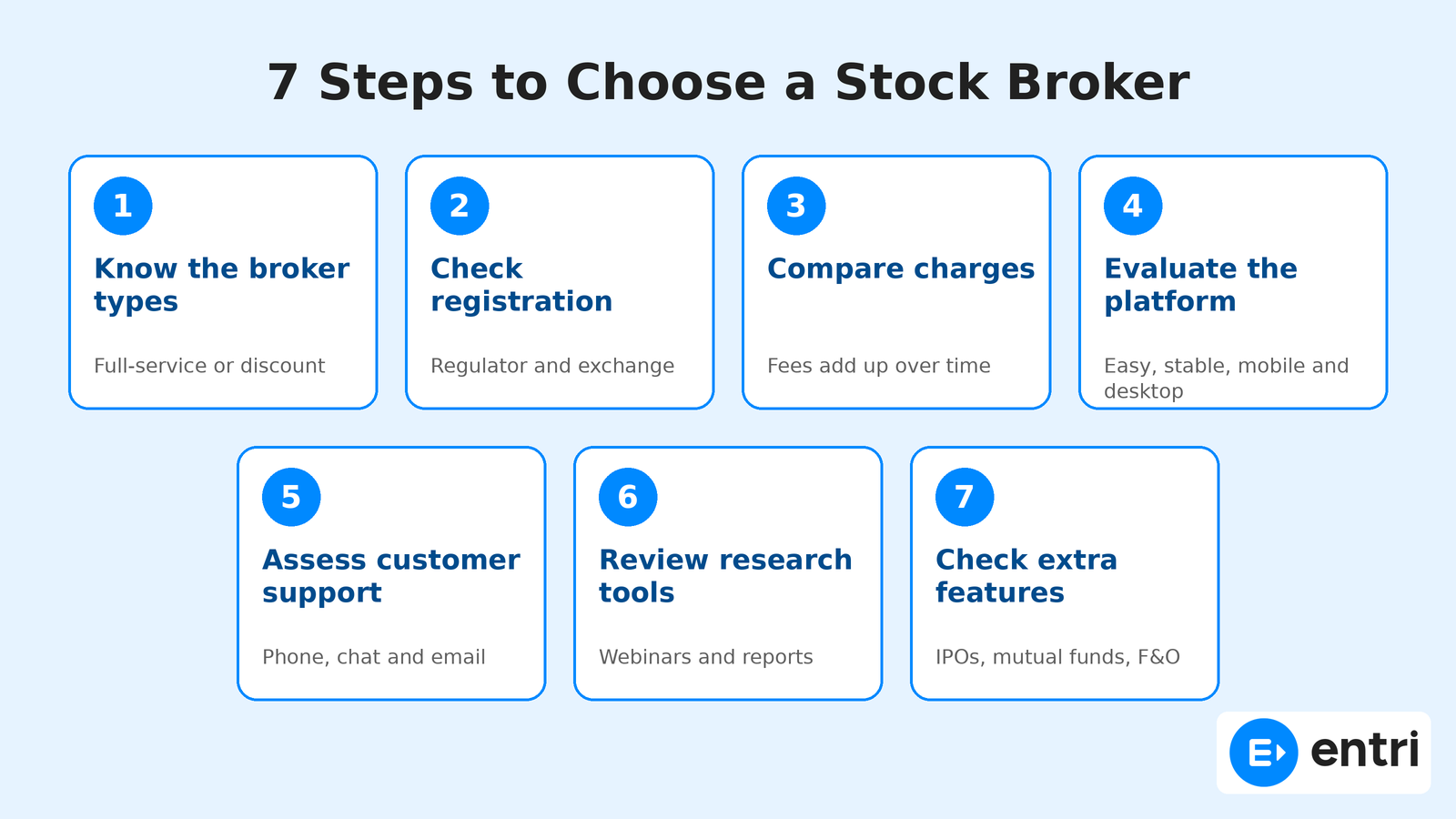
1st Step: Understand the Two Main Types of Brokers
| Type | What they Offer | Best for |
| Full-Service Broker | Research reports, relationship managers, advisory services, higher brokerage fees | Beginners who want guidance |
| Discount Broker | Low or flat brokerage, simple trading apps, minimal advisory support | Cost-conscious, self-directed traders |
As someone who is searching for the best stock broker in India, the first decision is really about which of these two models suits your investing style.
2nd Step: Check Regulatory Registration
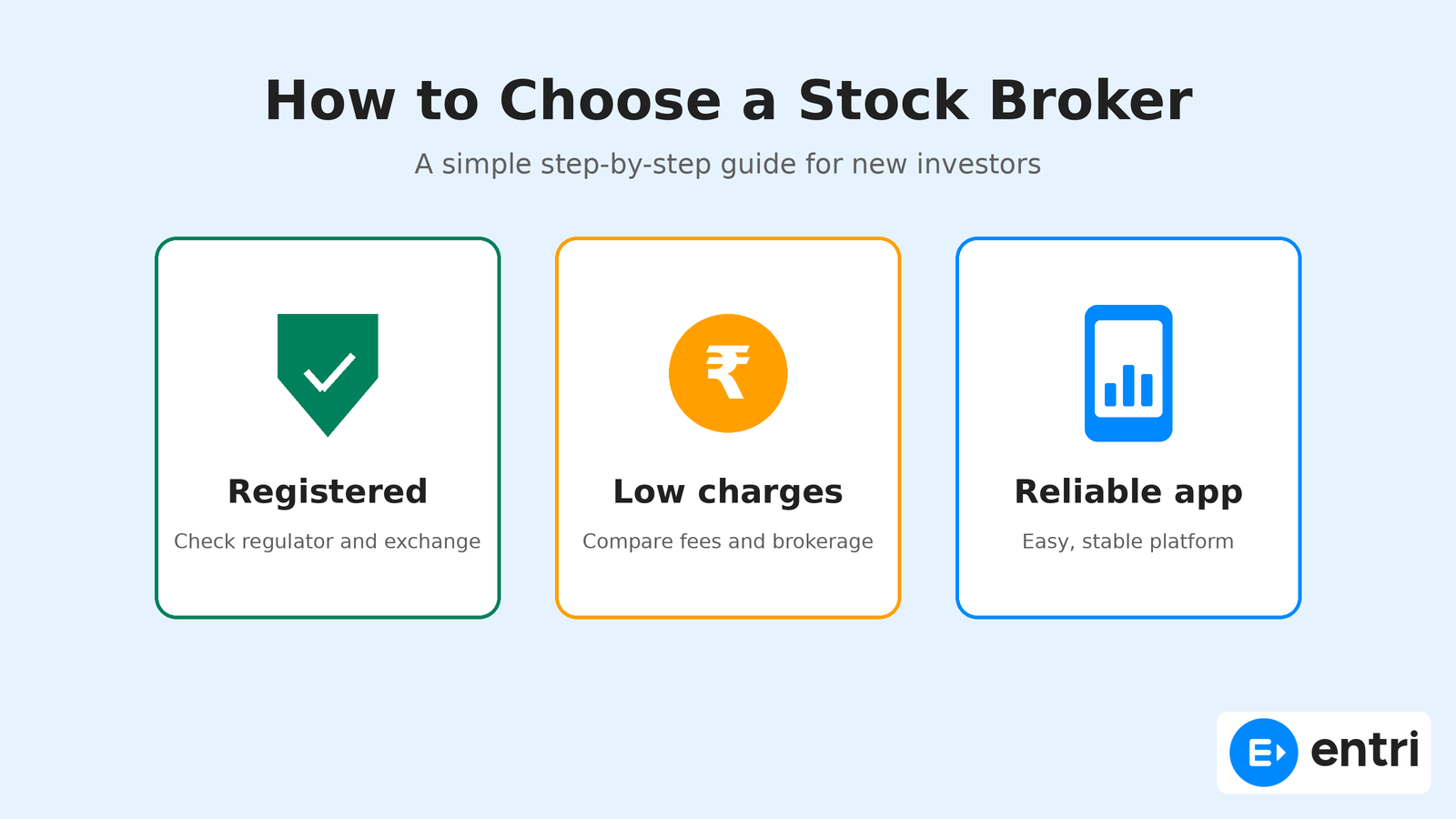
Before you open an account, it’s a must to verify whether the broker is registered with the market regulator.
Also check whether that broker is a member of the recognized stock exchanges.
It not only protects your money but also ensures the broker follows standard compliance practices.
- Confirm registration details on the regulator’s official website
- Check exchange membership status
- Look for depository participant registration (for holding shares in your demat account)
3rd Step: Compare Brokerage and Account Charges
Fees can quietly eat into your returns over time, so compare costs carefully:
- Account opening charges – one-time fee, sometimes waived
- Annual maintenance charges (AMC) – yearly fee for your demat account
- Brokerage per trade – flat fee or percentage-based
- Other charges – transaction charges, GST, stamp duty, and call-and-trade fees
| Charge Type | Typical Range |
| Account Opening | Free to ₹500 |
| AMC | ₹0 to ₹500/year |
| Equity Delivery Brokerage | ₹0 to 0.5% |
| Intraday Brokerage | ₹10–₹20 flat or 0.03% |
4th Step: Evaluate the Trading Platform
A good trading app or website should be:
- Easy to navigate, even for beginners
- Stable during high market volatility
- Available on both mobile and desktop
- Has charting tools and order types you actually need
Use the demo version or read user reviews before making your final decision.
5th Step: Assess Customer Support
Markets move fast, and technical issues can happen at least-expected times. Look for:
- More than one support channel such as phone, chat and email
- Reasonable response times
- Availability during market hours
6th Step: Look at Research and Educational Resources
As a new investor, brokers who offer webinars, tutorials, and research reports can help you make informed decisions.
When it comes to experienced traders, they may give priority to advanced analytics.
7th Step: Check Additional Features
- Range of investment products (stocks, mutual funds, IPOs, F&O, bonds)
- Margin funding options
- Integration with tax-filing or portfolio-tracking tools
A Simple Checklist Before You Decide
- Broker is properly registered and compliant
- Charges fit your trading frequency and budget
- Platform is user-friendly and reliable
- Support is responsive
- Research tools match your experience level
- Additional features align with your investment goals
There is no single answer to which is the best stock broker in India. It depends on each person’s investment goals, trading frequency, and comfort with technology.
A beginner may be looking for value guidance and educational support.
On the other hand, an active trader may give priority to low costs and a fast platform.
Take your time, compare a few options using the checklist above, and choose the broker that aligns best with how you plan to invest.
This lesson is for education only and is not investment advice.
|
ALSO READ |
|
| Introduction to Indian Stock Market | |
| What is Leverage and Margin Trading? | |
| Introduction to Mutual Funds | Key Factors Before Investing in a Mutual Fund |
| How to Analyze Mutual Funds | |
