Introduction
Some mornings you wake up already tired. The alarm hasn’t even gone off yet, but your brain is already running the list: breakfasts, school drop-off, laundry mountain, the toddler who refuses shoes, the older one who needs help with spelling words before the bus comes. You love them fiercely—so much it hurts sometimes—but there are days when you catch yourself staring out the window wondering, “Is this all there is right now? Just surviving until bedtime?” You don’t want to complain. You chose this. You wouldn’t trade it. But you also want something that’s just for you, something that fills you back up instead of draining what little energy is left.
That’s when online Montessori training for mothers starts to feel like a quiet answer you didn’t know you were looking for. It doesn’t ask you to leave the house, find a sitter, or pretend you have hours of free time. You can open your laptop (or phone) in the fifteen minutes between snack time and tantrum o’clock, and suddenly you’re learning how to turn ordinary moments—spilled rice, a child lining up cars for the tenth time, a slow walk to water the plants—into gentle, purposeful learning that actually makes your home feel calmer and your children more confident.
Montessori isn’t about fancy classrooms or expensive toys. It’s about trusting that kids are born curious and capable, and giving them real things to touch, explore, and master at their own speed. Most mothers already live parts of this philosophy without realizing it: you don’t force your two-year-old to eat faster; you let them practice with a small spoon until they get it. You don’t yell when they spill; you hand them a cloth and show them how to wipe. Online Montessori training simply gives a name to those instincts, adds beautiful structure, and shows you how to do it intentionally—without guilt, without overwhelm.
In this post we’re going to talk about why this path feels so right for so many of us right now. It isn’t just another certificate to hang on the wall. It’s a way to feel more capable as a parent today, more peaceful in your own home, and quietly excited about possibilities for tomorrow—all while your kids are still small and still need you close. Moms who’ve walked this road often say the same thing with a soft laugh: “I started for me… but it ended up being the best thing I ever did for my family too.”
Register for the Entri Elevate Montessori Teacher Training Program! Click here to join!
Why Montessori Teaching Is Ideal for Mothers
There’s a really satisfying feeling in discovering that the way your been showing up for your kids all these years has a name – and a century of thoughtful expertise backing it up. Montessori isn’t just a bunch of rules or identical lessons. It’s all about getting to know your kid really well, seeing what sets their heart on fire, and then quietly setting things up so they can chase that excitement without you constantly telling them “no, no, no” or “hurry up”.
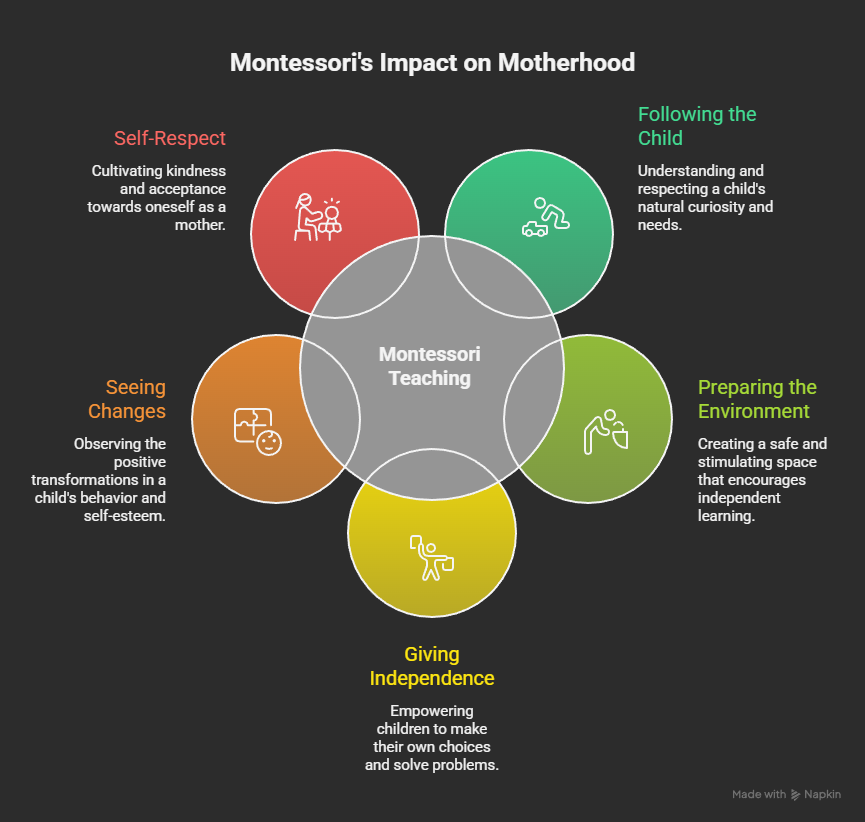
You’re probably already doing this sort of thing on a daily basis already. When your four year old is adamant they need to buckle up themselves, even though it takes forever, and you can breathe through your own frustration because you know they need to figure it out – that’s following the child. When you put out a little jug of water and a cup so they can have a go at pouring – rather than handing them a sippy cup for life – that’s preparing the environment. And when you resist the urge to fix their towers of blocks as soon as they start to wobble, and instead sit nearby saying “youve got this” until they get the hang of it – that’s giving them some independence.
Online Montessori training for mums takes those natural moments and gives them some shape. You watch some really honest and short videos of real families – not some fancy influencers – trying to have similar experiences in the midst of messy living rooms with laundry baskets left over from last week. You read some explanations that just click and make you think “that’s exactly what happens at our place”. You get some ideas that you can try tomorrow using things you already have at home – a tray of dried beans to scoop up, a basket of socks to sort out, a little broom to sweep up crumbs after snack time.
The thing that really hits home is just how quickly you start to see some changes. Your kid starts wanting to lend a hand a bit more. Mornings aren’t so crazy because they can dress themselves or put out their own plate. Fighting with siblings decreases because they’ve learned to work out their own little issues. And you – you stop feeling like you’re constantly trying to control behavior and start feeling like you’re actually guiding your child to grow. It’s exhausting in the best possible way – like you’re finally rowing with the current instead of swimming against it.
Theres also this tiny shift in how you feel about yourself. Montessori keeps reminding you that kids are whole people – worthy of respect even when theyre having a meltdown, capable even when they get it so wrong the first ten times. And that same respect starts to turn inwards. You start to be kinder to yourself on the really hard days. You stop judging your self-worth by the state of the floor or whether nap time was quiet or not. You start to see your own growth in the same way you see your kids – slow, a bit wonky, but beautiful.
Flexibility of Online Montessori Courses

Let’s call a spade a spade : most online courses sound pretty great at first, but then you quickly realise they expect you to be sitting in front of the laptop at 10 a.m. on Tuesdays, when your toddler is still snoozing and you’re still running on coffee fumes. Montessori training online flips all that on its head. You don’t get that “class is about to start” alert, and you don’t have to frantically click “join Zoom” at the last minute to avoid missing the start of the session. No, you can just boot up the platform when you finally have a spare 10 minutes – whether that’s when the baby finally settles down after a tantrum, or when your partner takes the kids out for a walk, or when you’ve managed to sneak in some study time after the kids have gone to bed.
You can re-watch a 10 minute video as many times as you need to because one of the kids kept asking for a drink or a snack. You can pause it mid-sentence to sort out a squabble over who gets to use the blue crayon, and then pick up where you left off 10 minutes later – without missing a beat. Modules unlock once you’ve finished them, so you don’t have to worry about artificial deadlines hanging over your head. And if life gets in the way – whether that’s a bout of sickness, a dentist appointment or just a random stomach bug that decides to descend on your household, the course just waits patiently for you. No guilt trips, no “you’re falling behind” warnings.
And it’s also a heck of a lot kinder on the purse strings. No fuel to pay for, no parking fees to shell out, and you don’t have to spend a fortune on a whole library of textbooks. Most of the materials are digital, or you probably already have them at home, so you don’t have to break the bank. And because you can break up your studying into tiny chunks, you don’t have to worry about committing a whole day to commuting or childcare arrangements.
For mums who live miles from the nearest training centre, or who work weird hours, or who just can’t see themselves leaving the house for three hours twice a week – this flexibility feels like a breath of fresh air. It’s like someone has finally looked at us and said “I get it – education doesn’t have to be a gruelling slog through the daily grind”.
Learning While Managing Family Responsibilities
Trying to learn in some learning when you’re in the midst of juggling tiny humans can be overwhelming at times. But the beauty of online Montessori training is that it lets you tackle it in whatever small chunks of time you can manage – be it 15 minutes while your oatmeal is cooking, or 30 minutes while the baby is feeding. The assignments aren’t presented as some kind of daunting task list, but as gentle suggestions, like watch your kid during free play and see what keeps them captivated, or try setting up a simple activity like moving pom-poms with tongs and see what happens – and take just two minutes to reflect on what was easy or hard.
A lot of the “homework” just ends up being part of the regular chaos of life anyway. You introduce a new practical life activity at snack time and your 3 year old suddenly starts carrying juice to the table without being asked. You practice that fancy courtesy language during dinner & your kid picks it up, like magic. The line between learning & being a parent just gets a little blurrier – in a good way.
When life gets in the way (which let’s be honest, it always does) – you don’t have to worry about falling behind. You can just close the laptop, comfort the crying kid, clean up the spilled paint and then come back to it later. Other women in the course forums become like virtual friends – “I do my studying in the car during swim lessons”, “I read the theory while they watch one episode of Bluey”, “I burst into tears when I finally finished module 1 because I was so proud of myself for pushing through”. Those tiny shared truths are just what you need to keep going.
You celebrate the tiny wins – a lesson is done, your kid wants to sweep the floor on their own, a morning comes along with minimal tears over socks. You reward yourself with a fave cup of tea, a mini dance party with the kids or just a quiet moment to remind yourself – “yeah, I’m doing this, I really am doing this.”
Over time, you end up getting more than just some knowledge – you get to see proof that you’re capable of growth even in the midst of all the chaos. And that, honestly, is kinda magic.
Career Opportunities After Course Completion

When you finish, the certificate is nice—but the real gift is the quiet confidence that you now have something valuable to offer beyond your own four walls. Some moms step into assistant roles at local Montessori schools, working a few mornings a week while their own kids are in preschool or with grandparents. They come home buzzing: “I watched a three-year-old tie their shoes today and it took everything in me not to cheer out loud.”
Others start small home programs—three or four neighborhood children coming over a few days a week to play and learn in a prepared space. It’s income that happens while you’re still home for your own kids’ lunch and stories. Word spreads quickly when parents see how calm and focused the children are.
Some take nanny or family-educator positions for families who specifically want Montessori principles in their home—better pay, flexible hours, sometimes even the chance to travel with the family during school breaks. Others lean creative: writing blog posts about real-life Montessori activities, selling printable activity packs, leading small parent workshops over Zoom on weekends.
The early childhood world is hungry for people who truly understand child-led learning, and this training gives you credibility that stands out. Virtual meetups and alumni groups help you find openings that fit your life. Most of all, it gives you choices—something a lot of us haven’t felt in years.
Register for the Entri Elevate Montessori Teacher Training Program! Click here to join!
Conclusion
Online Montessori training for mothers isn’t about becoming someone else. It’s about coming home to the pieces of yourself that already knew how to mother, guide, and love well—and giving those pieces better tools, more peace, and a little bit of breathing room. You watch your kids become more independent and happy. You feel your own shoulders relax a little lower each week. And slowly, you begin to envision a future that includes both your family and your own dreams.
What real moms who’ve walked this path have to say is that there are easier mornings, fewer battles, deeper gazes during playtime, and the warm satisfaction that comes from knowing they’re building something that will last. It’s not easy. It’s not always convenient. But every small step leads to so much more: connection, confidence, calm, and the quiet knowledge that you’re exactly where you’re meant to be, growing right alongside the little people who call you home. If your heart has been whispering that there’s more for you out there, listen. This might just be the gentle nudge you’ve been waiting for.
Get Certified & Start Your Montessori Career
Montessori Teacher Training Course by Entri App: Gain expert skills, earn certification, and kickstart your teaching career.
Join Now!Frequently Asked Questions
What Exactly Is Online Montessori Training for Mothers and How Does It Work?
When you first hear about online Montessori training for mothers, it’s natural to picture something rigid and academic—maybe a sterile virtual classroom with a lecturer droning on about educational theory while you struggle to keep a toddler from pulling your hair. But the reality is almost the complete opposite of that anxiety-inducing image. Online Montessori training designed specifically for mothers is a thoughtfully crafted learning experience that meets you exactly where you are: in the middle of your living room, surrounded by toys, with a half-drunk cup of tea growing cold somewhere nearby and a child who needs you every few minutes. It acknowledges that your life doesn’t pause for education, and instead of fighting that reality, it weaves learning into the fabric of your everyday existence.
The structure of these programs varies somewhat depending on the provider, but most quality online Montessori training for mothers follows a similar, mother-friendly pattern. When you enroll, you’re typically given access to a secure online portal or learning management system that houses all of your course materials. This isn’t the kind of platform that requires you to be logged in at specific times or to attend live lectures that conflict with nap schedules and school runs. Instead, everything is available on demand, twenty-four hours a day, seven days a week. You might log in at 5:30 in the morning because you woke up early and the house is still quiet, or at 9:30 at night after the children are finally asleep and you have reclaimed a small corner of the evening for yourself. You might even sneak in ten minutes of study while hiding in the bathroom—and yes, countless mothers have completed entire modules from exactly that location, because sometimes that’s the only guaranteed uninterrupted time you can find.
The curriculum itself is typically broken down into manageable modules or units, each focusing on a different aspect of Montessori philosophy and practice. You’ll find video content that shows real mothers implementing Montessori principles in real homes—not staged, magazine-perfect environments, but actual spaces with clutter, mismatched furniture, and children who occasionally refuse to cooperate. These videos are intentionally short and digestible, usually ranging from five to fifteen minutes, because the people who designed these courses understand that longer videos are simply impossible to finish when you’re parenting young children. Alongside the videos, you’ll typically find written materials that you can read in small chunks, reflection prompts that take only a few minutes to consider, and practical activity suggestions that you can try with your own children using items you already have at home.
One of the most beautiful aspects of online Montessori training for mothers is how seamlessly it integrates with your existing daily routine. The course doesn’t ask you to set aside large blocks of time for practice or to create artificial scenarios for observation. Instead, it teaches you to see the learning opportunities already present in your ordinary moments. When your toddler insists on pouring their own milk, even though you know half of it will end up on the table, that becomes an opportunity to practice the Montessori principle of practical life skills. When your preschooler lines up their toys in a particular order and becomes upset if you move them, you’re witnessing the sensitive period for order that Montessori identified more than a century ago. The course gives you language and framework for understanding what you’re already seeing, and gently guides you toward responding in ways that support your child’s development rather than inadvertently hindering it.
Assessment in these programs is typically gentle and reflective rather than high-pressure and exam-based. You might be asked to write short observations of your child during specific activities, or to reflect on how you implemented a particular Montessori principle and what you noticed as a result. There are no timed tests or stressful final examinations, because the goal isn’t to prove that you can memorize facts—it’s to demonstrate that you’re actually integrating this knowledge into your parenting and seeing positive changes as a result. Some programs include discussion forums or private social media groups where mothers taking the course together can share experiences, ask questions, and offer encouragement to one another. These communities often become unexpected sources of friendship and support, connecting you with other mothers who are walking a similar path and understand both the challenges and the joys of this journey.
The duration of online Montessori training for mothers varies widely depending on the program you choose and how intensively you’re able to study. Some mothers complete their training in a few months by dedicating consistent time each day, while others stretch it out over a year or more, moving through modules at whatever pace their family circumstances allow. There’s no penalty for taking longer, no judgment if life intervenes and you need to step away for a few weeks. The course simply waits for you, ready whenever you’re able to return. This flexibility is perhaps the single most important feature of training designed specifically for mothers—it acknowledges that your primary commitment is to your children and your family, and it supports that commitment rather than competing with it.
What you receive upon completion varies by program as well. Many offer certificates of completion or professional credentials that can open doors to employment opportunities if you choose to pursue them. Others focus more on personal growth and parenting confidence, providing you with deep knowledge and practical skills without the formal certification. The right choice depends entirely on your personal goals and what you hope to gain from the experience. Some mothers enroll specifically to enhance their parenting and create a more peaceful home environment, with no intention of ever working outside that home. Others see the training as a stepping stone toward a new career that will allow them to work with children while still being present for their own. Both paths are equally valid, and quality programs support mothers in whatever direction they choose to take their learning.
Perhaps most importantly, online Montessori training for mothers is designed to be encouraging rather than overwhelming. It doesn’t present Montessori as an ideal that you must perfectly achieve or an all-or-nothing proposition that requires you to overhaul your entire home and parenting approach overnight. Instead, it invites you to begin where you are, to try one small thing at a time, and to notice the difference that even tiny shifts can make. It celebrates your small victories—the morning when your child dressed themselves without help, the afternoon when they concentrated on an activity for twenty minutes, the evening when they helped set the table without being asked—and gently reminds you that this is enough, that you are enough, that the slow, steady work of raising capable, confident children doesn’t require perfection, only presence and intentionality.
Do I Need Any Previous Teaching Experience or Educational Background to Enroll?
This is perhaps the most common question that mothers ask when they first begin considering online Montessori training, and it’s usually asked with a particular tone—one that mixes hope with hesitation, curiosity with the fear of not being qualified enough. The answer, delivered with warmth and certainty, is that you do not need any previous teaching experience or educational background whatsoever to enroll in and successfully complete online Montessori training designed for mothers. In fact, many of the women who thrive most in these programs come to them with no formal education background at all, carrying only their lived experience as mothers and their deep desire to understand their children more fully and support them more effectively.
The Montessori approach itself was never intended to be the exclusive domain of trained teachers working in specialized classrooms. When Maria Montessori developed her method more than a century ago, she was responding to what she observed about how children learn naturally, and her insights apply just as powerfully in the home environment as they do in the carefully prepared classrooms that now bear her name. The principles of respect for the child, observation as a guide to understanding, and preparation of the environment to support independence—these are not concepts that require a teaching degree to grasp or implement. They are, in many ways, simply a formalization of what attentive mothers have always done instinctively: watching their children closely, noticing what captures their interest, and creating conditions that allow them to explore and master their world at their own pace.
When you enroll in online Montessori training for mothers, you’re not starting from nothing. You’re bringing with you months or years of intimate knowledge about your specific child—their temperament, their preferences, their fears, their joys, the particular way they approach a challenge or respond to frustration. This knowledge is invaluable and cannot be taught in any course. What the training provides is a framework for understanding what you’ve already observed, language to describe the developmental patterns you’ve noticed, and gentle guidance about how to respond in ways that support rather than hinder your child’s natural growth. It gives names to instincts you already have and offers structure to practices you may already be implementing without realizing they have a century of educational philosophy behind them.
Consider, for example, the common scenario of a toddler who insists on doing things themselves, even when it would be faster and less messy for you to simply do it for them. If you’ve found yourself standing in the kitchen, watching your two-year-old struggle to pour their own milk while you bite your tongue to keep from intervening, you’ve already encountered a core Montessori principle: the importance of allowing children to develop competence through meaningful work. The training simply helps you understand why that impulse toward independence is so powerful at this age, how to support it without losing your mind over the inevitable spills, and what comes next once pouring milk has been mastered. It takes what you’re already experiencing and gives you tools to navigate it with more confidence and less frustration.
The mothers who excel in online Montessori training come from every imaginable background. Some have advanced degrees in completely unrelated fields and are looking for a new direction that aligns with their values as parents. Others left formal education early and have spent years building expertise through lived experience rather than academic study. Some are single mothers juggling work and parenting with minimal support, while others have partners and extended family sharing the load. Some have one child and are trying to figure out this whole parenting thing for the first time, while others are on their third or fourth and hoping to approach the later years with more intention than they managed with the first. All of these mothers bring something valuable to their training, and none of them are disadvantaged by the absence of a teaching credential.
What matters far more than any previous education is your willingness to approach the material with an open mind and a spirit of gentle curiosity about yourself and your child. Montessori training asks you to observe without judgment, to reflect honestly on your own responses and reactions, and to experiment with small changes in how you structure your environment and interact with your children. These are not skills that require a degree to develop—they’re capacities that every mother possesses and can strengthen through practice. The training provides guidance and structure for that practice, but the raw material is already within you, waiting to be recognized and refined.
It’s also worth noting that online Montessori training for mothers is typically designed with the understanding that participants have limited time and attention to devote to study. The materials are presented in accessible language, free from unnecessary jargon or academic posturing. Concepts are explained clearly and illustrated with examples from real family life. When specialized terminology is introduced, it’s defined in context and connected to everyday experiences you’re likely to have had with your own children. The goal is never to make you feel inadequate or to highlight what you don’t know—it’s to build on what you already understand and gently expand your perspective in ways that feel natural and achievable.
If you’re still feeling uncertain about whether you’re qualified to begin this journey, try reframing the question. Instead of asking whether you have the right background, ask whether you have the right motivation. Are you genuinely interested in understanding your child more deeply? Are you willing to examine your own parenting patterns and consider gentle adjustments? Do you long for more peace and connection in your home, and are you open to learning how Montessori principles might help you create it? If you answered yes to these questions, you have everything you need to begin. The training will meet you where you are and accompany you where you want to go, regardless of what your educational history does or doesn’t include.
How Much Time Will I Need to Commit to My Studies Each Week?
The question of time commitment is one that weighs heavily on the mind of every mother considering any form of additional education, and it deserves an honest, nuanced answer rather than a simplistic one-size-fits-all number. The truth about online Montessori training for mothers is that the time commitment is remarkably flexible and can be adapted to fit whatever season of life you’re currently navigating. Some weeks you might find yourself with more time and energy to devote to your studies, while other weeks you might barely open the course portal at all—and both scenarios are accommodated within the structure of well-designed programs that understand the unpredictable nature of life with young children.
Most online Montessori training programs for mothers are designed with the realistic expectation that participants will spend somewhere between two and five hours per week engaged with course materials and related activities. However, this estimate requires significant unpacking, because the way those hours are distributed matters just as much as the total number. The beauty of these programs is that they don’t require you to carve out large, uninterrupted blocks of time—something that’s nearly impossible for most mothers of young children. Instead, they’re structured to allow you to engage in small increments throughout your week, fitting learning into the natural pauses and transitions that already exist in your daily rhythm.
Consider how a typical week might unfold for a mother enrolled in online Montessori training. Monday morning, while your toddler is happily occupied with blocks for fifteen minutes, you might watch a short video lesson on supporting concentration. Tuesday afternoon, while your preschooler is at a playdate, you could read through a module on preparing the environment and jot down a few notes about small changes you might try in your own home. Wednesday evening, after the children are asleep, you might spend twenty minutes reflecting on an observation prompt and typing out your thoughts. Thursday during naptime, you could browse the course discussion forum and connect with other mothers who are working through similar material. Friday morning, while your child eats breakfast, you might mentally plan how to introduce a new practical life activity over the weekend. None of these individual time investments feel overwhelming or impossible, but together they add up to meaningful engagement with the material.
The practical application components of the training don’t require additional time in the way you might expect, because they’re designed to be integrated into your existing routines rather than added on top of them. When a module suggests trying a particular activity with your child or observing their behavior during a specific type of play, you’re not being asked to create a special session that requires extra time and effort. You’re simply being invited to approach ordinary moments with new awareness and intention. The time you would have spent with your child anyway becomes richer and more purposeful, but it doesn’t demand more minutes than you were already giving.
One of the most liberating aspects of online Montessori training for mothers is that there’s no penalty for moving slowly through the material when life demands your attention elsewhere. If your child gets sick and requires round-the-clock care for a week, you don’t have to worry about falling behind or missing deadlines. If your family is going through a particularly chaotic transition, you can step back from your studies without guilt and return when things stabilize. The course doesn’t send催促 emails or mark you absent—it simply waits patiently for your return, understanding that your primary commitment is to your family and that your education exists to support that commitment, not to compete with it.
Some mothers find that they want to engage more deeply with the material than the minimum required, and the flexibility of online learning accommodates this as well. If a particular concept captures your interest, you can spend extra time exploring it, watching supplementary videos, reading recommended articles, or discussing it with other mothers in the course community. If you’re considering a career transition and want to build a stronger foundation of knowledge, you can invest additional hours in study and reflection. The program adapts to your goals and your capacity, rather than demanding that you adapt to its rigid expectations.
It’s also worth considering that the time you invest in your training may actually save you time in your daily life as you implement what you’re learning. Many mothers report that as they incorporate Montessori principles into their homes, their children become more independent and capable of handling tasks without constant assistance. A three-year-old who can dress themselves, pour their own drink, and help with simple meal preparation requires less of your direct intervention throughout the day. A child who has learned to concentrate deeply on self-chosen activities needs less entertainment and supervision from you. The time you spend learning how to foster this independence is, in a very real sense, an investment that pays dividends in reclaimed minutes and hours down the road.
Ultimately, the right time commitment for you is whatever feels sustainable given your current circumstances and energy levels. Some weeks that might mean three focused hours of study spread across multiple sessions. Other weeks it might mean thirty minutes of light engagement, just enough to maintain connection with the material until your capacity expands again. Both are valid, both are acceptable, and both will move you forward on your journey. The only wrong approach is to hold yourself to unrealistic standards that leave you feeling guilty and inadequate. Online Montessori training for mothers is meant to be a source of encouragement and growth, not another item on your never-ending to-do list.
Can I Really Learn Montessori Principles Without a Physical Classroom and Materials?
This question touches on a concern that many mothers have when they first consider online training, and it deserves a thoughtful response that addresses both the practical and philosophical dimensions of Montessori education. The image most of us carry of Montessori involves carefully arranged shelves, beautiful wooden materials, and children working intently in a space designed specifically for their needs. It’s natural to wonder whether these elements can be translated into an online learning experience, and whether the essence of Montessori can be understood and implemented without access to the physical environment that seems so central to the approach.
The reassuring answer is that yes, you can absolutely learn Montessori principles deeply and effectively through online training, and in some ways, learning in your own home with your own children offers advantages that a purely theoretical classroom-based program cannot match. The key insight that transforms online Montessori training from a compromise into a powerful learning experience is this: Montessori is not primarily about the materials, but about the relationship between the adult, the child, and the environment. The materials are tools that support that relationship, but they are not the relationship itself. When you learn Montessori online while living with your children in your actual home, you’re not practicing in a simulated environment and then trying to transfer those skills to real life. You’re learning directly in the context where you’ll apply your knowledge, with all the messiness, unpredictability, and beauty that real family life entails.
Quality online Montessori training for mothers doesn’t just tell you about Montessori principles—it shows you how those principles come to life in ordinary homes with ordinary children. The video content you’ll access features real families, not actors on a set. You’ll see mothers implementing Montessori practices in spaces that look like your space—kitchens with dishes in the sink, living rooms with toys scattered on the floor, bedrooms where the carefully prepared environment sometimes gets turned upside down by an enthusiastic toddler. This authenticity is intentional and deeply valuable. It prevents you from falling into the trap of believing that Montessori requires perfection or that you need to transform your home into a classroom before you can begin. Instead, it shows you that Montessori is about small, intentional shifts within the reality of your existing life.
As for the materials themselves, you’ll discover that many of the most powerful Montessori activities require nothing more than items you already have at home. A tray, a small pitcher, and a cup for water-pouring practice. A basket of socks for sorting and matching. A low shelf where your child can access a few carefully chosen toys. A child-sized table and chair that you probably already own. The specialized Montessori materials that fill classroom shelves are wonderful tools, but they’re not prerequisites for implementing Montessori principles in your home. The training will teach you to see the learning opportunities in ordinary objects and to present activities in ways that capture your child’s interest and support their development, using what you already have.
When the training does introduce you to specific Montessori materials, it does so in ways that help you understand their purpose and consider whether purchasing or making them would benefit your particular child. You’ll learn what each material is designed to teach, how to present it to your child, and what to observe as they work with it. If you decide to acquire certain materials, you’ll have the knowledge to choose quality options that will serve your child well. If you decide that your family’s budget or space constraints make purchasing materials impractical, you’ll have the creativity to adapt activities using items you already own. The training empowers you to make informed decisions rather than prescribing a rigid set of requirements.
The online format also offers advantages that traditional in-person training cannot match. You can revisit video demonstrations as many times as you need, pausing and rewatching until you feel confident in your understanding. You can access the course materials from anywhere—while waiting at a doctor’s appointment, during a child’s music class, in the quiet moments of early morning before anyone else is awake. You can connect with a community of mothers from diverse locations and circumstances, learning from their experiences and sharing your own. The flexibility and accessibility of online learning means that more mothers can access Montessori training than ever before, regardless of where they live or what their family schedule looks like.
Perhaps most importantly, learning Montessori online while parenting young children allows you to immediately apply what you’re learning and see the results in real time. You don’t have to wait until you’ve completed the course to start implementing changes. After watching a module on fostering independence, you can try a new approach during the next meal. After learning about sensitive periods, you can observe your child with fresh eyes and notice patterns you hadn’t seen before. This immediate application deepens your learning and keeps you motivated, because you’re constantly seeing evidence that your efforts are making a difference in your daily life and in your child’s development.
The mothers who complete online Montessori training often report that they feel more connected to the philosophy than they would have in a classroom setting, precisely because they learned it in the context of their real lives. They didn’t practice observing children in a controlled environment—they observed their own children in all their glorious unpredictability. They didn’t practice preparing an environment on paper—they rearranged their actual homes and saw how their children responded. The learning was never separate from the living, and that integration makes the knowledge stick in ways that theoretical study alone cannot achieve.
Will This Training Actually Help With Challenging Behaviors Like Tantrums and Defiance?
If you’ve ever found yourself standing in the middle of a grocery store while your three-year-old screams because you wouldn’t buy them a particular snack, or if you’ve spent an entire morning locked in a battle of wills with a preschooler who refuses to put on shoes, you know that parenting young children can sometimes feel like an endless series of confrontations that leave everyone exhausted and nobody satisfied. The hope that online Montessori training might offer relief from these struggles is often what draws mothers to explore this path, and the good news is that Montessori principles, when understood and applied consistently, can dramatically transform how you navigate challenging behaviors—though perhaps not in the way you might expect.
The first and most important shift that Montessori training offers is a fundamental reframing of how you understand challenging behavior. Instead of viewing tantrums, defiance, and resistance as problems to be eliminated or behaviors to be controlled, Montessori invites you to see them as communication—your child’s way of telling you that something in their environment or experience isn’t working for them. A child who melts down every time you try to leave the house isn’t trying to make your life difficult; they’re expressing distress about transitions that feel abrupt and overwhelming. A preschooler who refuses to share isn’t being selfish; they’re demonstrating a developmental stage where understanding ownership is a prerequisite to understanding generosity. When you begin to interpret behavior as communication rather than manipulation, your entire approach to responding shifts from combat to curiosity.
The training provides you with specific tools for observing your child more effectively, so you can begin to identify the patterns and triggers that precede challenging moments. You might notice that tantrums are more likely when your child is hungry or tired, or that defiance spikes during transitions between activities, or that certain environments consistently overwhelm your child’s sensory system. These observations aren’t just interesting data points—they’re the foundation for preventing challenging behaviors before they begin. When you know that transitions are difficult, you can build in warnings and rituals that ease the shift. When you recognize that your child needs to feel a sense of control, you can offer appropriate choices within necessary limits. The training helps you move from reacting to problems after they erupt to designing a life where fewer problems erupt in the first place.
One of the most powerful Montessori concepts for addressing challenging behavior is the idea of the prepared environment. This doesn’t just mean having nice toys on low shelves—it means thoughtfully arranging your home to support your child’s independence and reduce frustration. A toddler who can reach their own cup and pour their own water is less likely to tantrum about thirst because they can meet their own need. A preschooler who has a low hook for their coat and a place for their shoes is less likely to resist leaving the house because the process of getting ready is within their capability. When you systematically examine your environment through your child’s eyes and remove obstacles to their competence, you eliminate countless sources of frustration that previously erupted as challenging behavior.
The training also addresses the importance of connection and relationship in preventing and responding to difficult moments. Montessori emphasizes the role of the adult as a gentle guide who observes, supports, and trusts the child’s natural development. When your child feels seen and understood by you, when they know that you’re on their side even when you’re setting limits, they’re more likely to cooperate and less likely to engage in power struggles for the sake of proving their autonomy. The course helps you build this connection through practices like following the child’s interests, observing without judgment, and communicating with respect even in moments of conflict.
When challenging behaviors do occur—and they will, because children are human beings with big feelings and limited coping skills—Montessori training gives you frameworks for responding in ways that support emotional regulation rather than escalating the conflict. You’ll learn about the importance of staying calm yourself, of acknowledging feelings without condoning hurtful actions, of offering comfort and connection even while holding boundaries. You’ll understand that a child in the midst of a tantrum is not capable of reasoning or learning, and that your role in that moment is to provide a calm, safe presence until the storm passes. This knowledge alone can transform how you experience these difficult moments, replacing feelings of failure and frustration with patience and compassion.
Many mothers who complete Montessori training report that the biggest change isn’t in their children’s behavior—though that often improves dramatically—but in their own responses to that behavior. When you understand why your child is struggling, you’re less likely to take it personally. When you have tools for prevention and response, you’re less likely to feel helpless and overwhelmed. When you’ve built a foundation of connection and respect in your everyday interactions, you have more resources to draw on during difficult moments. The training doesn’t promise to eliminate all challenging behavior—that would be an unrealistic and even undesirable goal, because children need to struggle and feel frustration as part of their development. But it does promise to help you navigate those struggles with more grace, more understanding, and more effectiveness, so that both you and your child emerge from difficult moments stronger and more connected rather than depleted and defeated.
How Is Online Montessori Training Different From Regular Parenting Books or Blogs?
This question gets to the heart of what makes structured education valuable, even in an age where information about virtually any parenting topic is available for free with a quick internet search. If you’re like most mothers considering online Montessori training, you’ve probably already read several parenting books, followed numerous influencers on social media, and absorbed countless blog posts and articles about child development. You might wonder what a formal training program can offer that you haven’t already encountered in your self-directed learning journey. The answer lies in the difference between information and transformation, between scattered tips and integrated understanding, between feeling inspired and feeling equipped.
When you read a parenting book or blog, you’re typically receiving information that has been filtered through someone else’s experience and presented in a way that’s designed to be broadly applicable. This can be valuable—many mothers have gained helpful insights from books and online content. However, this format has inherent limitations. The information is static, meaning you can’t ask follow-up questions or seek clarification when something doesn’t quite make sense in your specific context. It’s passive, meaning you consume it without any structure for application or reflection. And it’s fragmented, meaning you might learn about Montessori principles from one source, positive discipline from another, and brain development from a third, without any framework for integrating these different perspectives into a coherent whole.
Online Montessori training for mothers addresses each of these limitations through its structured, interactive, and integrated approach. Rather than presenting information for you to consume, it creates a learning journey for you to experience. The curriculum is carefully sequenced so that each concept builds on previous ones, creating a deep understanding that’s greater than the sum of its parts. You don’t just learn that children need independence—you learn the developmental reasons behind this need, the specific ways to support it at different ages, the common obstacles that arise, and the gentle strategies for overcoming those obstacles. The knowledge is layered and connected, creating a foundation that supports everything else you’ll learn and practice.
The interactive elements of online training transform passive reading into active learning. When you watch a video demonstration of a Montessori activity, you’re not just seeing what to do—you’re observing the subtle details of presentation, the pacing, the language, the way the adult responds to the child’s interest or hesitation. When you complete reflection prompts, you’re not just recording what happened—you’re processing your observations, connecting them to course concepts, and beginning to form your own understanding of how these principles apply to your unique child and family. When you participate in discussion forums, you’re not just reading others’ experiences—you’re articulating your own, receiving feedback, and learning from the diverse perspectives of other mothers on the same journey.
The structured nature of the training ensures that you encounter important concepts you might miss in self-directed learning. It’s easy when reading books or blogs to gravitate toward topics that already interest you or confirm what you already believe, while skimming past ideas that challenge you or require more effort to understand. A well-designed course gently but persistently guides you through the full scope of Montessori philosophy and practice, ensuring that you develop a comprehensive understanding rather than a collection of favorite tips. You might not have chosen to learn about the mathematical mind in early childhood or the sensitive period for order, but encountering these concepts in the context of your training might transform how you see your child’s seemingly inexplicable behaviors.
Perhaps most importantly, online training provides accountability and support that self-directed learning cannot. When you’re reading a book on your own, there’s nothing external encouraging you to actually implement what you’re learning, to persist when you encounter challenges, or to reflect honestly on what’s working and what isn’t. The course structure, with its sequenced modules and suggested timelines, gently nudges you forward even on days when your motivation flags. The community of fellow learners provides encouragement, inspiration, and the reassurance that you’re not alone in your struggles. The knowledge that you’re working toward completion of a program gives you a sense of progress and achievement that scattered reading rarely provides.
The practical application components of the training bridge the gap between knowing and doing in ways that books cannot. It’s one thing to read that children benefit from participating in household tasks; it’s another thing entirely to have structured guidance on introducing food preparation activities to your toddler, with specific suggestions for equipment, presentation, and expectations. It’s one thing to understand that observation is important; it’s another to have prompts that guide your attention to specific aspects of your child’s behavior and reflection questions that help you derive meaning from what you’ve observed. The training doesn’t just tell you what to do—it walks alongside you as you actually do it, providing support and structure for the messy, beautiful process of translating philosophy into daily life.
For mothers who have already read extensively about Montessori or child development, the training offers the opportunity to deepen and integrate that knowledge, filling in gaps, correcting misunderstandings, and connecting disparate ideas into a cohesive framework. For mothers who are new to these concepts, it provides a structured entry point that prevents the overwhelm of trying to learn everything at once from scattered sources. Either way, the result is not just more information, but transformed understanding and increased capacity to create the peaceful, connected home environment you desire for your family.
What Specific Topics Will I Learn About in Montessori Training for Mothers?
When you enroll in online Montessori training designed for mothers, you’re embarking on a journey that will touch virtually every aspect of your life with your children, from the physical arrangement of your home to the quality of your emotional connection, from your understanding of developmental stages to your responses to everyday challenges. The curriculum is comprehensive yet accessible, covering the full scope of Montessori philosophy while always connecting back to practical application in your unique family context. Understanding what you’ll learn can help you envision how this training might transform your daily experience and whether it aligns with your personal goals and values.
The foundation of any quality Montessori training program is a thorough exploration of Montessori philosophy and child development. You’ll learn about Maria Montessori’s observations and insights, the principles that guide her approach, and the way these principles have been adapted and applied over the past century. This includes understanding concepts like the absorbent mind, which explains how young children learn effortlessly from their environment; sensitive periods, those windows of intense interest in specific types of learning; and human tendencies, the universal patterns of behavior that drive human development across cultures and eras. This philosophical foundation isn’t abstract theory—it’s the lens through which you’ll learn to see your child’s behavior and needs with new clarity and understanding.
You’ll dive deep into the concept of the prepared environment, learning how to arrange your home to support your child’s independence, concentration, and development. This goes far beyond buying special furniture or toys. You’ll learn to examine your space through your child’s eyes, identifying obstacles to their competence and opportunities for their participation. You’ll understand how to organize materials for accessibility and appeal, how to rotate toys and activities to maintain interest without overwhelming, and how to create spaces that invite exploration while maintaining the order that young children crave. For many mothers, this section of the training alone transforms their experience of daily life, as their homes become places of greater peace and their children become more capable and content.
The practical life curriculum is one of the most immediately applicable and transformative components of Montessori training. You’ll learn how to involve your child in the everyday activities of your household—food preparation, cleaning, self-care, gardening—in ways that build competence, concentration, and confidence. You’ll discover that a two-year-old can learn to peel a banana, pour their own cereal, and wipe up their own spills. You’ll understand how a three-year-old can participate in setting the table, folding laundry, and caring for plants. You’ll see how these activities, far from being chores, become meaningful work that satisfies your child’s deep need for purpose and contribution. The practical life section provides specific guidance on introducing activities, presenting them attractively, and supporting your child’s success while accepting the inevitable messiness of learning.
The sensorial area of the curriculum addresses how children learn through their senses and how you can support this natural process. You’ll learn about the specific materials Montessori developed to isolate and refine each sense, and more importantly, you’ll learn how to notice and name sensory experiences in your everyday environment. You’ll understand why your child is drawn to certain textures, sounds, or movements, and how to provide rich sensory experiences without overstimulation. You’ll discover activities that help your child classify and organize sensory information, building the neural foundations for later abstract thinking. The sensorial training transforms how you see ordinary moments—a walk becomes an opportunity to notice sounds and smells, a meal becomes a chance to explore tastes and textures, a bath becomes a laboratory for experimenting with water and volume.
Language development in the Montessori approach is rich and multifaceted, and your training will cover how to support your child’s journey from preverbal communication to reading and writing. You’ll learn about the importance of rich, precise language in everyday conversation, the value of storytelling and poetry, and the specific materials and activities that prepare children for literacy. You’ll understand how to recognize and support the sensitive period for language, providing the right experiences at the right time without pressure or pushing. You’ll discover that reading and writing emerge naturally when children are surrounded by language-rich environments and given opportunities to explore letters and sounds through hands-on activities.
Mathematics in the Montessori approach is concrete and experiential, and your training will introduce you to the materials and methods that make abstract concepts accessible to young children. You’ll learn how children develop number sense through everyday experiences long before they encounter formal math instruction. You’ll discover activities that build understanding of quantity, sequence, and operations through hands-on manipulation. You’ll understand how the Montessori math materials progress from concrete to abstract, allowing children to internalize mathematical concepts through repeated experience rather than rote memorization. Even if you never use a single formal Montessori math material, understanding this developmental sequence will transform how you support your child’s mathematical thinking in everyday life.
Beyond these curriculum areas, your training will address the role of the adult as observer, guide, and preparer of the environment. You’ll learn observation techniques that help you truly see your child—their interests, their challenges, their unique way of approaching the world. You’ll understand how to use these observations to inform your responses and your preparation of the environment. You’ll explore the delicate balance between supporting independence and providing appropriate help, between following the child and maintaining necessary limits. You’ll reflect on your own triggers and patterns, developing greater self-awareness and emotional regulation that benefit both you and your children.
Throughout the training, you’ll also learn about the specific needs and characteristics of different developmental stages, from infancy through early childhood. You’ll understand what’s developmentally typical at each age, what your child is working to master, and how you can best support that work. This developmental knowledge prevents you from expecting too much or too little, from pushing when you should wait or waiting when you could gently encourage. It helps you respond to your child’s behavior with understanding rather than frustration, with patience rather than pressure, with confidence rather than confusion.
The specific topics and their depth will vary somewhat between programs, but quality online Montessori training for mothers will provide comprehensive coverage of all these areas, always connecting philosophical understanding to practical application in your home with your children. By the time you complete your training, you’ll have a deep, integrated understanding of child development and Montessori principles, along with the practical skills to create an environment and a relationship that support your child’s full potential.
Can I Really Build a Career With Montessori Training, and What Would That Look Like?
For many mothers considering online Montessori training, the possibility of transforming this learning into meaningful paid work is an exciting and hope-filled prospect. The image of building a career that allows you to continue being present for your children while also contributing financially, using skills that feel deeply aligned with your values and interests, is powerfully attractive. The good news is that Montessori training can indeed open doors to a variety of career paths, some of which offer remarkable flexibility for mothers who need to balance work with family responsibilities. Understanding what these paths look like can help you envision a future that includes both your family and your professional aspirations.
The most direct career path following Montessori training is work in a Montessori school or early childhood center. Depending on the credentials your specific program provides and the requirements in your location, you might qualify for positions as an assistant teacher, lead teacher, or classroom aide. These roles allow you to work directly with children in an environment that embodies the principles you’ve studied, collaborating with other Montessori educators who share your understanding and commitment. School schedules often align well with family life—many positions follow the traditional school calendar, with summers and holidays off, and part-time options are frequently available for parents who want to work while their own children are in school or care.
The demand for qualified Montessori educators has grown significantly in recent years as more families seek alternatives to traditional early childhood education. Montessori schools across the country and around the world are often eager to hire individuals who have completed recognized training, even if they don’t have extensive classroom experience. Your lived experience as a mother, combined with your formal training, positions you uniquely to understand both the developmental needs of children and the concerns of parents. Many mothers find that this combination makes them particularly effective and sought-after educators, able to bridge the worlds of home and school in ways that benefit everyone involved.
For mothers who want to work while remaining at home with their own children, starting a small home-based Montessori program can be an ideal option. This might mean caring for two or three neighborhood children a few days a week, creating a mini-community where children can learn and play together in a prepared environment. It might mean offering parent-child classes where you guide parents and toddlers through Montessori activities together, building community and sharing your knowledge with other families. It might mean providing specialized support for families who want to implement Montessori at home but need guidance and encouragement. Home-based work allows you to set your own hours, choose your own clients, and design your own programs, all while remaining physically present for your own children.
Another growing field is that of the Montessori consultant or parent educator. Families who are interested in Montessori but don’t have access to a school, or who want to supplement their child’s school experience with Montessori at home, often seek guidance from trained professionals. As a consultant, you might visit families in their homes to help them prepare their environment, observe their children and offer insights, and suggest activities and approaches tailored to their specific situation. You might offer workshops or courses for parents in your community, sharing what you’ve learned in a format that’s accessible and practical. You might work with families virtually, offering consultations over video calls and email support. This path offers tremendous flexibility and the deep satisfaction of helping other families create the peace and connection you’ve cultivated in your own.
For mothers with a creative bent and comfort with technology, the digital space offers numerous opportunities to build a Montessori-related business. You might start a blog or YouTube channel sharing Montessori activities and insights from your real-life experience, building an audience and generating income through advertising, sponsorships, or affiliate marketing. You might create and sell digital products—printable activity guides, e-courses for parents, observation journals, curriculum planners—that help other families implement Montessori principles in their homes. You might offer online coaching or group programs, leading other mothers through the journey you’ve taken. The digital landscape allows you to reach families far beyond your geographic area and to build a business that fits around your family’s schedule rather than demanding that your family fit around your business.
Some mothers combine multiple paths, creating a portfolio career that draws on their various skills and interests. You might work part-time in a Montessori school two days a week, see consulting clients one afternoon a week, and run a blog or online shop in the margins of your time. This variety can be deeply satisfying, allowing you to engage with children, support other parents, and express your creativity, all while maintaining the flexibility to prioritize your family when needed. The income from multiple streams can add up to meaningful financial contribution without the burnout that can come from a single demanding role.
It’s important to note that career opportunities vary depending on the specific training you complete and the credentials it provides. Some programs offer internationally recognized Montessori certifications that qualify you for teaching positions anywhere in the world, while others provide foundational knowledge that prepares you for certain roles but not others. Before enrolling, it’s wise to research the specific outcomes graduates from your chosen program have achieved and to consider what path most interests you. Many programs offer career guidance and job placement support, connecting graduates with opportunities in their area and helping them navigate the transition from training to work.
What unites all these career paths is that they draw on the deep understanding and practical skills you develop through your training. You’re not just performing tasks—you’re bringing a coherent philosophy and a respectful approach to every interaction with children and families. This alignment between your work and your values is deeply satisfying, making your professional life feel meaningful rather than draining. And because the early childhood field values trained professionals, your certification gives you credibility that can translate into better compensation and more opportunities than you might find in other flexible work options.
For many mothers, the career possibilities that open up after Montessori training represent more than just income—they represent a pathway back to themselves, a way to reclaim parts of their identity that got submerged in the all-consuming work of early motherhood. The work you do with children and families isn’t separate from your identity as a mother; it’s an extension and expression of that identity, a way to share what you’ve learned and continue growing alongside other parents and children. This integration of roles, rather than the constant switching between them, can bring a sense of wholeness and purpose that’s difficult to find in work that feels disconnected from your deepest self.
What If My Partner Isn't on Board or Our Parenting Styles Clash?
This question carries so much weight for mothers who are considering Montessori training but worry about how it will fit into their existing family dynamics. The fear is real and valid: you’re excited about a new approach that feels deeply right to you, but your partner doesn’t share that excitement or actively disagrees with Montessori principles. You worry about creating conflict in your relationship, about sending mixed messages to your children, about investing time and energy in learning something that you won’t be able to fully implement because you’re not the only one making decisions in your home. These concerns deserve honest acknowledgment and thoughtful consideration.
The first thing to understand is that you’re not alone in this situation. Many mothers who pursue Montessori training do so without their partner’s full enthusiasm or understanding, and many find ways to integrate what they’re learning without creating lasting conflict in their relationships. The path isn’t always smooth, and it requires patience, communication, and strategic thinking, but it is possible to move forward even when you’re not starting from a place of complete alignment with your partner.
One of the most helpful approaches is to begin by understanding your partner’s perspective. Resistance to a new parenting approach often comes from a place of love and concern, even if it doesn’t sound that way in the moment. Your partner might worry that Montessori is too permissive or too structured, depending on their understanding of the philosophy. They might fear that changes to your home or routine will disrupt the family’s equilibrium or create more work for them. They might feel defensive, interpreting your interest in Montessori as a criticism of how you’ve been parenting together. They might simply be exhausted and resistant to anything that feels like one more thing to think about or adjust to. Taking time to understand the source of their resistance, and acknowledging their concerns as valid even if you don’t share them, creates a foundation for more productive conversations.
When you do talk with your partner about Montessori, focus on concrete, specific examples rather than abstract philosophy. Instead of saying “I want to implement Montessori principles in our home,” which can sound vague and overwhelming, try saying “I learned this really simple way to help our toddler pour their own water, and I’d love to try it. Would you be willing to give it a shot and see how it goes?” Instead of describing the prepared environment in theoretical terms, invite your partner to notice how your child responds when you lower a few items to their level or create a dedicated space for their activities. Small, visible successes are more persuasive than eloquent arguments, and they allow your partner to see the benefits of Montessori without feeling pressured to adopt an entire philosophy.
It’s also helpful to acknowledge that you don’t need to implement everything at once, and you don’t need your partner to be fully on board with every aspect of Montessori for you to begin making changes. You can start with areas that feel less contentious—perhaps introducing practical life activities in the kitchen, or adjusting your child’s bedroom to be more accessible—without making demands about how your partner interacts with the children or structures their time with them. As your partner sees positive changes in your child’s behavior and your own experience of parenting, they may become more curious and open to learning more. Many mothers report that their initially skeptical partners became enthusiastic supporters once they saw the results with their own eyes.
When it comes to areas where you and your partner genuinely disagree about parenting approaches, it’s important to find ways to honor both perspectives rather than creating a right/wrong dynamic. Your children benefit from having two parents who love them, even if those parents have different styles and approaches. The goal isn’t to convert your partner to Montessori thinking, but to find a way for both of you to feel respected and for your children to receive consistent love and clear expectations, even if the specifics vary somewhat between parents. This might mean agreeing on certain non-negotiable principles while allowing flexibility in how each of you implements them. It might mean dividing responsibilities so that each parent has primary authority over certain domains. It might simply mean accepting that your children will experience different approaches with each parent and that this diversity is not harmful but enriching.
If your partner is willing to learn more about Montessori, you might invite them to watch selected videos with you, read a short article, or visit a Montessori school or home program together. The goal isn’t to overwhelm them with information but to offer gentle exposure to the philosophy in ways that feel accessible and relevant. Some partners become more interested when they understand the scientific basis for Montessori principles or see how the approach supports skills and qualities they value, like independence, concentration, or respect. Others remain uninterested in the philosophy but become supportive of your pursuit because they see how much it means to you and how it positively affects your experience of parenting.
It’s also worth considering whether your training program offers resources or support for involving partners. Some programs include materials designed to introduce Montessori to other family members, or discussion forums where mothers share strategies for navigating differing parenting approaches. Connecting with other mothers in similar situations can provide both practical ideas and emotional reassurance that you’re not alone in this challenge.
Ultimately, the decision to pursue Montessori training is yours to make, regardless of your partner’s level of enthusiasm. You don’t need permission to invest in your own growth and learning, and you don’t need your partner to share your interests for you to benefit from them. The knowledge and skills you gain will shape your interactions with your children regardless of how fully your partner adopts the same approach. You’ll become more observant, more patient, more intentional in your responses. You’ll understand your children more deeply and feel more confident in your parenting. These changes benefit your whole family, even if your partner can’t articulate exactly what’s different or why it’s working.
As you move forward, remember that the goal isn’t to create a perfect Montessori home or to convert everyone around you to your way of thinking. The goal is to become the mother you want to be, to create the relationship with your children that you deeply desire, and to find peace and purpose in the daily work of raising your family. Montessori training is a tool for that journey, not a test of whether your family measures up to some external standard. Hold that perspective gently, and you’ll find your way through whatever challenges arise, with grace for yourself, your partner, and your children.
How Do I Choose the Right Online Montessori Training Program for My Family?
As you stand at the threshold of this journey, excited about the possibilities but perhaps overwhelmed by the number of programs available, the question of how to choose wisely becomes increasingly important. Not all online Montessori training for mothers is created equal, and finding the program that truly fits your needs, your goals, and your family circumstances requires careful consideration of multiple factors. Taking time to research and reflect before enrolling will pay dividends throughout your learning journey, ensuring that you invest your precious time, energy, and resources in a program that will genuinely serve you.
The first and most important consideration is accreditation and recognition. Montessori training exists on a spectrum from informal introductory courses to rigorous professional certification programs, and understanding where a particular program falls on this spectrum is essential for making an informed choice. If your goal is primarily personal enrichment and improved parenting, a less formal program may serve you perfectly well. If you hope to work in Montessori schools or build a professional career, you’ll want to ensure that your training is recognized by employers and professional organizations. Research the accrediting bodies in the Montessori world—organizations like the Association Montessori Internationale (AMI) and the American Montessori Society (AMS) set standards for teacher training—and understand whether your prospective program meets those standards or offers alternative credentials that will be valued in your context.
The curriculum content and depth is another crucial factor to evaluate. Look carefully at what the program covers and how thoroughly it addresses each topic. Does it provide comprehensive coverage of child development, Montessori philosophy, and practical application across all areas of learning? Does it include observation practice and reflection opportunities, or is it purely theoretical? Does it address the specific challenges and opportunities of implementing Montessori in the home environment, or is it primarily focused on classroom settings? The program description should give you a clear sense of what you’ll learn and how you’ll learn it. If possible, request a sample module or syllabus to get a more concrete understanding of the content and approach.
The format and flexibility of the program matter enormously for mothers with young children. Look for programs that offer truly self-paced learning with no required live sessions or rigid deadlines. Consider whether the materials are accessible on mobile devices, allowing you to learn in the small pockets of time that appear throughout your day. Investigate how long you’ll have access to the course materials—some programs offer lifetime access, which can be valuable for review and reference as your children grow. Understand the technical requirements and ensure they’re compatible with whatever devices and internet access you have available. A program that looks perfect on paper but requires more technology or scheduling flexibility than you can manage will quickly become a source of frustration rather than growth.
The support and community aspects of the program can significantly impact your learning experience. Does the program offer access to instructors who can answer questions and provide guidance? Is there a community of fellow learners where you can share experiences, ask questions, and offer encouragement? Are there opportunities for interaction and connection, or will you be learning entirely on your own? For many mothers, the community aspect of training becomes one of the most valuable elements, providing friendship, accountability, and the reassurance that others are walking a similar path. If this matters to you, look for programs that actively cultivate community through discussion forums, social media groups, or live Q&A sessions.
Practical application components should be a central part of any quality program. Montessori is, above all, a practice—a way of being with children that must be lived to be understood. The best programs include structured opportunities for observation, reflection, and implementation, guiding you to apply what you’re learning in your real life with your children. Look for programs that include assignments or activities that require you to try things with your child, observe their responses, and reflect on what you’ve learned. These experiential components transform information into understanding and create lasting change in your daily life.
The cost of the program is obviously an important consideration, but it’s worth thinking about cost in relation to value rather than simply seeking the cheapest option. A more expensive program that provides comprehensive training, recognized credentials, strong support, and lasting access may ultimately be a better investment than a cheaper program that leaves you with questions and limited options. Consider what you hope to gain from your training—personal growth, career opportunities, community, credentials—and evaluate programs based on how well they deliver what you need. Some programs offer payment plans or scholarships, making higher-quality options more accessible than they might initially appear.
Reading reviews and testimonials from actual graduates can provide invaluable insight into what a program is really like. Look for reviews from mothers whose circumstances and goals resemble your own, and pay attention to both what they praise and what they wish had been different. Reach out to programs directly with your questions—how they respond can tell you a lot about their values and their commitment to supporting students. A program that takes time to answer your questions thoroughly and warmly is likely to provide that same quality of support throughout your learning journey.
Consider the longevity and reputation of the program and its founders. How long has the program been operating? What are the qualifications and experience of the people who created it? Are they actively involved in the Montessori community and engaged with current research and practice? Programs with deep roots and active engagement in the field are more likely to provide current, high-quality training than fly-by-night operations that appeared overnight in response to growing interest in Montessori.
Finally, trust your intuition. After you’ve researched all the practical factors, after you’ve compared costs and curricula and credentials, after you’ve read reviews and asked questions—pay attention to how you feel about each program. Which one excites you? Which one feels like it would welcome you exactly as you are, with all the beautiful chaos of your current life? Which one aligns with your values and your vision for yourself as a mother and as a learner? The right program will feel like an invitation rather than an obligation, like a door opening rather than a hoop to jump through. When you find that program, you’ll know you’ve found your path.
Remember that choosing a program isn’t a permanent, unchangeable decision. If you enroll and find that a program isn’t meeting your needs, you can make a different choice. The most important step is to begin, to commit to your own growth and learning, and to trust that even if your first choice isn’t perfect, the journey itself will teach you what you need to know to find your way. Your children are growing every day, and every day you invest in understanding them more deeply and supporting them more effectively is a day well spent, regardless of which program accompanies you on that journey.