Table of Contents
What actually are autonomous robots? Well, as the name suggests, they work and act without any external control, which means, human control. They are intelligent machines that perceive their environment and make decisions using AI accordingly.
These autonomous robots are transforming industries by handling complex as well as dangerous tasks more efficiently than traditional automation. They have perfected doing repetitive tasks as well. By 2025, the global autonomous robotics market reached $12.2 billion, growing at a 22.1% CAGR toward 2030. This apparently reflects rapid real-world adoption.
New to Robotics? Start from the Basics. Join Now!
Key Takeaways
- Autonomous robots use a loop – perceive-plan-act-feedback.
- Core technologies include LiDAR, cameras, SLAM, edge AI, and ROS.
- AMRs hold 45% market share. This dominates warehouses for 40% to 60% productivity gains.
- Key applications: logistics, healthcare, agriculture, defense, disaster response.
- Future: Level 5 autonomy, swarms, soft robotics by 2030 amid labour shortages.
- Learning robotics now creates high-growth career opportunities.
How do Autonomous Robots Work?
Autonomous robots function through a closed-loop system. It continuously senses, decides, and then acts. This architecture enables real-time navigation, avoiding every potential obstacle, and efficiently executing tasks in dynamic environments. More than 80% of industrial AMRs use SLAM (Simultaneous Localization and Mapping). This reduces navigation errors by up to 95%.
Perceive – Plan – Act – Feedback Loop
| STEP | COMPONENT | FUNCTION | EXAMPLE TECH |
| Perceive | Sensors | Detect surroundings | LiDAR, RGB Cameras |
| Plan | AI Algorithms | Compute optimal path | SLAM, A*, RL |
| Act | Actuators | Execute motion | DC motors, robotic arms |
| Feedback | Control Loop | Real-time correction | Kalman filter, PID |
Master Robotics and AI!
Ready to build the future? Join our comprehensive robotics course to bridge the gap between complex code and physical motion. You’ll gain hands-on experience giving you the technical edge needed to lead in the age of automation.
Know MoreSensor Suite: Eyes and Ears of Autonomy
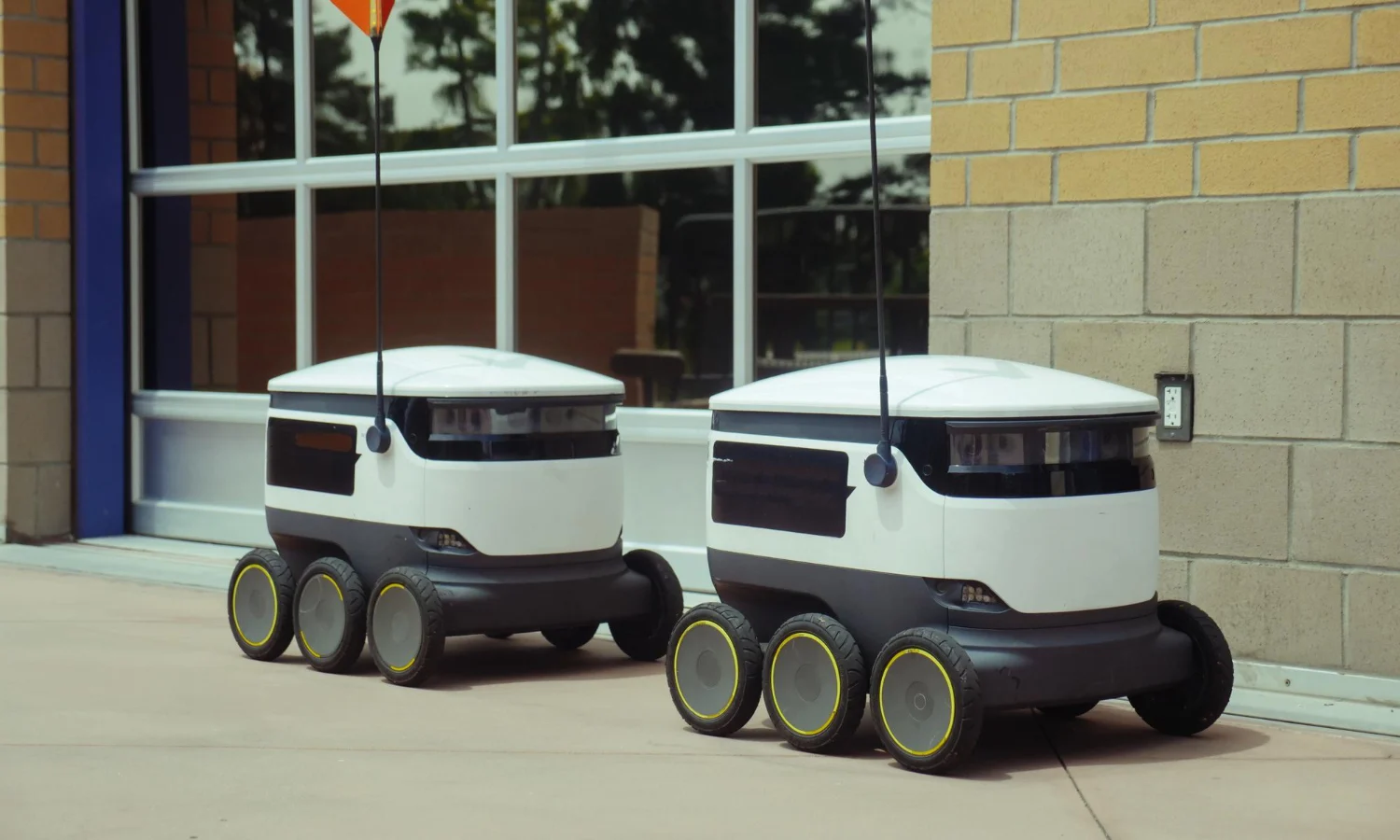
Sensors like LiDAR, cameras, ultrasonic modules and IMUs give robots a live picture of their surroundings. Combining all these data streams with sensor fusion allows you to create highly accurate 3D maps of a robot’s environment. Modern LiDAR systems have got it down to being able to tell you with very little error – about 2cm at 100m – which makes navigation a whole lot more precise.
LiDAR – or Light Detection and Ranging – is constantly firing out millions of laser pulses per second, and all those pulses create a “point cloud”. This lets you map out obstacles right down to the millimetre – which is pretty handy for navigating tight warehouse spaces. RGB-D cameras like Intel’s RealSense can add a bit of colour and depth to the mix which is perfect for spotting objects, particularly if you’ve got fragile goods hidden amongst the clutter.
Ultrasonic sensors are cheap and can tell you when you’re getting close to something – even if you can’t see it. However, IMUs are standby to track the robot’s orientation and acceleration to stop it tipping over on rough terrain. And then there are the fusion algorithms (Kalman filters being a good example) which all come together to give you a picture that is actually useful.This lets robots handle a whole load of tricky environments like a busy factory floor.
AI Brain: Perception to Decision-Making
Machine learning models and computer vision algorithms take raw sensor data and turn it into actual useful information. This lets autonomous robots work out where to go, how to avoid things in their way and adjust on the fly. Open-source tools like ROS are crucial for getting the various components to work together in sync. It can be SLAM for creating a map, A* for figuring out the shortest route or reinforcement learning for working out the best way to do something in a tricky situation.
Most commercial robots are powered by NVIDIA Jetson edge AI platforms and they can do real-time calculations in under 50 ms. This is fast enough to react quickly in situations like avoiding a crash at highway speeds. At the heart of it all are convolutional neural networks (CNNs) in tools like TensorFlow, which are able to spot objects. Not just that but also SLAM, which lets machines build a map without needing a GPS. Then you have path planners like Dijkstra or D* Lite which works out the best route to take, rerouting if something unexpected comes up like a box falling over – Path planners like this will re-route to avoid the fallen box.
Reinforcement learning, often trained in simulators like Gazebo, lets robots learn from their mistakes, even when they’ve failed in a virtual world. This gets to a standard of performance that’s almost up to a human – it is even helped with picking tasks. This whole AI package has brought factory downtime down from 100% to 20% in ABB Robotics 2026 case studies.
Actuation and Control: From Thought to Motion
Electric motors, differential wheels and multi-joint arms turn AI ideas into real-world movements at lightning speed, completing tasks in as little as a millisecond. PID controllers get precision down to a science – tweaking speed and position. Not just that but it brings balance so the robot stays stable whether it is on rocky ground or racing down a ramp. Systems like Boston Dynamics’s Spot robot can bounce across rough terrain at a steady 1 m/s – with an impressive 99% uptime & able to lug heavy loads (14 kg) with ease. Of these, some of them were made known in the 2025 field tests done with the company.
DC servo motors give the grunt needed for tackling heavy lifting, while stepper motors offer pinpoint accuracy for delicate jobs like picking eggs in an agri-bots. Imagine being able to zip sideways through tight spaces without turning a wheel.That is the magic of omnidirectional wheels (Mecanum) in action. Then there’s the feedback from encoders and force sensors to make sure it all ‘works together’ – and to top it all off, model predictive control (MPC) steps in to stop the robot from slipping up. This winning combination boosts task completion rates to a whopping 98% in tricky, unstructured situations – far outperforming your average worker.
Master Robotics and AI!
Ready to build the future? Join our comprehensive robotics course to bridge the gap between complex code and physical motion. You’ll gain hands-on experience giving you the technical edge needed to lead in the age of automation.
Know MoreTypes of Autonomous Robots
Autonomous robots fall into six major categories based on mobility, environment, and task complexity. This classification aligns with SAE autonomy levels, from partial to full independence. AMRs dominate with 150,000+ units shipped annually.

1. Industrial AMRs (Autonomous Mobile Robots)
Autonomous robots come in handy within the industrial sector. In that case, AMRs autonomously transport goods inside warehouses using laser navigation. They integrate with Warehouse Management Systems for real-time optimization. Top facilities cut labour costs by approximately 30%. Not just that, they achieve faster order fulfilment.
2. UAVs (Unmanned Aerial Vehicles)
This is the sector where more interesting things happen. Autonomous drones perform aerial delivery, mapping, and most importantly, surveillance. They use GPS, vision AI, and obstacle avoidance for safe navigation. Agriculture drones improve crop monitoring efficiency by 25% to 30%.
3. UGVs (Unmanned Ground Vehicles)
When it comes to vehicles, they have innovative turns. UGVs operate on rough terrain for inspection, exploration and defense. They reduce human exposure to hazardous environments. They can be used in disaster zones and bomb disposal missions on a global level.
4. USVs (Unmanned Surface Vehicles)
Well, this takes a far more enthusiastic turn. USVs autonomously navigate oceans for mapping and environmental monitoring. That’s how it primarily works. They collect long-duration data without any human crew. Them being perfected, ocean research missions now can run for months without any intervention.
5. Humanoid Robots
This is where possibilities of robots to replicate human beings opens up evidently and efficiently. The areas where humanoid robots replicate human motion include service and industrial tasks. They are designed for human-centric environments particularly like homes and offices. Use cases include but are not limited to material handling as well as customer interaction.
6. Swarm Robots
This is where collaborative efforts find its way. Swarm robots collaborate using decentralized AI along with collective intelligence. They excel in search-and-rescue as well as large-area mapping. Studies show 10× efficiency can be gained over single-robot systems.
Applications of Autonomous Robots (Real-World Impact)
Autonomous robots are deployed across logistics, healthcare, agriculture, defense, and exploration. They automate high-risk and repetitive workflows while improving accuracy. In 2025, 1.2 million robots have been reported to have generated $20B+ economic value.
Logistics and Manufacturing
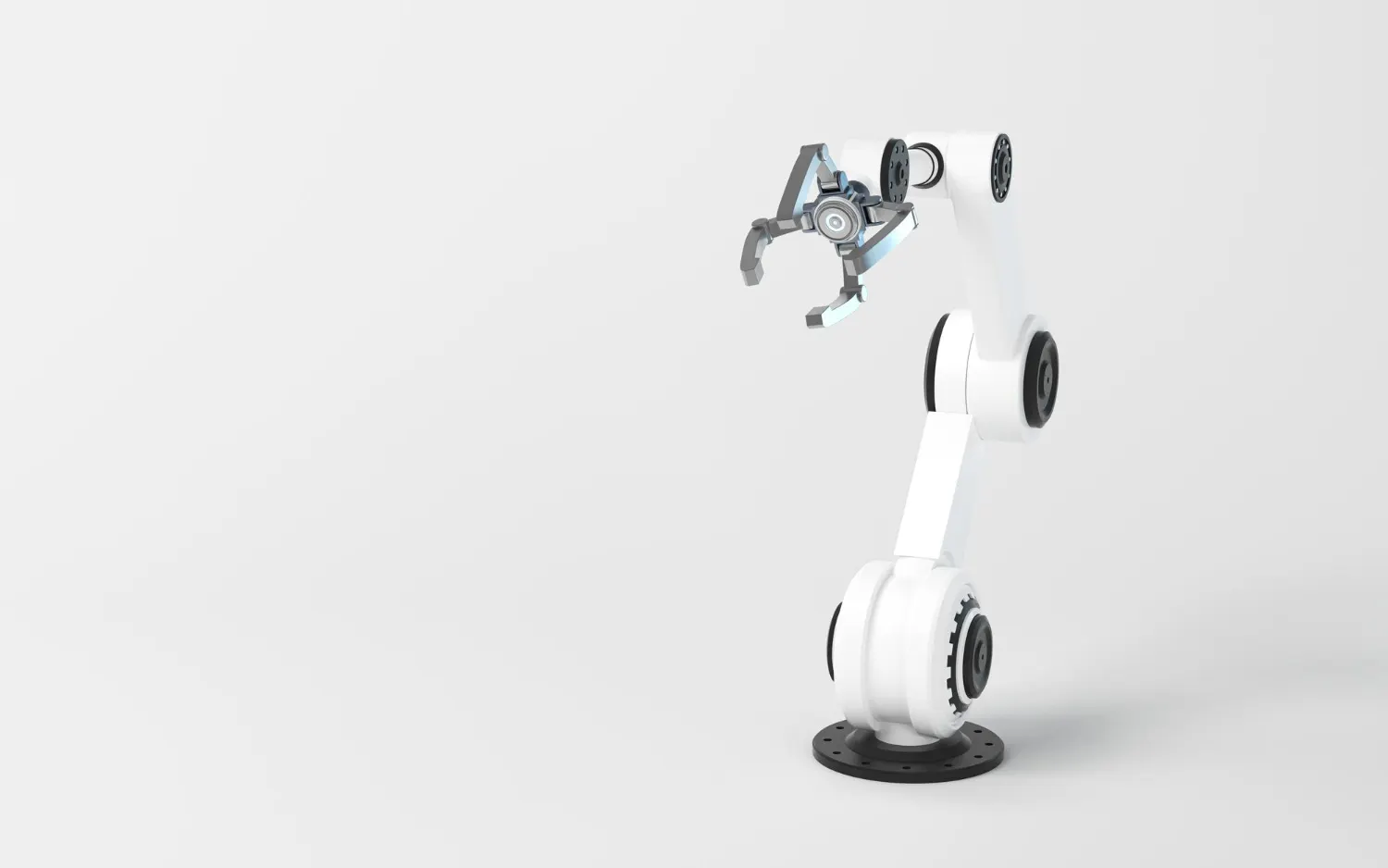
- AMRs automate picking, sorting, and inventory movement.
- They integrate with WMS and operate 24/7 without fatigue.
- Major logistics firms report billions in annual savings.
Healthcare
- Autonomous robots handle UV disinfection, medicine delivery, and telepresence.
- They reduce infection risks through contactless workflows.
- Used in 2,000+ hospitals worldwide for sanitation.
Agriculture
- Robots monitor crops, spray precisely, and harvest autonomously.
- They optimize inputs like water and fertilizer using AI analytics.
- Farm yields improve by up to 30%.
Defense and Security
- Autonomous systems conduct reconnaissance and surveillance.
- They minimize soldier exposure to high-risk zones.
- Drone swarms enable large-area intelligence gathering.
Disaster Response and Exploration
- Robots enter collapsed buildings, nuclear sites, and deep oceans.
- They operate where humans cannot survive.
- Critical in Fukushima clean-up and earthquake rescue missions.
Future Trends in Autonomous Robots
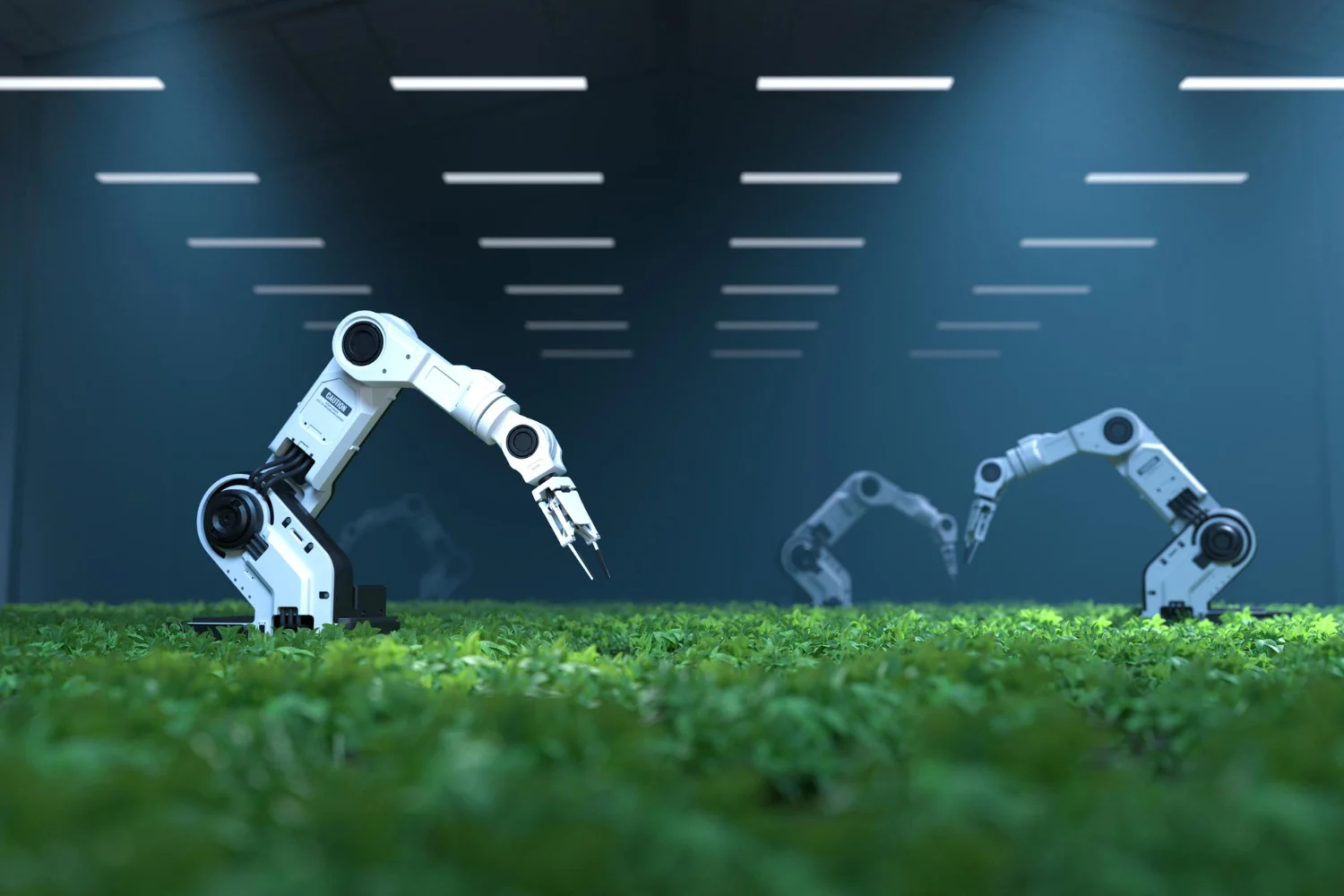
Autonomous robots will reach Level 5 full autonomy through edge AI, 6G connectivity, and bio-inspired design. Human-robot collaboration and ethical AI will shape responsible adoption. The market is projected to hit $45 billion by 2030. Here is an outlook based on what is on hold from 2026 to 2030.
Edge AI Integration
- Edge AI enables robots to process data locally without cloud latency.
- This allows instant decision-making in remote environments.
- Latency drops by up to 90%, enabling real-time autonomy.
Swarm Intelligence at Scale
- Multiple robots will coordinate like biological systems.
- Decentralized learning improves resilience and efficiency.
- Expect 10× productivity gains in large operations.
Soft Robotics and Human Collaboration
- Flexible grippers allow safe interaction with humans and delicate objects.
- This unlocks use cases in healthcare and retail.
- Human-robot collaboration improves 40% task efficiency.
6G-Enabled Human-Robot Interaction
- Ultra-reliable communication enables real-time remote control and monitoring.
- This supports telesurgery, remote mining, and space robotics.
- Reliability targets reach 99.9% uptime.
Ethical AI and Regulations
- Bias-free decision systems and safety standards will be mandatory.
- Global policies will govern autonomous deployment.
- Compliance frameworks will shape industry adoption.
New to Robotics? Start from the Basics. Join Now!
Conclusion
The changing scenario of scientific advancements is increasingly rapid. The AI phase is getting perfected as well. In this context, autonomous robots are also playing an important role in redefining how industries operate. This applies to cases through AI-driven independence.
From warehouse AMRs to ocean-mapping USVs and rescue swarms, their impact is also expanding rapidly. Keep exploring for updates and start working on being a part of this evolving revolutionary field.
|
RELATED POSTS |
|
|
Skills Needed for a Successful Career in Robotics Engineering |
|
|
What is Robotics? A Beginner’s Guide to Understanding Robotics |
|
Master Robotics and AI!
Ready to build the future? Join our comprehensive robotics course to bridge the gap between complex code and physical motion. You’ll gain hands-on experience giving you the technical edge needed to lead in the age of automation.
Know MoreFrequently Asked Questions
What are Autonomous Robots?
Autonomous robots – machines that just happen to be run by AI and with the help of sensors, without any need for human intervention. They just cruise around, doing their thing in all sorts of dynamic environments.
How do Autonomous Robots figure out where they are going?
They use a bunch of things like SLAM, GPS, LiDAR, and computer vision to help them map out where they are and where they need to go. And the AI algorithms in there are able to plan out the best path to take in real time – something that cuts down on navigation errors by a whopping 95%.
What is the difference between an AMR and an AGV?
An AMR is basically a robot that can just roam around on its own using AI and sensors – it’s pretty much free to go wherever it needs to go. An AGV, on the other hand, has to follow a set path – it can follow markers, but it generally has a pretty set route it has to stick to. AMRs are a lot more flexible as well as being highly scalable.
Are Autonomous Robots safe for us to be around?
Yeah, because they’re equipped with things like sensors, fail-safes and collision avoidance systems – they’re pretty designed to be safe to be around. There are even safety standards that have to be met before they can be sent out into public spaces, so you can bet they’re pretty safe.
What kind of skills do you need to build an Autonomous Robot?
You need to have some pretty solid coding skills – programming in things like Python or C++ is a must, and so is knowing about ROS, AI and control systems. And don’t even get me started on the importance of understanding sensors and embedded systems – they aren’t exactly easy to get the hang of.
Can Autonomous Robots work alongside humans?
Absolutely, through this thing called collaborative robotics, or cobots. They’re just basically designed so that they can safely work alongside humans. And basically, it’s just a matter of adding in some safety sensors and soft actuators and you’re good to go.
Will Autonomous Robots replace human jobs?
Not really, no. It’s more of a case of a lot of jobs changing – they’re going to automate lots of pretty dull tasks, but they’re going to create whole new tech roles that we don’t even know about yet.
How can I start a career in Robotics?
First off you need to get a good handle on AI, ROS, and embedded systems. Then its just a matter of building some real projects and running some simulations – and if you really want to get serious about it, Entri’s Robotics and AI Certification programme is definitely worth looking into.