Table of Contents
Introduction
Montessori education – the brainchild of Dr. Maria Montessori – has been putting a child at the centre of things for over a hundred years now. It has its focus on independence and all-round growth. The latest research suggests that Montessori based public programmes really have the edge. Kids in these programmes are doing better with their reading and memory. They are also more confident with managing their time and getting on with others, all at a lower cost to the tax payer.
India’s National Education Policy 2020 is set to give Montessori a much bigger role in helping kids get a solid foundation in their learning. We can see why – urban parents are getting more & more interested. The beauty of the Montessori approach is that it encourages kids to get hands on with discovery. This helps bring up curious, tough and resourceful little people.
You’ve got your prepared environments, and your trained guides. Everything fits together in a way that looks at sustainability and mental health. What is really interesting to see is the Montessori way is showing some really solid results. This looks like it really does help bring up adaptable leaders. Keep reading to take a closer look at the fundamentals and its 5 key components.
Learn the Montessori philosophy, classroom management techniques, and hands-on activities!
What is The Montessori Method?
1: What is the primary focus of the first plane of development in the Montessori method?
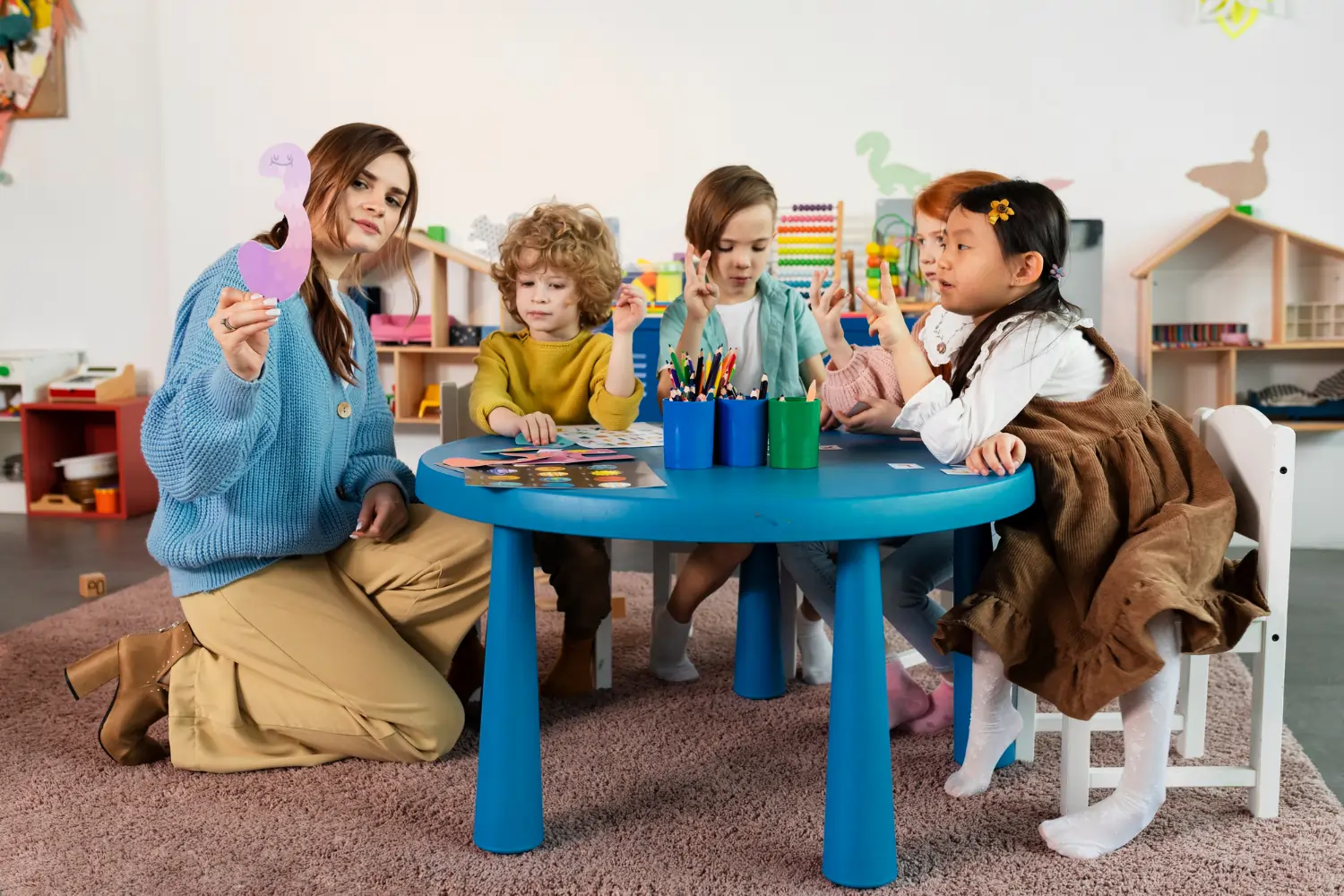
The Montessori method gives children a huge head start in life. It helps them grow in all sorts of ways from a really young age. In a Montessori classroom, the kids are free to learn at their own pace. This is made possible through all sorts of fun activities that are designed to help them grow and develop in unique ways. With a focus on play based learning, it is no wonder that it really appeals to parents in India who want to give their kids a holistic education.
Kids really get to dig in and explore all sorts of materials in a Montessori classroom. They learn things like pouring water or sorting objects. Though these might sound like simple tasks, they actually help build some really important practical skills. These, in fact, help the kids get a sense of concentration and coordination. Moreover, it is a lot more fun than just being told what to do and how to do it.
Nowadays it’s more important than ever that kids are able to adapt and thrive in a fast-changing world. The Montessori method is the perfect way to do just that. The fact that it also helps kids be more resilient, creative and able to work well in a team is the icing on the cake. It is a truly timeless method that helps kids grow into confident, capable and compassionate individuals who are ready to take on the world.
Get Certified & Start Your Montessori Career
Montessori Teacher Training Course by Entri App: Gain expert skills, earn certification, and kickstart your teaching career.
Join Now!5 Core Components In Montessori Education
The Montessori approach aims to lay a solid foundation for children so they can grow into driven, self-directed learners who, as they pursue further education and growth, will eventually become successful adults. Pre-schoolers may be able to gain independence, become more confident in their abilities, and establish trust in the world by being in a safe, stimulating, and caring environment like a Montessori classroom.
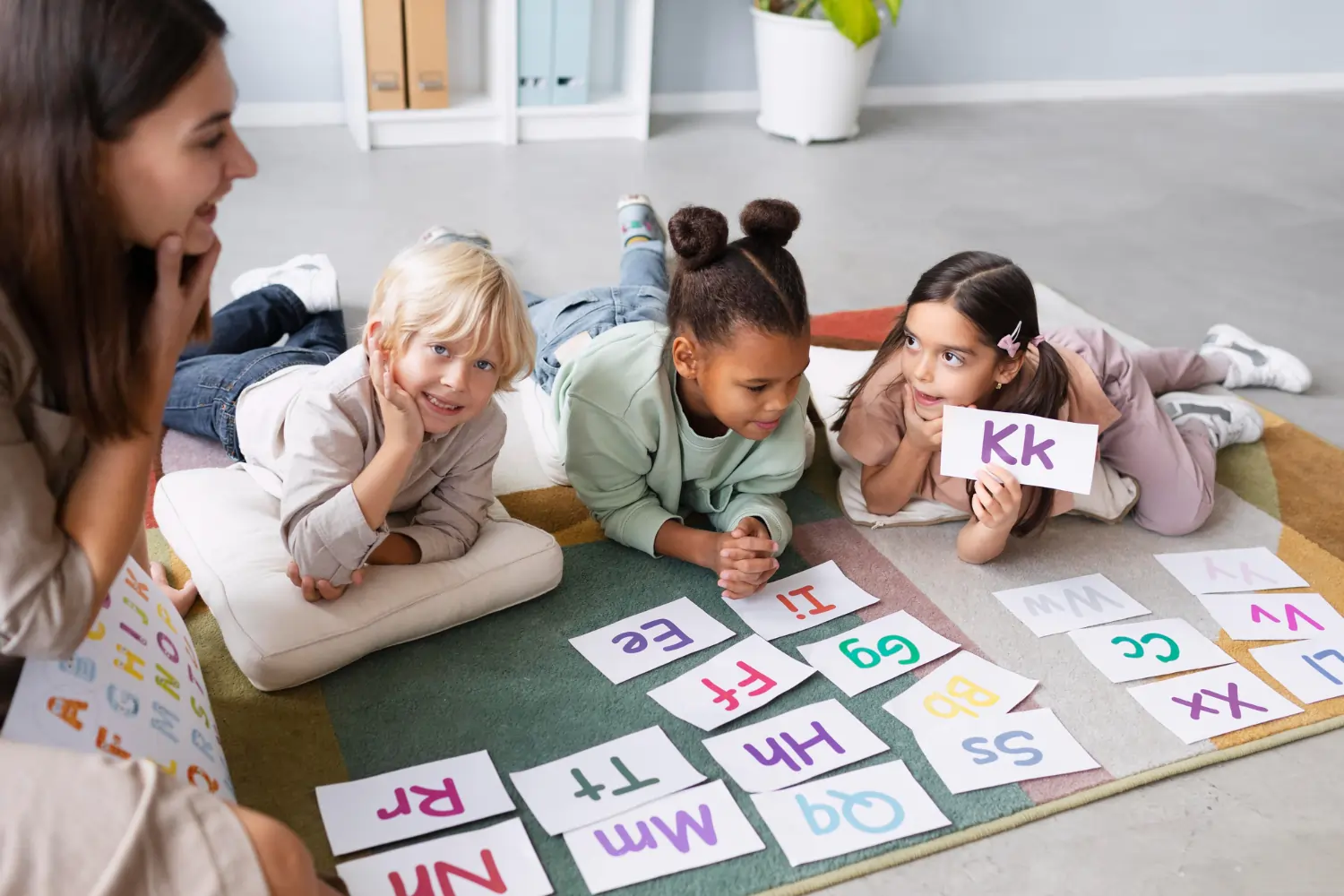
To establish the Montessori method in the classroom, we have to consider the following 5 core components of Montessori education.
1. Prepared Environment
Montessori classrooms are set up with kid-sized furniture, low shelves & materials that are literally within reach. This makes the whole space super inviting & means the kids can wander freely while still sparking their curiosity. With all the essentials laid out in an easy to navigate way, the kids can pick up whatever they need and get on with it, all without having to bother anyone – total independence. And all that freedom just encourages them to take ownership of their own learning too.
To cut a long story short, the materials & tools on offer are all designed to help the kids develop their senses – think colour tablets to help them see colours better, textured blocks to get them feeling different textures & sound cylinders to help them tune into what they can hear. All of these things help with the basics that are later built on for maths & reading like understanding shapes in geometry & the sounds of letters in phonetics.
As of now, Montessori centres here in India have started incorporating toys made from sustainable, eco-friendly materials like bamboo and recycled fabrics into the mix – and this is all because India’s really started to wake up to the importance of living greener, especially with the focus on sustainability that’s part of NEP 2020. This evolving approach to learning not only covers all angles of a child’s development but also starts teaching them from a young age to take care of the planet. In this way, they’re ready for a more eco-friendly world by the time they’re grown up.
2. Trained Montessori Guides
Montessori teachers, often referred to as guides, don’t try to lecture or drill knowledge into their students. Instead, they watch how a child develops and step in to gently nudge them along at their own pace. It is one that is tailored to help a child learn at the specific developmental stage. They happen to be at around birth to the age of 6. The bar for getting certified as a Montessori teacher is pretty high. The training usually lasting anywhere from 200 to 400 hours or so. It is this rigorous training that gives them the deep understanding they need of the Montessori philosophy. The specialist materials they use and how they create an environment lets each child learn in their own special way without ever pushing them too hard.
In India, we’re seeing an awful lot of interest in Montessori training right now. This means that they’re now integrating things like mindfulness and mental health strategies. This is held alongside the sorts of tech tools that use adaptive apps to help kids track their own progress. Guides in a Montessori school are always going to model calm behaviour. They step in only when needed and document each child’s progress so that the child grows with confidence. This really is a model of how to teach that parents today are really starting to expect.
3. Mixed-Age Grouping
Kids aged 3 to 6 learn side by side in multi-age classrooms – and it’s not uncommon for the older ones to take the younger ones under their wing and show them the ropes through pure repetition and watching what the bigger kids do. This just naturally builds empathy, patience and the works of collaboration. It’s an organic way to build leadership and social skills – the little ones get to watch the experts at work & gradually learn to do things on their own. India is absolutely on the case, with loads of top Montessori schools popping up in places like Kochi and Bengaluru. The parents are really getting behind it all. Because of the proof it provides that emotional intelligence gets a serious boost and all the nutty behaviour gets cut down to size.
Meanwhile kids on the younger side get to pick up some really fancy vocabulary and confidence from all the interactions going on, and the older ones get to solidify their own learning by actually teaching. That’s a pretty good way to get a taste of real-world diversity. In the current scenario, this whole approach is going to be right up there with all the latest inclusive education trends. The focus also rests on helping to make sure everyone gets treated fairly and we all develop some much-needed community bonds – just the kind of thing that’s essential if we’re all going be good global citizens.
Unlock your passion and shape young minds as a Montessori teacher!
4. Freedom with Boundaries
Children enjoy the freedom to choose activities within structured limits, guided by teachers to develop self-discipline, decision-making, and intrinsic motivation without descending into chaos. Clear ground rules – like respectful material use and timely clean-up – provide security, allowing exploration while preventing overwhelm. Modern adaptations emphasize emotional well-being, incorporating post-pandemic tools such as emotion charts and breathing exercises to build resilience and self-regulation – vital for mental health in high-stress environments.
This balance cultivates responsibility, as children learn consequences naturally, transitioning from external guidance to internal drive. Parents appreciate how it counters helicopter parenting, producing independent thinkers ready for life’s unpredictability. In India, it resonates with cultural values of disciplined freedom.
5. Extended Work Cycles
2 to 3 hours of uninterrupted work allows kids to really get into activities, dig deep, repeat them as many times as they need, and finish tasks all on their own. It’s amazing how that helps with focus and mastering new skills. Teachers hang back a bit, keeping an eye on things but only stepping in when the kids are ready for some one-on-one instruction – and they’ve got a keen sense of when kids are ready for certain skills like language or understanding order.
From 2025, it’s been clear that longer work cycles really pay off – big time. We’ve seen lasting gains in concentration, in how well kids can plan and follow through, and in their actual academic results. And the best part is, it all adds up to better results than traditional teaching methods, without breaking the bank. In 2026, a project in India took on the issue of attention deficits caused by too much screen time. It all fit neatly into the Indian National Education Policy’s idea of using play to build up kids’ ability to focus over the long haul. Children end up feeling really happy and fulfilled when they get into what we call “flow states”. This helps build up their grit and a lifelong love of learning – essential for succeeding in an ever-changing world.
| Montessori Teacher Training in Different Cities |
| Montessori Teacher Training Course in Trivandrum |
| Montessori Teacher Training Course in Kollam |
| Montessori Teacher Training Course in Kochi, Ernakulam |
| Montessori Teacher Training Course in Calicut |
BE A MONTESSORI TEACHER ! ENROLL FOR FREE DEMO VIDEO !
Conclusion
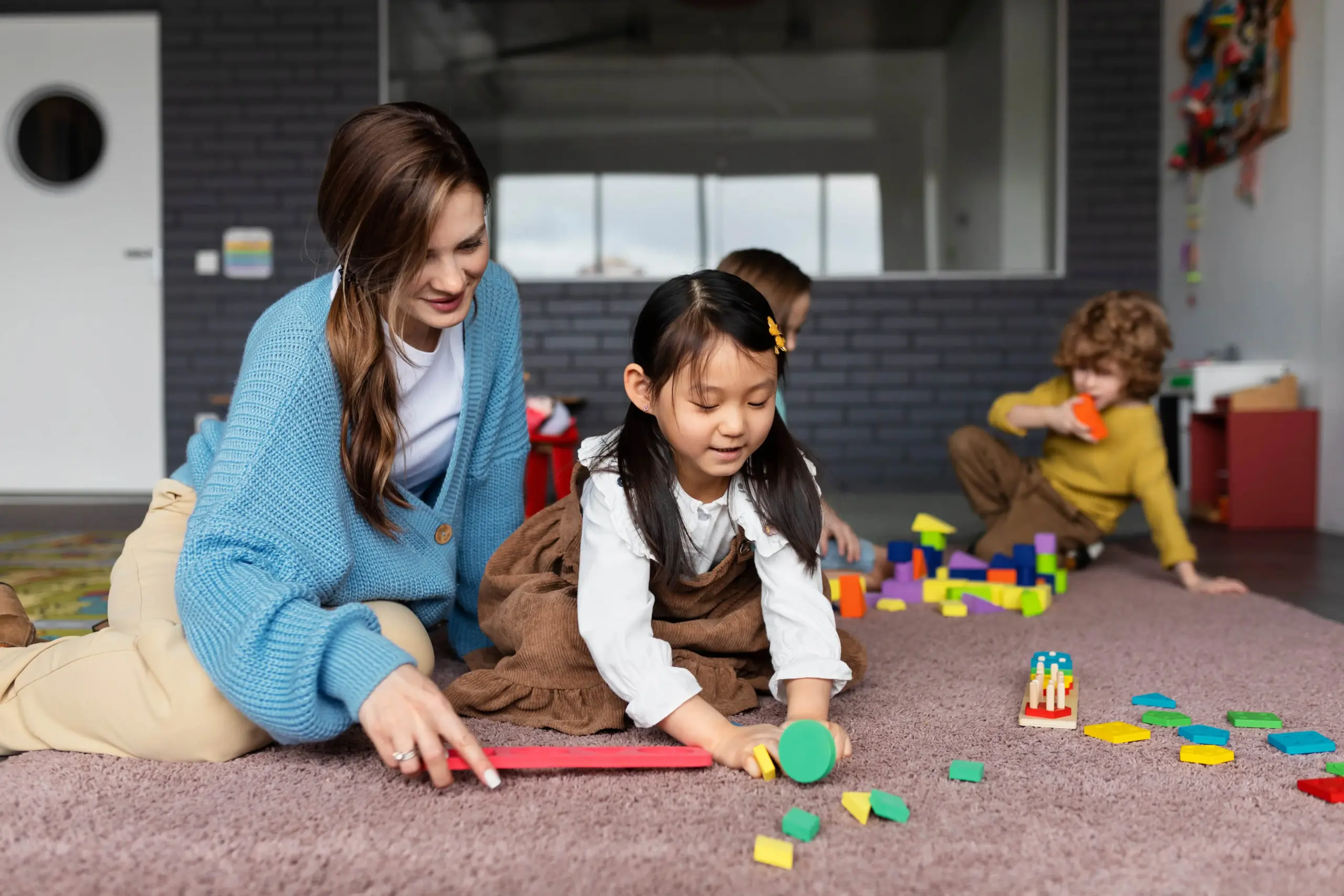
In a nutshell, the Montessori approach creates learning environments that are absolutely focused on kids. It also includes having teachers who really know what they’re doing, classroom arrangements that bring together kids of different ages. Their focus rests in giving them the freedom to make their own choices within certain limits, and letting them work without interruptions. These are the core bits that make up Montessori’s timeless approach to helping kids grow. By letting kids learn on their own terms and do things at their own pace, this method really does help them become confident, self-motivated and all-round curious about learning for the rest of their lives. And its ways keep going from strength to strength, even in today’s fast-changing world.
The idea that Dr. Maria Montessori had still has loads of teachers around the world inspired by it. That’s a testament to just how much it stays relevant to all kinds of classrooms. By giving the kids a chance to learn from these principles, you’re basically equipping them with all the tools they need to be successful. These five key bits of the Montessori way of thinking are what make it such a supportive, and a really stimulating place for kids to explore, learn and get on with becoming the best versions of themselves.