Table of Contents
What are the daily activities any individual has to do in an Indian household? Well, this includes folding clothes, pouring water, holding a book and reading, counting, etc. These things can easily be incorporated into the lesson plan. Repetition, and patient handling can foster the intended purpose.
Such structured plans are central to Montessori teacher training. They are a direct application of Maria Montessori’s philosophy of self-care to practical classroom activities for preschool kids. Wondering how important this can be? Well, these practical life activities help develop strong motor skills, longer and sharper focus and, most importantly, great self-confidence within the early stage itself.
Register for the Entri Elevate Montessori Teacher Training Program! Join Now!
Key Takeaways
- Daily Living Skills like pouring, holding books, and folding clothes can build independence, coordination, and concentration for kids of ages 3 to 6.
- Structured presentations are mandatory for Montessori certification and classroom demonstrations.
- Follow the lesson cycle: Observe → present → allow independent practice → extend → evaluate through observation.
- Start with self-care for 3 to 4 years. Then move to environmental care for 4 to 5 years. Finally, get to dressing and table setting for 5 to 6 years.
- Use real, child-sized materials and give space and time for repetition. Always encourage self-clean up for mastery.
Quick-Start Lesson Plan Overview
1: What is the primary focus of the first plane of development in the Montessori method?
| Skill Category | Age Group | Key Activity | Duration | Materials Needed |
| Food Prep | 3 to 4 yrs | Pouring water | 15 min | Pitcher, tray, sponge |
| Cleaning | 4 to 5 yrs | Dusting shelves | 20 min | Feather duster, cloth |
| Dressing | 5 to 6 yrs | Buttoning shirts | 25 min | Dressing frame |
| Table Setting | 3 to 6 yrs | Folding napkins | 15 min | Napkins, placemats |
Get Certified & Start Your Montessori Career
Montessori Teacher Training Course by Entri App: Gain expert skills, earn certification, and kickstart your teaching career.
Join Now!Why Daily Living Skills Matter in Montessori TTC
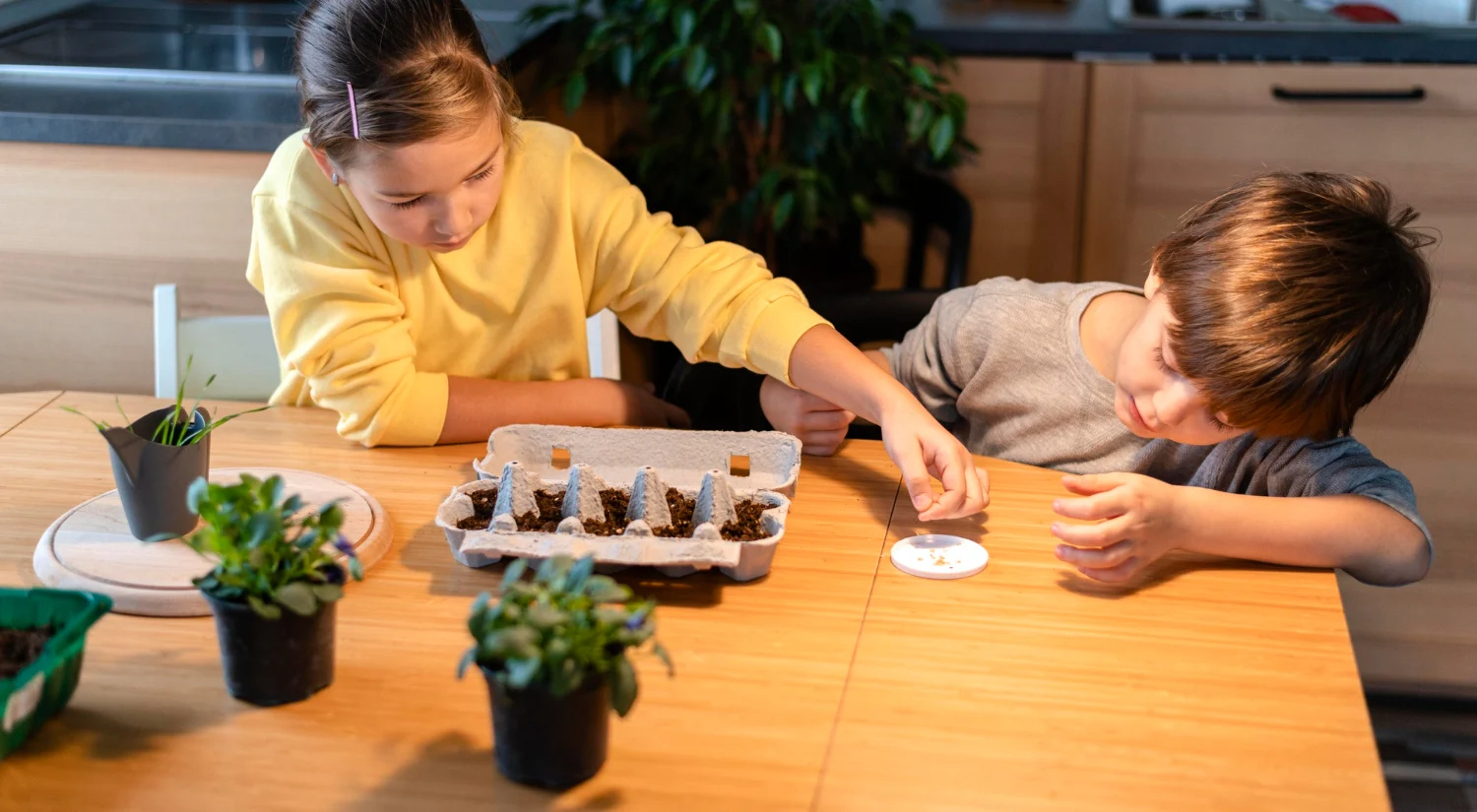
Daily Living Skills form the foundation of the Montessori Practical Life area, helping children move from dependence to independence. For TTC aspirants, mastering these presentations is essential because Practical Life demonstrations are a core part of certification assessments.
Maria Montessori observed that when activities are sequenced – from simple to complex – children learn tasks significantly faster and with deeper concentration. Modern Montessori training programs continue to validate this: structured Practical Life lessons improve classroom order, reduce teacher intervention, and enhance children’s self-discipline.
Core Benefits
- Builds concentration and work cycles
- Develops fine and gross motor coordination
- Instills order, grace, and courtesy
- Prepares children for real-life tasks
For trainees, these lessons are not just theory – they are mandatory demonstration modules during TTC practicums.
Essential Components of Montessori Daily Living Skills Lesson Plans
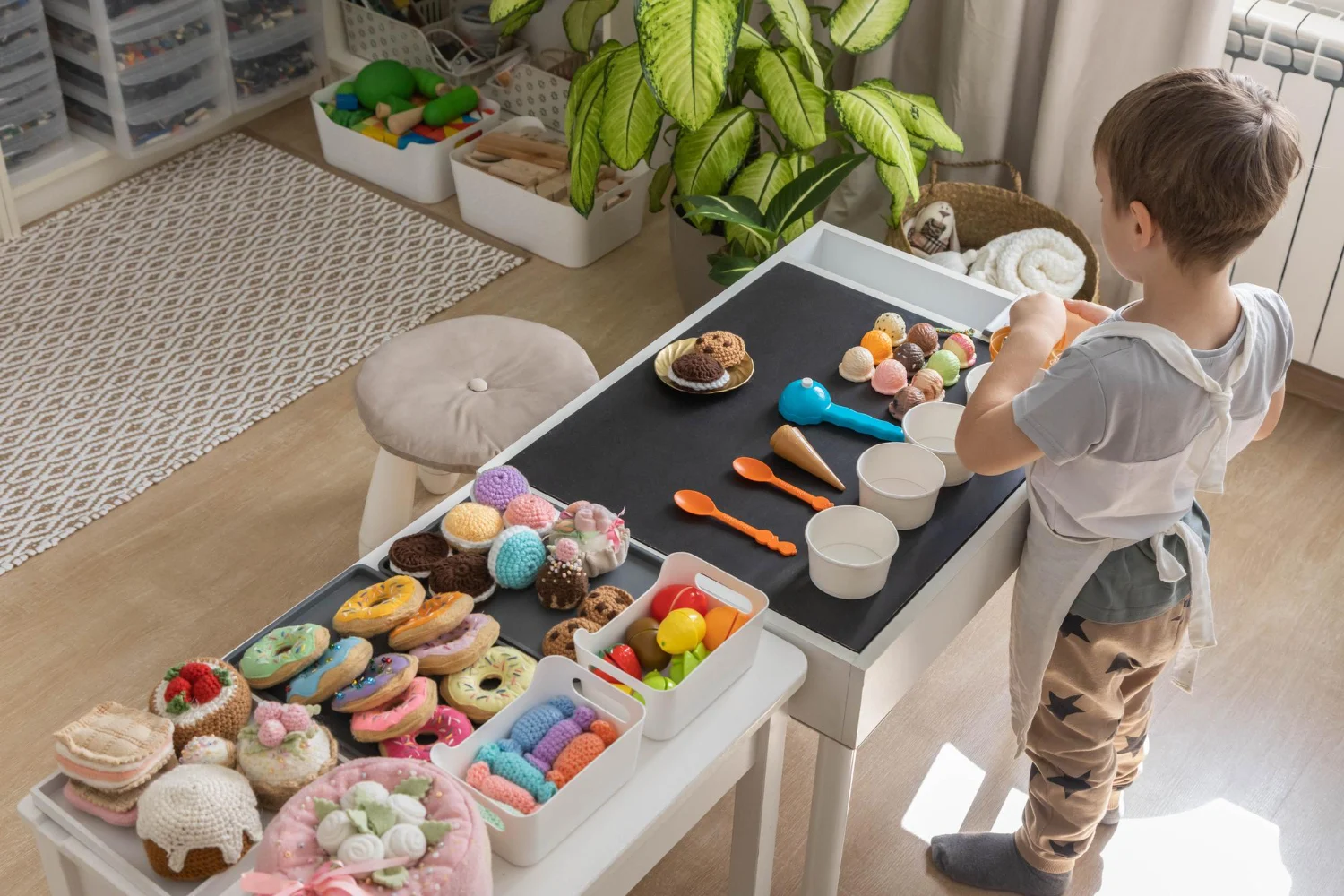
Every effective Montessori lesson plan follows a predictable, child-centred structure. This consistency allows children to internalize sequences and develop independence without constant adult correction.
Lesson Plan Template Structure
| Component | Description | TTC Implementation Tip | Example: Pouring |
| Objective | Clear measurable goal | Align with EYFS/NEP learning outcomes | Child pours without spilling |
| Materials | Child-sized, real objects | Use normalized trays | Glass pitcher, bowl, towel |
| Presentation | Slow, silent demonstration | Use 3-period lesson when needed | Model controlled wrist movement |
| Practice | Child repeats independently | Observe without interrupting | 5–10 repetitions |
| Extension | Advanced variation | Link to snack time or culture | Pouring juice for peers |
| Evaluation | Observation checklist | Record self-correction | Spills? Yes/No |
Pro Tip: Localize activities – rolling chapati, folding handkerchiefs, or polishing brass lamps connect Montessori principles with Indian home culture.
Age-Specific Daily Living Skills Lesson Plans (3 to 6 Years)
Montessori sequencing follows the child’s developmental stages – from gross motor to refined fine motor control.

3 to 4 Years: Basic Self-Care Plans
At this stage, children are in the early Casa environment and benefit from simple, repetitive tasks.
Key Activities
| Lesson Plan | Steps | Materials | Assessment |
| Handwashing | Wet → Soap → Rinse → Dry | Soap pump, basin, towel | Hands fully dry |
| Pouring | Grip → Tilt → Control → Wipe | Two small pitchers, sponge | No spill in 3 trials |
Learning Outcome: Improved hand-eye coordination and grip strength.
4 to 5 Years: Cleaning & Care of Environment
Children begin to take responsibility for their surroundings and enjoy purposeful movement.
Key Activities
| Lesson Plan | Steps | Materials | Assessment |
| Sweeping | Gather → Sweep → Empty pan | Child broom, dustpan | Clean floor line |
| Polishing | Apply → Buff → Inspect | Cloth, polish | Visible shine |
Classroom Impact: Cleaner environment and stronger sense of ownership.
5 to 6 Years: Dressing & Table Manners
These lessons prepare children for elementary transitions and social independence.
Key Activities
| Lesson Plan | Steps | Materials | Assessment |
| Buttoning | Align → Push → Repeat | Button frame | 10 buttons in 2 min |
| Table Setting | Mat → Utensils → Napkin | Tableware set | Correct placement |
Outcome: Faster dressing time and improved social grace during meals.
Get Certified & Start Your Montessori Career
Montessori Teacher Training Course by Entri App: Gain expert skills, earn certification, and kickstart your teaching career.
Join Now!Implementation Tips for Montessori TTC Trainees
Montessori Practical Life is not about fancy materials – it’s about precision, order, and observation.
Best Practices
- Rotate 4 to 6 activities weekly to maintain engagement
- Arrange shelves left-to-right, simple-to-complex
- Demonstrate silently before verbal instruction
- Allow repetition without interruption
Common Pitfalls
- Over-correcting the child
- Using plastic instead of real materials
- Rushing the presentation
How to Deal with it
- Step back and observe
- Allow self-correction
- Keep sessions short (10 to 20 minutes)
Inclusivity Tips
- Use larger knobs for children with motor delays
- Provide non-breakable glass alternatives
- Offer seated versions of sweeping for mobility needs
Certified teachers report higher parent satisfaction when children demonstrate independence at home – tying shoelaces, pouring water, or setting the dining table.
Challenges and Solutions in Daily Living Skills Lessons
| Challenge | Symptom | Solution | TTC Resource |
| Spilling | Messy tray | Use control-of-error mats | Spill-proof tray setup |
| Lack of Interest | Avoiding work | Add music or peer modelling | Activity demo videos |
| Group Conflict | Sharing issues | Grace & Courtesy lessons | Role-play scripts |
Shortening lesson duration for beginners increases persistence and reduces frustration.
Practical Examples for TTC Demonstration
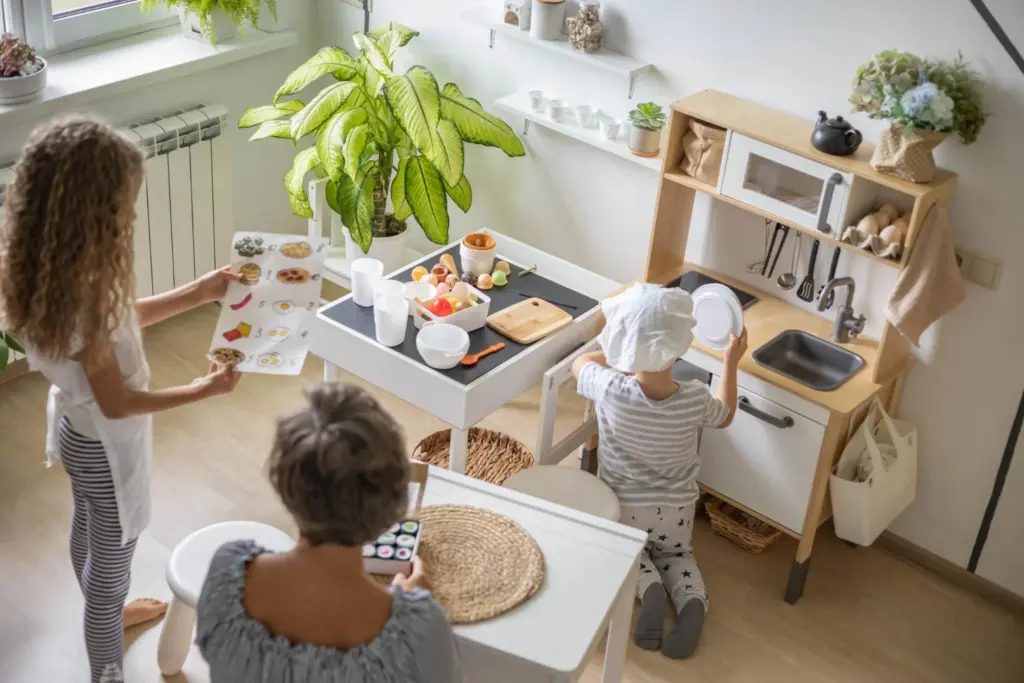
1: Pouring Water Lesson
- Objective: Child pours water without spilling
- Control of Error: Visible water level
- Extension: Pouring juice during snack time
2: Folding Napkins
- Objective: Fold along marked lines
- Indirect Aim: Preparation for geometry (symmetry)
3: Flower Arrangement
- Objective: Care for environment
- Indirect Aim: Aesthetic sense and sequencing
These examples are frequently used in TTC practical exams.
Assessment & Observation in Montessori Lesson Plans
Montessori evaluation is observation-based, not test-based. You are supposed to be vigil and keep track of how each student deals with each of the activities assigned to them on a daily basis. Here is a checklist to keep:
Observation Checklist for TTC
- Does the child complete the sequence independently?
- Is the movement controlled and purposeful?
- Does the child repeat the activity?
- Is there visible concentration?
Maintaining observation records is essential for TTC portfolio submission.
Cultural Adaptation for Indian Montessori Classrooms
Montessori is universal but surely adaptable. When you sit down to make your plan ensure that it aligns with the cultural practices of the Indian household. Here is a glimpse of some of the activities you can incorporate into your classroom setting:
Indian Context Activities
- Rolling chapati dough
- Folding dupattas
- Washing stainless steel plates
- Arranging diya lamps during festivals
These culturally relevant tasks increase engagement and home-school continuity.
Register for the Entri Elevate Montessori Teacher Training Program! Join Now!
Conclusion
You must have understood that daily living skills lesson plans can act as the backbone of practical life education. It helps in fostering independence as well as coordination along with a sense of responsibility and coordination in the young kids. Mastering these structured formats can be the critical and crucial step for Montessori TTC aspirants. This would be helpful not just for certification but for the overall effectiveness of the classroom practice.
Make sure that you build a curated pattern for your own lesson plans incorporating all the core principles and learning tactics. Transforming simple everyday tasks to deep and powerful developmental experiences is the ultimate point to conquer. Don’t sit there waiting, go ahead and work on your plan and step into the Montessori teaching career with intent and a signature style of your own. Make the young minds grow on their own with your splendid plan.
|
RELATED POSTS |
|
|
Montessori Teacher Training Course For Housewives: A Complete Guide |
|
|
Developing Social Skills in Preschoolers: A Montessori Approach |
|
Get Certified & Start Your Montessori Career
Montessori Teacher Training Course by Entri App: Gain expert skills, earn certification, and kickstart your teaching career.
Join Now!Frequently Asked Questions
Why are daily life skills important in Montessori TTC?
They are core demonstration lessons required for certification and classroom readiness.
How many lessons should be presented weekly?
Typically 3 to 5 lessons per week. Each of these should last 15 to 25 minutes.
What is the ideal age to start practical life activities?
Around 3 years of age, which is the absorbent mind phase.
What materials are used in Daily Living Skills lessons?
Child-sized real objects like glass pitchers, clothes, trays, and dressing frames.
How can I assess a child’s performance?
A child can be assessed through observation checklists and without any formal testing.
What is the 3-period lesson?
A Montessori technique: name → recognize → recall. Follow this chain.
Can these activities be done at home?
Yes, tasks like folding clothes and pouring water are ideal for home practice, where they spend time more freely.
Are these lessons part of TTC exams?
Yes, Practical Life demonstrations are mandatory for TTC exams.
How do you keep children engaged?
Connect the children to real-life tasks. Rotate activities on a weekly basis.
Can activities be culturally adapted?
Yes, you include local tasks like chapati rolling or polishing brass items, among many other possibilities.