Table of Contents
Every day, hospitals receive information in the form of patient records, bills, lab results, and information regarding the history of the treatments and operations of patients. The data must be handled properly in order for hospitals to receive and take advantage of the information. The steps to be taken include collecting, storing, organizing, securing, and analyzing the data so that the results can be useful in future decision-making.
As the healthcare system is constantly being made more and more complex, data management is considered a developing art for hospital administrators. With the appropriate data management skills, patient care can be made better, systemic issues can be diminished, and hospitals remain compliant with the organizational constraints.
Key Data Management Skills for Hospital Administrators
- An examination and interpretation of the data
- Administration of records and the organising of data
- Understanding of hospital information systems (also known as HIS and EHR)
- Data protection and the management of patient confidentiality
- The ability to report and document information
- Excel, databases, and analytics tools are examples of fundamental technical and technological abilities.
- Making decisions based on the insights provided by data
Join Entri’s Hospital Administration Course
Why Is Data Management Important in Healthcare?
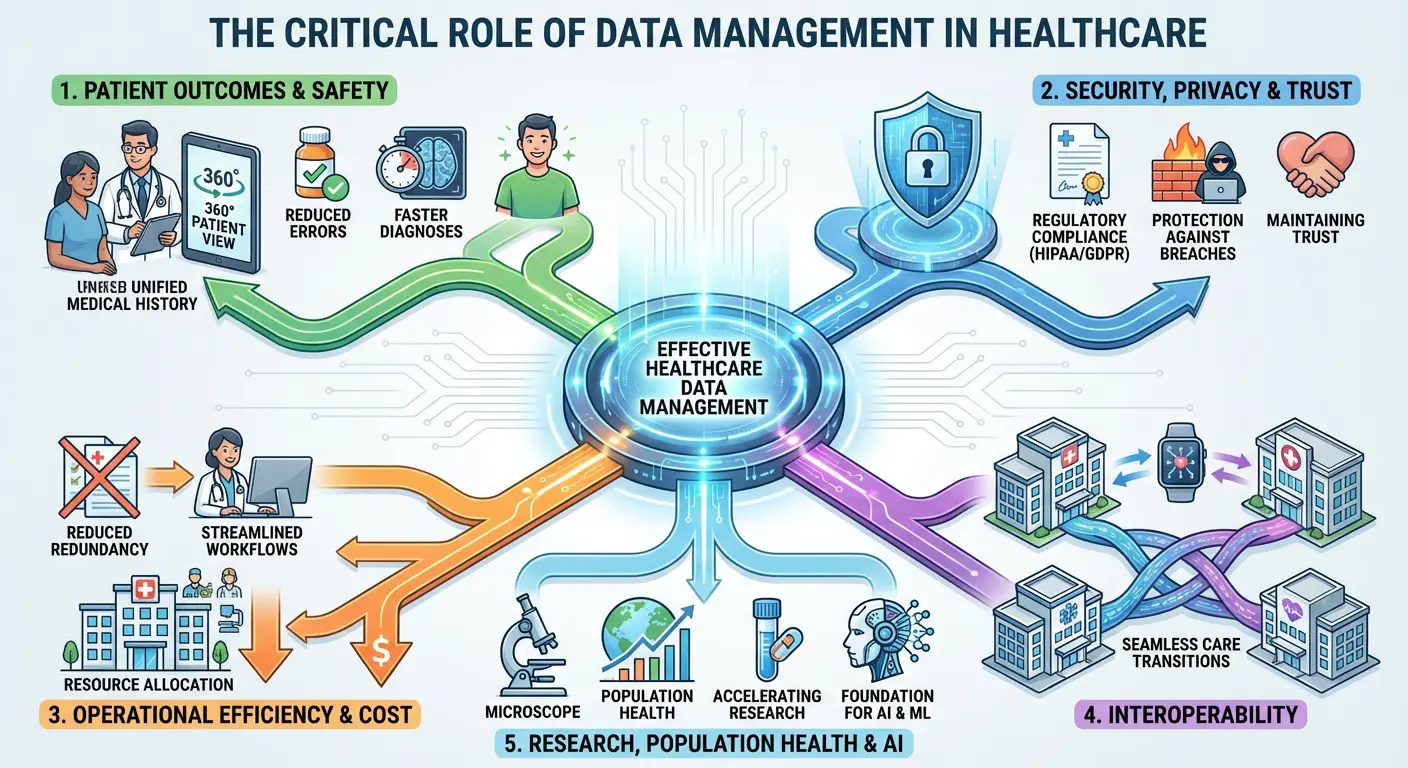
The significance of data in healthcare is inestimable. The quality of a hospital’s patient care and decision-making process depends on the precision of the data and the manner in which it is organized.
Some of the reasons healthcare data management is essential include the following:
- Enhanced patient care: Doctors can make the right diagnoses and provide the right treatments when they have the right data
- Operational effectiveness: Healthcare facilities utilize structured data to optimize the capacity of their staff, beds, equipment, and all other healthcare resources.
- Legal Requirement: Compliance with the laws of healthcare is made possible through proper documentation.
- Data-driven decision-making: Hospital leaders can make better strategies and be more effective in improving their offerings with quality data.
Role of Data in Hospital Administration
1: What is the primary role of a hospital administrator?
In hospital management, data is extremely pivotal/integral, as it enables managers to enhance operational efficiency and the quality of their services. The daily operations of a hospital generate a broad array of data, ranging from patient information, financials, results of treatments, and employee performance. The correct utilization and management of such information helps hospital managers to know what decisions to take to operate the hospital efficiently.
1. Managing Patient Information
An example of the vital function that data plays in the administration of hospitals is in the management of patient information. Patient records contain extensive information. Examples are medical histories, details of diagnoses, laboratory results, prescriptions, and treatment plans. Well-organized patient data helps doctors and nurses retrieve patient information quickly, which results in more accurate diagnoses and treatment.
2. Enhanced Decision-Making
Data is of tremendous use to hospital administrators in making key strategic and operational decisions. The analysis of data helps to define and understand phenomena such as the trend of patient admissions, the prevalence of certain diseases, and the outcome of various treatments. Administrators use the knowledge gained from data analysis to design more effective services, distribute resources more efficiently, and increase the operational effectiveness of the hospital.
3. Financial Management
Data is a critical component of a hospital’s ability to manage its finances. Financial data allows administrators to manage expense reports, billing reports, insurance claims, and revenue. Financial data is also critical to cost control, budget planning, and long-term financial forecasting.
4. Staff and Resource Management
The management of a hospital’s financial, human, and medical resources, such as personnel (physicians and nurses), medical equipment, and hospital beds, is a primary managerial responsibility. Data is important for resource management as is assists the administrator in managing the work schedule of individual staff members, the equitable distribution of work, and the distribution of medical equipment. Ultimately, this allows for the efficient allocation of resources and for the prompt provision of medical assistance to patients.
5. Patient Safety and Quality Improvement
Multiple hospitals collect various data such as patient feedback, recovery time, treatment results, and infection rates. This data, then, is used by hospital administrators to assess and learn how to improve and optimize the safety of patients and the overall quality of the gross healthcare services.
6. Compliance and Data Reporting
Data compliance is a must for hospitals, as they have to follow many legislative data control regulations. Based on the hospital data, reports are generated and provided to data reporting regulators to comply with the hospital regulations.
7. Future Planning & Development
Data is used by hospital admins for future long-term planning. Based on data on patients and healthcare, services are offered, and technology is advanced to meet the demands.
Hospital Administration Course with Assured Career Growth
Hospital Administration Course by Entri App: Master essential healthcare management skills, gain certification, and secure top roles in leading hospitals
Join Now!Key Data Management Skills for Hospital Administrators
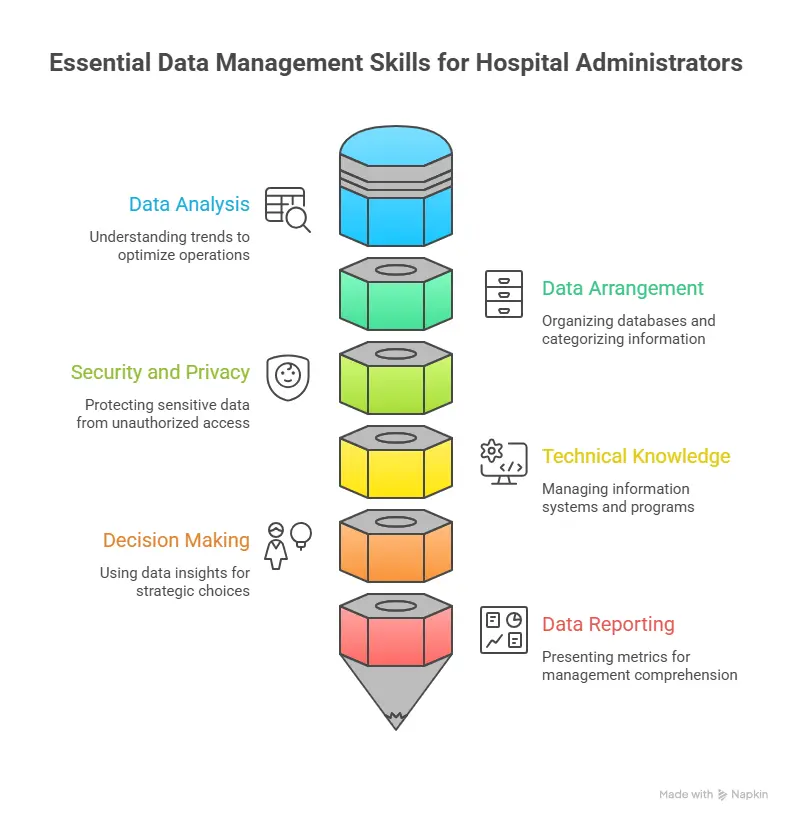
Hospital managers require a number of important skills to ensure they can handle healthcare data properly.
1. Skills in Analyzing Data
The capacity to understand data and discern trends that can aid in optimizing operational processes in a hospital.
2. Skills in Data Arrangement
The ability to keep organized databases, as well as categorize patient and hospital operational data.
3. Skills in Security and Privacy of Data
The ability to secure sensitive data of patients from unauthorized users, as well as the ability to sustain the confidentiality of this data.
4. Knowledge in the Technical Aspects
The knowledge to manage hospital information systems, electronic health records (EHR) systems, and data management programs.
5. Skills in Using Data to Make Decisions
The ability to utilize data insights to inform administrative and strategic decisions.
6. Skills in Reporting Data
The ability to prepare reports, dashboards, and summaries that can assist the management of a hospital in comprehending the metrics of hospital performance.
Tools Used for Healthcare Data Management
Healthcare organizations need digital systems and tools to gather, organize, store, and analyze healthcare data. Such technologies enable hospital administrators to manage patient data, operations, and decision-making processes. With the advancement of healthcare technologies, hospitals need data management systems that take care of data in a secure and efficient manner.
1. EHRs
An essential component in the management of healthcare data is EHRs. EHRs are digital systems that hold the medical histories of patients, their diagnoses, medications, lab results, and treatment plans. EHR systems enable secure sharing of patient information among physicians, nurses, and other members of the healthcare team.
2. Hospital Information Systems
Hospital Information Systems (HIS) manages the operations of a hospital. These systems are used to manage the financial, clinical, and administrative data of hospitals. HIS is capable of managing patient registration, appointment scheduling, invoicing, and inventory management in a hospital.
3. Laboratory Information Systems
A Laboratory Information System is used to manage and track data relating to laboratory tests and test results. With the Laboratory Information System, a lab is able to record test requests, perform sample analyses, store results, and communicate with physicians. Laboratory information systems minimize testing time and control and improve the accuracy of the results.
4. Radiology Systems
Radiology Information Systems are used for the management of information relating to MRIs, CTs, and X-rays. These systems are used to manage and organize the diagnostic images of patients that radiologists need. Radiology information systems enable users to report, track, and schedule radiology services.
5. Database Management Systems
Database management systems are used for the organization of large volumes of data in hospitals.It is effortless for administrators to ensure the merging of data retrieval, data updating, and data integrity with these solutions.
Databases are crucial for operational data, hospital stats, and patient data.
6. Analytics and BI tools
Analytics helps hospitals to understand the trends, patterns, and performance metrics. BI tools present data in the form of reports and dashboards. Administration can use it in evaluating hospitals, patient care, and finances.
They promote evidence-based decision-making and planning in a more structured manner.
7. Cloud storage
A lot of data in the healthcare sector is stored on the cloud. Cloud is a great technology for hospitals to store and access a lot of data.
The cloud offers backup, recovery from disasters, and collaboration across healthcare providers.
8. HIE Systems
Health Information Exchange Systems HIE Systems can help hospitals and other healthcare stakeholders, like clinics and labs, to share patient information.
It helps healthcare providers to streamline the patient care process and have access to a comprehensive record of the patient.
Join Entri’s Hospital Administration Course
Benefits of Strong Data Management Skills in Hospitals
Effective data management can improve a hospital’s operations and delivery of services. Some of the benefits of data management skills in hospitals are given below.
- Data Management and Improved Service: With organized and precise data, doctors can make accurate diagnoses and offer precise treatment plans.
- Data Management and Superior Alternatives: Administrators can use data in customizing their frameworks and operational management of the hospital.
- Data Management and Resource Allocation: This can lead to better optimization of staff, medical equipment, and hospital beds.
- Data Management and Cost Containment: Data can be used to identify areas where costs can be eliminated, thereby improving the financial management of the organization.
- Data Management and Quality of Patient Care: Data enhances tracking, reduces medical errors, and therefore improves the quality of care.
- Data Management and Enhanced Compliance: Efficient data management can help hospitals avoid non-compliance fines due to poor data management.
Data management in hospitals leads to optimally functioning hospitals and better services for patients.
Hospital Administration Course with Assured Career Growth
Hospital Administration Course by Entri App: Master essential healthcare management skills, gain certification, and secure top roles in leading hospitals
Join Now!How to Develop Data Management Skills
Here are some suggestions for improving skills in data management :
- Join a Training Program: Enroll in courses that provide education about data management in the healthcare sector or health informatics.
- Familiarize Yourself With Data Management Tools: Some specific tools that should be understood are data management software, analytical software, databases, and Excel.
- Interact with Hospital Systems: Familiarize yourself with electronic health records management systems and hospital information systems.
- Participate in Workshops and Seminars: Professional training in healthcare systems for data management.
- Be Informed: Related to the new healthcare technologies and data management practices, continual learning must be a priority.
Focusing on the aforementioned skills will result in more efficient management of hospital data and better healthcare services overall.
Conclusion
Effective hospital management today hinges on effective data management. In order for administrators to improve operations, make decisions, and ensure optimal patient care, data must be constructed, organized, and analyzed. Data management tools and hospital administrators’ data management competency allow for accurate record keeping, proper resource allocation, and resource management within data management parameters of healthcare. Such an approach to data management will improve services offered by hospitals and patient care services.
Hospital Administration Course with Assured Career Growth
Hospital Administration Course by Entri App: Master essential healthcare management skills, gain certification, and secure top roles in leading hospitals
Join Now!Frequently Asked Questions
Why is data management important for hospital administrators?
It helps them make decisions, manage resources, and improve patient care.
How does data management help patient care?
It ensures doctors have accurate and complete information to treat patients properly.
How does data management help hospital finances?
It tracks expenses, billing, and revenue for better budget planning and cost control.
Can hospital administrators learn data management online?
Yes, through online courses, workshops, and certifications.
How can data help manage hospital staff?
By tracking schedules, workloads, and performance to use staff effectively.
How does data management improve patient safety?
It reduces errors by keeping accurate records and tracking treatments.
Why is data security critical in hospitals?
Because patient records are confidential, and breaches can harm patients and violate laws.
How can administrators develop data management skills?
Through training programs, learning software tools, attending workshops, and hands-on experience.