Table of Contents
German noun declension changes noun forms based on grammar roles. It affects articles, adjectives, and sometimes noun endings clearly. This system is closely linked with German noun cases. Each case influences how nouns appear within sentences.
For example, consider this simple word change carefully:
der Mann → des Mannes (the man → of the man)
This change shows how declension works in German grammar. It reflects the genitive case showing possession clearly. The added “-es” ending marks ownership in this example. Understanding declension helps form correct and natural sentences.
Learn German language in your own language! Get free Demo Classes Here!
Key Takeaways:
- Nouns change form to match their role in sentences.
- Declension depends on case, number, and gender together.
- Articles and sometimes nouns change during declension patterns.
- Genitive case often adds “-s” or “-es” endings.
- Dative plural usually adds an extra “-n” ending.
- Strong, weak, and mixed patterns show how nouns change.
- Learning these patterns makes grammar easier and more clear.

Free German A1 Mock Tests – Powered by AI!
Test your skills on our interactive platform. Get instant feedback from our AI to help you communicate better and track your progress. Start your free German mock test now.
Test Your German A1 for FreeFrequently Asked Questions
What is German noun declension in simple terms?
German noun declension means changing noun forms based on their role. It depends on case, gender, and number.
Why is noun declension important in German grammar?
It helps show relationships between words clearly. It also ensures correct meaning and sentence structure.
How many types of noun declension patterns exist in German?
There are three main patterns in German. These are strong, weak, and mixed declension.
What is the difference between strong and weak nouns?
Strong nouns change mainly in genitive case. Weak nouns add “-n” or “-en” in most cases.
What is N-declension in German grammar?
N-declension refers to weak nouns with “-n” endings. These nouns often refer to people or animals.
Do all German nouns change in every case?
No, not all nouns change in every case. Articles usually change more than nouns.
How does plural noun declension work in German?
Plural declension is more consistent and simpler. Dative plural usually adds an extra “-n” ending.
What is the most difficult part of noun declension?
Remembering different patterns can feel confusing initially. Weak and mixed nouns often cause mistakes.
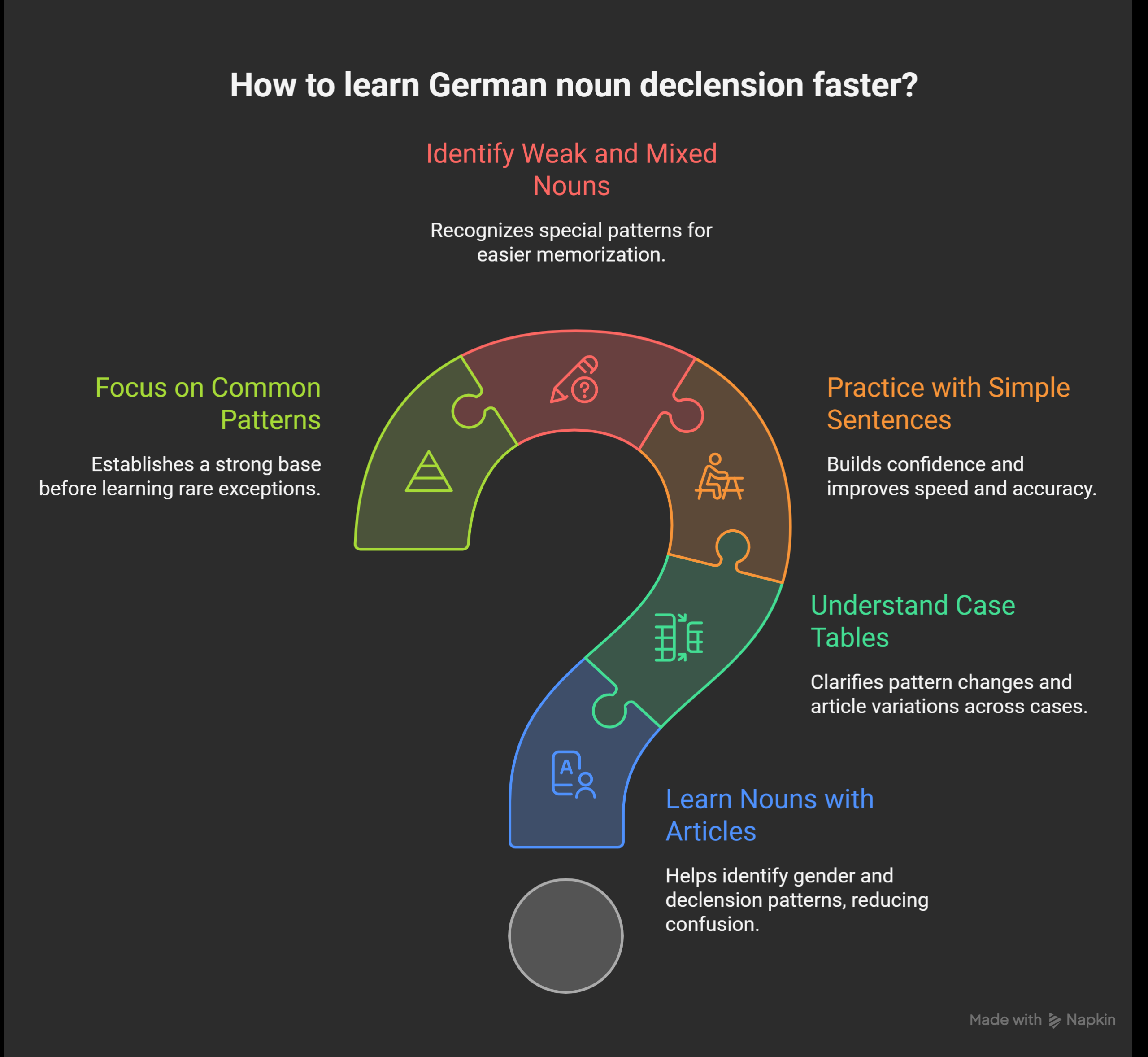
How can beginners learn noun declension easily?
Learn nouns with their articles from the beginning. Practice simple sentences regularly for better understanding.
How long does it take to master noun declension?
Basic understanding develops quickly with practice. Mastery takes time and consistent revision.