
Table of Contents
German speaking improves faster with the right methods. Level-based topics make learning simple and clear. A1 level focuses on basic and personal topics. Learners practice simple sentences and daily conversations. A2 level adds more detail to everyday situations. B1 level helps express opinions and experiences clearly. B2 level builds strong arguments and deeper discussions. Daily speaking practice improves fluency. Small efforts every day give better long-term results.
Learn German language in your own language! Get free Demo Classes Here!
Key Takeaways:
- Speaking topics improve fluency and confidence together
- Topics should always match your current language level
- Learning slowly helps avoid confusion and mistakes
- Daily practice helps build strong speaking habits
- Simple topics create a strong learning foundation
- Advanced topics improve thinking and expression skills
- Regular speaking reduces fear and hesitation over time
1. Introduction
Speaking is very important in learning German. It helps you communicate in real life situations. It allows you to express your thoughts clearly. Speaking also builds confidence over time with regular practice. Each small success makes you feel more comfortable speaking. You become less afraid of making mistakes. This encourages you to speak more often.
Practicing speaking topics improves fluency and vocabulary faster. It helps you form sentences more easily. You learn how to use words in the right context. You also learn how to respond quickly in conversations. This reduces hesitation while speaking. It makes conversations smoother and more natural over time.
This guide gives structured speaking topics for each level. Topics are grouped from A1 to B2 levels. Each level has suitable and easy topics. This makes learning simple, clear, and more organized. It also helps you track your progress step by step.

Free German A1 Mock Tests – Powered by AI!
Test your skills on our interactive platform. Get instant feedback from our AI to help you communicate better and track your progress. Start your free German mock test now.
Test Your German A1 for FreeFrequently Asked Questions
What are good German speaking topics for beginners?
Simple topics like family, hobbies, and daily routine are best. They are easy to understand and talk about.
How can beginners start speaking German easily?
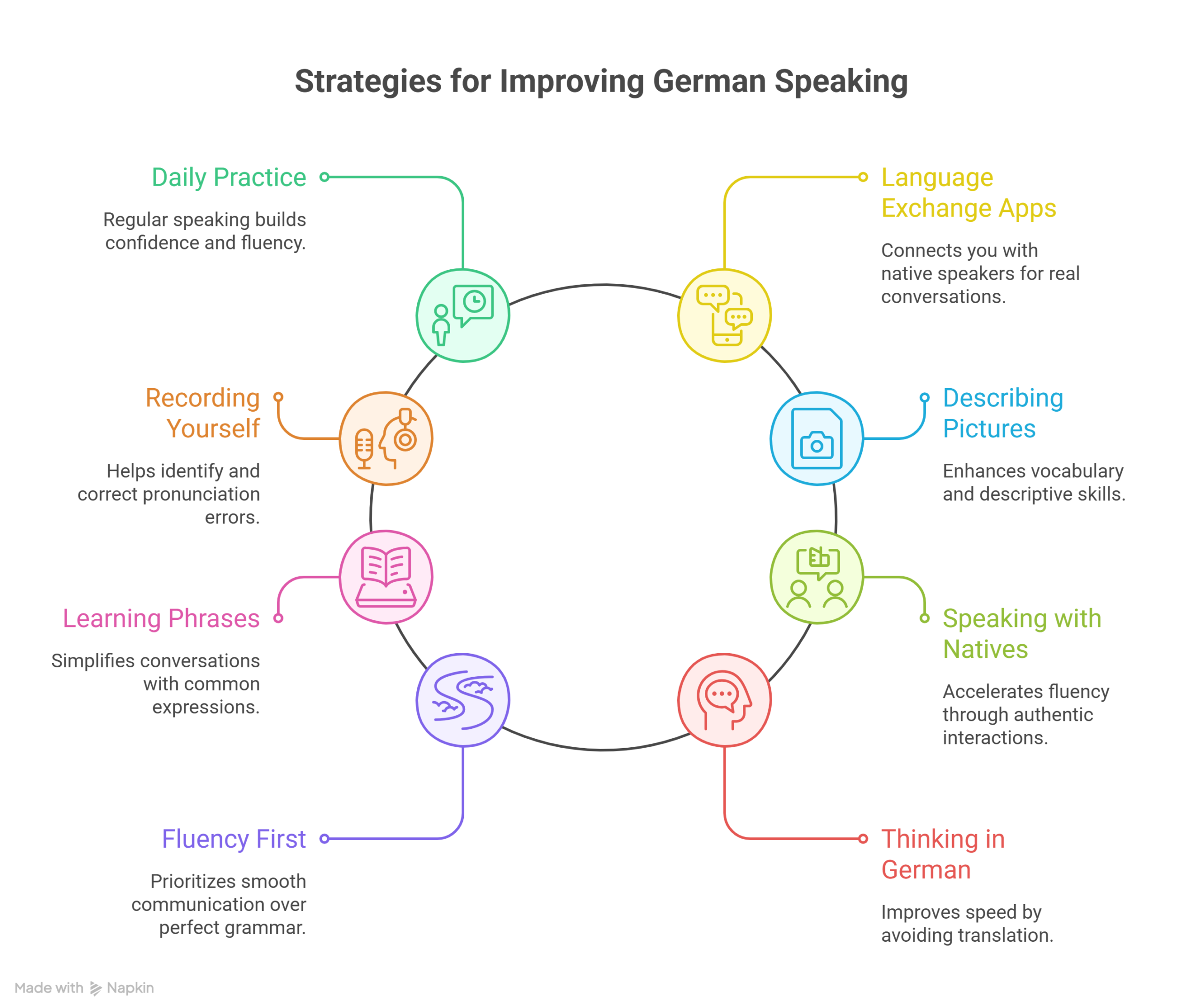
Start with short sentences and basic words. Practice simple daily conversations regularly. This builds confidence slowly.
How can I practice speaking German at home?
Speak aloud daily and record your voice. Listen and correct your mistakes step by step.
How often should I practice German speaking?
Practice every day for a few minutes. Regular practice gives better results than long sessions.
Do I need a partner to practice speaking German?
A partner is helpful for real conversations. However, you can also practice alone using recordings.
What topics are used in German speaking exams?
Common topics include personal life, opinions, and social issues. These test your speaking ability clearly.
How can I improve German speaking fluency quickly?
Practice daily and focus on speaking without long pauses. Use simple words and build slowly.
Is grammar important while speaking German?
Grammar is important but not at the beginning. Focus on fluency first, then improve accuracy later.
Can I learn German speaking without classes?
Yes, you can learn using online tools and self-practice. Consistency is the most important factor.
How long does it take to improve speaking skills?
With daily practice, you can see improvement within a few weeks. Progress depends on consistency.