Table of Contents
You downloaded a language app, and suddenly you’re in the middle of German words. Before you go ahead and start speaking German, you want to know: how much time do we have here?
Most people who take the plunge into learning German achieve A1 in about 60 to 100 hours of dedicated study, which amounts to 4 to 6 weeks of daily practice, 2 to 3 months of regular study in the evenings, or 3 to 6 months of regular studying squeezed in on the weekends.
Important Takeaways
- A1 is the absolute beginner level when it comes to the Common European Framework of Reference for Languages (CEFR)
- On average, learners need 60 to 100 hours of study time
- If you put the hours in on a daily basis, you can reach A1 in 4 to 6 weeks
- Regular evening learners will be there in 2 to 3 months
- Weekend learners can expect to take a bit longer, 3 to 6 months – but the key is consistency, not the total amount of time
- To be honest, daily consistency is a whole lot more important than just racking up the hours.
What Even is A1 Level in German?
1: How do you say "Good Morning" in German?

Now, what does it mean to be an A1-level student in a German language course? That answer resides in the CEFR framework, which sets out proficiency levels in languages spoken in Europe. When you’ve reached A1, you’ve hit the ground running as you can now have a basic conversation in German that moves beyond reciting what you’ve read in textbooks.
The good news is you don’t have to be fluent yet at this stage. Don’t get hung up about making grammar mistakes, getting confuses der, die and das mixed up, or struggling to put your thoughts into words in a coherent order – all of these are normal at the A1 level. What really matters is that you can have a conversation even if it’s not with a native speaker.
This is not going to be your best conversation but at least its a start. What’s more, you’ll be able to muddle through as a tourist in a German speaking country, order food in a restaurant, ask for directions, and thus be able to communicate with locals who are not gobbling on too fast. And of course, if you’re struggling to keep up you can always say “sorry, I didn’t quite catch that – could you repeat that a bit slower”.
Join Entri Online German Language A1 Course!
Free German A1 Mock Tests – Powered by AI!
Test your skills on our interactive platform. Get instant feedback from our AI to help you communicate better and track your progress. Start your free German mock test now.
Test Your German A1 for FreeAverage Time it Takes to Reach German A1
The amount of time it takes to get to A1 level in German can vary wildly depending on your lifestyle and the study methods you choose. But after looking at research from language schools and the Goethe Institute, we have a pretty good idea of what you can expect to happen.
Intensive learning: four to six weeks. Students on an immersive program end up putting in 15 to 20 hours a week – that’s a combination of class time and homework done outside of class. To be honest this is a good option for people who can take time off work or are studying full-time.
Regular learning: two to three months. This is basically studying one hour each weekday evening – that’s evening classes or doing self-study after a long day at the office. To be honest most people in work fall into this category.
Factors That Affect Learning Time
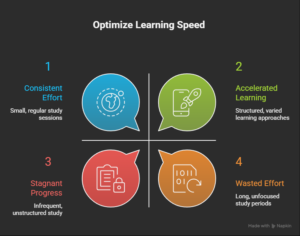
Everyone learns at their own pace – & its not fair to compare one person to another. These 5 factors really can make all the difference in how long it takes to get up to a basic level of German (A1 is a good place to start :
The amount of time you can commit to studying every day. You know what doesn’t work as well as you might think? A 3 hour study session on a Sunday afternoon. What works better is breaking it down into 30 minutes a day. Constant exposure to the language keeps it fresh in your brain & makes it stick.
The way you go about learning. If you’re taking a class with a teacher you’ll likely pick things up faster than someone winging it with language apps. Self-study will work just fine – if you actually have a plan & stick to it. The thing is that the best results come from mixing it up & trying a few different methods.
Whether or not you’ve got any prior experience with a language before now. Have you ever tried learning another language? That’s going to make things a whole lot easier. You already have a good idea of how to go about memorising vocab & understanding grammar. And if you’re an English speaker you’ll also be able to find loads of words that are similar in German – like “haus” for house or “finger” for finger.
Fast Track Versus Slow Learning Comparison
The table below shows how different daily commitments change your timeline to reach the A1.
| Daily Study Time | Weekly Hours | Expected Completion Time | Best For |
| 3 to 4 hours | 20+ hours | 4 to 6 weeks | Full time students, career breaks |
| 1 to 2 hours | 8 to 12 hours | 2 to 3 months | Working professionals, motivated self learners |
| 30 minutes | 3 to 4 hours | 4 to 6 months | Busy parents, hobby learners |
| 15 minutes | 1 to 2 hours | 8 to 12 months | Casual interest, travel preparation |
The fast track gets you speaking sooner. But slow learning works too. Choose the pace that fits your life. A slow plan you follow is better than a fast plan you quit.
Free German A1 Mock Tests – Powered by AI!
Test your skills on our interactive platform. Get instant feedback from our AI to help you communicate better and track your progress. Start your free German mock test now.
Test Your German A1 for FreeSample Study Plan for A1
– But Feel Free to Stretch it Out! This six-week plan is for those who want to really push themselves to learn German. If you’re not a serious learner, you can stretch out each weeks content to one month. And if you’re just throwing your toes in the water, you can go even further.
Week 1 and 2: Getting Started with the Basics First you need to learn the German alphabet and its sounds. Also you need to practice those super important greetings like “Guten Morgen” and “Hallo”. Learn to introduce yourself – “Ich heiße…” – and numbers one to 100.
Week 3 and 4: Building on Your Fundamentals Every day, you should add 20 new words to your dictionary. Pay particular attention to nouns and their article “der”, “die”, “das” and so forth. Learn the verbs “sein” (to be) and “haben” (to have), as well as the present tense conjugations.
Week 5 and 6: Speaking and Listening Practice Now is the time to practice some proper conversation with your partner. Watch some slow German news channels like Slow German mit Annik on YouTube, and you’ll get a feel for how native speakers sound. Try saying some of these phrases out loud until you’re confident that you can do it naturally and without hesitation.
Tasks to Add a Bit of Fun to Your Week Write a simple diary entry each night, it should be three sentences. Change your phone language to German for an hour a day, you’ll be surprised at how much you can pick up by osmosis.
Tips to Learn German A1 Fast – Without the Hard Work

These tiny changes can actually shave weeks off your learning time.
Enjoy the small gaps in your day. You can listen to German podcasts while riding to work, cooking or cleaning, or even review flashcards while waiting in line or taking a break. Your brain is learning even when you’re not at your desk.
Start speaking German right away, don’t wait until you are ready to. You’ll never be ready, so jump in! Learn five phrases to practice: “Ich verstehe nicht” can be lifesaving when you’re stuck. Believe it or not, native speakers appreciate your effort.
Establish a routine for yourself and stick to it. Study while you have your morning coffee, during your lunch break or just before going to bed. Do it at the same time each day. You’re looking at the routine, not the amount of time you spend studying.
Common Mistakes to Avoid
Avoiding these errors saves you months of wasted effort.
Studying only grammar. Many beginners get stuck on der, die, das. They memorize tables but cannot speak. Grammar supports communication. It should not replace communication. Learn one grammar rule, then use it in ten sentences.
Skipping listening practice. Reading German is easier than hearing it. Native speakers talk fast. They blend words together. Train your ears daily. Listen to the same short audio many times until every word becomes clear.
Waiting for perfection. Some people want to sound correct before they speak. This waiting never ends. You will make mistakes at A1. You will make mistakes at B2. Speak anyway. Mistakes are how you learn.
Inconsistent effort. Two weeks of hard work followed by two weeks off does not work. The forgetting curve erases your gains during the break. Small daily steps create real progress.
Learning alone without feedback. Apps cannot hear your pronunciation mistakes. They cannot correct your sentence structure. Find a tutor, language partner, or teacher who gives you real feedback.
You Can Learn German A1 Faster Than You Think
The timeline is clear. Sixty to one hundred hours. Four weeks if you go all in. Three months with a normal work schedule. A1 is the easiest level to reach because the goals are small and specific.
Many people stay stuck at zero because they overthink the commitment. They wait for the perfect time. The perfect app. The perfect method. That waiting is the real enemy, not the language itself.
Start today with fifteen minutes. Learn to say hello and your name. Tomorrow add one more phrase. The first week feels hard. The second week feels easier. By week three, your brain starts to think in small German sentences.
Join a structured course if you want to move faster. Get a study partner to stay accountable. Use the sample plan above as your roadmap. The only way to fail at learn German A1 is to never start.
Your first real conversation in German is waiting. That moment when someone speaks to you and you understand. When you answer without translating in your head first. That feeling makes every study hour worth it.
Join Entri Online German Language A1 Course!
Conclusion
The numbers do not lie. You need 60 to 100 hours to reach learn German A1. That is four weeks of focused work or three months of steady evening study. The path is clear and proven.
Many people never start because they think German is too hard. They worry about the long road ahead. But A1 is just the first small step. It is the easiest level to finish because the goals are small. Learn to say hello. Learn to order coffee. Learn to talk about your job. Each skill builds on the last.
The real secret is not talent or a perfect method. It is showing up every day. Thirty minutes daily beats a five hour Saturday session. Your brain needs frequent contact with the language. Short, consistent work creates lasting memory.
Stop waiting for the right time. That time does not exist. Open an app right now. Say “Hallo, ich heiße…” out loud. Write down one German sentence. The first minute is the hardest. After that, you are already on your way.
Free German A1 Mock Tests – Powered by AI!
Test your skills on our interactive platform. Get instant feedback from our AI to help you communicate better and track your progress. Start your free German mock test now.
Test Your German A1 for FreeFrequently Asked Questions
Is A1 German harder than other languages for English speakers?
No. German shares many words with English. Words like “Haus” (house), “Finger” (finger), and “Wasser” (water) are almost the same. The grammar has extra rules, but A1 only covers the basics. Most English speakers find A1 German easier than Asian or Slavic languages.
Can I reach A1 using only a free app like Duolingo?
Partially. Apps teach vocabulary and basic sentences. But apps cannot correct your speaking or explain grammar well. You need extra listening practice and real conversations to pass an official A1 test. Use an app as a tool, not your only method.
How many German words do I need for A1?
About 500 to 700 words. This includes common nouns, basic verbs, adjectives like “gut” (good) and “schlecht” (bad), and everyday phrases. You do not need advanced vocabulary. Focus on words you use daily like food, family, work, and directions.
Can I pass the Goethe A1 exam with self study?
Yes, but you need the right materials. Get a textbook designed for the Goethe exam. Practice old test papers. Listen to the listening section many times. Record yourself speaking the exam prompts. Many people pass with self study, but a course gives you faster feedback.
What is the difference between A1 and A2?
A1 is survival German. You introduce yourself and ask simple questions. A2 adds past tense and longer conversations. You can talk about your weekend and describe people. A2 requires about 200 more hours of study. Finish A1 first before thinking about A2.
Do I need a tutor to learn German A1?
No, but a tutor helps. Tutors correct your mistakes immediately. They stop bad habits before they become permanent. They also keep you accountable. If your budget is tight, try a language exchange partner. Free partners are not as reliable as paid tutors.
How do I know I am really at A1 level?
Take a placement test from the Goethe Institute or DW Learn German. These tests are free online. They check your reading, listening, and grammar. If you score above 80 percent, you are ready for A2. Official exams cost money but give you a certificate.
Can a child learn A1 faster than an adult?
Children learn pronunciation faster. Adults learn grammar and study habits faster. Adults also understand learning strategies. A motivated adult with one hour daily reaches A1 faster than a child with the same time. Age matters less than consistency and method.
What is the single fastest way to learn German A1?
Immersion combined with structured study. Spend four hours daily in class. Do two hours of homework. Speak only German during waking hours. This method works in four weeks. Most people cannot do this because of work or family. For normal people, one hour daily with a tutor is the fastest realistic path.