Table of Contents
Want to become a computer vision engineer? All you need to prepare yourself with is a solid foundation in programming, mathematics, machine learning and deep learning frameworks. And on top of that, get some hands-on experience building real-world vision systems like object detection or image recognition models. This isn’t exactly optional.
New to Robotics? Start from the Basics. Join Now!
Key Takeaways
- Computer Vision Engineers build AI systems that can look at images and videos and pick out objects to figure out what’s going on in a visual scene. They automate all sorts of visual tasks too.
- The skills you need to get started are pretty basic – Python, C++, some machine learning, deep learning, image processing and all that neural network jazz.
- First off, most entry-level engineers are stuck on tasks like data prepping, model training and getting images to work with.
- The field is exploding right now because of demand from everywhere – we’re talking autonomous vehicles, healthcare AI, robotics and smart cities.
- Now, having a portfolio full of real-world projects under your belt is a lot more important than some theoretical knowledge. Those from software engineering, data science, robotics, or electronics can all make the leap to computer vision.
Introduction
Computer Vision is where AI gets to see the world – not just interpret images and videos, but actually see the world around it. That’s what’s behind self-driving cars, facial recognition, medical imaging and all the usual suspects when it comes to surveillance systems.
The computer vision market is set to balloon from $13 billion in 2021 to nearly $39 billion by 2026 – that’s just crazy talk. Every industry that’s adopting AI is looking for folks who can make visual AI systems happen – and it’s no surprise that computer vision engineers are at the top of the tech industry wish list.
Master Robotics and AI!
Ready to build the future? Join our comprehensive robotics course to bridge the gap between complex code and physical motion. You’ll gain hands-on experience giving you the technical edge needed to lead in the age of automation.
Know MoreWhat is a Computer Vision Engineer?
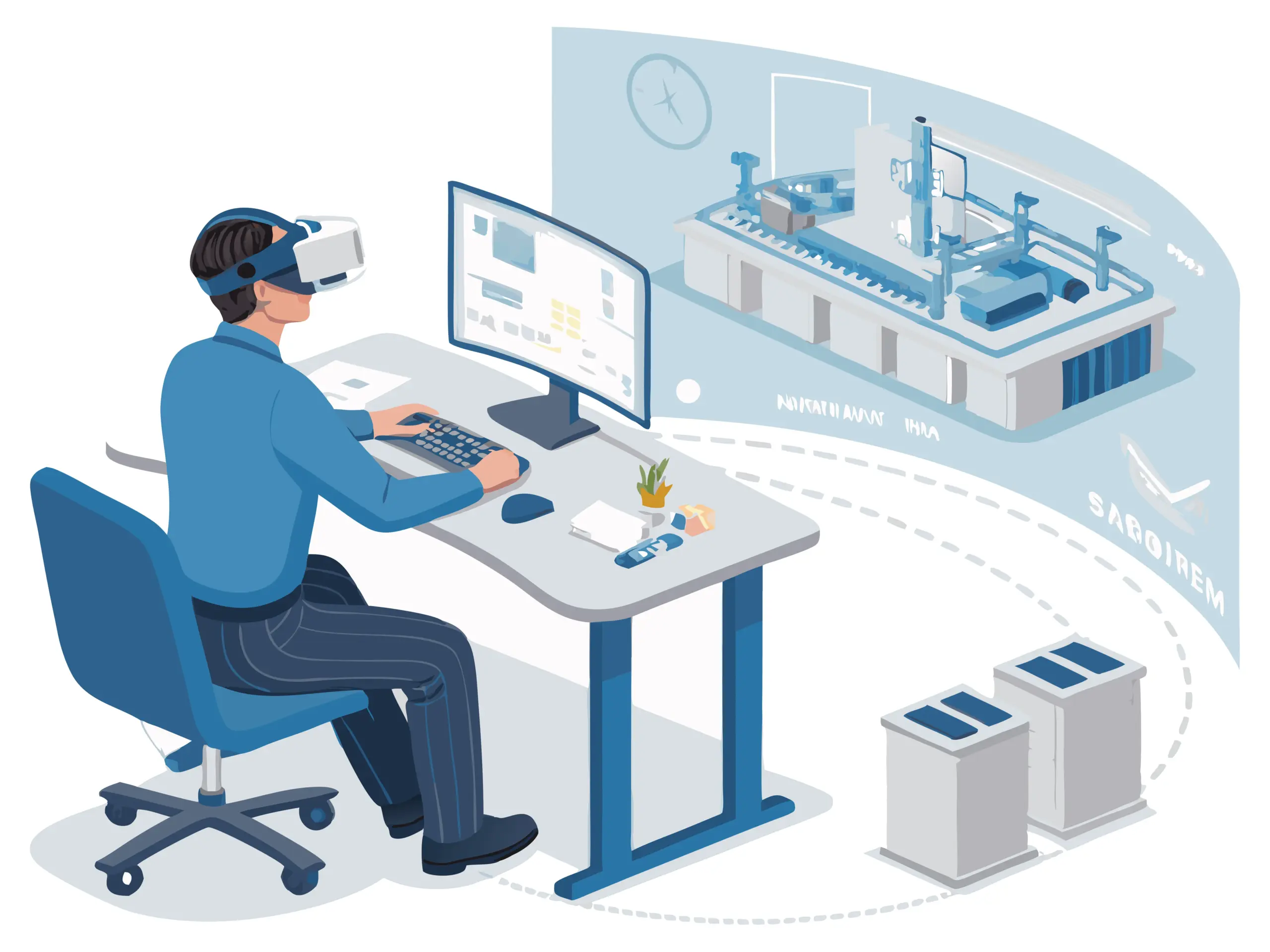
A Computer Vision Engineer develops algorithms and systems that allow computers to understand visual information from images or videos.
Their work typically involves:
- Image recognition
- Object detection
- Facial recognition
- Video analytics
- Image segmentation
- Visual tracking systems
These engineers combine image processing, machine learning, and deep learning to convert raw visual data into actionable insights for applications such as autonomous vehicles and medical diagnostics.
Roles and Responsibilities of a Computer Vision Engineer
| Responsibility | Description |
| Algorithm Development | Designing algorithms for image recognition, object detection, and segmentation |
| Data Processing | Cleaning, labelling, and pre-processing image datasets |
| Model Training | Training machine learning and deep learning models |
| System Optimization | Improving performance for real-time applications |
| Testing & Validation | Ensuring models perform accurately in real-world environments |
| Deployment | Integrating vision models into applications or production systems |
Computer vision engineers often collaborate with data scientists, software engineers, and domain experts to integrate AI models into real-world products.
Step-by-Step Guide to Becoming a Computer Vision Engineer

Step 1: Learn Programming Fundamentals
Programming is the backbone of computer vision.
| Language | Why it’s Important |
| Python | Most widely used for machine learning and AI |
| C++ | High-performance applications |
| Java | Sometimes used in enterprise systems |
| MATLAB | Used in research environments |
Python is especially dominant because of powerful libraries like OpenCV, NumPy, TensorFlow, and PyTorch.
Step 2: Build a Strong Mathematics Foundation
Computer vision relies heavily on mathematical concepts.
Important topics include:
- Linear Algebra
- Probability & Statistics
- Calculus
- Optimization
- Geometry
These concepts help engineers understand neural networks, transformations, and image processing techniques.
Step 3: Learn Machine Learning and Deep Learning
Computer vision systems rely heavily on machine learning models.
Key Concepts to Learn
- Supervised learning
- Convolutional Neural Networks (CNNs)
- Transfer learning
- Feature extraction
- Neural network training
CNNs are especially important because they are designed to analyze visual patterns in images.
Step 4: Study Image Processing
Before training AI models, images must be processed.
Common techniques include:
- Edge detection
- Image filtering
- Noise reduction
- Colour transformations
- Feature extraction
These techniques help machines interpret raw image data effectively.
Step 5: Master Computer Vision Libraries
Real-world projects rely on specialized frameworks.
| Tool | Purpose |
| OpenCV | Image processing and computer vision |
| PyTorch | Deep learning models |
| TensorFlow | AI model development |
| Keras | High-level neural network API |
| CVAT | Data annotation for computer vision |
Tools like CVAT are commonly used to label datasets for training models.
Step 6: Build Real-World Projects
Hands-on projects are critical for career growth.
Examples:
- Face detection system
- Traffic sign recognition
- Medical image classifier
- Object detection in surveillance footage
- Autonomous drone vision system
A strong GitHub portfolio often matters more than certificates.
Step 7: Learn Model Deployment
Companies want engineers who can deploy models in real-world environments.
Important skills include:
- Cloud deployment (AWS, GCP)
- Docker containers
- API integration
- Edge AI deployment
Deployment skills make you far more employable.
Step 8: Stay Updated With Research
Computer vision evolves rapidly.
Important conferences include:
- CVPR
- ICCV
- NeurIPS
- ECCV
Reading research papers and experimenting with new techniques keeps your skills relevant.
Master Robotics and AI!
Ready to build the future? Join our comprehensive robotics course to bridge the gap between complex code and physical motion. You’ll gain hands-on experience giving you the technical edge needed to lead in the age of automation.
Know MoreComputer Vision Engineer Skills You Must Learn
| Skill Category | Important Skills |
| Programming | Python, C++, APIs |
| Machine Learning | CNNs, neural networks |
| Mathematics | Linear algebra, statistics |
| Data Processing | Image pre-processing, annotation |
| Tools | OpenCV, TensorFlow, PyTorch |
| Software Engineering | Version control, testing, deployment |
| Soft Skills | Problem-solving, collaboration |
Employers typically expect expertise in Python, machine learning, and deep learning frameworks.
Computer Vision Engineer Salary (2026)

Computer vision engineers are among the highest-paid AI specialists.
| Experience Level | Average Salary |
| Entry Level | $85,000 to $105,000 |
| Mid-Level | $110,000 to $130,000 |
| Senior | $150,000 to $200,000 |
Average annual salary across major platforms ranges from $115k to $131k in the U.S.
| Experience | Salary |
| Entry Level | ₹8L to ₹15L |
| Mid-Level | ₹20L to ₹40L |
| Senior | ₹50L+ |
Industries Hiring Computer Vision Engineers
Computer vision applications span many industries.
| Industry | Use Cases |
| Automotive | Autonomous vehicles |
| Healthcare | Medical imaging diagnosis |
| Retail | Smart checkout systems |
| Agriculture | Crop monitoring |
| Security | Facial recognition & surveillance |
| Robotics | Industrial automation |
These applications continue to expand as AI technologies mature.
Career Path for Computer Vision Engineers
| Career Stage | Role |
| Entry Level | Computer Vision Engineer / ML Engineer |
| Mid-Level | Senior Vision Engineer |
| Advanced | AI Architect / Research Scientist |
| Leadership | Principal AI Engineer |
Challenges in the Computer Vision Field

While rewarding, this career also presents challenges:
- High computational requirements
- Need for large labelled datasets
- Rapidly evolving technology
- Complex real-world deployment
However, the strong demand and salary potential make it an attractive field.
Future of Computer Vision Engineering
The future of computer vision is extremely promising.
Emerging trends include:
- AI-powered medical diagnostics
- Smart cities and surveillance
- Augmented reality (AR)
- Robotics and drones
- Autonomous transportation
As AI adoption accelerates, demand for computer vision engineers continues to rise globally.
New to Robotics? Start from the Basics. Join Now!
Conclusion
If you want to become a Computer Vision Engineer, you’ll need to put together some serious skills – programming know-how, machine learning chops, math skills and actual experience working on real-world projects. Admittedly, the learning curve can be quite steep, but the rewards on both the intellectual and financial fronts can be very sweet indeed.
As the industries are snapping up all sorts of visual systems left and right, you’ll find yourself right at the forefront of cutting-edge tech as a computer vision engineer. And as an aspiring pro, you can bet your boots you’ve got a pretty bright career path ahead of you.
|
RELATED POSTS |
|
|
Skills Needed for a Successful Career in Robotics Engineering |
|
|
What is Robotics? A Beginner’s Guide to Understanding Robotics |
|
Master Robotics and AI!
Ready to build the future? Join our comprehensive robotics course to bridge the gap between complex code and physical motion. You’ll gain hands-on experience giving you the technical edge needed to lead in the age of automation.
Know MoreFrequently Asked Questions
What kind of degree do I need to become a computer vision engineer?
Well most folks in the business have a degree in computer science, or else in artificial intelligence, electrical engineering or robotics.
What tools do computer vision engineers get to use?
The usual gang includes OpenCV, TensorFlow, PyTorch, Keras, and even CUDA – that’s quite a toolbox.
Do computer vision engineers need to know machine learning?
Absolutely. Machine learning and deep learning are two of the key parts of modern computer vision systems.
Can beginners actually learn computer vision?
You bet. There are loads of online courses and open source resources out there that’ll help you get into it.
Which industries are likely to hire computer vision engineers?
That’s an easy one – it’s basically anywhere that needs to use visual systems – healthcare, robotics, the automotive industry, agriculture, retail, and security.
What kind of projects will help build a computer vision portfolio?
You should aim for stuff like face recognition systems, object detection models, medical image analysis and surveillance systems.
What's the main difference between machine learning and computer vision?
Well machine learning is the bigger picture, while computer vision is the visual data bit – which is nice and focused.