Table of Contents
If you are up for a Simulation Engineering job role, you need to master programming languages like Python and C++. Along with that you need to have a grasp of handling simulation platforms like ROS and Gazebo. This works in favour of building hands-on project experience in Robotics or AI environments.
This is not simply a technical job but one of the fastest-growing careers in India’s engineering landscape. The current job scenario suggests simulation engineers to be at the heart of upcoming growth in the field.
Key Takeaways
- Simulation engineers design virtual environments to safely test robots and AI systems before real-world deployment.
- Python, C++, ROS2, and Gazebo are the four mandatory factors for landing your first role.
- A structured 6 to 12 month self-learning roadmap with portfolio projects will make you job-ready.
- India’s simulation engineering job market is growing at 25% year-on-year, with strong demand from defence, automotive, and logistics sectors.
- Cloud simulation tools like AWS RoboMaker eliminate the hardware barrier for beginners.
New to Robotics? Start from the Basics. Join Now!
What is a Simulation Engineer?
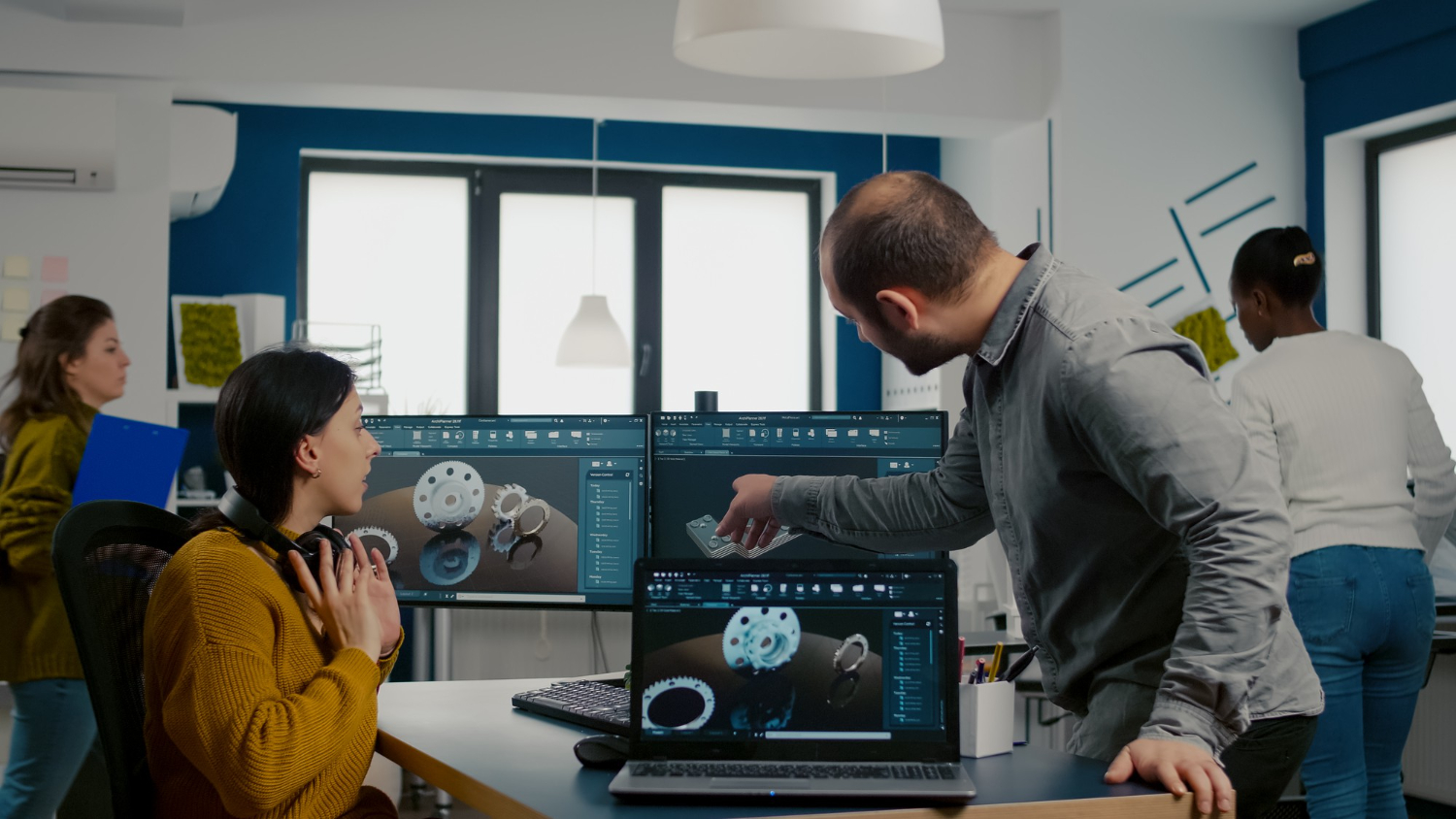
The job of a Simulation Engineer primarily involves building digital replicas of physical systems like vehicles, industrial machines, robots and drones. These replicas are then run through thousands of virtual scenarios long before building the real machine.
It is just a virtual stress-testing of the real system inside a computer. A Simulation Engineer bridges software development with physics modelling and artificial intelligence. It is not simply about running simulations but designing environments that are safe enough to make into real forms.
Why this Role Matters Right Now
Simulation Engineering is found to be cutting down physical prototyping costs. Across various sectors such as autonomous vehicles, warehouse automation and space robotics, real-world testing is too risky and also expensive. Simulation is the solution for this.
India’s push into Industry 4.0 has created a sustained demand for engineers who can build and manage these virtual environments. The firms such as DRDO, Addverb and GreyOrange invest heavily in autonomous systems.
Master Robotics and AI!
Ready to build the future? Join our comprehensive robotics course to bridge the gap between complex code and physical motion. You’ll gain hands-on experience giving you the technical edge needed to lead in the age of automation.
Know MoreKey Skills Every Simulation Engineer Needs
It is not expected for you to master everything all at once. But there are certain foundational skills that you need to be familiarized with. Also knowing where to start and upskill saves a lot of time and effort.
| Skill Category | Essential Skills | Proficiency Level |
| Programming | Python, C++, MATLAB | Advanced |
| Simulation Tools | ROS2, Gazebo, Unity | Intermediate |
| Physics & Math | Dynamics, Kinematics, Linear Algebra | Intermediate |
| AI/ML | Reinforcement Learning, Computer Vision | Beginner–Intermediate |
| Soft Skills | Problem-Solving, Collaboration | Ongoing |
ROS2 and Python cover about 80% of entry-level work. You can rely heavily on them initially and then build outward then on.
You cannot avoid getting along with physics as kinematics and dynamics act as the backbone of a robust simulation. Your model should non-negotiably behave like the real-world.
Step-by-Step Roadmap: 6–12 Months to Job-Ready

This is not about just asking you to learn coding and then apply it on projects kind of roadmap. You will get a clear understanding in building concrete projects that are deliverable and added to your portfolio.
Month 1–2: Programming and Math Foundations
Your focus must be on Python and linear algebra. You don’t need to be an immersed mathematician, but just need to understand vectors, matrices and basic calculus. They align with the language that physics simulators follow.
Milestone Project:
Simulate a pendulum’s motion in Python using Matplotlib. This teaches numerical integration and visualisation – both daily tools in simulation work.
Month 3–4: Get Comfortable with ROS and Gazebo
Now you need ROS2 and Gazebo. Install them on your system preferably with Ubuntu. Go through the official ROS tutorials and get graduation to build something of your own.
Milestone Project:
Build a virtual robot arm that navigates around obstacles in a Gazebo environment. This is a portfolio-worthy project that demonstrates spatial reasoning and tool proficiency.
Month 5–6: Go Deeper into Robotics Physics
It is time to study robot kinematics, that is how joints and links move, and also dynamics – the force behind that movement.
Milestone Project:
Simulate drone flight paths using a PID controller. Autonomous vehicle teams specifically look for this kind of project experience.
Month 7–9: Add AI and Machine Learning
Simulation becomes truly powerful here. You can train ML models inside your virtual environments. This is about computer vision systems identifying obstacles or reinforcement learning agents learning to navigate.
Milestone Project:
Build an autonomous rover in Gazebo that uses TensorFlow-based reinforcement learning for pathfinding. This single project demonstrates ROS, Gazebo, AI integration, and systems thinking.
Month 10–12: Portfolio Polish and Job Preparation
Make it a habit to publish everything on GitHub. You can write short ‘README’ files that explain what each project does, what you have learned and why you built it. There is a high chance that the recruiters read them.
In India, your target must be firms like GreyOrange, Tata Elxsi, DRDO, Addverb and Bosch. These are the organizations that hire simulation-focused engineers – both at fresher as well as experienced levels.
| Step | Duration | Milestone Project | Expected Outcome |
| Foundations | 2 Months | Pendulum Simulation | Code proficiency |
| Tools | 2 Months | Virtual Robot Arm | ROS/Gazebo setup |
| Physics | 2 Months | Drone Flight Paths | Dynamics understanding |
| AI Integration | 3 Months | Autonomous Rover | Portfolio centrepiece |
| Job Prep | 3 Months | GitHub Repository | 5+ interview calls |
Top Tools Simulation Engineers Use
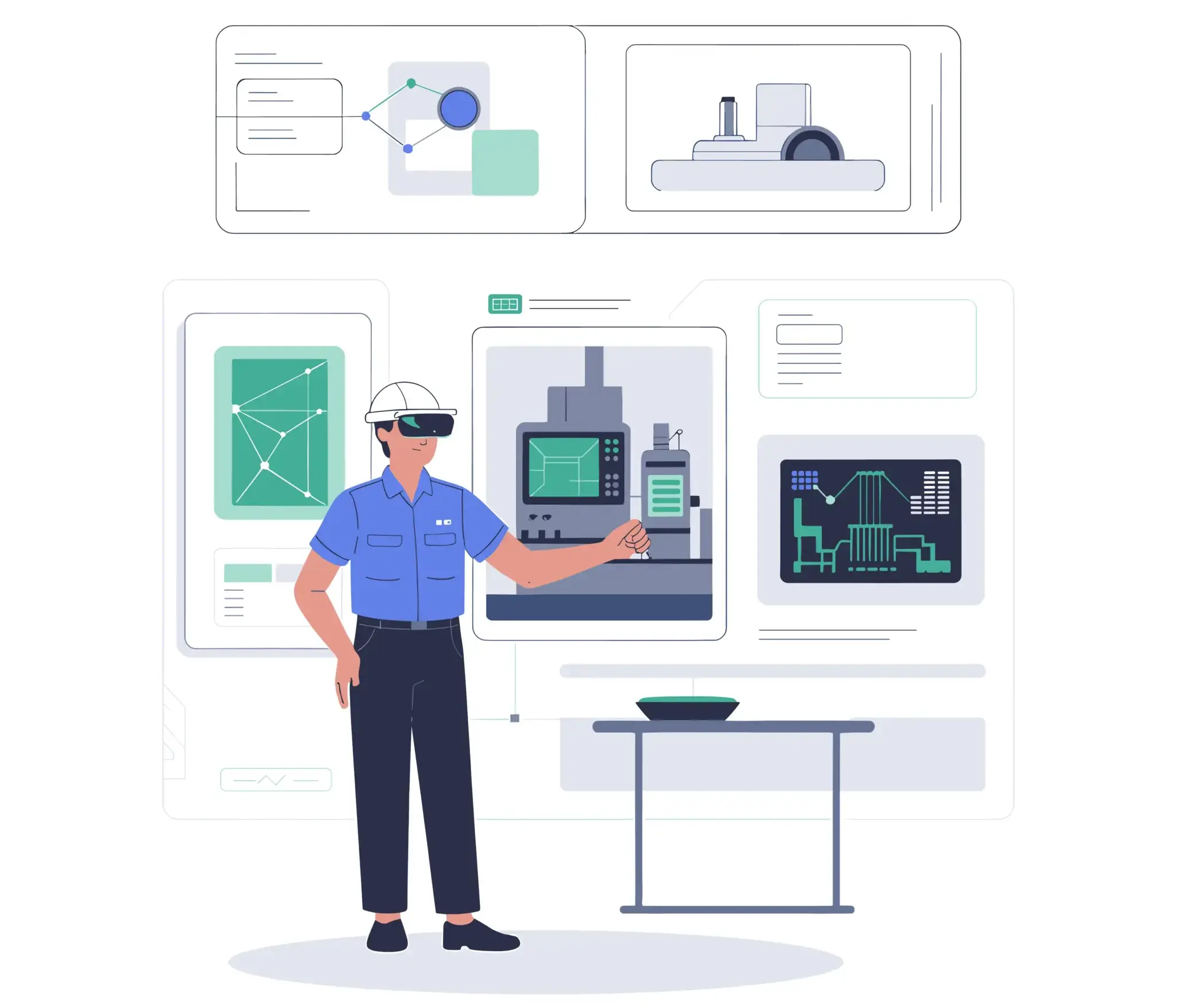
Once you familiarize yourself with the tools half of the job is done. Check out the breakdown of use cases against what is free and what is worth your time as a beginner.
| Tool | Use Case | Cost | Best For |
| ROS2 / Gazebo | Robot simulation | Free | Open-source robotics |
| Unity / ML-Agents | AI training environments | Free/Pro | Realistic visual sims |
| MATLAB / Simulink | Control systems modelling | Paid | Engineering precision |
| NVIDIA Isaac Sim | Physically accurate GPU sims | Free | High-fidelity AI training |
| Webots | Multi-robot simulation | Free/Pro | Education and projects |
| AWS RoboMaker | Cloud-based robotics sim | Pay-as-you-go | Teams without hardware |
As a beginner, you should start with ROS2 and Gazebo together. They are both free and open source that represent the global standard for robotics simulation.
NVIDIA Isaac Sim is worth exploring, as it becomes increasingly important in high-fidelity AI training environments.
Master Robotics and AI!
Ready to build the future? Join our comprehensive robotics course to bridge the gap between complex code and physical motion. You’ll gain hands-on experience giving you the technical edge needed to lead in the age of automation.
Know MoreSimulation Engineer Salary in India (2025–26)
Here’s the realistic salary picture based on 2026 averages:
| Experience Level | Average Salary (₹ LPA) | Top Hiring Companies |
| Fresher (0 to 2 years) | 6 to 12 | Bosch, DRDO, Addverb |
| Mid-Level (2 to 5 years) | 15 to 25 | GreyOrange, Siemens |
| Senior (5+ years) | 25 to 40+ | Tata Elxsi, KRDL, ISRO |
In this field, transitioning from entry to mid level is steep. It is mainly because hands-on project experience is directly linked to compensation. If you are an engineer who can demonstrate ROS proficiency, real deployment and AI integration, you can command a significantly higher payment.
At the 2 to 5 years mark, AWS and GCP simulation certifications are increasingly valued. This applies especially in cloud-first robotics companies.
Common Challenges & How to Solve them
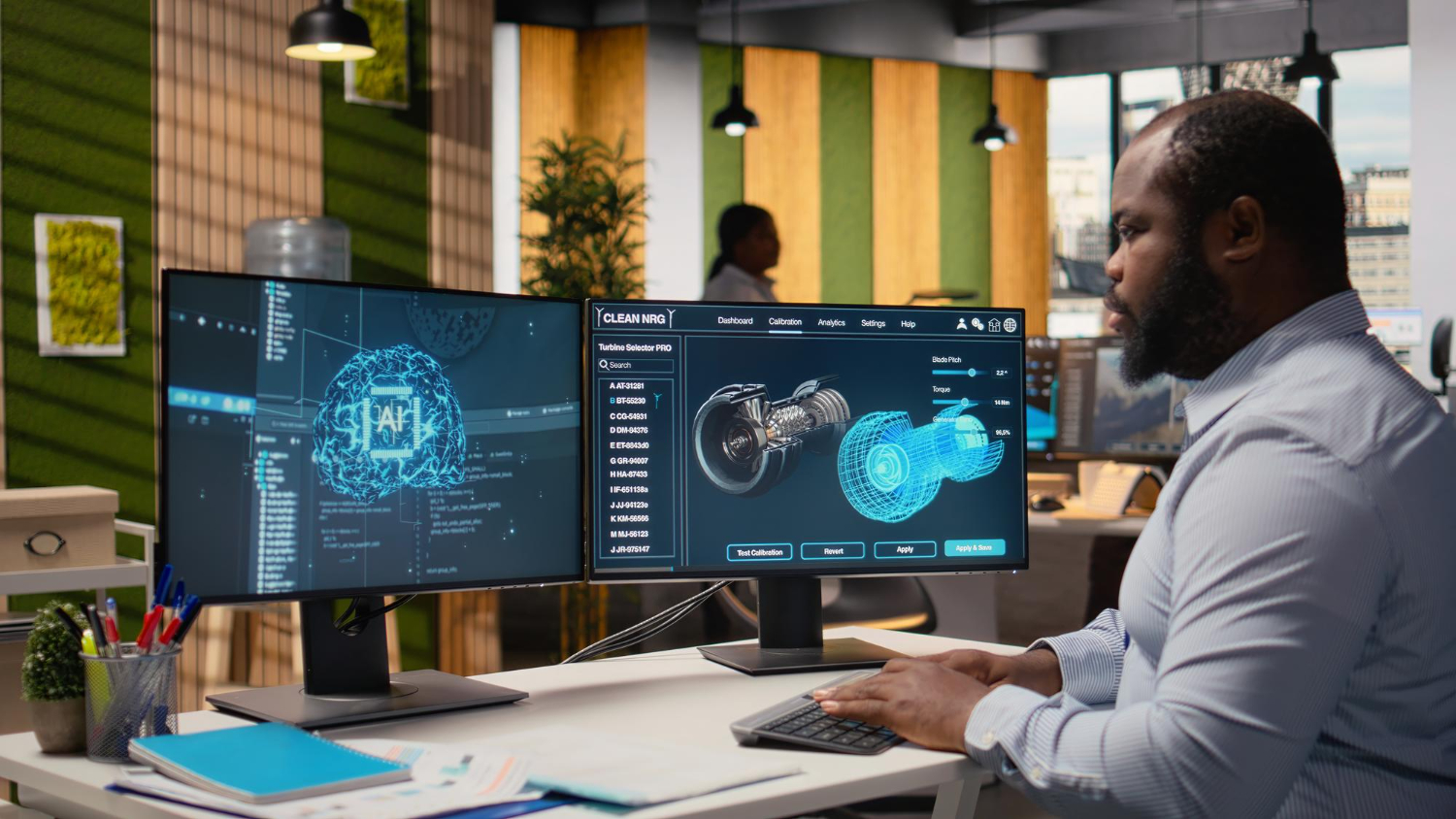
1. The Learning Curve Feels Overwhelming
Simulation engineering involves multiple domains simultaneously. This might be challenging at first. You need to schedule sequential learning.
Don’t try learning reinforcement and ROS at the same time. Schedule that to one thing per month.
2. No Access to Physical Hardware
The point of having Simulation Engineering is that you don’t need a real robot to test the workings. You can use AWS RoboMaker or run Gazebo locally.
The possibilities of using cloud simulation to build an entire portfolio is wide without even touching a physical hardware.
3. Standing Out in a Competitive Job Market
It is obvious that the majority of candidates looking for a job in Simulation Engineering have similar degrees and certifications. The factor that separates the candidates is GitHub activity.
Work on building at least three substantive projects involving SLAM, a control systems project cover and reinforcement learning navigation. These are the most commonly tested interview domains.
Simulation Engineer vs. Robotics Engineer: What’s the Difference?
This is a common point of confusion and so getting clarification about their distinction is important.
As a Simulation Engineer you will be working almost entirely on virtual environments. In this role the output is a model, a test result or a validated algorithm.
A Robotics Engineer, on the other hand, works on both simulation as well as hardware. They design the physical robot, wire sensors and then hand off the validated behaviour to manufacturing.
At the early career stages, the roles overlap. But simulation-specific roles have affiliation toward software-heavy companies with AI labs, autonomous vehicles and defence tech. Whereas robotics engineering roles appear more in hardware-first firms.
New to Robotics? Start from the Basics. Join Now!
Conclusion
In India, the robotics and autonomous systems ecosystem is expanding. Simulation Engineering is one of the distinct careers with high demand over supply of qualified professionals. As much as demanding the path is, it is also unusually learnable. You just need to commit to a structured and project-first approach.
There are fundamentally six pillars to master namely programming languages like Python, C++, ROS2 and Gazebo, physics fundamentals and AI integration.
Build three meaningful GitHub projects targeting firms that are aligned with your domain interest. Understand that this field rewards demonstrated capability more than other credentials.
India’s robotics market won’t slow down. Just be ready as the opportunities are opening up. Take that first step with a clear roadmap and start your journey confidently.
|
RELATED POSTS |
|
|
Fleet Management Engineer – Skills, Roles and Responsibilities |
|
Master Robotics and AI!
Ready to build the future? Join our comprehensive robotics course to bridge the gap between complex code and physical motion. You’ll gain hands-on experience giving you the technical edge needed to lead in the age of automation.
Know MoreFrequently Asked Questions
Can I become a simulation engineer without a degree?
Yes, you can. A good percentage of simulation engineering roles value demonstrated project portfolio and certifications over formal degrees. A strong GitHub profile with ROS/Gazebo projects can actually outperform a degree and make it to the recruiter’s shortlist.
What is the best certification for simulation engineering in India?
Two of the most recognized options are NVIDIA Isaac Sim certification and the ROS Developer Certificate. Earning these will validate your hands-on tool proficiency.
Is Python enough to start, or do I need C++ immediately?
At the initial phase, Python will do as it covers most entry-level job requirements. For performance-critical simulation tasks C++ is essential. So it is worth learning once you get comfortable working with Python-based ROS workflows.
What industries hire simulation engineers in India?
Mainly industries like automotive (Tata Motors), defence (DRDO), warehouse robotics (GreyOrange) and aerospace are the primary hiring sectors.
Do I need a GPU to run simulation tools?
For basic Gazebo simulations, a standard laptop will do. However, high-fidelity training environments and NVIDIA Isaac Simdo will benefit from a GPU. But cloud alternatives like AWS RoboMaker remove this barrier.
Is ROS2 better than ROS1 for beginners?
Yes it is. ROS2 is the current industry standard offering better security as well as real-time support. It is what most new job listings refer to. It is wise to start with ROS2 directly.
How important is mathematics for simulation engineering?
It is in fact fundamental. You need to have a hold of calculus, linear algebra and also an understanding of physics – dynamics and kinematics – to build simulations that behave realistically.
Is reinforcement learning required for simulation engineering?
Not immediately. However, it gets highly valuable when you step into the intermediate level. Advanced simulation roles require the ability to train RL agents inside virtual environments, especially in autonomous systems.
Can I use Windows for ROS and Gazebo?
Technically, you can use it via WSL2. But it is strongly recommended to use Ubuntu (Linux). Most enterprise deployments, community support and documentation assume a Linux environment.
What's the difference between Gazebo and Unity for simulation?
Gazebo prioritizes physics accuracy and is built with a purpose to build robotics simulation. Unity (ML-Agents) is visually more flexible. In a space where AI training and photorealistic rendering matters, it fits well.