Table of Contents
Key Takeaways:
- Hydropower technicians in Germany work hands-on with turbines, generators, and control systems to keep hydropower plants safe, efficient, and reliable.
- Germany’s energy transition and growing renewable share (close to 60% of electricity in 2024) create stable, long-term demand for skilled technicians in green power.
- Typical hydropower technician salaries range roughly from 33,000–38,000 EUR at entry level to 50,000–60,000+ EUR with experience and responsibility.
- Strong German language skills (B1–B2) significantly improve job opportunities, integration, and salary growth, and Entri’s comprehensive online German course is tailored to help learners reach those levels.
- Experience as a hydropower technician in Germany, combined with Schengen mobility and EU frameworks, can open doors to further roles across other European countries in the renewable-energy sector.
Introduction
If you like working with machines more than sitting behind a desk, and you also care about climate change, the role of a hydropower technician in Germany sits right at the sweet spot between hands-on work and meaningful impact. In a country that is rapidly transitioning away from coal and fossil fuels, hydropower plants quietly maintain grid stability, especially when wind or solar output fluctuates.
By 2024, renewable energy sources were expected to cover nearly 60% of Germany’s electricity production, with hydropower contributing over 20 TWh and run-of-river capacity expanding significantly. This push toward clean energy is not just about technology; it is about people on the ground—technicians who operate, maintain, and optimize these plants every day. [1]
Role and Responsibilities: What Does a Hydropower Technician Do?
1: How do you say "Good Morning" in German?
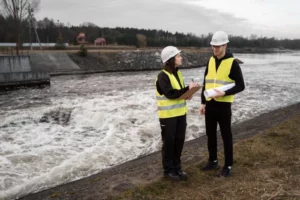
A hydropower technician in Germany is responsible for operating, monitoring, and maintaining hydropower plants so that they generate electricity safely, efficiently, and reliably.
In practice, this means:
- Monitoring turbines, generators, control systems, and flow rates from control rooms and on-site panels.
- Performing routine inspections, preventive maintenance, lubrication, and part replacements on electro‑mechanical components.
- Troubleshooting faults in electrical systems, sensors, hydraulics, gates, and protection systems during unplanned outages.
- Assisting in overhauls, upgrades, and modernization projects of older hydropower stations to meet new efficiency and environmental standards.
- Documenting work, following safety protocols, and complying with German and EU environmental regulations at dams, run-of-river plants, and pumped-storage facilities.
Hydropower technicians often work in shifts because plants operate 24/7, and in many locations the role combines both fieldwork (in all weather) and control-room monitoring.
Free German A1 Mock Tests – Powered by AI!
Test your skills on our interactive platform. Get instant feedback from our AI to help you communicate better and track your progress. Start your free German mock test now.
Test Your German A1 for FreeEnergy Industry Opportunities in Germany
Why is Germany a strong place to build a hydropower or renewable energy career right now? Germany is one of Europe’s leaders in the energy transition, with renewable energy supplying around 59–63% of the public electricity mix in 2024 [2], and the federal government targeting climate neutrality by 2045. [1]
Key points that make Germany attractive for hydropower technicians and other green‑energy professionals:
- Renewable plants produced roughly 275–284 TWh of electricity in 2024, showing steady growth year-on-year. [3]
- Hydropower alone delivered around 21–22 TWh, with run-of-river capacity expanding from about 4.9 GW to 6.4 GW as operators modernize existing sites rather than building many new dams.
- The shift away from coal and the expansion of flexible assets like pumped storage create a continuous need for skilled technicians who can keep plants efficient, safe, and digitally integrated into smart grids.
For job seekers, this translates into stable demand across utilities, municipal providers, and private renewable-energy operators, often in long-term, permanent roles rather than short project-based contracts.
Read in detail: Germany’s Booming Energy Industry
|
German A2 Exercises – Download Free PDF |
||
Eligibility Requirements for the Role
To qualify as a hydropower technician in Germany, you need to meet specific academic, technical, and language criteria:
-
Academic Qualifications:
- Completion of secondary education (high school diploma or equivalent).
- Vocational training (Ausbildung) in Mechatronics, Electrical Engineering, Industrial Mechanics, or a related technical field.
- Alternatively, a bachelor’s degree in Civil Engineering, Environmental Science, Renewable Energy, or a similar discipline.
-
Technical Skills:
- Practical experience with electrical systems, mechanical maintenance, control systems, and hydraulics.
- Familiarity with safety protocols and environmental regulations in power plants.
-
Language Proficiency:
- German language skills at least at B1 level for most roles, with B2 preferred for advanced positions and better integration.
-
Additional Requirements:
- Strong problem-solving abilities and attention to detail.
- Willingness to work in shifts and on-site, including remote or outdoor locations.
-
Certifications (Optional but Advantageous):
- Certificates in power plant operations, renewable energy, or specialized hydropower technologies.
By meeting these eligibility requirements and following the step-by-step guide, you can build a successful career as a hydropower technician in Germany’s growing renewable energy sector.
Also read: What Level of German is Required to Work in Germany?
Step-by-Step Guide: How to Become a Hydropower Technician in Germany
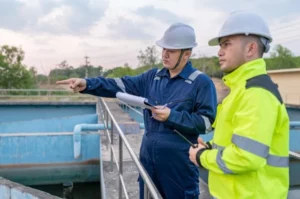
Becoming a hydropower technician in Germany is a structured process that combines technical education, practical training, and language preparation. Here’s a clear, step-by-step guide to help you start your journey:
1. Complete Secondary Education
Obtain a high school diploma or equivalent, ideally with a focus on science and technical subjects. This is the foundation for further technical education or apprenticeship programs in Germany.
2. Pursue Vocational Training (Ausbildung) or Technical Degree
Apply for a dual vocational training program (Ausbildung) in fields such as Mechatronics, Industrial Mechanics, Electrical Engineering, or Water Supply Technology. These programs typically last 3 years and combine classroom learning with on-the-job training.
Alternatively, pursue a bachelor’s degree in Civil Engineering, Environmental Science, or Renewable Energy at a German university or university of applied sciences.
3. Gain Practical Experience
During your Ausbildung or degree, complete internships or practical projects with hydropower plants, engineering firms, or water management agencies. This hands-on experience is highly valued by employers.
4. Obtain Relevant Certifications
After completing your training or degree, consider additional certifications in areas like power plant operations, safety, or specialized hydropower technologies. These can enhance your job prospects.
5. Learn German (B1/B2 Level)
German language proficiency is essential for most technician roles in Germany. Aim for at least B1 (intermediate) for entry-level jobs and B2 (upper-intermediate) for better opportunities and higher pay.
6. Apply for Jobs and Visa
Use job portals like Indeed.de, StepStone, or EURES to find hydropower technician positions. International candidates can apply for the Skilled Worker Visa or Opportunity Card if their qualifications are recognized.
7. Continue Professional Development
Once employed, participate in continuing education, attend industry conferences, and consider advanced vocational degrees (Fachschule) for career advancement.
Free German A1 Mock Tests – Powered by AI!
Test your skills on our interactive platform. Get instant feedback from our AI to help you communicate better and track your progress. Start your free German mock test now.
Test Your German A1 for FreeSalary of Hydropower Technicians in Germany
How much does a hydropower technician earn in Germany in 2026? Hydropower technician salaries typically sit in the same band as other plant or renewable-energy technicians, with average annual pay around 40,000 EUR and a range that grows with experience, region, and shift allowances.
External data on renewable roles and technician-level jobs in Germany suggests that:
- A hydropower technician can expect around 35,000–45,000 EUR per year on average, depending on company and region.
- Technician roles in similar green-power plants (for example, solar-power plant technicians) average about 42,500 EUR per year.
- Mechatronics technicians with vocational training (a common background for plant technicians) typically earn 33,600–38,400 EUR per year at the start, with substantial growth after some years.
| Experience Level | Approx. Annual Salary (EUR) | What This Typically Looks Like |
|---|---|---|
| Entry-level (0–2 years) | 33,000 – 38,000 | After Ausbildung or initial technical role, often shift-based. |
| Mid-level (3–7 years) | 40,000 – 50,000 | Independent operation, troubleshooting, possible mentoring of juniors. |
| Senior / Lead Technician | 50,000 – 60,000+ | Supervisory responsibilities, complex outages, modernization projects. |
Salaries may be higher at large utilities or in southern and western regions with strong industrial bases, and German language skills can improve offers and promotion prospects.
People also read: Salary Guide for Germany
Lifestyle and Living Conditions in Germany
What is it actually like to live in Germany as a technician from abroad? Germany combines relatively high wages with strong worker protections, public healthcare, and robust public infrastructure, which makes it attractive for technical professionals and their families.
Key lifestyle factors:
- Cost of living vs. salary: Average gross salaries in larger cities range from about 45,000–55,000 EUR per year for many technical roles, which is usually enough to maintain a comfortable, middle-class life, especially outside very high-rent hotspots like Munich.
- Social benefits: Employees are covered by statutory health insurance, pension contributions, unemployment insurance, and paid leave.
- Work culture: German workplaces emphasize punctuality, safety, and clear processes, but also protect work–life balance with regulated working hours and paid vacation, which is valuable in shift-based plant jobs.
- Additionally, Germany has recently announced a major increase in their minimum wages. The increase is scheduled to be in effect in two phases – 2026 and 2027.
Hydropower plants are often located in scenic river valleys or mountainous regions, so technicians may enjoy quieter towns, easier access to nature, and less traffic than in big metropolitan centers—while still having rail connections to major cities.
Future Prospects in Hydropower and the Technician Role
Is hydropower a future-proof career in Germany, or will everything shift to solar and wind? While solar and wind are growing faster in raw capacity, hydropower remains critical as a stable, controllable source that supports grid flexibility and storage, particularly via pumped-storage plants.
Future trends that benefit hydropower technicians:
- Digitalization of plants with SCADA systems, sensor networks, and predictive maintenance tools, which increases demand for technicians comfortable with both mechanical and digital systems.
- Ongoing modernization of existing run-of-river and storage plants to improve efficiency and environmental performance, generating continuous work in upgrades and retrofits rather than just basic operation.
- Integration with battery storage and smart grids, where hydro assets help balance variability from wind and PV, making these plants strategically important in the overall system.
For technicians, this means a career that can evolve into senior technical expert, operations supervisor, maintenance planner, or even plant manager roles over time.
You might also like: Top Industries and Career Opportunities in Germany
|
Goethe Exam Dates: Multiple Test Centers |
|
| Trivandrum Goethe Exam Dates | Kochi Goethe Exam Dates |
| Chennai Goethe Exam Dates | Coimbatore Goethe Exam Dates |
Migration and Schengen Mobility Opportunities
If you work as a hydropower technician in Germany, can you move around the rest of Europe easily? Germany is part of both the European Union and the Schengen Area, a zone of 20‑plus European countries that have removed internal border checks to allow largely passport-free movement.
There are two important perspectives here:
- As an EU citizen working in Germany: You benefit from the EU’s freedom of movement for workers, which allows you to live and work in other EU states without complex work-permit procedures, subject to some specific national rules.
- As a non-EU citizen who moves to Germany: Once you hold a valid long-term residence or certain national permits, you can usually travel freely for short stays (up to 90 days in 180 days) within the Schengen Area for tourism or short business trips, though working in another country will normally require a separate local permit.
From a career point of view, German experience in renewable energy—especially in technical plant roles—can be a strong stepping stone to jobs in Austria, Switzerland (outside the EU but in the Schengen travel area), the Nordics, and other hydropower-intensive countries that value hands-on operational expertise.
Also read: Opportunities in Other Countries After Learning German
Why German Language Skills Matter for Hydropower Technicians
Do you really need German to get a hydropower technician job in Germany? For site-based roles like hydropower technicians, German language skills are a major advantage and, in many cases, a practical necessity because:
- Safety instructions, technical manuals, and operating procedures are often written in German.
- Daily coordination with colleagues, supervisors, and external contractors typically happens in German, especially outside major international cities.
- Many vocational programs (Ausbildung) and company trainings run entirely in German, and language skills can directly improve hiring chances and salary growth.
Aiming for at least B1–B2 level German significantly improves prospects for employment, career advancement, and long-term integration.
Entri’s German Language Course: Your Career Booster
Entri offers an online German Language Course that covers levels from A1 to C2, with live interactive sessions, local-language tutors, mock tests, and structured preparation aligned with Goethe-style exams.
Key course features that are especially relevant for technical careers in Germany:
- Levels A1 to C2 with exam focus: The program is designed to help learners build up from basic communication to advanced proficiency, with many learners successfully clearing Goethe exams at A1–B2 levels.
- Live interactive classes and recorded sessions: Learners can attend live sessions, practice speaking, and then revisit recordings, which helps master technical vocabulary over time.
- Structured weekly plan: The course blueprint walks through grammar topics, cases, verb tenses, connectors, and conversation practice in a step-by-step way, making it easier to stay consistent over several months.
- Career angle: The course is positioned for people aiming at international careers in Germany’s industries; language proficiency increases job opportunities and is frequently a requirement for visas, Ausbildung seats, and plant roles.
For an aspiring hydropower technician, this means the course can:
- Help reach conversational levels (A2–B1) within a few months with focused effort.
- Prepare for recognized exams like Goethe-Zertifikat, which support visa applications, Ausbildung applications, and employer confidence.
- Provide flexibility (online learning, recorded sessions) so you can combine language study with technical education or full-time work.
If your goal is “hydropower technician job in Germany,” pairing a technical background or vocational training with Entri’s German course is a practical, targeted pathway.
Conclusion
Building a career as a hydropower technician in Germany means combining technical skill with a clear purpose: keeping a cleaner, more resilient energy system running every hour of the day. With renewable energy already covering a majority of Germany’s electricity mix and plans to go fully climate-neutral, technicians who understand hydropower, safety, and modern digital control systems are likely to remain in demand for years to come.
For aspiring professionals from India and other countries, the path is clear but structured: gain solid technical training, invest in German language learning through a focused program like Entri’s A1–C2 course, and then use Germany’s evolving visa options to step into the country’s green-energy workforce. If your aim is a stable, well-paid job that directly supports the climate transition, “hydropower technician in Germany” is a career worth taking seriously.
Free German A1 Mock Tests – Powered by AI!
Test your skills on our interactive platform. Get instant feedback from our AI to help you communicate better and track your progress. Start your free German mock test now.
Test Your German A1 for FreeFrequently Asked Questions
What qualifications do I need to become a hydropower technician in Germany?
Typically, a technical vocational qualification (such as Mechatronics Technician, Electrical Technician, or Industrial Electrician) or a related diploma is required, often earned via the German dual Ausbildung system or a comparable foreign qualification plus recognition.
Is hydropower still relevant when solar and wind are growing so fast?
Yes. While solar and wind are expanding rapidly, hydropower remains crucial for grid stability, flexible generation, and storage—especially pumped storage—and its contribution in Germany has remained steady around 20–22 TWh recently.
What German level should I target before applying for technical jobs?
For most plant-based technician roles, B1 German is often the practical minimum, while B2 opens more skilled positions, internal trainings, and promotion paths.
Can international candidates use a Job Seeker or Opportunity Card to find renewable-energy work in Germany?
Germany offers routes such as the Job Seeker Visa and Opportunity Card targeting skilled professionals in shortage occupations, including green and technical fields, allowing several months in-country to search for a job.
Are there night shifts or weekend work for hydropower technicians?
Yes. Because hydropower plants run 24/7, many technician roles involve shift work, including nights, weekends, and on-call duty during outages, typically compensated with allowances or shift bonuses.