Table of Contents
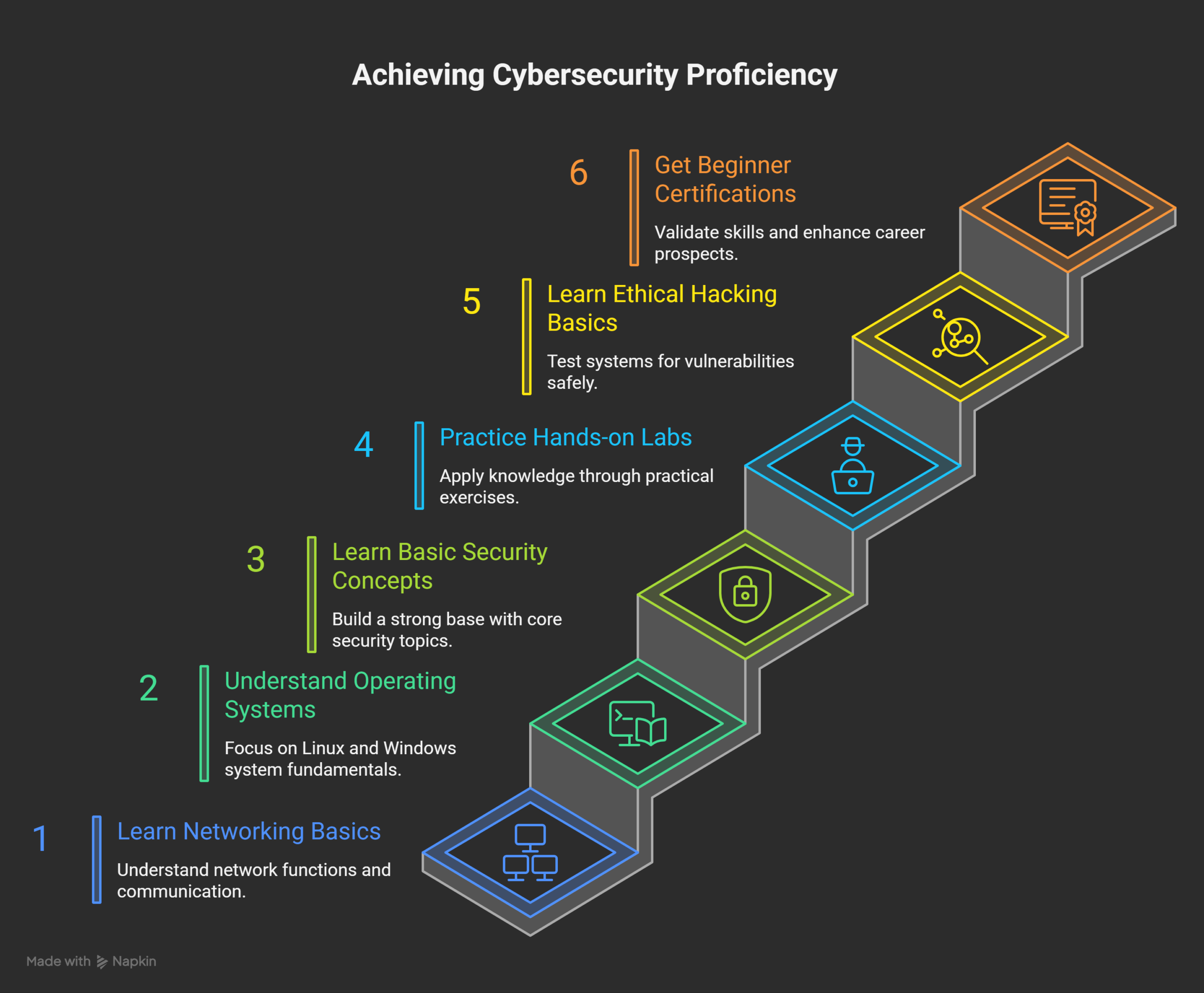
Cybersecurity begins with learning basic networking and core concepts. Knowing OS like Linux and Windows is needed. Start practicing through hands-on labs as early as possible. This guide explains skills, tools, and career steps clearly. It shows how beginners can build strong foundations easily. Focus on doing small tasks and solving problems daily. Avoid memorizing concepts without applying them in practice. Gradually explore ethical hacking after building core basics. Certifications support growth but should not be rushed early. Consistent practice and curiosity will help you grow faster.
Enroll in Entri’s AI-Powered Cybersecurity course now!
Key Takeaways:
- Start with networking and operating systems
- Practice using real tools and labs early
- Learn basic security concepts before hacking
- Certifications help, but skills matter more
- A job-ready level can be reached in 3–12 months


Frequently Asked Questions
What is cybersecurity in simple terms?
Cybersecurity means protecting systems, networks, and data from attacks, unauthorized access, and damage in digital environments.
Do I need coding to start cybersecurity?
Coding is not required at the beginning, but learning basic programming like Python can help automate tasks and understand tools better.
Which is the best certification for beginners?
CompTIA Security+ and Google Cybersecurity Certificate are good starting points because they cover fundamental concepts clearly.
How can beginners practice cybersecurity skills?
Beginners can use platforms like TryHackMe and Hack The Box to practice real-world scenarios safely.
Is cybersecurity a good career in 2026?
Yes, cybersecurity continues to grow with increasing demand due to rising cyber threats worldwide.
How long does it take to get a job?
With consistent learning and practice, beginners can become job-ready within 6 to 12 months.
Can non-IT students learn cybersecurity?
Yes, anyone can start cybersecurity with proper guidance, basic computer knowledge, and consistent practice.
What are the easiest roles to start with?
SOC Analyst and Security Analyst roles are considered beginner-friendly entry points.
Are certifications enough to get a job?
Certifications help, but practical skills and hands-on experience are more important for getting hired.
What tools should beginners learn first?
Beginners can start with tools like Wireshark, Nmap, Burp Suite, and Metasploit to understand basic security tasks.