Table of Contents
Introduction
A degree in mechanical engineering alone is insufficient in this competitive world. By studying the greatest courses that will assist you after Mechanical engineering, you might enhance your technical abilities, understanding, and competence as an engineer. For mechanical engineers, there are fantastic job-oriented courses that offer enormous professional and personal benefits like enhanced marketability, increased relevance, better compensation packages, career flexibility, and much more.
Job‑oriented short‑term courses for mechanical engineers continue to centre on MEP, oil & gas piping, CAD/CAE, automation (PLC–SCADA, robotics, CNC), among others. In addition to this there are emerging areas like EVs and Industry 4.0. But all these have stronger demand for digital skills, sustainability, and, most importantly, smart‑manufacturing exposure. Here is a tightened and highly relevant version of your blog’s core content.
Elevate your career with our comprehensive MEP Course! Get Free Demo Here!
Why Choose Short-Term Courses
- Mechanical job roles increasingly demand domain specialization. In addition to that software and automation skills remain on demand, and not just a B.Tech or diploma.
- Current growing sectors include green buildings, HVAC, industrial automation, EVs, robotics, and digital manufacturing. All of them prefer certified candidates with hands‑on project work.
- Short‑term, job‑oriented programs (2 to 12 months) preferably help freshers and working professionals in bridging skills gap and switch to higher‑paying roles faster.
Master MEP Design with Industry-Leading Training!
Gain in-depth knowledge of Mechanical, Electrical, and Plumbing (MEP) Design with expert-led courses. Learn HVAC, fire safety, sustainable building strategies, and BIM applications to excel in the construction industry.
Know MoreTop short‑term courses after Mechanical Engineering
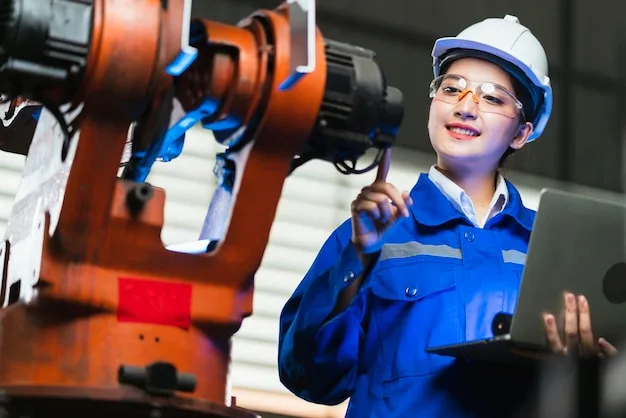
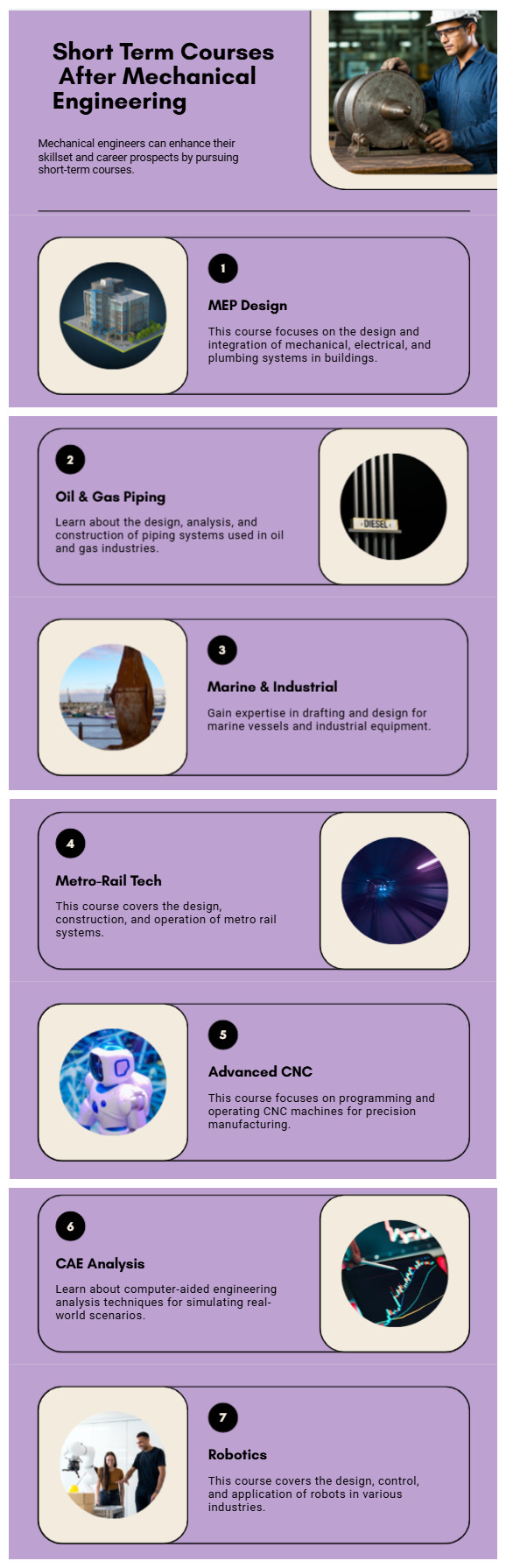
Some of the best job oriented short term courses after mechanical engineering is provided below.
- MEP Design Course
- PG Diploma in Oil & Gas Piping Engineering Design and Analysis
- Certification Course in Marine & Industrial Drafting
- PG Diploma in Metro-Rail Technology
- Advanced CNC Programming
- CAE Analysis
- Robotics
- Supply Chain Management
- PLCSCADA
MEP Design Course (HVAC, Electrical, Plumbing, Fire‑fighting)
The demand for capable and seasoned engineers in the field is extremely high due to the expansion of the construction industry. After electrical and mechanical engineering, MEP engineering is among the greatest job choices. For those looking to begin a career in MEP, a certification program is among the finest choices.
MEP remains one of the strongest options for mechanical graduates. This is because of the sustained growth in commercial, residential, data‑centre and infrastructure projects in India and the Middle East.
A good MEP course covers:
- HVAC load calculation
- duct design
- pump and piping design
- fire‑fighting systems
- electrical services basics
- green building concepts
- BIM/Revit‑based coordination to meet current industry standards.
Ideal for: Those who are into construction and building services, HVAC design and site coordination roles.
PG Diploma in Oil & Gas Piping Engineering Design and Analysis
After an engineering diploma, PG Diploma in Oil and Gas Piping Engineering Design and Analysis Program is various best professional publications that you can choose. Design process plant life, beeping design is the most important problem. This path gives you a radical understanding of the pipe setup and gives you the best training balance on class exercises and weapons.
Piping design offers opportunities in refineries, petrochemical plants, LNG terminals, and process industries. This increasingly emphasise on safety and international codes.
An updated curricula typically cover:
- ASME/ANSI standards
- pipe stress analysis, layout and isometrics
- 3D modelling tools
- familiarity with digital twins and plant‑design software used in modern facilities.
Ideal for: Those who target process plant, oil & gas, and other large‑scale industrial projects.
To improve your engineering skills and emerge as an effective engineering specialist, you can study codes and requirements, piping fabrication techniques, 3D model tubes in PDM and much more studies from this road.
Certification in Marine & Industrial Drafting (CAD)
After earning your diploma in mechanical engineering, you might also consider courses in marine and industrial drafting. These fields offer exciting opportunities, especially if you have an interest in design and precision engineering.
Marine drafters use computer-aided drafting and design (CADD) software to turn engineers’ concepts into technical drawings. These drawings are essential for building various types of vessels, from leisure boats to military ships and even submarines.
Marine and industrial drafting roles use advanced CAD tools. This comes in handy mainly to convert engineering concepts into manufacturable, standards‑compliant drawings for ships, offshore structures, among others.
Employers expect CAD proficiency in:
- at least one major platform AutoCAD, SolidWorks, NX, or CATIA
- Basic knowledge of GD&T, 3D modelling and drawing automation for faster design cycles.
Ideal for: Those with a design-oriented mindset and enjoy precise detailing.
Start a Rewarding Career in MEP! Free Demo Classes Here!
PG Diploma in Metro-Rail / Rail Systems Technology
A postgraduate degree in Metro Rail Technology is an additional feasible opportunity for gadget -technical graduates. This path allows your understanding of engineering specialties that deal with all types of railway delivery structures, creation and manage.
Due to rapid growth of Metro Rail tasks, there is lots of need for rail delivery technical specialists with understanding and technical abilities required to do more green jobs. You will gain knowledge of railway infrastructure, gadget design necessities, MRT idea surgery, sign concepts, tracks and factors from this sub -engineering route.
There is consistent demand for engineers trained in rail infrastructure as metro and regional rail expansions are ongoing in Indian cities. Rolling stock, signalling interfaces and system integration are equally important areas.
Current programs emphasise:
- track and alignment
- traction and braking systems
- depot layout
- RAMS (Reliability, Availability, Maintainability, Safety)
- exposure to international rail standards used in modern corridors.
Ideal for: Mechanical graduates who are into transport, urban infrastructure and long‑term government/PSU‑linked projects
Advanced CNC Programming and CAM
If you’ve completed your mechanical engineering degree and are looking for opportunities in the manufacturing sector, this course can give you a strong advantage. In just two to three months, you’ll gain the skills needed to work with CNC machines, making it one of the best courses to take after earning a B.Tech in mechanical engineering.
CNC, or Computerized Numerical Control, is a technology used to automate machining processes. By learning how to operate CNC machines and program them using G and M codes, you’ll be able to create precise, high-quality products – an essential skill in modern manufacturing. This course can open doors to a promising career in the industry.
CNC remains core to manufacturing. But employers now prefer engineers who can program multi‑axis machines, optimise tool paths, integrate CAM software, and understand basic Industry 4.0 concepts. This includes machine connectivity.
- Short programs (2 to 3 months) usually cover:
- G & M codes, part programming
- Tooling and work‑holding
- CNC turning and milling
- simulation with hands‑on shop‑floor practice being crucial for employability.
Ideal for: Those targeting roles in precision manufacturing, automotive, die & mould, and production shops.
Supply Chain Management for Engineers
Mechanical engineering work is used to design, produce and maintain equipment and production lines in supply chain management. The supply chain is guaranteed by mechanical engineers to guarantee appropriate machines and equipment. Production of defective products can be prevented by following appropriate standards set up by machine technique. The use of drones on production lines is another area of responsibility for mechanical engineers.
Mechanical engineers are valued in supply chain roles primarily for their understanding of production, maintenance and quality. This applies especially in manufacturing, automotive, and e‑commerce operations.
Short SCM programs typically cover:
- demand forecasting
- inventory and warehouse management
- lean manufacturing
- basic data analysis and logistics
- helping engineers transition into techno‑managerial positions.
Ideal for: Those interested in planning, operations and coordination roles rather than pure design.
|
Engineering Upskilling Courses
|
| MEP Course |
| Structural Design Course |
CAE / FEA Analysis
Full product is covered by computer aid technique, or CAE from the engineering process, from developing algorithm to product. It develops products using the benefits of engineering simulation. In the development process, physical prototypes are not necessary for CAE analysis, which provides speed to product development.
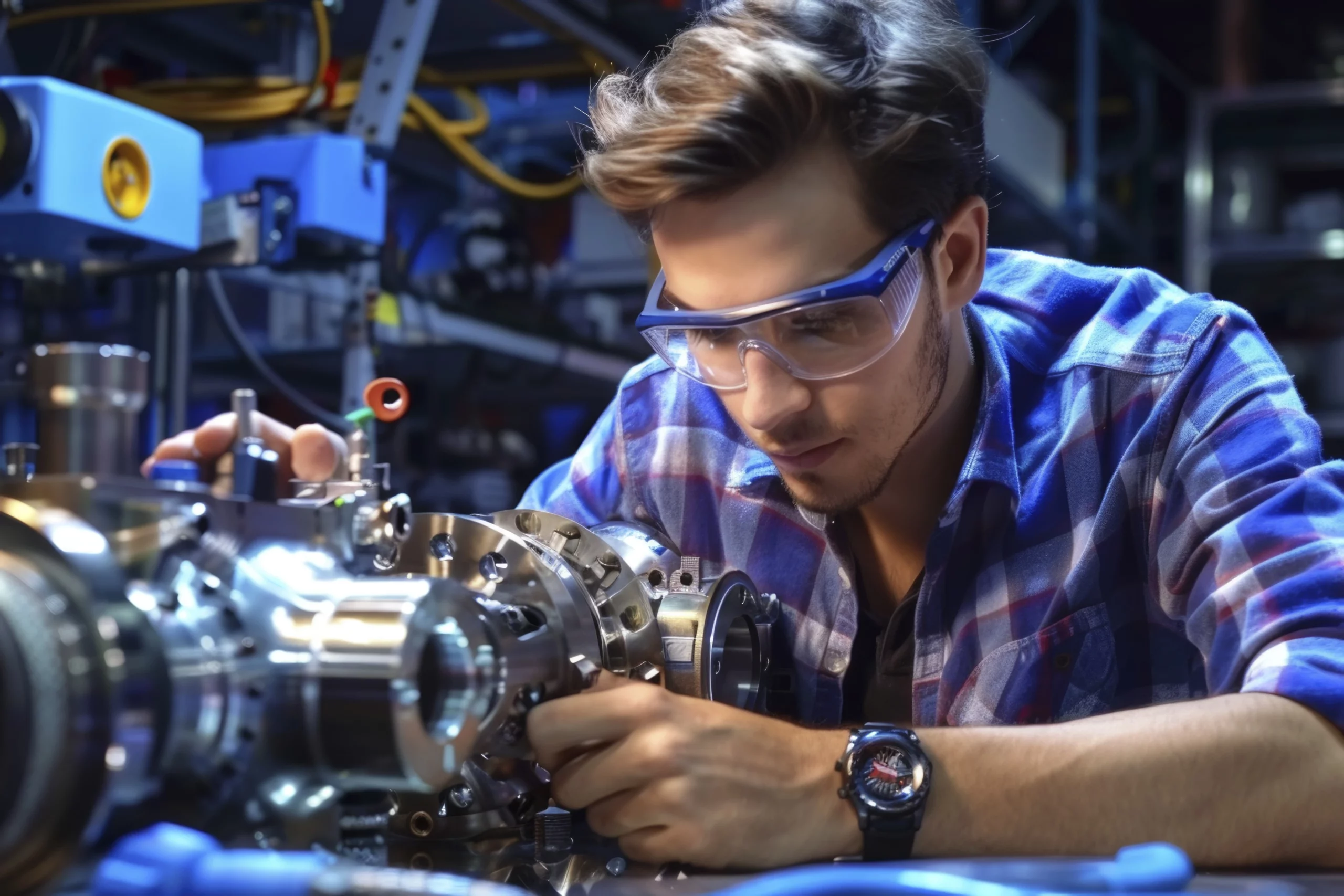
CAE skills are today highly valued for roles in design validation, light-weighting and durability analysis across automotive, aerospace, industrial machinery and consumer products.
A job‑oriented CAE course introduces:
- finite element concepts and tools such as ANSYS, Abaqus, HyperMesh
- modules on structural, thermal and fatigue analysis
- at least a couple of complete project case studies.
Ideal for: Candidates interested in virtual prototyping, simulation and design optimisation roles.
Robotics, Mechatronics and Industrial Automation
A mechanical engineering degree lays the foundation for a career in robotics. Robotics focuses on designing, building, and operating machines that assist humans, often taking over repetitive tasks that would otherwise require human effort.
If you’re curious about this field, gaining hands-on experience is a great way to explore your interest. You can take internships with government agencies or private companies and enrol in certification courses to build your skills and knowledge. Whether you’re passionate about automation or fascinated by human-like machines, robotics offers an exciting and rewarding path to explore.
Robotics and mechatronics have expanded beyond automotive. They have now come to warehousing, logistics, FMCG, and healthcare, driven by collaborative robots and smart material‑handling systems.
Short courses now commonly combine:
- mechanical design, sensors and actuators, microcontrollers/PLC basics,
- robot kinematics and simple automation projects,
- prepare learners for entry‑level roles in integration and maintenance.
Ideal for: Those who enjoy integrating mechanical systems with electronics and control for automated solutions.
PLC–SCADA and Industry 4.0 Automation
If you’re a mechanical engineering graduate considering a career in automation, learning PLC and SCADA could be a game-changer. These skills are in high demand across industries as automation continues to grow, making this course a smart choice for your future.
PLC (Programmable Logic Controller) and SCADA (Supervisory Control and Data Acquisition) are essential technologies for modern industrial automation. Companies looking to streamline operations and improve efficiency rely on professionals trained in these systems.
PLC and SCADA skills remain core in process plants, utilities and manufacturing. But currently they are increasingly combined with Industry 4.0 topics such as IIoT connectivity, data logging and basic analytics.
A strong course will cover:
- ladder logic programming
- HMI design
- communication protocols
- alarms and trends
- introduce cloud‑enabled SCADA
- cybersecurity basics and integration with robots or drives for modern smart factories.
Ideal for: Mechanical engineers moving into plant automation, maintenance, and controls engineering.
Start a Rewarding Career in MEP! Free Demo Classes Here!
Other Emerging Options
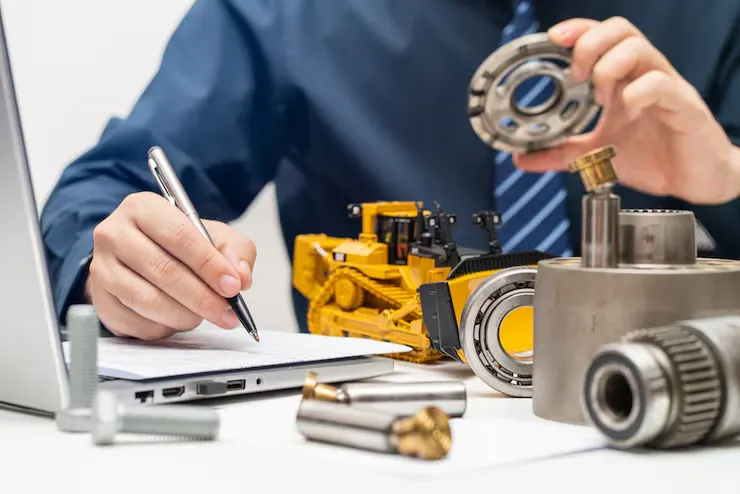
EV & Battery Technology
Courses on EV powertrains, battery pack design, thermal management and charging infrastructure are increasingly popular. This applies particularly for mechanical grads who are entering the electric mobility sector.
Additive Manufacturing (3D Printing)
This includes short certifications on metal and polymer 3D printing. In addition to that design for additive manufacturing and post‑processing support roles in aerospace, healthcare and tooling also work.
Sustainable Energy & HVAC‑R
Programs focusing on solar thermal, heat pumps, energy audits and advanced refrigeration systems go hand-in-hand with the global push towards decarbonisation.
How to Choose the Right Course
It is important that you match the course with your target industry. Some primary choices to pick from include:
- construction (MEP)
- process (piping, PLC‑SCADA)
- manufacturing (CNC, CAE)
- mobility (EVs, rail), or
- operations (SCM).
Check for updated content (Industry 4.0, sustainability, digital tools), strong projects, software exposure, and recognised certification. Don’t get stuck with theoretical syllabus alone. Prefer institutes that provide structured mentorship, placement support and real‑world case studies. This will make the transition from classroom to shop floor or site smoother.
How to Choose the Right Course
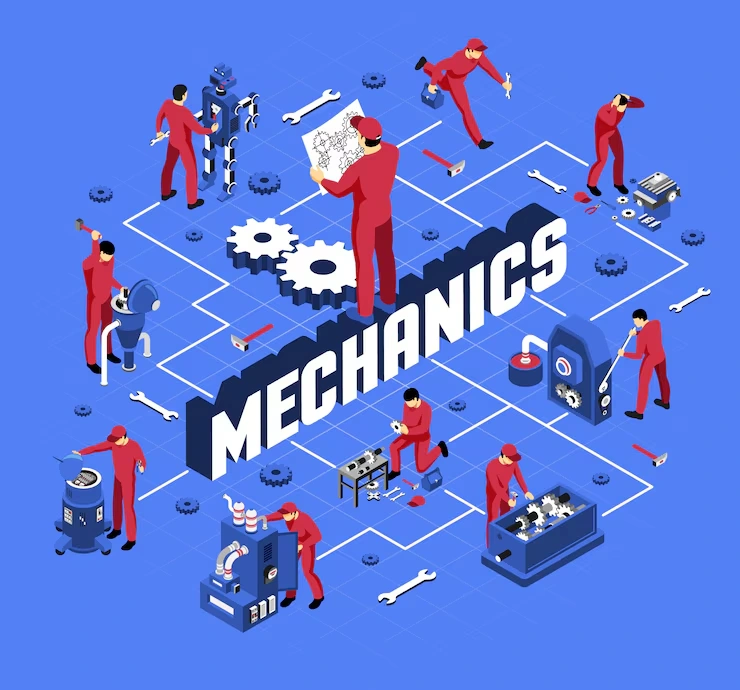
It is important that you match the course with your target industry. Some primary choices to pick from include:
- construction (MEP)
- process (piping, PLC‑SCADA)
- manufacturing (CNC, CAE)
- mobility (EVs, rail), or
- operations (SCM).
Check for updated content (Industry 4.0, etc.), strong projects, software exposure, and recognised certification. Don’t get stuck with theoretical syllabus alone. Prefer institutes that provide structured mentorship, placement support and real‑world case studies. This will make the transition from classroom to shop floor or site smoother.
Entri App provides career oriented training with practical experience. Our team of expert professionals train you to get placed in top notch companies. You have the option of both recorded and live classes with 6 months mentorship.
Master MEP Design with Industry-Leading Training!
Gain in-depth knowledge of Mechanical, Electrical, and Plumbing (MEP) Design with expert-led courses. Learn HVAC, fire safety, sustainable building strategies, and BIM applications to excel in the construction industry.
Know MoreFrequently Asked Questions
Q1. Why should I pursue a short-term course after mechanical engineering?
Ans: Short-term courses help enhance technical skills, improve job prospects, and increase earning potential. They provide specialized knowledge in fields like MEP, Oil & Gas, Robotics, and Supply Chain Management, making graduates more competitive in the job market.
Q2. Which short-term course is best after mechanical engineering?
Ans: The best course depends on your career goals. If you are interested in construction, MEP Design is a great option. For manufacturing, Advanced CNC Programming and CAE Analysis are beneficial. If you want to work in automation, PLC SCADA is ideal.
Q3. Do these courses provide certification?
Ans: Yes, most reputed training institutes provide certifications upon course completion, which can boost your resume and job prospects.
Q4. Are there any prerequisites for enrolling in these courses?
Ans: Most courses require a mechanical engineering degree or diploma, but some specialized courses may require basic knowledge of software like AutoCAD or programming.