Table of Contents
The need to practice good personal hygiene is best instilled in young children at a young age. In addition to keeping kids healthy, it lays the groundwork for future self-sufficiency, self-assurance, and autonomy. But it takes persistence, consistency, and a method that acknowledges children’s innate interest to teach them about personal hygiene to young children.
A child-centered and entertaining technique to promote personal hygiene is the Montessori approach. Based on the principles of self-sufficiency and practical experience, this approach teaches youngsters about personal hygiene via everyday activities and everyday living. Children learn healthy habits in a natural and enjoyable way via Montessori education because it allows them to explore on their own and takes responsibility of their own care.
Register for the Entri Elevate Montessori Teacher Training Program! Click here to join!
Understanding the Montessori Approach
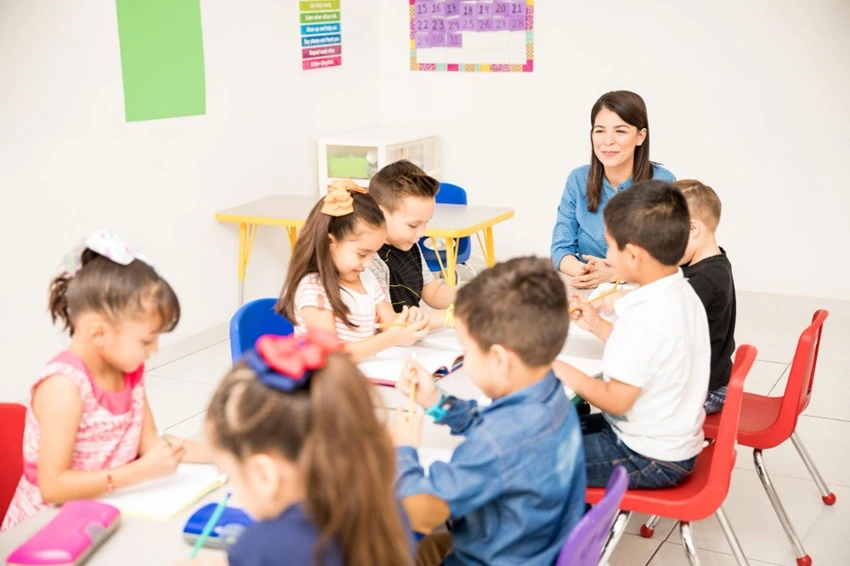
The Montessori method is an educational concept that was founded by Dr. Maria Montessori with the intention of nurturing a child’s natural curiosity, autonomy, and love of learning through the use of play and exploration. Through the use of hands-on experience rather than traditional lecture-based instruction, it enables children to develop their capacity for independence and self-reliance at their own pace.
The requirements of the learner are taken into consideration while designing a Montessori classroom in order to encourage autonomous study. Everything is designed to be readily accessible for children, from the dimensions of the furniture to the layout of the utensils and supplies. This gives children the opportunity to exercise their autonomy in making choices, to work independently, and to take satisfaction in the things that they have achieved.
When it comes to matters of personal hygiene, the Montessori method combines the instruction of children on how to take care of themselves into their regular life skills. By not micromanaging children, we teach them skills that will help them take care of themselves, such as washing their hands, brushing their teeth, and grooming themselves. Through the use of this strategy, personal hygiene is transformed from a necessary evil into an inspirational habit that promotes health on all levels (mental, physical, and spiritual).
Key Montessori Principles Used In Hygiene Education
1: What is the primary focus of the first plane of development in the Montessori method?
The Montessori method incorporates the notion of “Practical Life Education,” which is a bigger concept in which children acquire basic life skills via meaningful, hands-on experiences. Personal hygiene is a component of this larger concept. The successful and natural teaching of hygienic practices is guided by a number of Montessori concepts, including the following:
Independence
In accordance with a key Montessori concept, it is important to provide children the autonomy to complete activities on their own. Providing children with the opportunity to do tasks such as brushing their own teeth, washing their hands, and putting on their own clothing is an example of what might be considered a kind of personal hygiene teaching. In addition to being there to assist their children when they need assistance, parents and instructors are also there to encourage their children to depend on themselves.
Prepared Environment
The learning environment is organized to make hygiene activities accessible. Child-sized sinks, mirrors, towels, and hygiene materials are placed within easy reach, helping children engage without adult dependence. A well-prepared space promotes confidence and consistency in self-care routines.
Learning Through Practical Life Activities
Because the learning environment has been thoughtfully created, doing hygiene activities is not difficult at all. We have placed kid-sized sinks, mirrors, towels, and hygiene goods in handy places to foster autonomous play via the use of these accessories. When one has a clean and well-organized space in which to take care of themselves, it fosters a sense of dependability and self-assurance.
Observation and Guidance
The instructors at Montessori schools keep a close watch on the children in order to evaluate their level of development and determine whether or not they are ready for each activity. It is important for teachers to lead by example by washing their hands often and properly. After that, they should allow pupils to find out how to repair their own errors as they go through the lesson.
Respect for the Child
The ability of children to acquire self-care skills is something that we have trust in, and we treat them with respect. This encouraging environment helps kids develop a sense of self-worth and a healthy relationship with their personal cleanliness, which in turn increases their confidence.
Routine and Consistency
A beneficial routine may be strengthened via the use of regularity. The purpose of adding daily hygiene activities into a Montessori classroom is to assist children in the development of positive habits, such as washing their hands after playing, brushing their teeth after eating, and cleaning up after themselves.
Get Certified & Start Your Montessori Career
Montessori Teacher Training Course by Entri App: Gain expert skills, earn certification, and kickstart your teaching career.
Join Now!Importance of Teaching Personal Hygiene in Early Childhood
Prevents disease and promotes health
Young infants usually become ill and spread germs. Cleaning their hands before meals, flossing twice a day, and keeping their cuticles clean may help youngsters prevent illness and strengthen lifelong immune systems.
Fosters independence and responsibility
Kids gain independence by learning to clean. Students grow more autonomous by being proud of their self-sufficiency in Montessori.
Boosts self-esteem and confidence
Independently completing daily duties boosts kids’ self-esteem. Cleanliness boosts youngsters’ self-esteem. Cleaning, grooming, and maintaining oneself makes people feel more comfortable in social circumstances.
Increases public awareness
Maintaining cleanliness keeps youngsters healthy and teaches them to care for others. People who remember to wash their hands, hide their symptoms, and stay clean get along with others.
Encourages mental and social growth
Child hygiene may impact many aspects of life. Brushing teeth and bathing may teach youngsters organization, impulse control, and detail. When things are organized, kids relax. This keeps youngsters attentive and safe.
Montessori Activities for Teaching Personal Hygiene
Children are able to gain information in the most efficient manner via the Montessori method by participating in activities that are both practical and experiential and that link learning to daily life. The concept of personal hygiene is included in practical life activities, which are activities in which children take part in genuine chores that encourage self-care, independence, and a sense of respect for their environment. Below you will find a number of activities that are inspired by Montessori and are designed to efficiently teach cleanliness in a way that is both entertaining and natural:
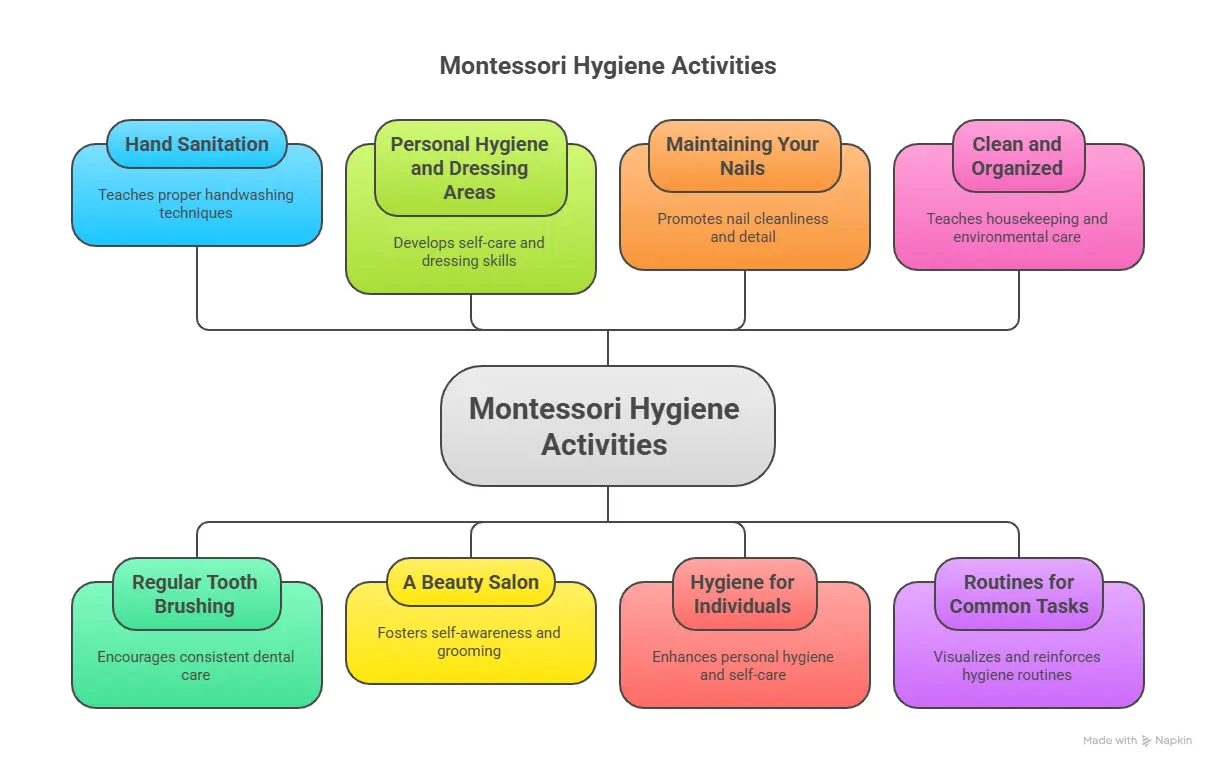
Hand Sanitation
In a Montessori classroom, handwashing improves attention and motor skills.
Prepare one small dish or a low sink, soap, water, a towel, and a tray-mounted nail brush.
This lesson emphasizes handwashing before meals, after playing, and after using the bathroom and teaches youngsters how to do so.
Regular tooth brushing
A small mirror and artificial teeth may help young toddlers practice appropriate dental care.
Place child-friendly goods near a low shelf or hygiene station. A toothbrush, a cup, toothpaste, and a towel are needed.
Learns dental hygiene and its advantages.
Personal hygiene and dressing areas
Montessori clothing structures like buttoning, zipping, and snapping let children learn to dress properly and take care of their appearance.
Autonomy, fine motor skills, and self-confidence in one’s picture may improve.
A beauty salon
Children may learn to groom themselves with a little brush or comb. Since the mirror is at their height, they can see themselves.
This curriculum teaches self-awareness, respect, and hygiene.
Maintaining Your Nails
Kids may clean and trim their nails under adult supervision.
Prepare a towel, nail brush, and a small basin of water. Sharp items are banned.
Promotes cleanliness and detail.
Hygiene for Individuals
Kids may enhance their fine motor skills and personal hygiene by washing their faces with a soft cloth or sponge.
A dish with hot water, a washcloth, a mirror, and a towel are needed.
This learning experience promotes cleanliness and self-care.
Clean and organized
Cleaning tables, dusting, and washing small cloths are Montessori classroom housekeeping activities.
Students learn that personal cleanliness benefits them and their surroundings in this session.
Routines for Common Tasks
Visualizing a toothbrush, bath, and handwashing station may help kids remember and practice basic hygiene routines.
Goal achieved: improved personal cleaning practices.
Register for the Entri Elevate Montessori Teacher Training Program! Click here to join!
Role of Teachers and Parents in Reinforcing Hygiene Habits
When it comes to assisting children in the development of healthy hygiene habits, the Montessori method encourages collaboration between parents and teachers. In order for children to develop self-care, responsibility, and cleanliness, the most effective techniques are for them to see the conduct of their parents and to be reared in an atmosphere that is supportive. Instead of mandating that a kid clean up on their own, parents and teachers may encourage children to develop healthy hygiene habits by providing them with training and providing them with positive reinforcement.
An Illustration of Examples of Good Hygiene Practices
Children often get the greatest knowledge by observing adults. Children should be able to see their parents and teachers engaging in appropriate hygiene behaviors such as washing their hands before eating and after brushing their teeth. This is because cleanliness is infectious. The use of words alone is not sufficient to create a difference; constant modeling is what is required.
Creating patterns that can be used more than once
Kids learn to be clean when their home life is similar to their school life. Kids develop a good attitude toward personal cleanliness when they see the same behaviors in different situations, like someone washing their hands before a snack or cleaning their teeth after eating.
Self-reliance promotion
Parents and teachers should let kids handle their own hygiene. This may involve giving children with scaled sinks, mirrors, and towels in Montessori classrooms. Parents may create a small hygiene space with readily available goods to help kids take care of themselves.
Self-reliance promotion
Every youngster should be responsible for their own hygiene. This may be met by giving Montessori students-sized sinks, mirrors, and towels. Parents may establish a little hygiene area with conveniently accessible products to help youngsters take care of themselves.
Providing a prepared environment
Both parents and teachers do their part to create environments that encourage self-care. In the classroom, hygiene supplies are carefully stored on low shelves, while in the home, bathroom things are arranged in a way that allows them to be easily accessible to children. Independent thought and responsibility are fostered in an atmosphere that is easily available.
Communication and cooperation are crucial
Open contact between instructors and parents ensures hygiene lessons are reinforced. A cohesive approach may be developed by discussing successes, issues, and approaches. This gives kids the same direction and expectations in both environments, which benefits everyone.
Highlighting the Importance of Conducting Oneself with Respect and Mindfulness
Through the use of tales, games, and talks, adults may assist youngsters in comprehending the significance of maintaining a clean environment. This is essential for their personal health as well as the health of individuals who are in their immediate vicinity. The result is the development of characteristics that are crucial to the Montessori learning approach, including as empathy, respect, and civic duty.
Get Certified & Start Your Montessori Career
Montessori Teacher Training Course by Entri App: Gain expert skills, earn certification, and kickstart your teaching career.
Join Now!Benefits of Montessori-Based Hygiene Learning
Through the Montessori method, children are taught to become enthusiastic about hygiene courses, rather than seeing them as a burdensome task. It is beneficial to children’s self-esteem to encourage them to develop healthy habits that will last a lifetime and to encourage them to develop self-reliance and introspection. Some of the most important advantages of a Montessori-based hygiene education are as follows:
- Helps youngsters develop their independence by allowing them to take care of themselves.
- Personal hygiene responsibilities are a great way to increase one’s dignity and self-esteem.
- Coordination and fine motor skills may be developed via activities such as cleanliness and personal grooming.
- Practicing proper hygiene on a daily basis teaches children discipline and order.
- Educating people about health and cleanliness, as well as promoting introspection.
- The instruction teaches children to respect themselves as well as others and to maintain order for everyone.
- Children are able to make better judgments and find solutions to difficulties when they are taught to do sanitary tasks on their own.
- As a result of making individuals feel better about their health, they developed a practice of cleaning.
- By practicing good hygiene, one may reduce the likelihood of being unwell or contaminated.
- Self-care creates a sense of competence and care for children, which is beneficial to their emotional well-being.
- The maintenance of good behaviors is facilitated by encouraging consistency between the home and the school.
- Facilitates the maintenance of positive habits throughout childhood and into adulthood.
Conclusion
When it comes to educating children about personal hygiene, the Montessori method encourages children to develop their independence, self-assurance, and sense of responsibility, while also making self-care a natural and pleasurable part of their everyday lives. The children not only learn how to keep the environment clean, but they also develop self-respect, discipline, and social awareness via the use of activities that include hands-on participation, practical routines, and an environment that has been prepared. A solid basis for lifetime health, well-being, and personal development may be established via the implementation of these Montessori-based hygiene practices, which need regular direction from both teachers and parents.
Get Certified & Start Your Montessori Career
Montessori Teacher Training Course by Entri App: Gain expert skills, earn certification, and kickstart your teaching career.
Join Now!Frequently Asked Questions
How does Montessori teaching make hygiene fun for children?
By using hands-on activities, child-sized tools, and visual routines, hygiene becomes an engaging and independent learning experience.
At what age can children start learning personal hygiene in a Montessori setting?
Children can begin simple hygiene routines, such as handwashing and brushing teeth, as early as 2–3 years old.
What role do parents play in Montessori hygiene education?
Parents provide consistent guidance, model good habits, and create a prepared environment at home that encourages children to practice hygiene independently.
Why is independence emphasized in Montessori hygiene learning?
Independence builds confidence, responsibility, and self-respect, helping children take ownership of their own health and cleanliness.
How can teachers reinforce hygiene habits without being controlling?
Teachers observe, demonstrate, and gently guide children, allowing them to learn through practice and self-correction rather than force.
How does Montessori hygiene education benefit a child long-term?
It fosters lifelong healthy habits, personal responsibility, social awareness, confidence, and a positive attitude toward self-care.
Can hygiene routines be integrated into daily Montessori life?
Yes, hygiene is incorporated into daily routines as part of practical life activities, making cleanliness a natural and consistent habit.