
Table of Contents
The child-led approach where self-correcting is encouraged, hands-on activities build both independence as well as confidence. This includes activities with materials like sandpaper letters and moveable alphabet for kids with ages between 3 and 5.
Research based on such teaching lessons shows that kids in such prepared language environments show significant developments with faster vocabulary growth and early reading skills. This applies to six months of consistent practice as per aligned classroom observations (AMS) 2023-2024.
Register for the Entri Elevate Montessori Teacher Training Program! Join Now!
Key Takeaways
- Montessori language lessons include sensorial, phonetic, and child-led activities.
- Use concrete, symbolic progression including objects, sounds, letters, words and sentences.
- Short 20 to 30 minute work cycles are most effective.
- Supports multilingual classrooms (highly relevant for Kerala preschools).
- Easily adaptable for home, Anganwadi, and hybrid preschools.
- Montessori TTC trainees can implement these lessons immediately.
Why Montessori Language Lessons Boost Preschool Literacy
1: What is the primary focus of the first plane of development in the Montessori method?
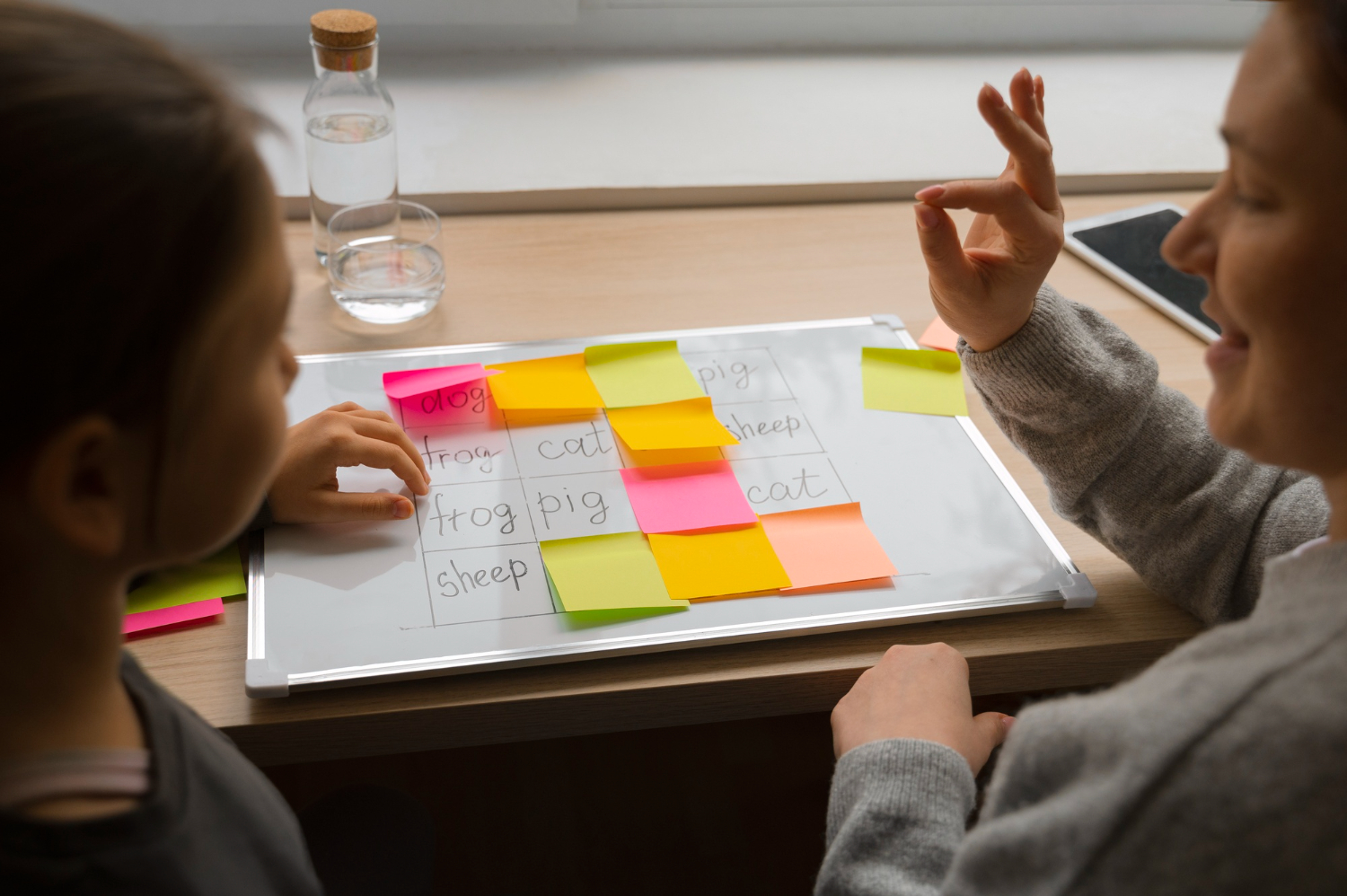
Montessori language lesson plans prioritize sensory exploration over memorization. This helps children feel sounds before they actually see them.
Key Benefits
- Builds phonetic awareness faster through sound games and tactile tracing.
- Promotes independent learning with self-correcting materials.
- Expands real-world vocabulary using object baskets and cultural stories.
- Develops fine motor skills for writing readiness.
- Encourages confidence in speaking and storytelling.
If you are working on certificate pathways, even as a Montessori TTC trainee, you can integrate these lessons into practicum portfolios. This needs structured observation records to keep track of.
Get Certified & Start Your Montessori Career
Montessori Teacher Training Course by Entri App: Gain expert skills, earn certification, and kickstart your teaching career.
Join Now!Core Montessori Language Lesson Plans
Here are 10 ready-to-implement activities you can adopt right away.
Quick Overview
| Lesson | Focus Area | Age | Duration | Key Material | Outcome |
| 1 | Sound Games | 3 to 4 | 20 min | Voice | Phonemic awareness |
| 2 | Sandpaper Letters | 3 to 5 | 25 min | Sandpaper letters | Sound-symbol link |
| 3 | Moveable Alphabet | 4 to 5 | 30 min | Wooden letters | Word building |
| 4 | Vocabulary Basket | 3 to 4 | 20 min | Real objects | Noun expansion |
| 5 | Storytelling Circle | 3 to 5 | 25 min | Picture cards | Narrative skills |
| 6 | I Spy Phonics | 4 to 5 | 20 min | Classroom items | Sound blending |
| 7 | Three-Part Cards | 3 to 4 | 25 min | Language cards | Matching & reading |
| 8 | Rhyming Chains | 3 to 5 | 20 min | Rhyme objects | Rhythm awareness |
| 9 | Simple Sentences | 4to 5 | 30 min | Sentence strips | Grammar basics |
| 10 | Cultural Stories | 3 to 5 | 25 min | Books/flags | Global vocabulary |
Detailed Lesson Plans – Montessori TTC Format
You have to stick to the Montessori TTC principals while framing the lesson plans. To make it more practical, ensure that you stick to a fixed structure.
The important factor is to observe everything keenly. Understand what applies more to the bunch of kids at hand and how the activities can be introduced to them. Then you have to present it to the kids as interesting as possible and foster curiosity. This will have to make bringing them to practice the activity easier. Thereafter the kids will take over and lead the activity or game at hand.
Structure: Observe → Present → Practice → Extend
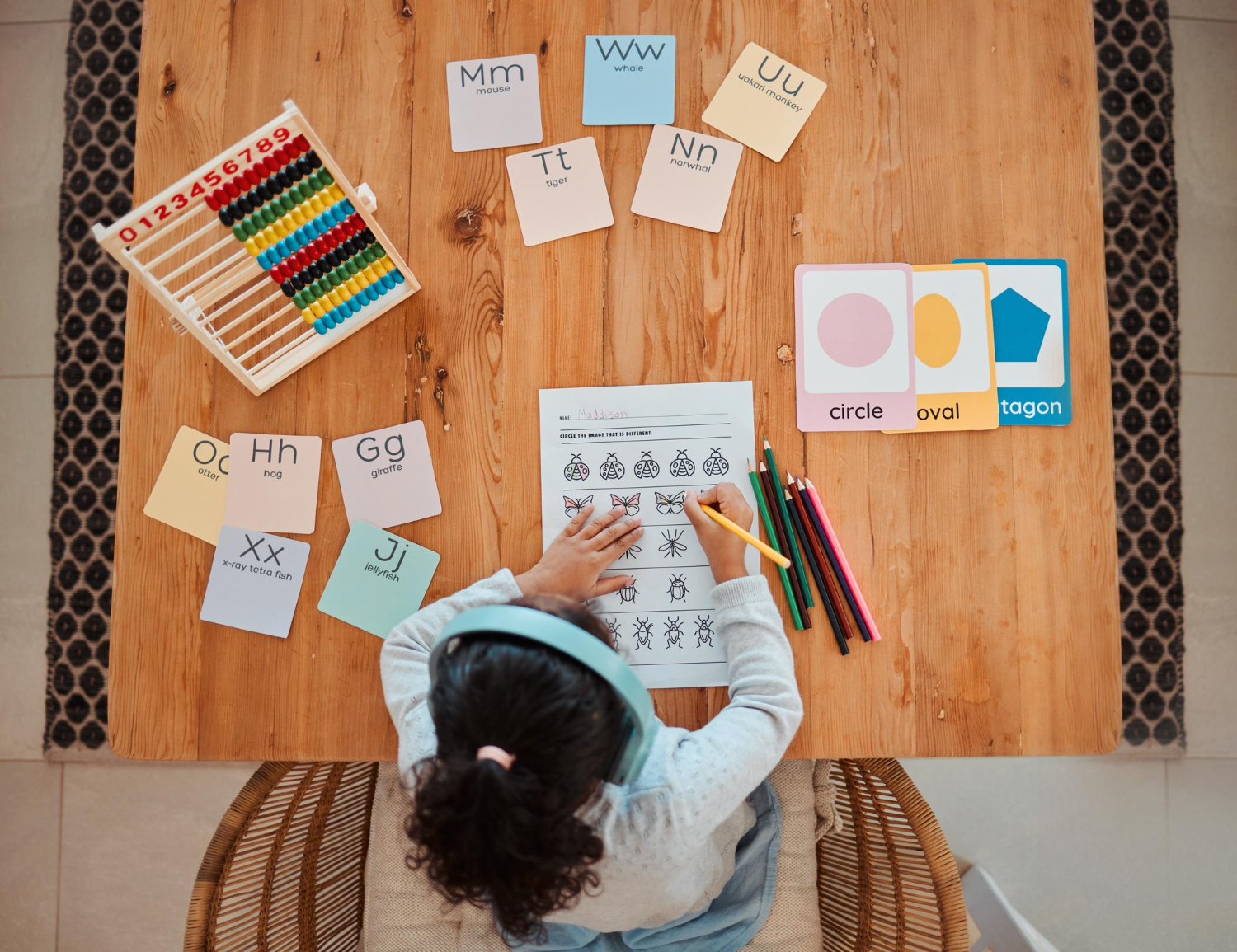
1. Sound Games (Phonemic Awareness Starter)
Objective: Isolate beginning sounds.
Materials: None (voice-led).
Presentation: Sit in a circle and say, “I spy something that starts with /m/ — mat.”
Practice: Child identifies objects with the same sound.
Extend: Child leads the game.
Assessment: Child identifies at least five initial sounds independently.
2. Sandpaper Letters (Tactile Phonics)
Objective: Connect sound with symbol through touch.
Materials: Sandpaper letters.
Presentation: Trace letter while saying sound: “This is /a/.”
Practice: Child traces with eyes closed for muscle memory.
Extend: Match letter to objects (a → apple).
Outcome: Strong sound-symbol association.
3. Moveable Alphabet (Word Building)
Objective: Form phonetic words before writing.
Materials: Moveable alphabet.
Practice: Child builds words like cat, mat, sun.
Extension: Picture-to-word matching for reading readiness.
4. Vocabulary Basket – Real Objects
Objective: Expand nouns using concrete items.
Materials: Basket with real objects (shell, spoon, leaf).
Activity: Three-period lesson: “This is a shell → show me shell → what is this?”
Extension: Add multilingual vocabulary (English + Malayalam).
5. Storytelling Circle
Objective: Develop sequencing and speaking confidence.
Materials: Picture cards.
Children arrange cards and narrate a story.
Builds grammar, imagination, and sentence flow.
6. I Spy Phonics (Blending Sounds)
Objective: Blend sounds into words.
The teacher says: “I am thinking about something that says /c/ /a/ /t/.”
The child brings them together to utter “cat”.
7. Three-Part Cards (Pre-Reading)
Objective: Match picture → word → label.
Promotes visual discrimination and reading readiness.
8. Rhyming Chains
Objective: Recognize rhyming patterns.
Use objects: cat–hat–mat.
Build phonological rhythm.
9. Simple Sentences
Objective: Introduce subject–verb–object.
Use sentence strips: “The dog runs.”
Child matches to picture.
10. Cultural Stories – Global Vocabulary
It would be more effective if you introduce stories from different cultures. In Kerala classrooms, include local festivals, foods, and traditions to build contextual vocabulary. You can include visual cues to make them identify each of them.
Materials Checklist for Montessori Language Lessons
Here is a checklist to keep for the Montessori language lessons.

Essential Environment Setup
☑️Sensory: Sandpaper letters, moveable alphabet
☑️Visual: Three-part cards, picture books
☑️Hands-on: Object baskets, sentence strips
☑️DIY Options:
- Sandpaper + cardboard letters under ₹200
- Magazine cut-outs for cards
Get Certified & Start Your Montessori Career
Montessori Teacher Training Course by Entri App: Gain expert skills, earn certification, and kickstart your teaching career.
Join Now!Implementation Tips for Montessori TTC Teachers
- Observe before presenting – follow the child’s interest.
- Work within a sensitive period of 3 to 6 years.
- Keep lessons short and repeatable.
- Use mixed-age peer learning.
- Document progress through portfolios instead of tests.
- Avoid over-correction; allow self-discovery.
- Integrate multilingual vocabulary (English + mother tongue).
Common Challenges & Solutions
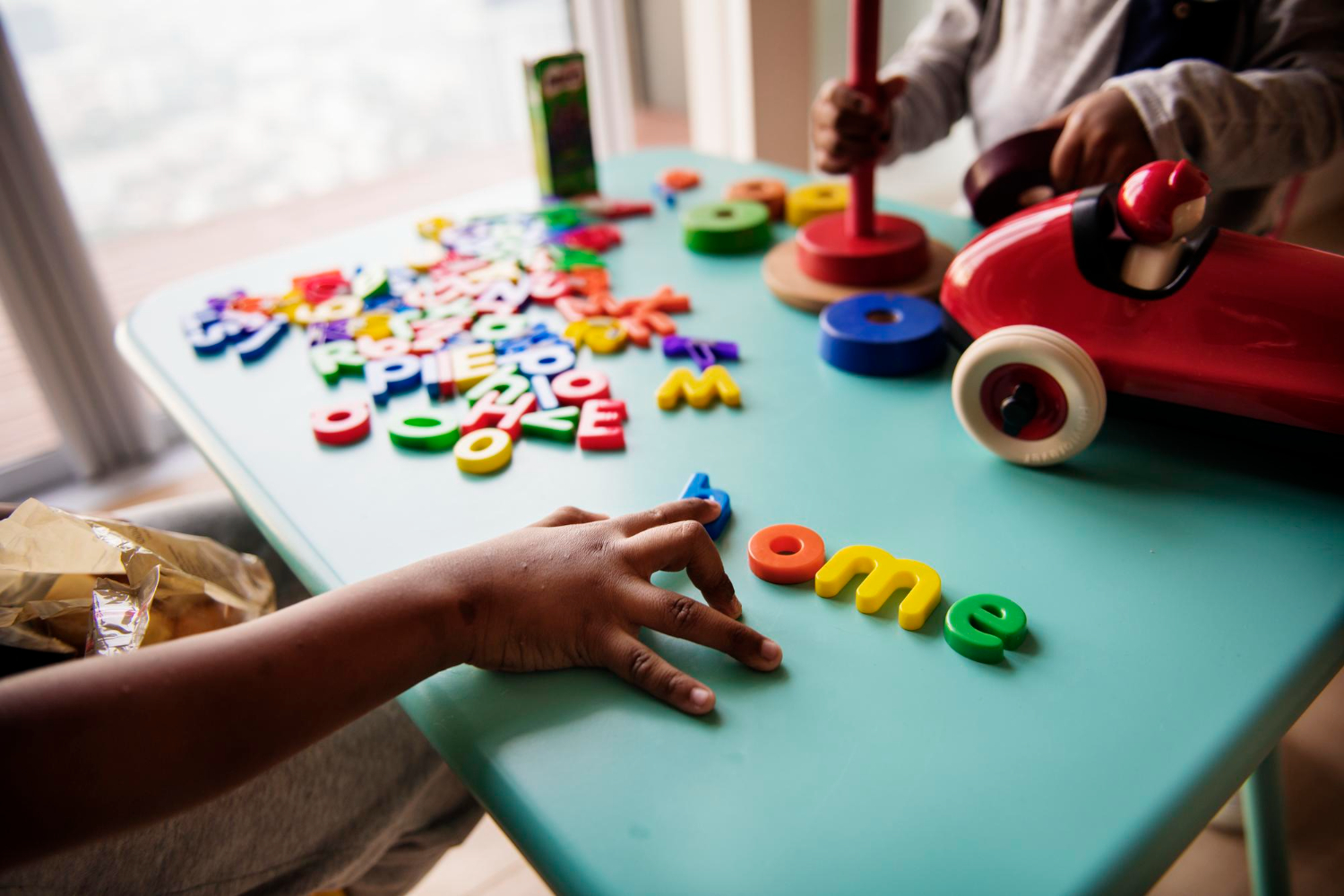
There are still some challenges that come in its way of implementing the Montessori way of doing things. The reasons can be a handful, and here are the common ones. You can come up with solutions for these as follows:
The Lesson Feels too Teacher-Led
In this case, you can find an alternative. You can offer options to choose from by providing a choice of materials to pick.
The Child is not Tracing
Well, this is more common than anything. In such instances, you can return to sound games and come back later. Not pushing kids to do anything is key. Let them feel at ease and choose to do the activities themselves.
Limited Budget
If this is the case, you might want to pick up some DIY materials. Being creative around the kids can make your job also more interesting. Kids would love to have that from you.
Mixed Ability Group
Okay, this is also obvious in a group of kids. Not every kid aligns with the tasks equally. In that case, provide them parallel tasks to work on.
Assessment in Montessori Language Lessons

- Observation checklists
- Work samples (moveable alphabet words)
- Audio storytelling recordings
- Vocabulary growth logs
Register for the Entri Elevate Montessori Teacher Training Program! Join Now!
Conclusion
Montessori lessons and philosophy have already been established as an effective teaching practice since date. The ways in which Montessori language lesson plans can transform preschool kids have been explored here. They can be transformed into early readers, confident speakers, and thereby joyful storytellers. This can be made possible through hands-on, child-led activities.
The teachers and parents can create a prepared environment at school and home that nurtures and fosters literacy as naturally as possible. All you need is to follow the model ‘Observe–Present–Practice–Extend’. Stop idling your time on prep videos and start creating your own lesson plans right away.
|
RELATED POSTS |
|
Get Certified & Start Your Montessori Career
Montessori Teacher Training Course by Entri App: Gain expert skills, earn certification, and kickstart your teaching career.
Join Now!Frequently Asked Questions
What age is best for Montessori Language Lessons?
Ages 3 to 5 is a great time for Montessori language lessons. By this age, the language explosion stage is already in full swing.
How long should a lesson last?
Ideal length for a lesson is around 20 to 30 minutes. This time frame fits neatly into a work cycle for young children.
Do children learn phonics or the whole language?
In Montessori, we start with phonics and work our way up to reading – it’s kind of a natural progression.
Can This Work in Non-Montessori Schools?
Absolutely, they can. There are a lot of non-Montessori preschools that are having great success with hybrid models.
How do I assess my child's progress?
Progress is usually best evaluated through a combination of observation and looking over their work, not through tests.
What if a child is multilingual?
If a child is already speaking a few languages at home, you’ll find that Montessori encourages learning multiple vocabularies at the same time.
Is writing taught before reading?
Kids usually get to build their words first, then learn to read them. In this way, they get a feel for the sounds.
What is the first language activity?
It usually starts with Sound games, basically just getting their mouth round all the different sounds.
Are using digital tools advisable?
We only use digital tools as a bit of a helper. Never use them as a replacement for hands-on materials.
What materials are a must have for beginners?
For a good start you’ll want to get hold of sandpaper letters, a moveable alphabet, and a little object basket.