Table of Contents
Through the cultivation of creativity, self-reliance, and a respect for individual learning, working as a Montessori teacher offers a unique opportunity to shape the minds of young children. Maria Montessori was the person who provided the inspiration for the Montessori educational approach, which places a significant focus on learning via experience and inquiry led by the child. Having knowledge about the Montessori career path can assist you in making decisions that are both intelligent and fulfilling, regardless of whether you are just beginning your teaching career or are going to teach for a long period of time.
Register for the Entri Elevate Montessori Teacher Training Program! Click here to join!
Entry-Level Montessori Teaching Roles
Most Montessori teachers start in entry-level positions. They receive practical experience and a better understanding of the strategy through these jobs. These jobs allow entry-level workers to gain knowledge and experience to grow in the company.
1. Montessori Assistant Teacher
Montessori Assistant Teacher Starting with this point is typical of the Montessori technique. Assistant teachers help guide teachers with classroom discipline, class preparation, and student monitoring. Student supervision is also their responsibility. They learn to be calm while helping kids become self-sufficient, which benefits them.
2. Support Staff
Staff members in this job assist with classroom preparation, administrative responsibilities, and Montessori material organization. These contents may include language, practical life, and sensory activities. Learn about Montessori principles before enrolling in a full-time teacher training program.
3. Intern Montessori Teacher
Montessori certification candidates can intern in program schools. They observe, then assist, and then teach smaller groups of kids under adult supervision. This discussion links theory with classroom training.
Skills Acquired during entry-level
- Capabilities Acquired During the Initial Phase:
- Management strategies for the classroom and observational methods
- Acquiring an understanding of child-centred learning
- Preparation of instructional materials
- Communication and collaboration with teachers and parents are essential.
In order to become a certified Montessori lead teacher, which allows one to autonomously create and implement child-centred learning experiences, entry-level Montessori teaching positions serve as stepping stones on the path to such accreditation.
Career Growth Opportunities in Montessori Education
1: What is the primary focus of the first plane of development in the Montessori method?
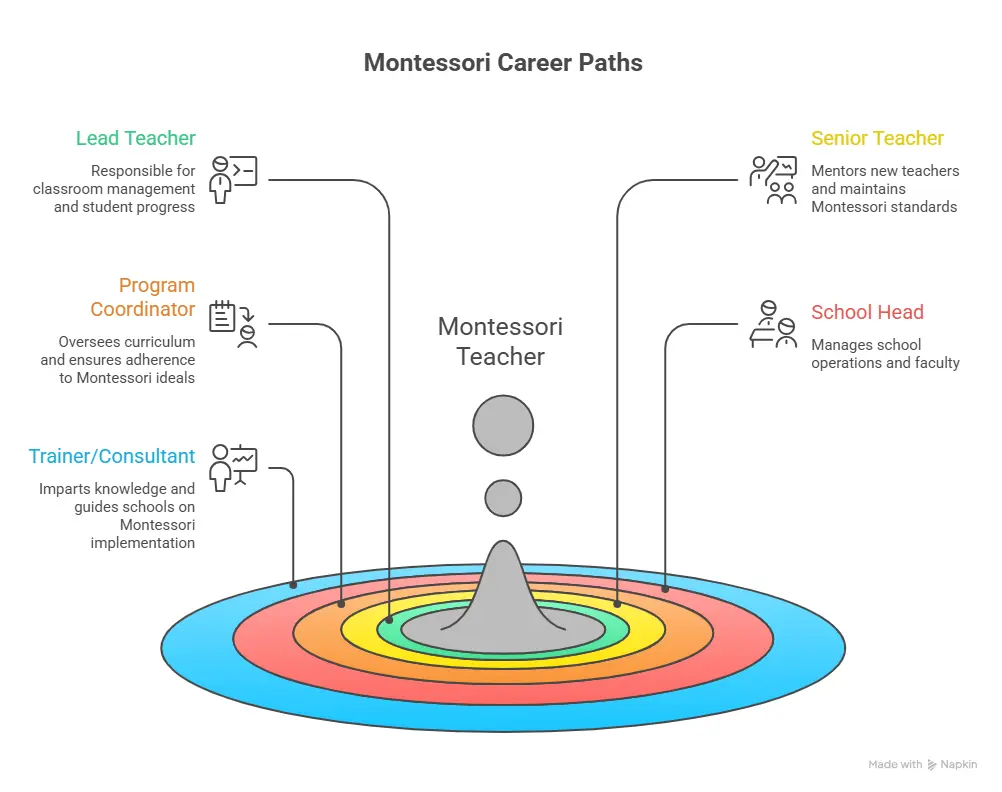
A career in Montessori education provides opportunity for ongoing professional development and growth and development opportunities. Through the accumulation of experience, educators have the opportunity to advance into roles that are more specialized and focused on leadership, so expanding their influence within the educational community.
1. Lead Montessori Teacher
Many educators rise to the position of lead teacher after obtaining certification and earning experience. As part of their responsibilities in this position, they are responsible for the entirety of a classroom, including lesson planning, monitoring student progress, and guiding children through autonomous learning. It is also the responsibility of lead teachers to mentor assistant teachers and to keep parents informed.
2. Senior Montessori Teacher or Mentor
A professional can become a senior teacher or a mentor after gaining several years of teaching experience. This allows them to provide guidance to novice teachers. The maintaining of Montessori standards and the promotion of professional development among their contemporaries are both significantly aided by their contributions.
3. Coordinator of Montessori Classroom Programs
The role of the curriculum coordinator is to direct the educational programs that cater to pupils of different ages. They often work closely with school officials to check that the lessons and methods of instruction are in line with the original Montessori ideals, which helps to keep the educational quality high.
4. The head of a Montessori school
School directors and heads of school are among the administrative roles that trained Montessori experts might pursue after gaining experience. All the while keeping the school’s commitment to the Montessori philosophy in mind, these people are in charge of the faculty, admissions, finances, and daily operations.
5. Montessori Trainer or Consultant
A number of educators make the decision to pursue careers as teacher trainers or consultants, as a means of imparting their knowledge to aspiring Montessori teachers or providing guidance to schools regarding the implementation of curriculum. By following this path, they will be able to exert a greater effect on Montessori education.
Get Certified & Start Your Montessori Career
Montessori Teacher Training Course by Entri App: Gain expert skills, earn certification, and kickstart your teaching career.
Join Now!Salary and Experience Progression
In Montessori Education, the pay scale is determined by years in the field, how many certifications the teacher has, and if the teacher is in a management position. With curricular and managerial experience, the teacher’s salary, position, and respect in the profession grows.
1. Starter Stage (Assistance and Interns)
When starting in Montessori Education, assistant and intern positions are the ones with the lowest pay. Their job is to learn to manage a classroom, aid the lead teacher in instruction, and prepare materials for the Montessori method. Although the pay is low, this stage is critical for experience and one’s own confidence in teaching.
2. Certified Lead Teacher in the Montessori Method
Teachers are able to supervise classrooms on their own if they have obtained certification from a recognized program such as the Association Montessori Internationale (AMI) or the American Montessori Society (AMS). The salary of lead teachers are much greater than those of other instructors because of their qualifications and the duty they have to guide the intellectual and emotional development of students.
3. An experienced or senior educator in the Montessori method
It is common for instructors to advance into senior positions or mentor roles after gaining five to ten years of experience. As they get a more in-depth understanding of Montessori principles and contribute to the development of staff or the preparation of curriculum, their salaries grow.
4. Positions Regarding Administration and Leadership
The positions that give the highest salary in Montessori institutions are those that involve curriculum coordination, school director, or center head. Staff members, operations, and long-term academic planning are all under the supervision of these professionals. One of the benefits that comes along with leadership responsibilities is the opportunity to get professional training allowances or incentives based on performance.
4. The opportunities for self-sufficiency or business ownership, respectively
Educators often make the decision to build their own Montessori centers, become consultants or trainers, or both in order to increase their income and have more freedom in their work. Teachers are able to combine their management skills with their teaching responsibilities through the practice of entrepreneurship.
Long-Term Career Options in Early Childhood Education
In the field of early childhood education, the Montessori method incorporates a substantial number of different techniques. In the future, there are a variety of job options available to educators, including management, research and consultancy, and even the possibility of starting their own business. They are able to bring about good change and make a greater difference in the lives of their children as a result of this.
1. The Director – Montessori Learning Center
When they have worked in the Montessori sector for a few years, some Montessori instructors go on to pursue roles such as principals and school directors. Among their many responsibilities, they are responsible for supervising a group of teachers, ensuring that the school operates well, and defending the genuineness of Montessori education. The use of this strategy is an excellent way to accomplish both the goal of establishing a solid educational foundation and the goal of securing your professional future.
2. Education Consultant or Teacher Trainer (Montessori Methods)
Teachers who have a significant amount of experience can become trainers or consultants, guiding new teachers and advising schools on how to effectively implement Montessori principles once they have gained this experience. It is possible for them to work individually or in conjunction with training institutes, leading workshops and professional development sessions.
3. Creator of Educational Programs for Young Children
Montessori schools, publishing firms, and educational organizations are all potential places for educators who possess the creative and analytical talents necessary to segue into the field of curriculum design. They create learning materials, lesson plans, and activities that are based on child-centred education and are appropriate for children of a certain age.
4. Positions in the Research and Policy Departments
Following their Montessori education, some teachers go on to pursue studies in early childhood education policy or to perform research in the region. Researchers may collaborate with educational institutions, non-governmental organizations (NGOs), or government agencies in order to investigate the impact that early childhood education has on the growth and development of students, the effectiveness of programs that prepare teachers, or the possibility of modifying existing regulations.
5. Educational Entrepreneurship
There are a lot of experienced Montessori teachers that create their own preschools or centers because they want to combine their passion for teaching with their entrepreneurial soul. In the event that they take charge of a school and contribute to its success, teachers have the ability to mold their classrooms and pedagogy in line with their own personal values and priorities.
Learn the Montessori philosophy, classroom management techniques, and hands-on activities!
Conclusion
An education in the Montessori method is not merely a profession; rather, it is a journey of development, learning, and effect that continues throughout one’s entire life. Instructors have the power to affect the futures of young people by encouraging creativity, independence, and respect. This beginning with entry-level employment and proceeding to leadership roles, instructors have the ability to influence the destinies of young people.
While the Montessori road offers possibilities for professional progress and important experiences, it also offers the chance to study and develop outside of the classroom through training, administration, research, and company ownership. In addition, the Montessori path offers valuable experiences. By possessing the traits of enthusiasm, certification, and dedication, Montessori educators have the ability to have a substantial and profitable career in the field of early childhood education. This is the case on the condition that they exhibit these qualities.
As a result of their personal and professional fulfilment, Montessori teachers are in a position to exert an influence on the manner in which their students acquire knowledge.
Get Certified & Start Your Montessori Career
Montessori Teacher Training Course by Entri App: Gain expert skills, earn certification, and kickstart your teaching career.
Join Now!Frequently Asked Questions
What qualifications are required to become a Montessori teacher?
You’ll need a recognized Montessori training certificate from an accredited institution such as the Association Montessori Internationale (AMI) or American Montessori Society (AMS). A background in education or child development is also beneficial.
How much can a Montessori teacher earn?
Salary depends on experience, location, and certification level. Entry-level assistants earn modest pay, while certified lead teachers, coordinators, and directors can earn significantly higher salaries.
How can Montessori teachers grow their careers?
Teachers can pursue advanced certifications, take on leadership roles, become trainers or consultants, or open their own Montessori centers to expand their career scope.
Is Montessori teaching a stable and long-term career?
Absolutely. Montessori education is in growing demand globally, offering stability, fulfillment, and continuous opportunities for career advancement.
Can Montessori teachers work in regular schools?
Yes. Many Montessori-trained teachers also work in traditional or hybrid schools, bringing child-centered and hands-on learning approaches into mainstream classrooms.