Table of Contents
Pre-programmed robots are machines that do their thing based entirely on the code that some human wrote at some point, with no real-time learning thrown in. They’re a huge deal in industrial automation because they can deliver results that are near perfect in every way – precision, speed, and repeat. This applies if you’re working in a pretty controlled environment.
According to the International Federation of Robotics (IFR), by 2025 there are going to be over 3.9 million of them working in factories across the world, and most of them are the kind that just follow a set of pre-programmed instructions to get the job done – the sort of thing you might see powering the automotive, electronics, and logistics sectors.
Ever seen a robot big arm welding car frames or slapping products onto packaging at breakneck speed? Chances are you’ve seen a pre-programmed robot in action!
New to Robotics? Start from the Basics. Join Now!
Key Takeaways
- Pre-programmed robots just follow the script as given by the person who programmed them.
- About 75% of all industrial automation goes on using these types of robots.
- They can stick to the job at hand with almost perfect reliability in really high volume manufacturing operations.
- They come in a few different forms – think articulated, Cartesian, SCARA, cylindrical, polar and delta robots.
- As for returns on investment – in big scale production you can usually start seeing the benefits of having them in place within a year or so.
- They really come into their own when it comes to pretty predictable, super repetitive, high precision work.
What are Pre-Programmed Robots?
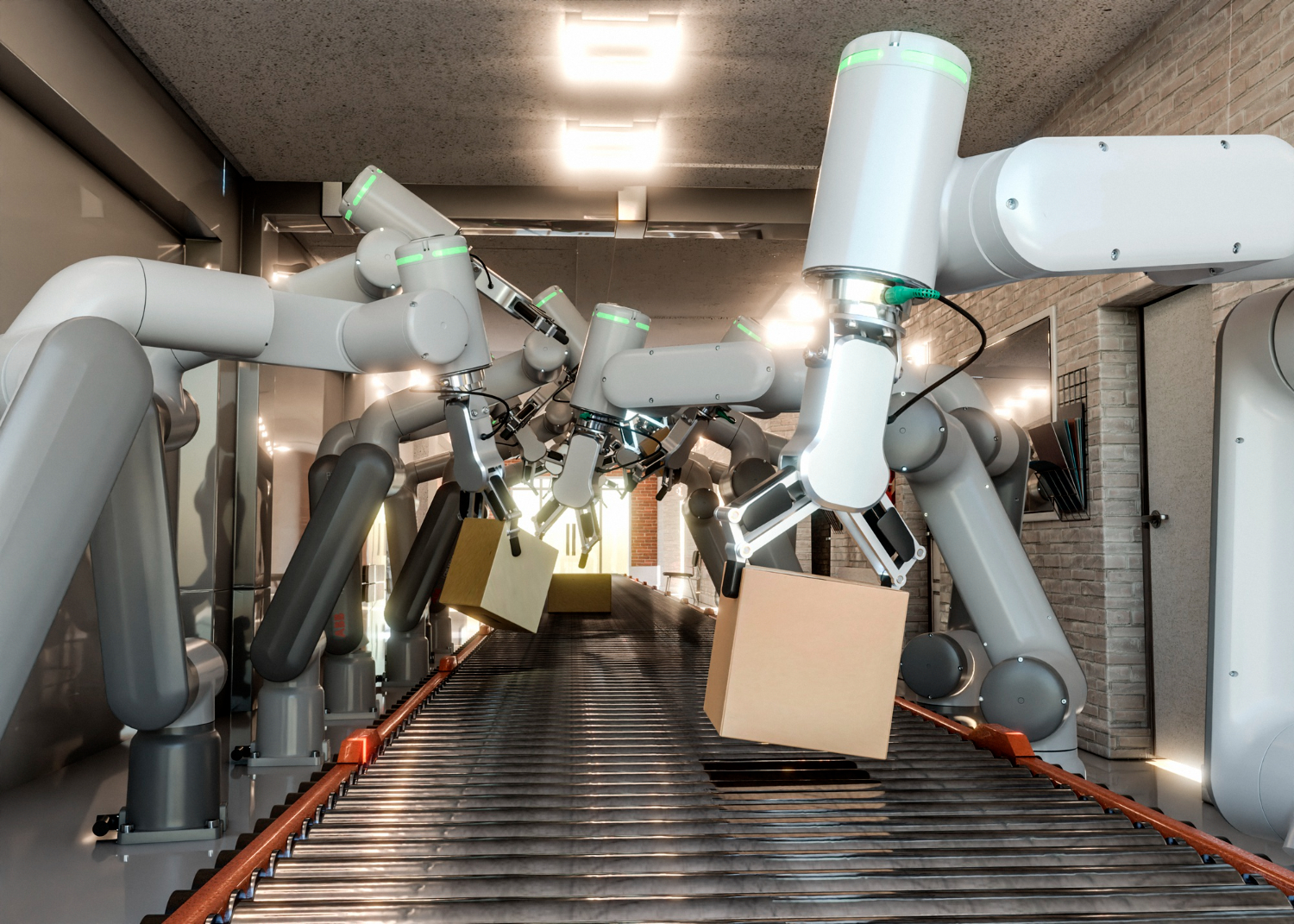 Pre-programmed robots are machines that perform repetitive tasks using hardcoded instructions stored in controllers. They operate deterministically, meaning every movement and action is predefined. Statista estimates that these robots make up nearly 80% of the $16.5 billion service robotics market in 2025, reflecting their reliability and industrial dominance.Unlike AI robots that adapt using machine learning, pre-programmed robots execute fixed workflows. They are ideal for environments where consistency is critical – like welding car chassis or assembling microchips.
Pre-Programmed Robots vs AI Robots
Well, it is repeatedly being enquired if these robots work along with AI. In fact, they work differently and here is how they are different.
| Feature | Pre-Programmed Robots | AI Robots |
| Decision-Making | Fixed code paths | Machine learning adapts |
| Flexibility | Low; task-specific | High; handles variations |
| Cost (2025 avg) | $20K to $100K | $50K to $500K+ |
| Examples | Pick-and-place arms | Autonomous drones |
| Market Share | 75% industrial | 25% emerging |
Simply put, pre-programmed robots prioritize precision. AI robots prioritize adaptability.
Master Robotics and AI!
Ready to build the future? Join our comprehensive robotics course to bridge the gap between complex code and physical motion. You’ll gain hands-on experience giving you the technical edge needed to lead in the age of automation.
Know MoreHow do Pre-Programmed Robots Work?
Pre-programmed robots work by executing sequential code via microcontrollers or PLCs (Programmable Logic Controllers). Engineers write instructions in languages like C++, Python, or Ladder Logic. These instructions control sensors, motors, and tools to complete tasks. In automotive plants, IFR data shows these robots achieve 99.9% uptime, often processing over a million components daily.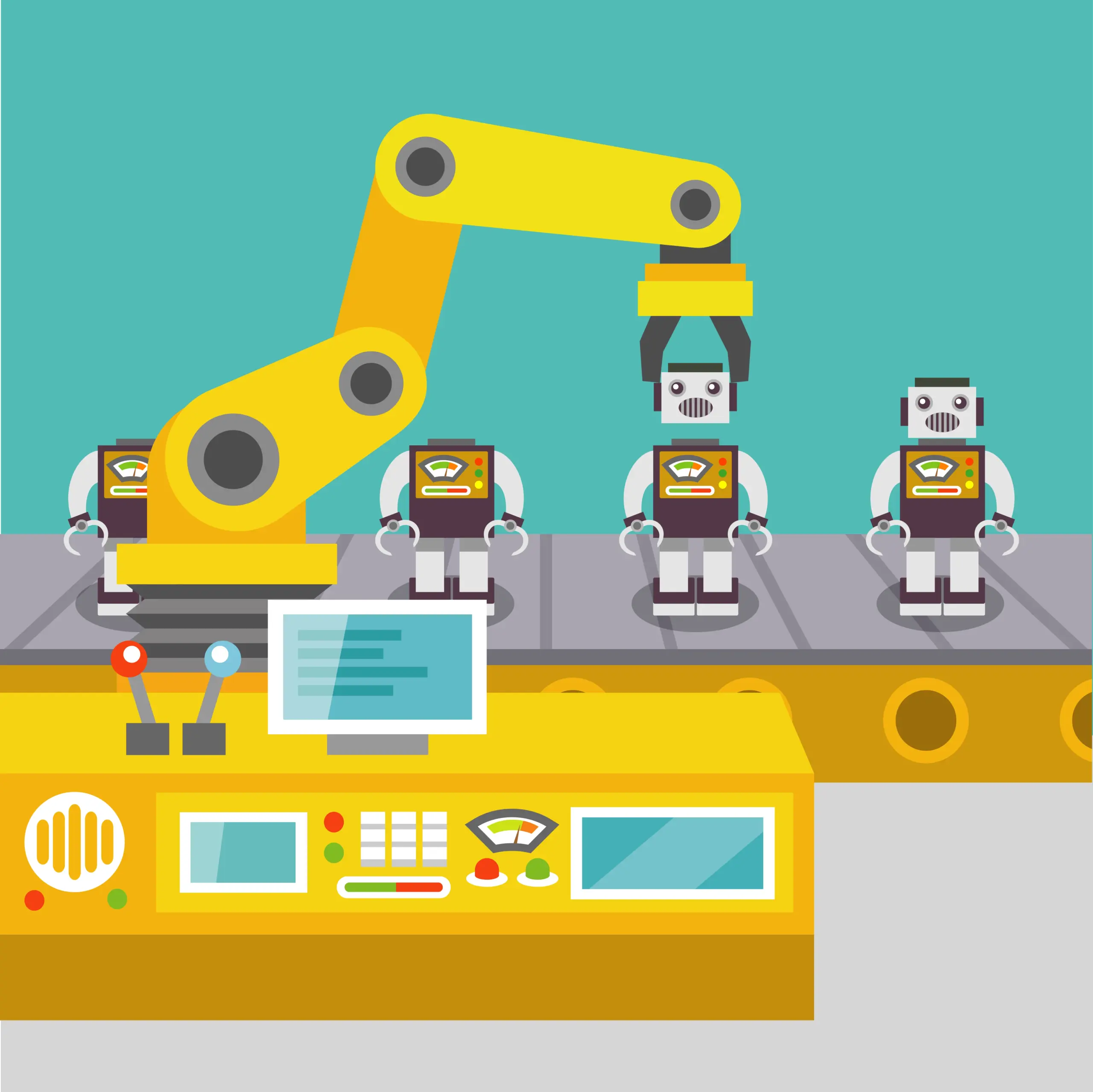
Key Components of Pre-Programmed Robots
In making the pre-programmed robots function, there are numerous components that work well. Here is a crisp glimpse at what they are and how they make things function with examples.
| Component | Function | Example Tech |
| Controller / PLC | Executes code | Siemens S7-1200 |
| Sensors | Detect position/environment | Encoders, limit switches |
| Actuators | Drive motion | Servo motors, stepper motors |
| End-Effector | Performs task | Grippers, welders |
| Programming Interface | Code input | Teach pendants, ROS |
Each component works in synchronization – sensors detect input, the controller processes it, actuators move, and the task repeats in milliseconds.
Step-by-Step Workflow
1. Code Writing
Engineers flesh out the details of how the thing moves in simulation software – like RoboDK for example.
2. Simulation & Testing
You test it out in a virtual world before trying to do it for real to catch any mistakes before it causes any real problems.
3. Upload & Calibration
The code gets loaded up into the PLC (which is like the brain of the robot essentially) and the sensors get dialled in so they’re working just as they should be.
4. Execution Loop
Sensors send info to the controller, the actuators respond and it all starts over.
Sensors → Controller → Actuators → Repeat.
5. Monitoring
Dashboards on the HMI track the basics in real-time.
This closed-loop system ensures speed, safety, along with predictable output.
Types of Pre-Programmed Robots
There are six main types of pre-programmed robots and they come in a variety of flavours since they’re each tailored to suit a specific industrial task. Their design all comes down to how many degrees of freedom (DOF) they’ve got, how much weight they can carry and how much space they’re going to be working in. It is predicted that there’s going to be another 2.7 million robot installations by 2027 and articulated arms are going to account for roughly 40% of them.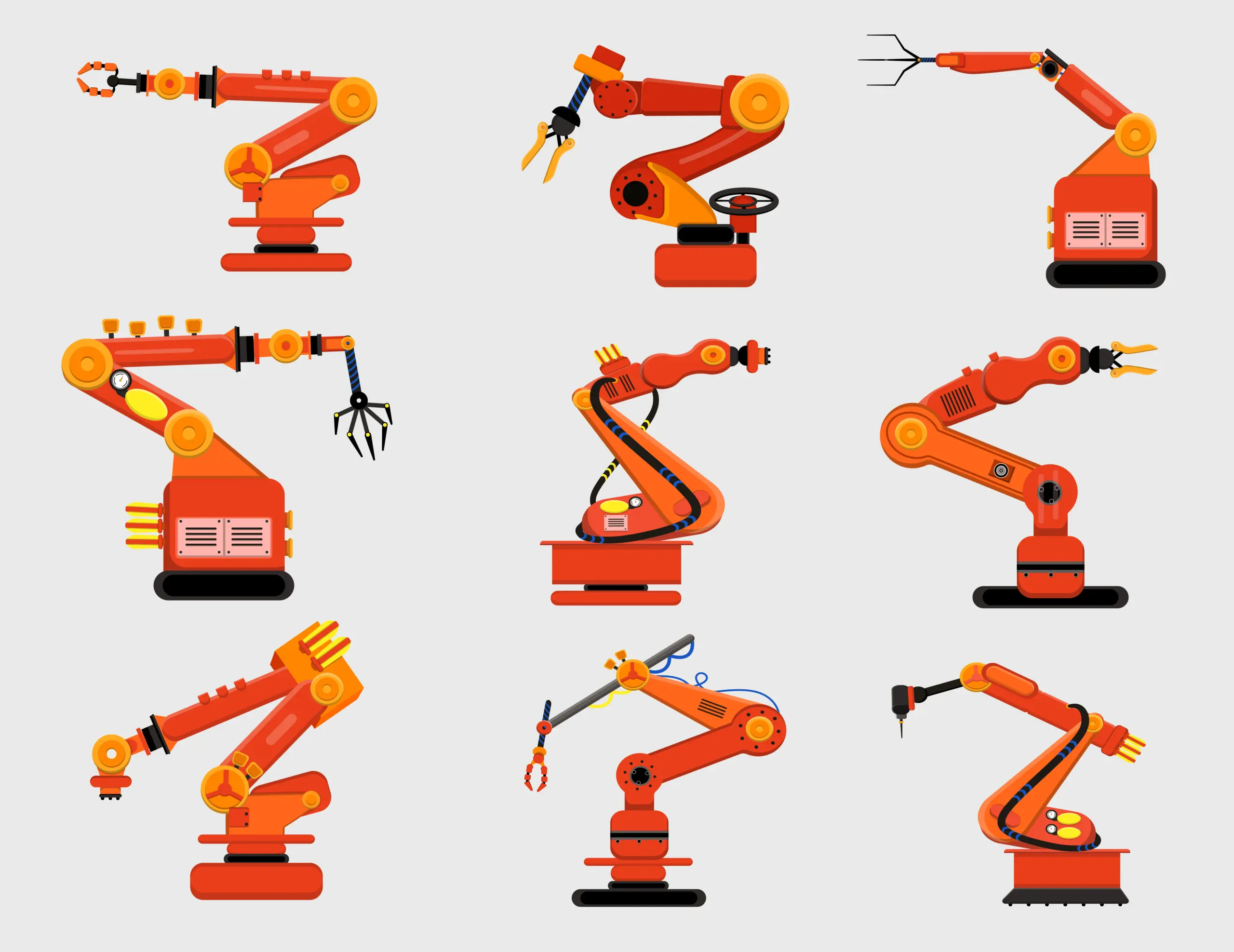
Common Types of Pre-Programmed Robots
| Type | DOF | Payload Capacity | Primary Use | Example Model |
| Articulated Arm | 4 to 6 | 5 to 500 kg | Welding/Assembly | FANUC M-20iA |
| Cartesian (Gantry) | 3 | 1 to 100 kg | Pick-and-Place | Bosch Rexroth |
| SCARA | 4 | 1 to 20 kg | Electronics | Epson T3 |
| Cylindrical | 3 | 5 to 50 kg | Material Handling | OTC FD-B4 |
| Polar (Spherical) | 3 | 10 to 100 kg | Arc Welding | ABB IRB 1520 |
| Parallel (Delta) | 4 | <5 kg | High-Speed Picking | ABB FlexPicker |
Each type is engineered for efficiency in its designated role.
Uses of Pre-Programmed Robots
Pre-programmed robots handle nearly 70% of repetitive industrial tasks worldwide. They reduce human error, improve workplace safety, and enhance production speed. There are reports that say that productivity gains of up to 45% are in factories using robotic automation.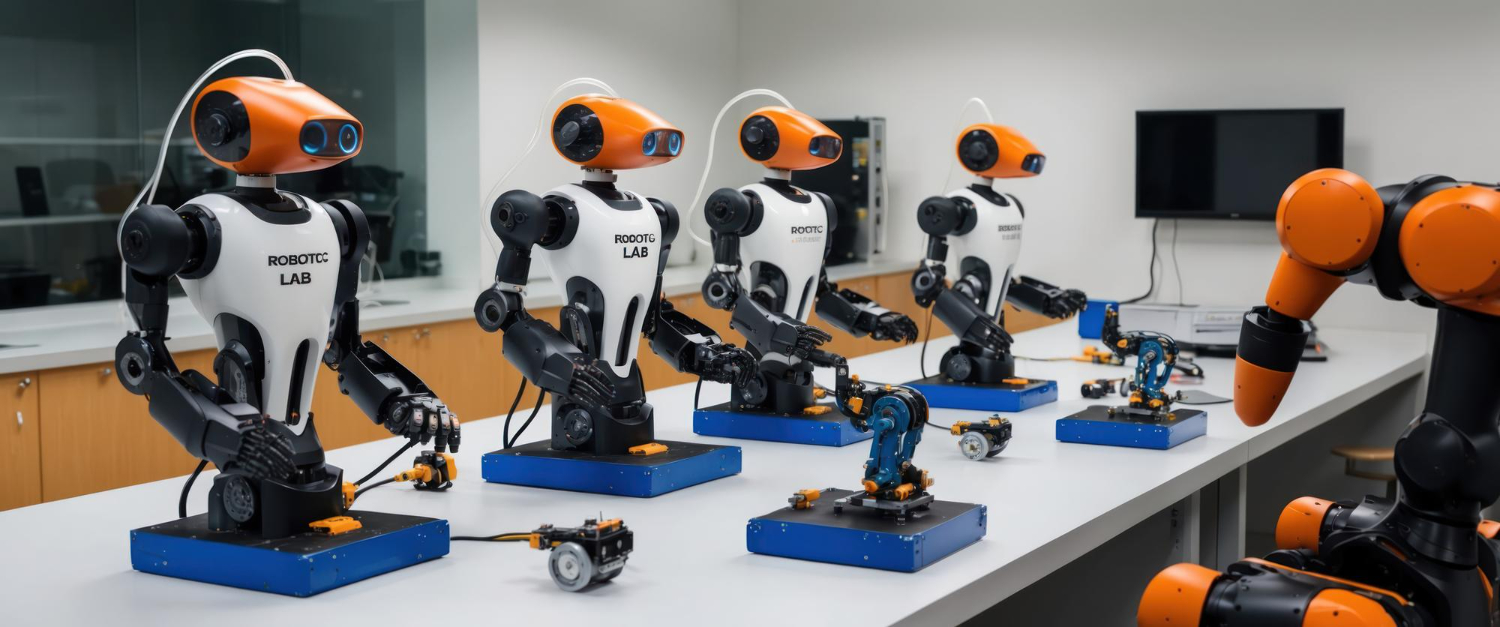
Industry Applications
| INDUSTRY | KEY USES | EFFICIENCY GAIN | REAL-WORLD EXAMPLE |
| Automotive | Welding, Painting | 50% faster cycles | Tesla Gigafactory |
| Electronics | PCB Assembly | 30% defect reduction | Foxconn lines |
| Logistics | Palletizing, Sorting | 40% throughput | Amazon warehouses |
| Food & Beverage | Packaging | 25% labour savings | Nestlé bottling |
| Pharmaceuticals | Vial Filling | 99% sterility | Pfizer labs |
From assembling smartphones to packaging medicines, these robots power modern production.
Master Robotics and AI!
Ready to build the future? Join our comprehensive robotics course to bridge the gap between complex code and physical motion. You’ll gain hands-on experience giving you the technical edge needed to lead in the age of automation.
Know MoreAdvantages and Limitations
Pre-programmed robots offer speed, precision, and cost-efficiency. However, they lack adaptability and require reprogramming for changes.
Pros vs Cons
|
PROS |
CONS |
|
Predictable accuracy |
No adaptability |
|
Low maintenance (MTBF >10,000 hours) |
High setup time |
|
24/7 operation |
Limited flexibility |
| Ideal for mass production |
Reprogramming requires experts |
As per Deloitte reports, 85% of robotic deployments will achieve ROI within about 12 to 18 months. This in turn will make them financially attractive despite upfront costs.
Future Trends in Pre-Programmed Robots
Well the future depends on the hybrid systems that combine pre-programmed reliability with edge AI intelligence. Cobots (collaborative robots) are expected to grow by 30% every year by 2030. IDC also states that the robotics market will surpass $210 billion, driven by Industry 5.0. This is an environment where humans and robots work side by side.
We’re moving forward toward a world where robots remain pre-programmed at the core. But they also gain smart overlays for safety and optimization.
New to Robotics? Start from the Basics. Join Now!
Conclusion
As they deliver unmatched precision, reliability and speed in controlled environments, pre-programmed robots continue to power the core of global automation. Even at a time when AI-driven systems are evolving, such fixed-code robots have a permanent spot at the top of industrial floors. This is because of their predictable performance and strong ROI. Having millions of units operating worldwide, they remain the first preference for high-volume as well as repetitive manufacturing tasks. The context is where consistency matters more than adaptability.
Considering all these factors, there is no chance these robots will get replaced. In fact, they will only be enhanced in terms of performance. Hybrid systems that combine deterministic programming with smart sensors and edge AI will be shaping the next phase of Industry 5.0. Whether for businesses or aspiring robotics professionals, understanding pre-programmed robots is no longer optional. It is undoubtedly foundational to navigating the future of automation.
Master Robotics and AI!
Ready to build the future? Join our comprehensive robotics course to bridge the gap between complex code and physical motion. You’ll gain hands-on experience giving you the technical edge needed to lead in the age of automation.
Know MoreFrequently Asked Questions
What is a pre-programmed robot in simple terms?
A pre-programmed robot is one that’s set to follow a pretty standard set of instructions given to it by its human handlers. These instructions are the same every time in order to do the same repetitive tasks over and over.
How much does a pre-programmed robot cost in India?
This depends on how much weight they can handle and how complicated tasks they are set to do. The price for an entry level unit can range between 10 and 50 lakhs. For more industrial grade systems – these can cost anything from 1 to 5 crores.
Are Pre-programmed Robots Better than AI Robots?
Now, for certain types of jobs – essentially high-volume tasks that get done over and over in an identical way – yes pre-programmed robots are the better option. But should these tasks be a bit more unpredictable – then an AI powered robot might be the way to go.
Where are pre-programmed robots most often used?
You’ll typically find these types of robots in industries like automotive manufacturing, making electronics for other gizmos, moving supplies around, making and processing food, and pharmaceuticals.
Do pre-programmed robots use artificial intelligence?
Not a chance. These robots actually run on good old-fashioned predictable code rather than any AI type learning algorithms.
How long do industrial robots last?
If properly maintained, these types of robots can easily last an industrial facility 10 to 15 years.
What is a PLC in Robotics?
It’s basically a Programmable Logic Controller that takes those robotic instructions and puts them into action.
What is DOF in Robotics?
It stands for Degrees of Freedom. This just means the number of independent movements a robot can actually make.
What is the biggest limitation of pre-programmed robots?
Primarily, it’s their lack of ability to adapt if something unexpected comes up.
Will pre-programmed robots become obsolete?
No, they aren’t going anywhere. Over time they will start incorporating AI and hybrid systems. They’ll still play a pretty big part in industrial automation.