Table of Contents
Introduction
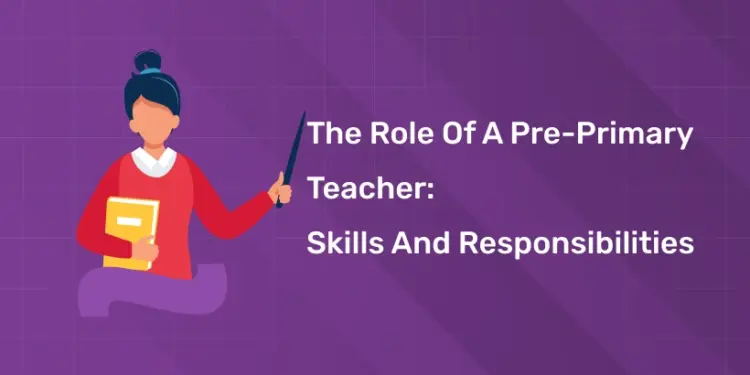
Imagine stepping into a child’s first classroom adventure. It is the place where ABCs and colours spring to life and the magic really happens in figuring out how to learn. The pre-primary teachers are the game-changers in this context. They are not just professional educators but the first trusted friends a child makes outside the family home. A teacher builds the bridges that help them master language, grow confident socially, feel curious about the world, and most importantly feel secure in their own skin.
In our look at early childhood education, the role of a pre-primary teacher goes way beyond just childcare. It is the foundation of a lifelong love of learning that is built on the back of joyful daily routines, playful discoveries, keeping a close eye on how little ones grow and develop. Most of all, they develop a deep affection for the children in their care. Why does all this matter to parents and educators?
Why do they search for information on ‘pre-primary teacher roles’ or ‘early childhood skills’? The answer is simple. It is because they realize that the quality of teaching a pre-primary teacher does has a massive impact on a young child. They influence their ability to learn, stay resilient, and stay eager to learn and take on new challenges as they grow up.Ready to get an extensive understanding about what makes these pre-primary teachers on demand? Let’s take a look at the super important elements of early childhood education.
Unlock your passion for education and shape young minds as a Montessori teacher!
The Importance of Pre-Primary Teachers in Early Education
1: What is the primary focus of the first plane of development in the Montessori method?
Early childhood is a period when the brain goes into overdrive. It grows at a speed that’s simply amazing and the experiences kids have during those years have a huge impact on their future learning, behaviour and overall wellbeing. UNICEF has highlighted how those early experiences can either lay the foundations for future success or set a child back for life.
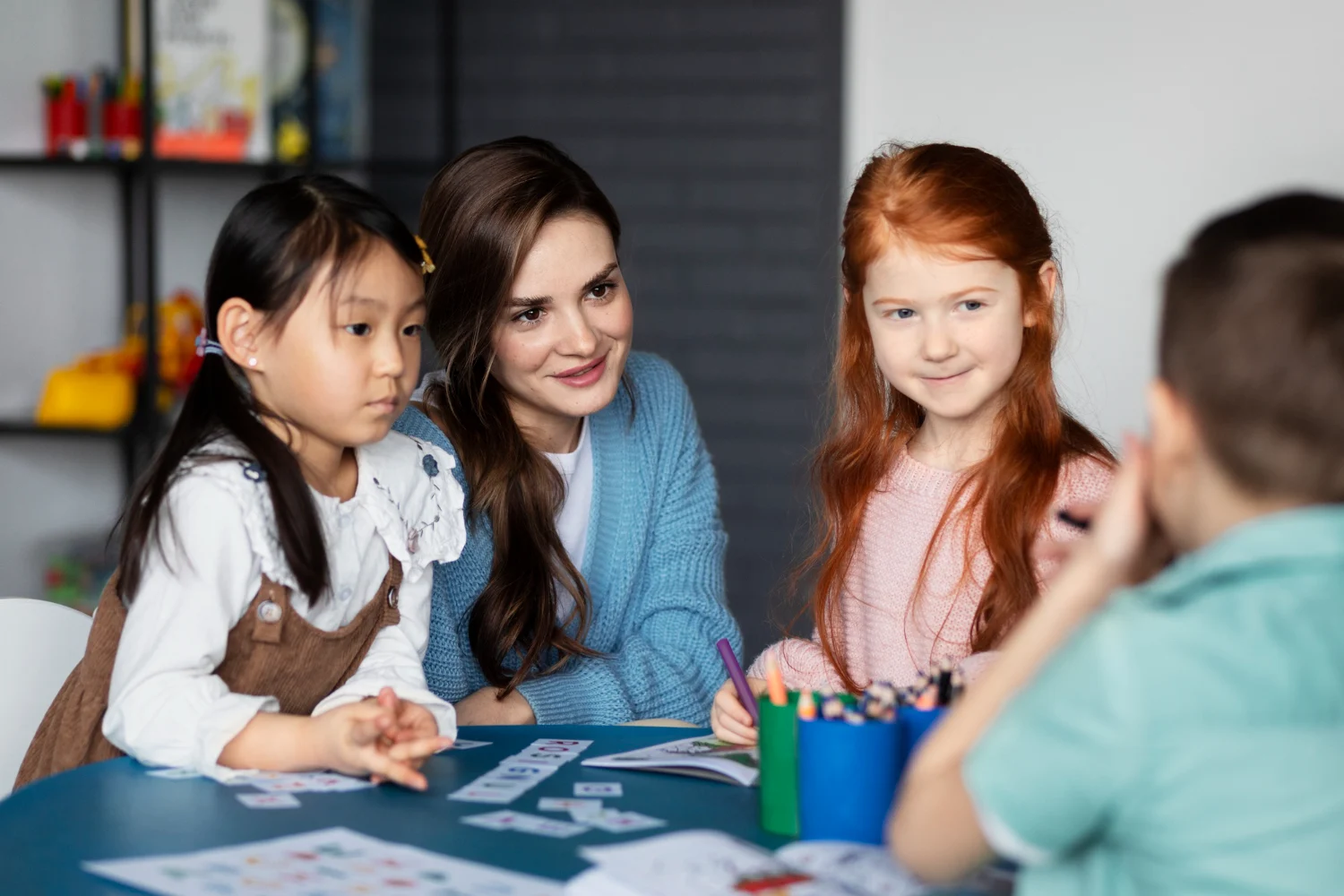
A pre-primary teacher plays a vital role at a time when kids are learning to navigate big feelings. This includes not getting their own way, sharing, taking turns and dealing with anger). They also influence how the kids develop their language skills at an incredible pace through constant interaction and conversation. To be precise, they include
- building their numeracy and literacy skills through play
- forming habits that will make them more independent as they grow – that means learning to pay attention, follow a routine and not rely on others for every little thing.
One of the most powerful discoveries in child development is just how much a child’s brain is shaped by the interactions they have with the important adults in their lives. It is been termed “serve and return” where the back-and-forth between a kid and a loving adult has a huge impact on the way the brain develops and supports language and social skills. In the classroom, pre-primary teachers do this all day long, whether it’s chatting away with the children, reading them a story or singing a song with them. This is all part of helping them develop and grow.
In India, the policy makers have come to realise just how important those early years are. The NEP 2020 made it clear that Early Childhood Care and Education (ECCE) is especially important for kids from the age of 3 upwards. It also stresses that a lot of brain development happens before the age of 6, which is a key milestone for kids.
Get Certified & Start Your Montessori Career
Montessori Teacher Training Course by Entri App: Gain expert skills, earn certification, and kickstart your teaching career.
Join Now!Who is a Pre-Primary Teacher?
A pre-primary teacher (also called preschool teacher, kindergarten teacher, early years educator, or ECCE educator) works with children typically between ages 3 to 6, supporting learning through play-based and activity-based methods.
They are not only teaching content – they are shaping:
- behaviour and emotional regulation
- communication and early language
- motor skills (fine and gross)
- social habits and classroom readiness
- curiosity, creativity, and confidence
In the Indian context, this aligns strongly with the “Foundational Stage” approach (ages 3 to 8) that integrates early learning in a developmentally appropriate way.
Responsibilities of a Pre-Primary Teacher
A great pre-primary teacher gets the job done by being a guide, planner, storyteller, counsellor and calm problem solver – all at the same time, often within the same hour. Here are the main things they’re responsible for.
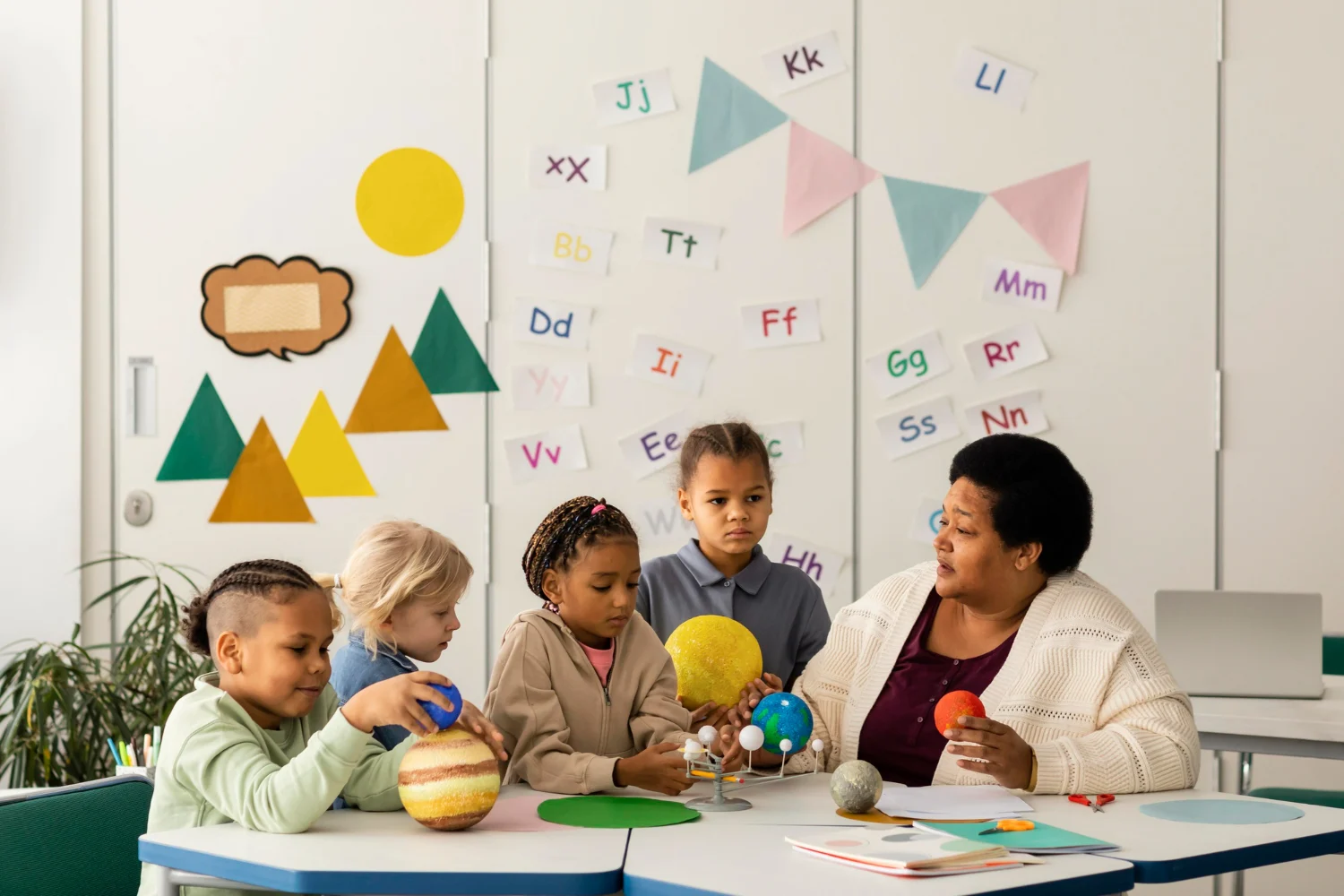
1) Creating a safe, structured and joyful classroom
Kids learn best when they feel secure. So pre-primary teachers build routines that are predictable, like:
- Welcome rituals and just a quiet time to get settled
- Circle time: singing songs, looking at the calendar and having a chat
- Activity blocks and moving on from one to the next
- Snack time, helping with the loo and rest time
- Getting the kids to clean up toys and teaching a little responsibility to boot.
2) Learning through play (not making them feel stressed)
Pre-primary learning is all about discovery. Teachers come up with activities that will help the kids develop:
- their language skills (through stories, rhymes & show-and-tell)
- pre-maths ( like sorting things, patterns and counting with everyday objects)
- their sensory skills ( sand, water, playing with different textures and fun sound-finding games)
- their creativity ( through art, music, role-playing and puppet shows)
Everyone agrees that this play based approach is the way to go, especially when it comes to learning from a young age.
3) Watching the kids and keeping an eye on how they’re developing
A big part of the job is being a bit of a detective who:
- Is having a hard time with their words?
- Struggles to play with other kids?
- Is having a hard time paying attention?
- Need help with getting things done with their fingers?
Keeping those close tabs on the kids helps teachers work with each child as an individual, and help sort out any issues early on.
4) Helping the kids with their social and emotional learning
Every single day is full of those tiny, important moments:
- a kid is crying at drop-off time
- two kids are squabbling over a toy
- someone is left high and dry
- another kid just refuses to play with anyone
Teachers show empathy, help the kids name how they’re feeling and teach them simple ways to cope with things.
5) Talking with parents and caregivers
Just saying “what did my kid learn today?” just won’t cut it. Parents want to know about their kid’s day – like:
- How did they behave?
- Did they eat their veggies?
- What did they enjoy most?
- How can I help them at home?
- What did they struggle with?
Being clear and respectful in your communication with parents is super important – it builds trust and gets better results.
6) Sorting out the classroom and getting the materials ready
Before you even think about putting on an activity – there’s a lot of prep work to do:
- making lesson plans ( sometimes on a weekly basis, other times just for the day)
- getting out the right teaching tools & worksheets ( and making sure they’re just right for the age group we’re working with)
- getting the right books, flashcards and toys out
- setting up special activity stations and theme corners
7) Keeping the kids safe and well
Pre-primary teachers need to be on the lookout for all sorts of things:
- making sure the classroom is safe and clean
- following all the rules around child protection
- looking out for any kids with allergies or special medical needs
- making sure they know the rules about picking kids up from school
To the kids, the classroom is a big new place – so safety and looking out for their well-being is a top priority.
Essential Skills for Pre-Primary Teachers
A degree can get you in the door, but for a teacher to really make a difference, you need to be able to back it up with some serious skills – the kind that get you loved by both kids & parents.

1) Patience -The Calm in Every Storm
Dealing with tantrums, boundary-testing and meltdowns on a daily basis is a tall order. But when a teacher keeps her cool, it’s not just the kids who calm down – it’s the whole room.
2) The Ability to Connect
Good teachers speak to kids in their own language – and that means more than just using child-friendly vocabulary. We’re talking about:
- Storytelling that sparks their imagination\
- The way they use their voice to capture their audience\
- And being able to really listen to what they’re saying\
- And of course, talking to parents in a way that makes them feel heard and understood
3) Thinking Outside the Box
Top teachers know how to turn a simple craft session into a meaningful learning experience. Like turning bottle caps into counting tools, or transforming a paper plate into a colour wheel – anything can become a learning opportunity with a bit of creativity.
4) Getting Under the Skin of Why
The best teachers don’t just label a kid as naughty or difficult – they take the time to really understand what drives their behaviour. That means developing a keen eye for observation & a basic understanding of child psychology
5) Keeping the Room Running Smoothly
Twenty tiny humans don’t keep themselves in line. So it’s up to the teacher to create routines and boundaries that keep everyone on track, and positive reinforcement that encourages good behaviour.
6) Being the Safe Haven
For some kids, their pre-primary teacher is a safe haven – a place where they know they’ll be accepted and loved. That’s not just a nice-to-have, that’s hard work – the kind that requires empathy, compassion and a willingness to be present in a really quiet way.
7) The Art of Rolling with it
We all know that plans can go out the window in an instant, and when they do, a top teacher is the one who can think on their feet & keep things running smoothly without making the kids feel like the whole place is falling apart.
Get Certified & Start Your Montessori Career
Montessori Teacher Training Course by Entri App: Gain expert skills, earn certification, and kickstart your teaching career.
Join Now!Educational Qualifications and Training
Many schools prefer candidates with:
- a degree (any stream, depending on institution)
- early childhood education credentials
- practical training in child development and classroom methods
In India’s evolving ECCE landscape, teacher preparation is increasingly important, especially for play-based, developmentally aligned learning (age 3 onwards).
Unlock your passion for education and shape young minds as a Montessori teacher!
Requirements
The baseline of requirements include either a bachelor’s in early childhood education or a diploma. But specialized programs like Montessori Teacher Training Course (TTC) can help you elevate your expertise. Montessori TTC focuses on child-led learning in a prepared environment with hands-on materials. This equips teachers for innovative classrooms. Certification from accredited bodies enables you with skills in observation, curriculum design, and inclusive practices. These are, in fact, must-haves for thriving in this rewarding field in the current scenario.
Montessori TTC (Teacher Training Course) is one of the most recognized pathways for pre-primary teaching because it emphasizes:
- child-led learning
- structured learning environments
- hands-on materials
- observation-based teaching
- independence and practical life skills
Your outline specifically notes mentioning Montessori TTC under training requirements. If you’re planning a serious career in pre-primary education, a Montessori TTC can strengthen both credibility and classroom confidence – especially in interviews and demo classes.
Conclusion
If you are aspiring to be a pre-primary teacher, this is the right time for you. But you should realize that a pre-primary teacher doesn’t just teach children. They shape how children feel about learning. Such a teacher is expected to build the earliest habits of curiosity, confidence, kindness, and resilience. Most importantly, you must design such teaching to be executed through play, structure, warmth, and intentional guidance.
Since you are drawn to teaching young children, this career can be deeply meaningful and professionally stable – especially when supported by the right training (like Montessori TTC) and continuous skill development.
Get Certified & Start Your Montessori Career
Montessori Teacher Training Course by Entri App: Gain expert skills, earn certification, and kickstart your teaching career.
Join Now!Frequently Asked Questions
Is a pre-primary teacher and a kindergarten teacher the same?
They are considered the same in many schools. However, depending on the institution’s structure, “Pre-primary” exclusively includes nursery, LKG/UKG, and kindergarten.
What are the top skill sets important for pre-primary teachers?
Patience, communication, creativity, classroom management, observation skills, empathy, and adaptability.
Is it mandatory to have a degree for pre-primary teachers?
Requirements may vary. Many schools prefer a degree, but specialized training in early childhood education can be equally important.
Is Montessori TTC necessary to become a pre-primary teacher?
Not always, but it significantly improves your teaching approach, employability, and classroom confidence – especially in Montessori and premium preschools.
What is the best starting point at a pre-primary teaching career?
It would be wise to start with foundational child development knowledge. You can consider getting practical training (like Montessori TTC), and practice demo classes.