
Table of Contents
A robust engineering sector, a stable economy, and excellent standards of living are some of the things that Germany is famous for. Professionals who plan, calculate, and design structures such as buildings, bridges, and industrial facilities are known as structural design engineers. These engineers play a significant role in this business. Skills, geography, and the size of the organization all play a role in determining salaries in this industry. We will present a clear picture of what you may anticipate earning at various phases of your career, as well as provide a breakdown of the typical compensation that structural design engineers in Germany receive. We will also discuss the factors that influence wages.
What Is a Structural Design Engineer?
Utilizing engineering concepts, a structural design engineer is responsible for designing and analyzing structures in order to ensure that they are both safe and function effectively. In addition to ensuring compliance with safety requirements, they use software tools such as CAD/FEM to perform load calculations. Construction organizations, consulting firms, infrastructure projects, and industrial design firms are all places of employment for these specific engineers. It is necessary to possess both technical expertise and the ability to creatively solve problems in order to fulfill this function.
Average Salary Of Structural Design Engineer in Germany
1: What is the primary purpose of structural design?
Structural design engineers in Germany have the potential to earn a salary of up to €58,000 per year. There are a number of factors to take into consideration, including the size of the company, the location of the organization, and the quality of the engineers. Those engineers who have five to ten years of experience earn between sixty thousand and seventy thousand euros annually. Earnings for engineers with only one year of experience range anywhere from 42,000 to 50,000 euros. The annual salary range for senior executive engineers with ten years of experience might be anywhere from seventy thousand to eighty-five thousand euros in Frankfurt, Hamburg, or Munich. The rewards that are currently available range anywhere from 49,000 to 92,000 euros. Most companies provide their workers with a base income that ranges from two thousand to seven thousand euros, in addition to bonuses. Structural design engineers should anticipate a steady increase in their salary and an increase in the number of work opportunities available to them as Europe continues to construct more buildings and infrastructure.
| Category | Base Salary (€) | Estimated Bonus (€) | Total Compensation (€) | Notes |
|---|---|---|---|---|
| Entry-Level (0–2 yrs) | 42,000 – 50,000 | 1,000 – 2,500 | 43,000 – 52,500 | Recent graduates starting in small or medium projects |
| Early Career (2–5 yrs) | 50,000 – 60,000 | 2,000 – 3,500 | 52,000 – 63,500 | Engineers gaining experience and moderate project responsibility |
| Mid-Career (5–10 yrs) | 60,000 – 70,000 | 3,000 – 5,000 | 63,000 – 75,000 | Engineers with advanced skills, leading small teams |
| Senior (10+ yrs) | 70,000 – 85,000 | 4,000 – 7,000 | 74,000 – 92,000+ | Senior engineers managing large projects and teams |
| Average Germany-wide | 47,000 – 58,000 | 2,000 – 4,000 | 49,000 – 62,000 | Represents typical base pay plus average bonuses across all experience levels |
Transform Your Career with Our Structural Design Course!
Unlock Your Potential in Structural Design! Gain expert knowledge in designing robust structures and advance your career in the construction and engineering fields. Limited spots available! 🌟
Know MoreSalary by Experience Level
An individual’s level of knowledge has the potential to have an impact on the amount of money that they generate. This is something that can happen. The amount of money you make from working for the company is directly linked to the amount of experience you have with the firm, which is a fact that is real. The pay that an entry-level engineer might anticipate earning can range anywhere from 42,000 to 50,000 euros per year, depending on the particulars of the post you are applying for. There is a pay range that falls between fifty thousand and sixty thousand euros for engineers who have two to five years of experience, and there is a salary range that falls between sixty thousand and seventy thousand euros for engineers who have five to ten years of experience when it comes to their compensation! In the case that they are in charge of projects or teams, senior engineers who have more than 10 years of experience have the potential to earn anywhere from seventy thousand to eighty-five thousand euros, or even more. In every instance in which they are in charge of those projects or teams, this is the situation. This occurs, particularly in situations where they are in charge of the individuals in question.
| Experience Level | Base Salary (€) | Estimated Bonus (€) | Total Compensation (€) |
|---|---|---|---|
| Entry-Level (0–2 yrs) | 42,000 – 50,000 | 1,000 – 2,500 | 43,000 – 52,500 |
| Early Career (2–5 yrs) | 50,000 – 60,000 | 2,000 – 3,500 | 52,000 – 63,500 |
| Mid-Career (5–10 yrs) | 60,000 – 70,000 | 3,000 – 5,000 | 63,000 – 75,000 |
| Senior (10+ yrs) | 70,000 – 85,000 | 4,000 – 7,000 | 74,000 – 92,000+ |
| Average Germany-wide | 47,000 – 58,000 | 2,000 – 4,000 | 49,000 – 62,000 |
Salary by Regional Differences
In Germany, the average pay for a structural design engineer varies a lot from city to city and region to region. The higher salaries in bigger places like Frankfurt, Munich, and Hamburg are due to things like the cost of living, the size of the projects, and the need for engineers. The cost of living is usually lower in smaller towns and areas, even though wages are usually lower there as well. The following table shows a summary of the average pay in different regions:
| City / Region | Minimum Wage (Euros) | Potential Bonus (in Euros) | Total Reimbursement (Euros) | Remarks |
|---|---|---|---|---|
| Munich | 55,000 – 75,000 | 3,000 – 5,000 | 58,000 – 80,000 | Exorbitant costs of living and extensive construction projects for infrastructure |
| Hamburg | 50,000 – 70,000 | 2,500 – 4,500 | 52,500 – 74,500 | Demand is robust in the industrial and port sectors |
| Frankfurt | 50,000 – 68,000 | 2,500 – 4,000 | 52,500 – 72,000 | Centers of finance and construction, with a cost of living that ranges from modest to high |
| Berlin | 48,000 – 65,000 | 2,000 – 3,500 | 50,000 – 68,500 | Technology and infrastructure initiatives that are expanding |
| Smaller Cities / Towns | 42,000 – 60,000 | 1,500 – 3,000 | 43,500 – 63,000 | Reduction in the cost of living and initiatives of a lower scale |
Structural Design Engineer vs. General Structural Engineer
Despite the fact that both positions are in structural engineering, they may have distinct characteristics, responsibilities, and compensation:
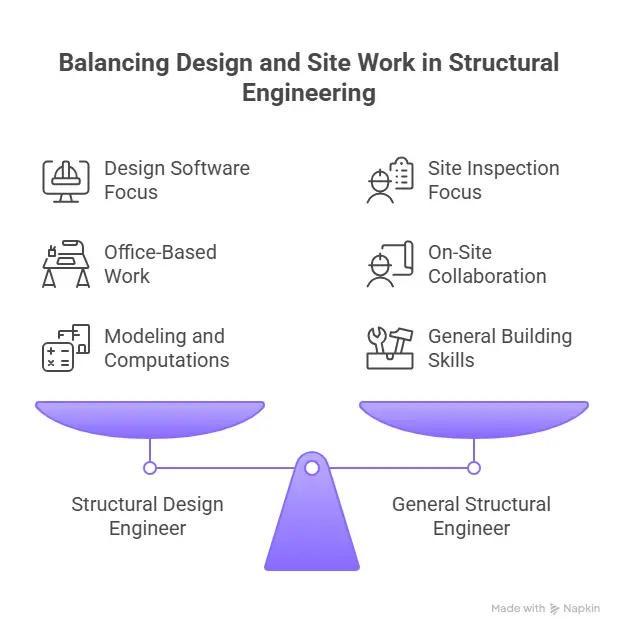
Structural Design Engineer: This type of engineer is responsible for the creation of buildings through the use of tools such as CAD, FEM, and BIM. They ensure that buildings are in compliance with safety requirements, as well as prepare detailed designs, which include calculating stress and load. Instead of supervising construction projects, these engineers spend most of their time working in offices or design businesses, where they perform a great deal of modeling and computations.
General Structural Engineer: The term “general structural engineer” refers to a specific category of structural engineer. The duties of this category of engineer are more general in nature and may include design in addition to site inspections, building supervision, maintenance, and compliance checks within the facility. They might be able to spend more time on-site, cooperating with construction teams and builders in order to formulate designs. Instead of concentrating on design software, they are more concerned with general building skills in their work.
| Aspect | Structural Design Engineer | General Structural Engineer |
|---|---|---|
| Primary Focus | Design and modeling of structures | Design, construction supervision, inspections, and maintenance |
| Work Environment | Mostly office-based, using design software | Mix of office and on-site work |
| Key Skills | CAD, FEM, BIM, structural calculations | Structural analysis, site supervision, compliance, coordination |
| Salary Range (€ per year) | 53,000 – 70,000 | 47,000 – 65,000 |
| Experience Level Effect | Senior roles in design can earn 75,000+ | Senior roles may earn 70,000+ depending on projects |
| Career Path | Specialist in structural design, project lead, software expert | Broad structural engineer, project manager, site supervisor |
Click here to get more information about the Entri Elevate Structural Design Online Course!
Transform Your Career with Our Structural Design Course!
Unlock Your Potential in Structural Design! Gain expert knowledge in designing robust structures and advance your career in the construction and engineering fields. Limited spots available! 🌟
Know MoreBenefits and Additional Pay
An increasing number of structural design engineers in Germany earn supplementary compensation in addition to their standard income. Individual performance, the company, and the project all have a role in determining the amount of these bonuses. The following are examples of common types:
- Paid based on an individual’s, team’s, or company’s success, performance bonuses are a type of incentive.
- Project Completion Bonuses are a way to recognize and provide incentives to engineers who successfully complete difficult or extensive projects.
- Weihnachtsgeld, also known as the Holiday Bonus or Christmas Bonus, is a customary bonus that is paid out at the end of the year and is often comparable to one month’s income.
- It is common practice for some businesses to provide a portion of their profits to their staff members.
Especially for engineers who are in the middle of their careers or who are senior engineers, these bonuses can add between two thousand and seven thousand euros to their overall wages each year.
Factors That Influence Salary
Engineers who work in structural design in Germany can make a lot more or a lot less, depending on a number of things. The base salary is just one of them. These include:
- Engineers with more years of experience usually make more money because they are more skilled, efficient, and good at leading others.
- Smaller towns generally pay less than big cities like Munich, Hamburg, and Frankfurt because there are fewer jobs and the cost of living is higher there.
- When it comes to pay, big international companies or companies in infrastructure-heavy industries usually pay more than small or local companies.
- Certificates and Advanced Degrees: You can make more money if you have a certificate or advanced degree in structural design, BIM, Eurocodes, or specialty software.
- Expertise in software tools such as CAD, FEM, BIM, seismic analysis, or industrial design can make engineers more useful.
- Fluency in German is often necessary for working with clients, contractors, and government officials; people who don’t understand German may be paid a little less.
- According to the level of difficulty and responsibility of the project, engineers who are in charge of big projects, teams, or high-risk building projects usually make more than engineers who work on smaller projects.
Advance Your Career with Structural Design Engineering Training-Join our Entri Elevate Course!
Conclusion
Searching for work in Germany is a good idea if you are a structural design engineer who is seeking for a profession that is not only challenging but also pays well and improves with time. The annual salary range for entry-level engineers is between 42,000 and 50,000 euros. An annual salary of €80,000 or more is possible for senior engineers who have a great deal of expertise. A few of the factors that influence compensation are the location of your place of employment, the size of the company you work for, the credentials and certifications you possess, and the location of your home. Due to the fact that Germany is consistently working on constructing projects that are beneficial to the environment, infrastructure projects, and new ideas, engineers who are looking for stable professions that pay well will find this region to be appealing.
|
RELATED POSTS |
|
|
How to Become Structural Design Engineer (Step-By-Step Guide) |
|
Transform Your Career with Our Structural Design Course!
Unlock Your Potential in Structural Design! Gain expert knowledge in designing robust structures and advance your career in the construction and engineering fields. Limited spots available! 🌟
Know MoreFrequently Asked Questions
Which German cities pay the highest salaries?
Major cities like Munich, Hamburg, and Frankfurt offer higher salaries due to high demand, large projects, and higher living costs. Salaries in smaller towns or rural areas are generally lower but can still provide competitive pay.
Can experience increase my salary significantly?
Absolutely. Engineers with 5–10 years of experience can earn €60,000–€70,000, and senior engineers with 10+ years and project leadership roles can earn €70,000–€85,000+, plus bonuses.
Do certifications or advanced degrees help increase salary?
Yes. Certifications in BIM, Eurocodes, or specialized structural software, or a Master’s/PhD degree, can raise salary by €2,000–€5,000 or more. These credentials make engineers more competitive in the job market.
Are salaries in Germany higher than other European countries?
Germany offers competitive salaries compared to most European countries due to its strong engineering sector and infrastructure projects. Cities with higher living costs (Munich, Frankfurt) offer higher salaries, comparable to Switzerland or the Netherlands in top-tier roles.
Does working in a large company pay more than a small company?
Yes. Large multinational construction or engineering firms often offer higher base salaries, better bonuses, and additional benefits compared to small or local consultancies. However, smaller companies may offer more flexibility or quicker career advancement opportunities.