
Table of Contents
Of all the robotic inventions, industrial robots are reported to increase productivity by a range of 30% to 50%. They cater to two major requirements – automating precision and reducing operational costs. This works well with the current sectors in which they are active: manufacturing, healthcare, agriculture and logistics. These robots combine the use of AI, advanced kinematics and sensors. This makes performance of repetitive, dangerous and high-accuracy tasks possible. This makes robots excel in terms of potential than humans.
Almost 3.5 million robots of different kinds are already deployed worldwide. The market is projected to reach $225 billion by 2030. This makes robotics a core industry skill in the current scenario.
New to Robotics? Start from the Basics. Join Now!
Key Takeaways
- Articulated robots lead in automotive/heavy assembly.
- Cartesian/SCARA excel in electronics/packaging.
- Cobots enable safe collaboration for SMEs.
- AMRs/service robots transform logistics/healthcare.
- Humanoids, swarms, soft robots drive AI automation; pair robotics skills with AI/IoT for 2026 careers.
Introduction to Robots in Modern Industry
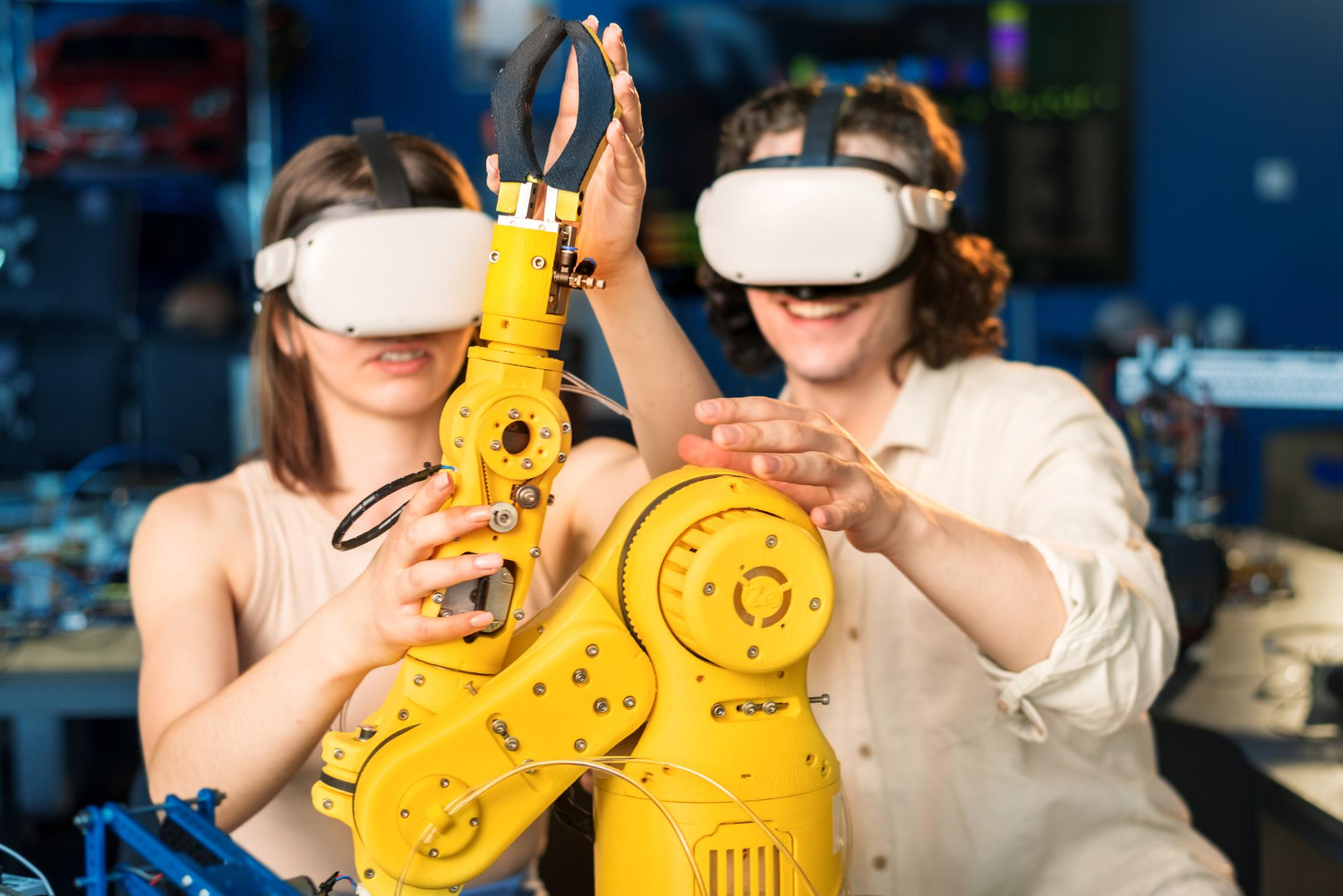
Robots are becoming more common in the rapidly advancing scientific world. They have evolved from fixed mechanical arms in the 1960s to AI-powered autonomous systems in 2026.Today’s robots use computer vision along with machine learning and edge computing. In addition to these, digital twins make real-time decisions more precise and accurate. According to global robotics federations, over 3.5 million industrial robots are currently operational worldwide. It is to be noted that adoption is accelerating in Asia and Europe.
Industries now rely on robots for:
- Precision manufacturing
- Surgical assistance
- Warehouse automation
- Smart agriculture
- Infrastructure inspection
Master Robotics and AI!
Ready to build the future? Join our comprehensive robotics course to bridge the gap between complex code and physical motion. You’ll gain hands-on experience giving you the technical edge needed to lead in the age of automation.
Know MoreMain Types of Robots and Their Industry Applications
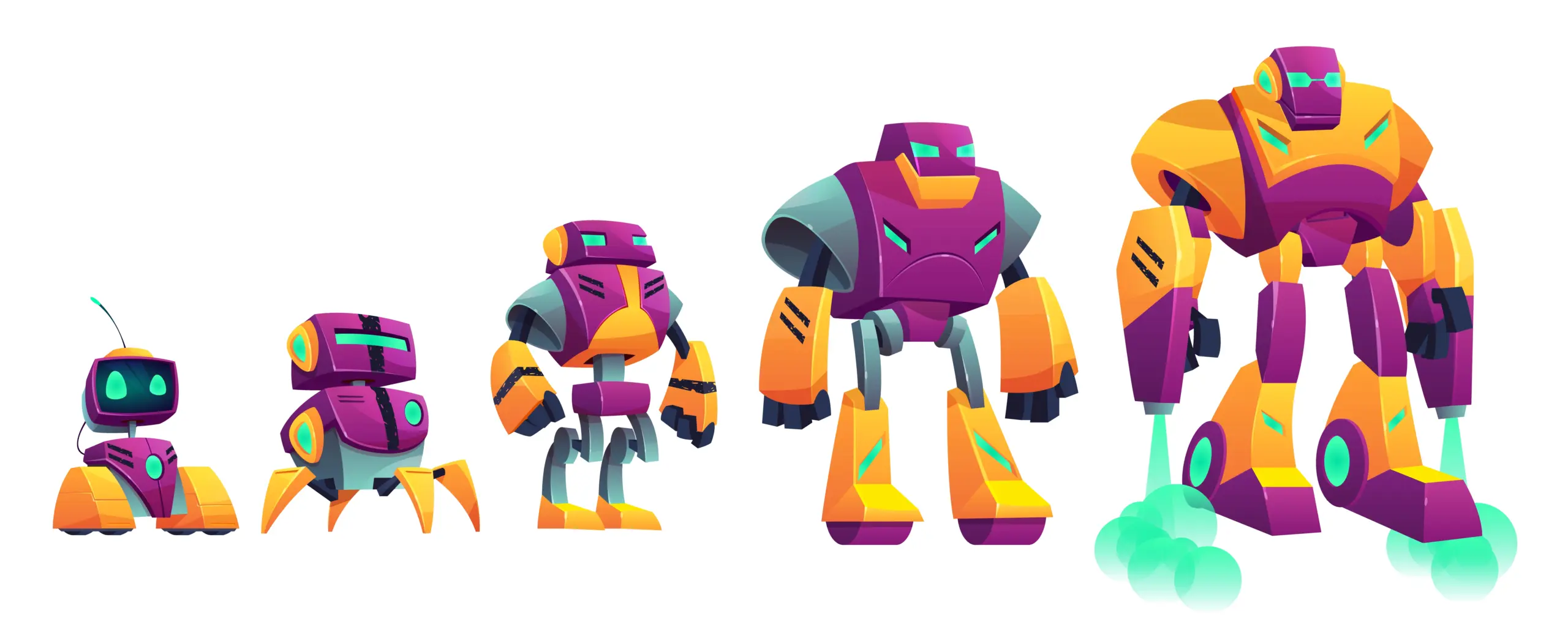
The evolution of robotics and the machines that were designed for several purposes and different forms has been fascinating. The curious inventions took a serious turn within no time. Once they were perfected and introduced into functional practical spaces, they have become an inevitable part of different enterprises. Here are the main types that reign in different industries.
1. Articulated Robots
Articulated robots are the most widely used industrial robots – the preferred robots of industry experts. These robots handle welding, painting, and heavy assembly in almost 75% of automotive plants. Their major features include:
- 3 to 6 rotary joints
- Enable human-arm-like movement
- 360° flexibility.
Typical Specs
- Axes: 6+
- Payload: 5 to 2000 kg
- Speed: Up to 10 m/s
Industry Uses
- Automotive welding and painting
- Heavy machine assembly
- Electronics soldering
2026 Trend: AI-powered adaptive welding using real-time vision systems.
2. Cartesian (Gantry) Robots
Cartesian robots were designed to make things as simple and precise as possible. They move along linear X-Y-Z axes and deliver extremely high positional accuracy. These robots are used heavily in e-commerce warehouses as they reduce picking errors by up to 90%. They are ideal for:
- Pick-and-place
- Palletizing
- Cleanroom automation
Typical Specs
- Axes: 3 linear
- Accuracy: ±0.01 mm
- Reach: Up to 10 m
Industry Uses
- Logistics and warehousing
- Pharmaceutical filling lines
- CNC machine loading
2026 Trend: IoT-enabled real-time inventory tracking.
3. SCARA Robots
SCARA robots – one of the well-established robots in the industry – are known for their high speed and high accuracy. They specialize in high-speed horizontal assembly. They achieve sub-second cycle times, making them ideal for electronics manufacturing. Nearly 50% of smartphone production lines use SCARA robots.
Typical Specs
- Axes: 4
- Speed: Up to 10 cycles/sec
- Payload: Up to 50 kg
Industry Uses
- PCB assembly
- Semiconductor handling
- Food sorting and packaging
Key Advantage: Selective compliance for precision insertion tasks.
4. Collaborative Robots (Cobots)
Collaborative robots, most commonly known as cobots, are designed primarily to work alongside humans. There won’t be any cages in these scenarios but act as working partners. Cobot adoption is growing by 40% every year. This is the case especially among SMEs. To detect collisions, they use:
- Force sensors
- AI vision
Typical Specs
- Payload: 3–16 kg
- Safety: Force-limited
- Programming: Drag-and-teach
Industry Uses
- Machine tending
- Healthcare labs
- Small-batch manufacturing
2026 Trend: AI cobots with voice and gesture control.
5. Delta (Parallel) Robots
Delta robots are known for their precision, high speed and compact design. They use parallel kinematics for ultra-fast picking. These robots can perform 120+ picks per minute, which makes it ideal for lightweight items. They are widely used in food and pharma along with electronics packaging.
Typical Specs
- Speed: 120 picks/min
- Accuracy: ±0.1 mm
Industry Uses
- Confectionery sorting
- Pill packaging
- Lightweight electronics handling
6. Humanoid Robots
Humanoid robots, as the name suggests, resemble human form and mimic human form as well as movement. They are designed and increasingly adapted for dynamic environments like:
- Warehouses
- Hospitals
- Pilot programs in eldercare
- Logistics
Capabilities
- Bipedal walking
- AI vision and LLM-based decision making
- Tool handling
Industry Uses
- Warehouse material handling
- Customer service
- Assisted living support
Challenge: High cost and ethical considerations.
7. Autonomous Mobile Robots (AMRs)
AMRs – Autonomous Mobile Robots – navigate using LiDAR, SLAM, and AI mapping, without fixed paths. They cut warehouse fulfilment time by up to 50%. Major e-commerce companies deploy hundreds of thousands of AMRs.
Typical Specs
- Load: Up to 1500 kg
- Navigation: AI-based dynamic routing
Industry Uses
- Warehouse transport
- Hospital delivery bots
- Retail inventory scanning
8. Service Robots
Service robots operate outside traditional manufacturing. They assist in healthcare, hospitality, and public services. The healthcare robotics market alone is expected to exceed $20 billion.
Types
- Surgical robots
- Cleaning robots
- Delivery robots
Industry Uses
- Minimally invasive surgery
- Hotel room service
- Airport assistance
9. Swarm Robots
Swarm robots operate in large coordinated groups using decentralized AI. Inspired by ants and bees, they are scalable and fault-tolerant. Agriculture trials show up to 30% yield improvement with swarm monitoring.
Industry Uses
- Crop inspection
- Disaster search and rescue
- Infrastructure monitoring
10. Soft Robots
Soft robots use flexible materials like silicone for delicate manipulation. They are ideal for biotech, food handling, and medical applications. Their adaptive gripping reduces product damage significantly.
Industry Uses
- Fruit picking
- Surgical assistance
- Lab automation
2026 Trend: Biomimetic soft robots for micro-surgery.
Robotics Industry Trends in 2026
| Trend | Impact | Key Area |
| AI-powered cobots | +50% SME adoption | Manufacturing |
| Edge robotics | Real-time decisions | Logistics |
| Green robotics | Energy-efficient systems | Smart factories |
| Digital twins | Predictive maintenance | Heavy industry |
| Human-robot collaboration | Safer workplaces | Multi-sector |
Benefits and Challenges of Industrial Robots

Benefits
- Higher productivity and consistency
- Reduced human injury in hazardous tasks
- 24/7 operation capability
- Precision and minimal waste
Challenges
- High initial investment
- Skilled workforce requirement
- Cybersecurity risks in connected robots
- Ethical concerns in humanoid deployment
Master Robotics and AI!
Ready to build the future? Join our comprehensive robotics course to bridge the gap between complex code and physical motion. You’ll gain hands-on experience giving you the technical edge needed to lead in the age of automation.
Know MoreHow to Start a Career in Robotics
To enter robotics in 2026, you need:
Core Skills
- Robotics kinematics and dynamics
- Programming (Python, ROS, C++)
- AI and computer vision
- IoT and sensor integration
Recommended Learning Path
- Learn electronics and control systems
- Master robotics simulation tools
- Build real-world automation projects
- Get certified in AI-integrated robotics
New to Robotics? Start from the Basics. Join Now!
Conclusion
Robots are becoming common in not just industries but also in other sectors and even in households. In short, they are no longer limited to professionals handling them, but anyone who can access them and has a grip on them. To be specific, robotics has started to revolutionize healthcare, agriculture, logistics and more commonly smart cities. Beginning with articulated arms it has come to AI humanoids with each robot type serving specific industrial purposes.
All this points to the rising demand for skilled professionals in robotics. So, learning robotics opens up wider opportunities on a global level with potential for high-growth careers. Start your journey right away and become industry-ready.
|
RELATED POSTS |
|
|
Skills Needed for a Successful Career in Robotics Engineering |
|
|
What is Robotics? A Beginner’s Guide to Understanding Robotics |
|
Master Robotics and AI!
Ready to build the future? Join our comprehensive robotics course to bridge the gap between complex code and physical motion. You’ll gain hands-on experience giving you the technical edge needed to lead in the age of automation.
Know MoreFrequently Asked Questions
Which Robots are actually used in manufacturing?
It’s Articulated, SCARA, Cartesian and Delta robots that you mostly see on a typical manufacturing line.
Where do you find Autonomous Mobile Robots?
You find Autonomous Mobile Robots, or AMRs for short, in all sorts of places – like warehouses, hospitals, retail stores and smart factories.
Which industries use service robots on a regular basis?
Healthcare, hospitality, airports and public services, – these are just a few examples of industries that routinely use service robots.
Are humanoid robots actually getting real work done yet?
Well, humanoid robots are currently in pilot programs – doing things like logistics, customer service and eldercare.
What type of robot is the fastest around?
The Delta robot is seriously fast, capable of whizzing through 120+ picks in just a minute.
What skills are needed to make it in a robotics career?
If you’re thinking of getting into robotics , you’ll need to be competent in things like programming, AI, electronics, control systems and mechanical design.
Which robot is best suited for the average small business?
For small businesses on a budget, it’s cobots all the way – low cost, easy to programme and safe to use.
What is Swarm Robotics all about?
Swarm robotics is being used in a bunch of different areas – agriculture monitoring, disaster rescue and large-scale inspection.
What are Soft Robots used for?
Delicate tasks like fruit picking, surgery and biotech handling are all well-suited to soft robots.
Is robotics a legitimate career path in 2026?
Robotics, when combined with AI, is one of the fastest growing tech careers out there.