
Table of Contents
Many people love working with small children. A nursery teacher training course helps them begin confidently. This course builds strong skills for early teaching. It trains learners to guide young minds gently. The program focuses on joyful and simple learning. It teaches how children grow and understand things. The course also prepares teachers for real classrooms. It becomes the first step toward a meaningful career.
Early childhood learning strongly shapes every child’s future. This stage needs patient and well-trained teachers. Children learn best through play and gentle care. Teachers create warm spaces that support happy learning. Good training builds confidence and teaching strength. It also helps teachers understand child behavior deeply. Strong training always leads to better learning outcomes.
Unlock your passion for education and shape young minds as a Montessori teacher!
Introduction
Early childhood is a powerful stage in every child’s life. Children grow fast and learn through simple daily moments. Every sound, color, and interaction teaches them something new. This early learning needs patient and skilled guidance always. A trained teacher helps children feel safe and confident. They support natural curiosity through play and gentle activities. Their presence creates a warm space for steady growth. Good guidance here forms strong learning habits for life.
A Nursery Teacher Training course prepares teachers for this important stage. It teaches how children think, feel, and respond. The course explains simple and effective teaching methods. It builds confidence in managing early classrooms smoothly. Training also improves creative planning for daily lessons. It helps teachers understand children’s emotional needs better. This preparation supports strong and joyful early learning journeys.
Key Points
-
Early years shape lifelong learning patterns.
-
Children need gentle and trained guidance.
-
Teachers build confidence through simple activities.
-
NTT training explains child development clearly.
-
The course strengthens practical teaching skills.
-
Creative lesson planning improves engagement.
-
Emotional understanding improves classroom care.
What Is a Nursery Teacher Training (NTT) Course?
1: What is the primary focus of the first plane of development in the Montessori method?
A Nursery Teacher Training course prepares teachers for early learning. It focuses on teaching children aged two to five. The course builds knowledge of simple and playful teaching methods. It trains learners to create safe and engaging classrooms. NTT gives clear guidance for handling young children’s needs. It also explains how to support development through daily activities. The course offers both theory learning and practical experience. Its main aim is to prepare confident early educators.
The course was created to support early learning growth. It helps teachers understand small learning patterns clearly. NTT gives structure to early education methods. It supports planned learning instead of random activities. The course ensures better classroom stability for young children.
Key Features of the NTT Course
-
Focus on early learning needs
-
Simple teaching techniques explained
-
Training for classroom organization
-
Exposure to creative learning methods
-
Clear guidance on handling small learners
Get Certified & Start Your Montessori Career
Montessori Teacher Training Course by Entri App: Gain expert skills, earn certification, and kickstart your teaching career.
Join Now!What the Course Focuses On
1. Teaching Approach
-
Uses play-based teaching styles
-
Encourages simple hands-on activities
-
Supports slow and steady learning
Subpoints:
-
Children learn through fun sessions
-
Teaching remains flexible and calm
-
Lessons stay age-appropriate always
2. Classroom Preparation
-
Guides teachers in organizing classrooms
-
Ensures safe and clean learning spaces
-
Helps maintain daily classroom routines
Subpoints:
-
Seating remains simple and open
-
Materials stay easy to use
-
Surroundings support child comfort
3. Learner Support
-
Teachers learn gentle communication
-
Training builds patience and clarity
-
Support helps maintain child confidence
Subpoints:
-
Children feel safe with trained teachers
-
Guidance boosts early curiosity
-
Emotional comfort stays a priority
Structure of the NTT Course
Table: Basic Structure of NTT Course
| Component | Description |
|---|---|
| Theory Lessons | Covers early teaching principles |
| Practical Tasks | Builds real preschool experience |
| Creative Activities | Encourages art and play work |
| Classroom Observation | Helps understand real setups |
| Simple Assessments | Checks progress and understanding |
All table descriptions use simple wording and short structure.
Benefits of an NTT Course
1. Clear Learning Path
-
Step-by-step teaching guidance
-
Easy methods for beginners
-
Smooth training for early classrooms
2. Practical Exposure
-
Real activity planning practice
-
Direct classroom observation sessions
-
Simple experience with young learners
3. Professional Growth
-
Builds confidence slowly
-
Improves teaching clarity
-
Supports long-term skill growth
Who Is a Nursery Teacher?
A nursery teacher is a trained early educator. This teacher works with very young children daily. Their main role involves guiding early learning gently. They help children explore ideas through simple activities. A nursery teacher creates safe and warm classroom spaces. They support emotional, social, and basic learning growth. Their presence builds comfort and trust for children. These teachers play a major role in early development.
Role of a Nursery Teacher
A nursery teacher guides children through early experiences. They introduce simple concepts in gentle and playful ways. Their support helps children understand the world better. They watch children closely during learning activities. Their observations help improve each child’s progress. They encourage curiosity through stories, art, and play. Their role stays central in early learning phases.
Core Duties of a Nursery Teacher
1. Guiding Daily Learning
Nursery teachers plan daily learning sessions. They design activities suited for young learners. These activities support slow and steady growth.
-
Lessons stay simple and enjoyable.
-
Children learn through hands-on tasks.
-
Learning remains age-appropriate always.
2. Supporting Emotional Needs
Teachers provide emotional care every day. They help children feel safe and calm. This emotional support strengthens learning ease.
-
Children trust supportive teachers easily.
-
Comfort reduces classroom fear significantly.
-
Emotional support shapes better behavior.
3. Maintaining Classroom Order
Nursery teachers keep classrooms organized. They manage materials and activity spaces carefully. Their organization helps children feel secure.
-
Clean spaces support easy movement.
-
Order reduces classroom distractions.
-
Routines become simple to follow.
Qualities of a Nursery Teacher
Key Personal Traits
-
Patience with young learners
-
Warm and friendly nature
-
Clear and gentle communication
-
Strong observation skills
-
Calm response to challenges
-
Creative activity planning habits
-
Respectful attitude toward children
Each trait supports smooth early learning experiences.
Working Style of a Nursery Teacher
A nursery teacher follows a calm working style. They interact with children using simple words. They avoid pressure during learning sessions. Their voice stays gentle throughout tasks. They celebrate small progress happily. They guide children with steady encouragement. Their approach keeps learning environments peaceful.
Table: Nursery Teacher Responsibilities
| Area | Teacher’s Role | Impact on Children |
|---|---|---|
| Learning Sessions | Plan simple lessons | Better understanding |
| Emotional Care | Offer calm support | Stronger confidence |
| Classroom Order | Maintain clean spaces | Easy movement |
| Social Growth | Model kind behavior | Healthier interactions |
| Creative Play | Design fun tasks | Higher curiosity |
Why Nursery Teachers Are Important
Nursery teachers shape early learning experiences. They influence how children view learning. Their guidance builds strong early habits. Their care supports emotional stability. A nursery teacher’s presence creates a secure learning space. Their role forms early educational foundations. They are vital figures in children’s first learning years.
Unlock your passion for education and shape young minds as a Montessori teacher!
Importance of Nursery Teacher Training in Early Childhood Education
Nursery teacher training plays a major role in early learning. Children need careful guidance during their first learning years. Their growth depends strongly on trained and calm teachers. Teachers with training understand early needs more clearly. They help children learn through simple and playful methods. Training supports both emotional and learning development. It brings order, care, and balance to early classrooms. This makes early learning steady, safe, and meaningful.
Why Trained Teachers Matter
Trained teachers understand how young children think. They observe small changes in behavior easily. This awareness supports healthier learning every day. Training helps teachers respond in gentle ways. It reduces stress inside early classrooms greatly. Children feel more secure with trained teachers. This security helps them explore new ideas freely.
Key Contributions of Training
1. Better Understanding of Young Minds
Training explains early growth patterns clearly. Teachers learn why children act differently. This knowledge supports more thoughtful teaching.
-
Teachers respond faster to learning needs.
-
Behavior becomes easier to understand.
-
Lessons stay suitable for young minds.
2. Strong Classroom Balance
Training teaches classroom balance techniques. Teachers learn to handle busy spaces calmly. This makes classrooms more organized daily.
-
Children understand routines easily.
-
Noise levels stay under control.
-
Activities run smoothly throughout sessions.
3. Improved Learning Quality
Training improves overall learning quality. Teachers plan simpler and clearer lessons. These lessons match early learning levels well.
-
Activities support steady progress.
-
Children enjoy learning more.
-
Each lesson stays structured and focused.
Table: How Training Supports Early Education
| Area of Support | Effect on Children | Effect on Teachers |
|---|---|---|
| Emotional Care | Better confidence | Calm communication |
| Learning Space | Safe environment | Clear arrangement |
| Daily Methods | Smooth activities | Better planning |
| Communication | Stronger bonding | Clearer guidance |
| Routine Setup | Predictable structure | Easier management |
Role in Emotional Growth
Training helps teachers build emotional safety. Young children need gentle voices daily. They also need predictable classroom behavior. Trained teachers support these needs strongly. Children feel understood and respected always. This comfort boosts learning interest greatly. Emotional safety becomes a strong foundation here.
Role in Social Development
Children learn social habits in early years. They watch teachers and follow simple cues. Trained teachers model kind and fair actions. This helps children interact more confidently. Training supports equal attention for everyone. Children learn sharing and patience naturally. Social growth becomes smoother through guidance.
Role in Creative Learning
Creativity supports strong early learning skills. Training teaches creative activity planning methods. It helps teachers design colorful learning tasks. These tasks build imagination in simple ways. Children stay excited through creative sessions. Teachers manage creativity without overwhelming children. This balance strengthens early learning experiences.
Get Certified & Start Your Montessori Career
Montessori Teacher Training Course by Entri App: Gain expert skills, earn certification, and kickstart your teaching career.
Join Now!What Does the NTT Course Cover?
The Nursery Teacher Training course covers major early learning areas. It introduces the basics of early childhood development. The course explains simple teaching methods for young learners. It guides learners in planning classroom tasks smoothly. Every module supports confident and caring teaching practice.
The course includes structured theory and active practice. It blends learning with observation-based tasks. This approach improves real classroom readiness. Each part supports a strong teaching foundation. The coverage stays clear, simple, and practical.
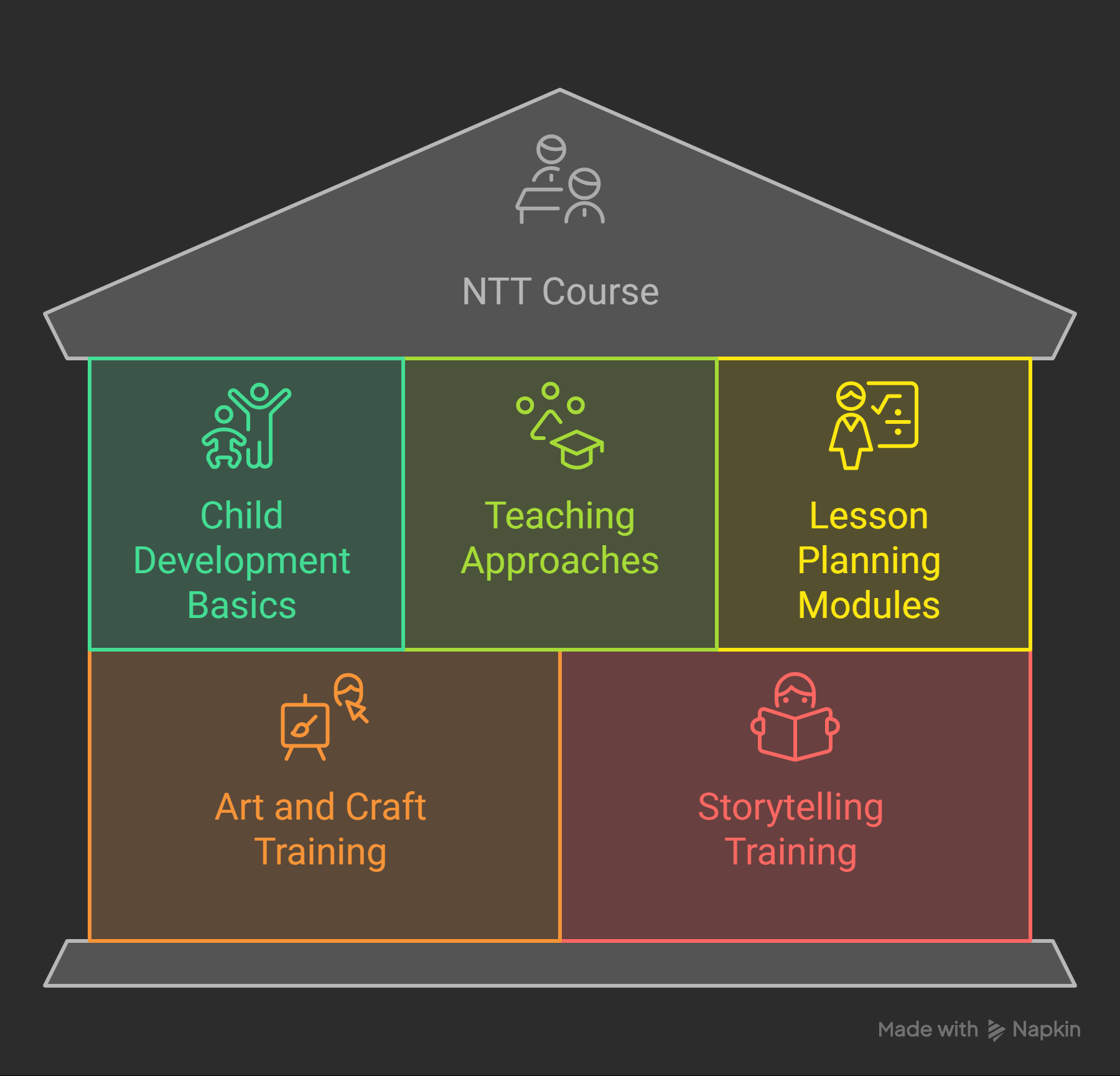
Core Areas of the NTT Course
1. Child Development Basics
This section explains early growth patterns. It covers physical, emotional, and social changes. It shows how children learn through play.
Key Points
-
Focus on natural child behaviour.
-
Understanding age-level milestones.
-
Awareness of emotional shifts.
Sub-Points
-
Motor growth: small and big movements.
-
Cognitive growth: thinking and understanding.
-
Social growth: bonding with others.
2. Teaching Approaches
Learners study simple teaching approaches. They explore play-based and activity-based learning. They learn methods that support active participation.
Key Points
-
Teaching stays gentle and creative.
-
Activities remain child-focused always.
-
Learning happens through simple actions.
Sub-Points
-
Play method: supports natural exploration.
-
Story method: improves imagination daily.
-
Music method: boosts joyful engagement.
3. Lesson Planning Modules
This area explains lesson creation techniques. It teaches structured planning for daily tasks. It guides activity spacing in classrooms.
Key Points
-
Lessons follow clear order.
-
Plans match age limits well.
-
Activities stay simple and achievable.
Sub-Points
-
Daily schedule: supports class flow.
-
Weekly themes: add variety easily.
-
Activity grouping: maintains balance.
4. Art and Craft Training
The course includes creative craft exercises. It teaches simple material use for classes. It encourages hands-on learning experiences.
Key Points
-
Creativity supports early understanding.
-
Crafts improve fine motor skills.
-
Visual tools simplify concepts.
Sub-Points
-
Paper craft: builds finger control.
-
Clay work: strengthens hand movement.
-
Drawing work: improves colour sense.
5. Storytelling Training
This module builds expressive storytelling skills. It shows how stories support learning. It helps learners create simple story sessions.
Key Points
-
Stories develop language skills.
-
They increase focus and imagination.
-
They build emotional understanding.
Sub-Points
-
Voice skills: shape story effects.
-
Props use: adds visual support.
-
Story planning: improves class flow.
Course Coverage Summary Table
| Module | Focus | Purpose |
|---|---|---|
| Child Development | Growth patterns | Understand child needs |
| Teaching Methods | Approaches | Support learning styles |
| Lesson Planning | Structure | Guide class routines |
| Art & Craft | Creativity | Build skills playfully |
| Storytelling | Expression | Improve engagement |
Skills You Gain from a Nursery Teacher Training Course
The NTT course builds strong teaching abilities. It shapes essential skills for early classrooms. It helps learners handle young children smoothly. The training supports clear understanding of classroom behaviour. Each skill strengthens daily teaching confidence.
The skills gained support long-term growth. They help learners create calm learning spaces. They encourage positive interaction with children. The training prepares learners for real class challenges. The skills stay helpful throughout the teaching journey.
Major Skills from the NTT Course
1. Observation Skills
Learners develop strong observation habits. They learn to notice small behaviour changes. They watch learning patterns in simple ways.
Key Points
-
Observation improves timely support.
-
It helps notice silent concerns early.
-
It guides teaching choices clearly.
Sub-Points
-
Routine watching: tracks daily progress.
-
Activity watching: checks learning response.
-
Behaviour watching: notes emotional shifts.
2. Interaction Skills
Learners gain skill in meaningful interaction. They learn to connect gently with children. They build trust through calm communication.
Key Points
-
Interaction promotes healthy bonding.
-
It improves classroom comfort.
-
It builds child confidence slowly.
Sub-Points
-
One-to-one talk: supports shy children.
-
Group talk: encourages peer bonding.
-
Encouraging talk: motivates learning.
3. Supportive Guidance Skills
Learners gain skills in helpful guidance. They learn to guide actions calmly. They offer support without pressure.
Key Points
-
Guidance improves child stability.
-
It supports emotional balance.
-
It helps maintain class harmony.
Sub-Points
-
Gentle cues: direct behaviour softly.
-
Reassuring words: reduce child stress.
-
Positive reminders: keep children focused.
4. Creative Thinking Skills
Learners build flexible creative thinking. They explore ways to simplify concepts. They create fresh ideas for activities.
Key Points
-
Creativity keeps lessons exciting.
-
It improves long-term interest.
-
It encourages expressive learning.
Sub-Points
-
Idea building: shapes new activities.
-
Material use: improves hands-on learning.
-
Theme creation: enhances daily joy.
5. Emotional Support Skills
Learners gain skills in emotional support. They understand children’s emotional signals. They respond calmly in sensitive moments.
Key Points
-
Emotional support builds trust.
-
It creates safe class environments.
-
It prevents emotional withdrawal.
Sub-Points
-
Comforting actions: soothe upset children.
-
Active listening: understands child worries.
-
Gentle reassurance: builds security.
Skill Summary Table
| Skill Area | Main Focus | Benefit |
|---|---|---|
| Observation | Behaviour reading | Early issue detection |
| Interaction | Communication | Stronger bonding |
| Guidance | Soft direction | Balanced behaviour |
| Creative Thinking | Idea creation | Better engagement |
| Emotional Support | Care response | Safer classrooms |
Unlock your passion for education and shape young minds as a Montessori teacher!
Eligibility and Duration of the NTT Course
The NTT course is open to aspiring teachers. It requires basic educational qualifications to enroll. The course is designed for individuals aged 17 or above. It targets learners who want early childhood teaching careers. Eligibility ensures candidates can understand child learning concepts. Duration varies depending on the institute or training type. Both short-term and extended programs are available. This flexibility accommodates diverse learners’ needs.
Eligibility Criteria
1. Educational Qualification
Candidates usually need to complete higher secondary schooling. Some institutes accept equivalent education or diploma programs. Eligibility ensures basic literacy, numeracy, and comprehension skills.
-
10+2 or equivalent from any stream is standard.
-
Some private institutes accept 10th pass candidates.
-
Language and writing skills must be sufficient for teaching.
2. Age Limit
Most institutes specify age between 17–35 years. Some flexibility exists for reserved categories. Age ensures learners can manage preschool responsibilities safely.
Points
-
Minimum age ensures maturity for classroom work.
-
Maximum age allows readiness for professional growth.
-
Relaxed limits may apply for reserved categories.
Duration of the NTT Course
1. Standard Duration
Most NTT courses last one year. Courses include theory lessons, practical activities, and observation. This duration gives sufficient time to master key skills.
Points
-
Balanced theory and practical sessions are included.
-
Full-time course lasts 12 months with structured learning.
-
Part-time options are available for working learners.
-
Hands-on classroom practice is included in standard programs.
2. Advanced or Extended Programs
Some institutes offer two-year diploma programs. These include additional subjects or specialization in early education. Longer courses provide deeper understanding of child learning.
-
Extended modules improve practical expertise.
-
Advanced courses include creative and social activities.
-
Learners gain confidence through prolonged exposure.
-
Specialization may include Montessori or activity-based learning.
-
Extended practice prepares learners for professional roles.
Eligibility and Duration Summary Table
| Criteria | Standard Requirement | Notes |
|---|---|---|
| Minimum Education | 10+2 or equivalent | Some centers accept 10th pass |
| Age Limit | 17–35 years | Relaxation for reserved categories |
| Course Duration | 1 year (standard) | Includes theory and practical sessions |
| Extended Program | 2 years (optional) | Includes specialization and advanced practice |
Types of Nursery Teacher Training Courses
Nursery teacher training courses vary to meet different learning needs. Some are short-term and focus on basic skills. Others provide extended study with specialization opportunities. The right course depends on your time and goals. Each type ensures learners gain confidence in teaching young children. Understanding these types helps candidates choose the best program.
Certificate-Level Courses
Certificate courses are short-term programs for beginners. They focus on basic teaching techniques and child guidance. These courses provide limited practical exposure but clear understanding.
Features of Certificate Courses
-
Duration is typically 6–12 months.
-
Focuses on child development basics and classroom activities.
-
Introduces learners to simple lesson planning and observation.
Key Learning Areas
-
Early growth patterns and social skills of children.
-
Play-based and activity-based learning methods.
-
Classroom observation and basic interaction skills.
Diploma Courses
Diploma courses are longer and more comprehensive. They suit learners seeking professional teaching careers. These programs provide theory and extensive practical experience.
Features of Diploma Courses
-
Duration ranges from 1–2 years.
-
Covers child development, creative activities, and lesson planning.
-
Recognized by educational boards or government authorities.
Key Learning Areas
-
Detailed lesson planning for daily classroom routines.
-
Hands-on practical sessions for effective learning.
-
Integration of creative teaching methods such as art and music.
Advanced and Specialized Courses
Advanced courses offer focused learning in specific methods. They are ideal for experienced teachers upgrading skills. Learners gain expertise in particular approaches to early education.
Features of Specialized Courses
-
Duration: 1–2 years depending on specialization.
-
Focus: Montessori, play-way, or activity-based learning.
-
Combines theory and practical exposure in depth.
Specialization Highlights
-
Montessori: promotes independence and child-centered learning.
-
Play-way: emphasizes learning through structured play.
-
Activity-based: encourages creativity and problem-solving skills.
Online NTT Programs
Online courses offer flexibility for learners unable to attend physically. They combine video lessons, virtual classes, and optional practical sessions.
Features of Online Courses
-
Duration: 6–12 months.
-
Covers early teaching methods and child observation.
-
Offers self-paced learning with live guidance.
Key Advantages
-
Recorded lectures allow anytime study.
-
Virtual assignments reinforce learning.
-
Optional workshops provide limited hands-on experience.
Comparison of NTT Course Types
| Course Type | Duration | Focus | Suitable For |
|---|---|---|---|
| Certificate | 6–12 months | Basic teaching skills | Beginners or short-term learners |
| Diploma | 1–2 years | Comprehensive knowledge | Aspiring professional teachers |
| Advanced/Specialized | 1–2 years | Montessori, play-way methods | Experienced or career-focused learners |
| Online | 6–12 months | Flexible theory and practice | Remote learners or working candidates |
Choosing the Right Course
Short courses provide quick skills for immediate work. Diplomas offer deeper understanding and professional preparation. Specialized courses focus on unique teaching methods. Online programs give flexibility for busy learners. The right choice depends on goals, time, and career plan.
Career Opportunities After the NTT Course
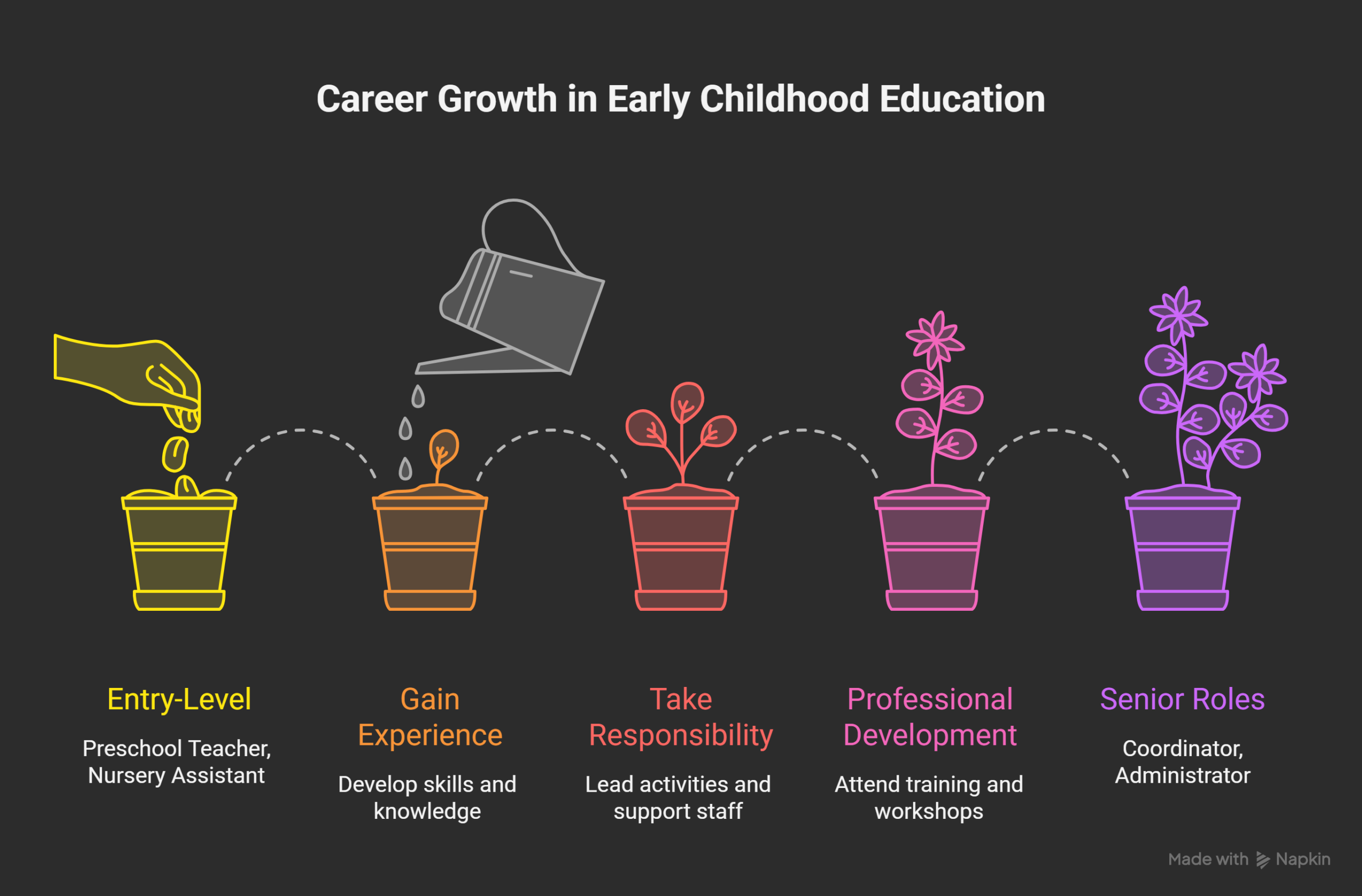
The NTT course opens many early-education careers. Training prepares learners for multiple roles. Each role supports child growth and development. Opportunities exist in schools, centres, and private setups. The field also provides steady long-term growth. Many professionals build strong careers with experience. These roles offer meaningful daily interactions.
The early education sector values trained staff. Children need gentle support during early years. Trained teachers help build strong foundations. Many families rely on quality early learning spaces. Centres hire skilled professionals for better outcomes. This demand creates stable job opportunities. Growth increases as experience rises.
Main Career Paths After NTT
Different roles match different strengths. Each role carries unique responsibilities. Early learning needs careful direction. These roles support that purpose.
1. Preschool Teacher
Preschool teachers guide early learning tasks. They plan activities for young children. Classrooms feel joyful under their care. Emotional support remains a big responsibility. Creative lessons improve child engagement.
Key Duties
-
Introduce simple learning tasks.
-
Maintain positive classroom energy.
-
Create playful learning setups.
-
Track daily child progress.
-
Encourage healthy social behaviour.
2. Nursery Assistant
Nursery assistants support daily classroom work. They assist teachers in many activities. Children receive extra help from assistants. Daily routines stay smooth with their support. Basic care remains their main focus.
Key Duties
-
Arrange activity materials neatly.
-
Help during craft sessions.
-
Guide children during play.
-
Keep spaces safe and clean.
-
Support children during transitions.
3. Playgroup Teacher
Playgroup teachers conduct playful sessions. Children learn basic skills through games. The learning environment stays relaxed. Teachers build comfort through gentle guidance. Early habits form through repeated practice.
Key Duties
-
Lead guided play tasks.
-
Teach simple social habits.
-
Encourage group interaction.
-
Ensure safe activity spaces.
-
Promote calm communication.
4. Child Care Centre Staff
Child care staff manage daily care routines. Children get close attention and support. Hygiene routines follow strict rules. Staff maintain safe and clean spaces. Comfort remains the highest priority.
Key Duties
-
Supervise children constantly.
-
Support feeding routines daily.
-
Maintain organised play areas.
-
Assist with group activities.
-
Ensure child safety always.
Advanced Career Paths
Experience unlocks senior roles. These roles include leadership duties. More responsibility brings better growth. Stronger skills lead to good positions. Professional development continues steadily.
1. Early Childhood Coordinator
Coordinators manage centre academic quality. They guide teacher planning regularly. Progress reports stay under their supervision. Training sessions improve staff performance. Classroom standards stay consistent.
2. Centre Administrator
Administrators oversee complete centre operations. Staff coordination remains their primary duty. Parents communicate directly with them. They manage enrolments and schedules. Daily tasks run under their control.
Workplaces That Hire NTT Graduates
Many settings need trained early educators. Each workplace offers different experiences. These environments support early learning needs.
Common Work Environments
-
Nursery schools
-
Play schools
-
Early education centres
-
Activity centres
-
Child development hubs
-
Child care facilities
Flexible Options
-
Home learning setups
-
Private teaching groups
-
Small batch sessions
Salary Overview Table
Salary levels vary between roles. Experience increases earning potential. Different centres offer different pay scales.
| Role | Starting Salary | Growth Expectation |
|---|---|---|
| Preschool Teacher | Moderate range | Steady yearly rise |
| Nursery Assistant | Basic income | Slow gradual growth |
| Playgroup Teacher | Moderate range | Experience boosts pay |
| Child Care Staff | Basic range | Growth based on skills |
| ECCE Coordinator | Higher range | Strong long-term rise |
| Centre Administrator | Good range | Significant growth later |
Why These Roles Matter
Early education shapes future development. Strong support builds confident learners. Positive habits form in these years. Every role adds value to child growth. Professionals bring comfort and guidance daily.
Conclusion
The NTT course opens doors to meaningful learning careers. Every skill learned supports early child development. Teachers shape strong foundations during early years. The course builds confidence for real classroom needs. Training prepares learners for many flexible career paths. Each role offers purpose and daily satisfaction. Early education becomes stronger with trained professionals.
This field grows with rising learning demands. More centres seek skilled early educators today. Experienced professionals enjoy stable long-term growth. Children benefit from caring and patient teachers. Strong training improves teaching quality everywhere. The NTT journey supports lifelong learning goals. Each step leads to rewarding opportunities.
Get Certified & Start Your Montessori Career
Montessori Teacher Training Course by Entri App: Gain expert skills, earn certification, and kickstart your teaching career.
Join Now!Frequently Asked Questions
What is a Nursery Teacher Training (NTT) Course?
The NTT course is a professional teacher training program designed to prepare individuals for teaching children in nursery, preschool, and early-learning environments. It focuses on child development, teaching methods, activity planning, and foundational classroom skills required in early education settings.
Who can join the Nursery Teacher Training Course?
Anyone who has completed 10+2 from a recognized board can join the NTT course. Many institutes accept students from any academic stream. Candidates with a passion for teaching young children or an interest in early childhood education are ideal for this program.
What is the duration of the NTT course?
The course is usually one year long. Some institutes offer part-time, weekend, or fast-track versions. Practical training, internships, and workshops may be included depending on the curriculum of the institute.
What skills do you learn in the NTT course?
The course helps learners build skills like communication, storytelling, lesson planning, child psychology understanding, creativity, teaching strategies, activity handling, classroom interaction, and early learning assessment methods. These skills make trainees ready for real classroom settings.
What jobs can I get after completing the NTT course?
After training, candidates can work as preschool teachers, nursery assistants, playgroup teachers, child care staff, early learning educators, or activity coordinators. With experience, they can move into roles like early childhood coordinators, centre administrators, or preschool managers.
Is the NTT course good for career growth?
Yes, the course offers strong career growth because early childhood education is expanding rapidly. With experience, teachers can take on leadership roles, start home-based learning centres, or pursue advanced ECCE programs for higher positions.
Do I need teaching experience before joining the NTT course?
No prior teaching experience is required. The course is designed for beginners and provides both foundational knowledge and practical training. Internships and practice sessions help trainees gain confidence.
What is the average salary after the NTT course?
Salaries vary based on the role, city, and institution. Entry-level positions in preschools or playgroups often offer moderate pay, while experienced teachers, coordinators, and administrators enjoy higher salaries and better growth opportunities.
Can I start my own preschool after completing NTT?
Yes, many candidates use the NTT qualification to start their own preschool or home-based learning setup. The course covers essential teaching and management skills that help in handling early education environments.
Is the NTT course recognized across India?
Most institutes offer widely accepted NTT certifications. However, recognition depends on the institute’s affiliation and accreditation. It is important to choose a trusted training centre with a good reputation and experienced faculty.