Table of Contents
Introduction
With the speedy evolution happening in the field of technology, there are far more advancements finding their way in our day-to-day life. One of the trending concerns is now around robotics and it is high time that we get to know what it is all about. Robotics isn’t some sci-fi “future tech” anymore. It is making some pretty amazing things happen in factories, hospitals, warehouses, in your own home – and even in space missions. Ever watched a robotic arm make perfect welds on a car frame, a vacuum just gliding round your floor on auto, or a rover stomping around on the Moon’s surface? That’s robots bringing some pretty crazy science fiction to life, right before your eyes – and it’s happening now.
Since you are already here you must be someone wondering where to begin. This beginner’s guide breaks it all down in a way that’s super easy to follow. Go on, find out what robotics is all about, the key parts that actually make a robot tick, and the types of robots that are really in demand right now. Above all, it shows you some easy ways to get started for yourself, even if you’re working with a tiny budget. It’s laid out in a nice plain way, so just sit back, get comfy, and keep on reading.
New to Robotics? Start from the Basics. Join Now!
What is Robotics?
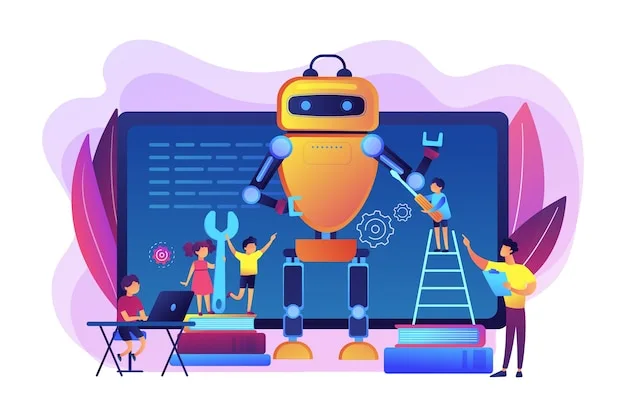
Robotics is one of those cool fields that gets to bring all sorts of different skills together – designing, building and programming machines. The end result is a machine – a robot – that can sense its surroundings and do tasks for you. This is done either on its own, or with a bit of help from a human. It has come to think of it like having a personal helper that can make your daily life a lot easier:
- Mechanical engineering to build things that can stand up to the rigours of everyday use
- Electronics for hooking all the sensors and circuits together
- Computer science for writing code and making smart decisions
- And then there’s AI and perception to give them some real smarts
So, at its most basic level, robots can sense, think and act. That seems the magic of it all. And why does it matter right now? Well, automation is really taking off in all sorts of industries. In India, the industrial robotics market was worth USD 1.62 billion in 2024. And it’s projected to hit USD 3.45 billion by 2030. That is a pretty rapid growth graph, and it’s getting innovators much excited.
Master Robotics and AI!
Ready to build the future? Join our comprehensive robotics course to bridge the gap between complex code and physical motion. You’ll gain hands-on experience giving you the technical edge needed to lead in the age of automation.
Know MoreMain Parts of a Robot
A robot can look complex, but most robots are built from a few core building blocks. Once you are into it completely, all of it can appear easier. Let’s have a glimpse:
1) Sensors (how a robot “feels” the world)
Sensors detect information like distance, light, temperature, sound, pressure, or motion. Examples: IR sensors, ultrasonic sensors, cameras, gyroscopes.
2) Controller (the robot’s “brain”)
The controller reads sensor data and runs the code that decides what to do next. Beginner-friendly examples: Arduino, Raspberry Pi, ESP32.
3) Actuators (how a robot “moves”)
Actuators convert electrical signals into motion. Examples: DC motors, servo motors, stepper motors, pneumatic actuators.
4) Frame + power system (the body and energy)
The frame holds everything together, and the power system (battery/power supply) keeps it running.
Beginner tip: If you can explain your robot in one line – “My robot senses X, decides Y, and does Z” – you already understand the fundamentals.
Popular Types of Robots in 2026
Robots are generally grouped by their function and where they get the job done.
Industrial Robots: The Workhorses of Factories
These work in factories on tasks like welding, assembling, painting, packing, and keeping an eye on production quality. India saw a record-breaking 8,510 industrial robot installations in 2023 – and that’s a huge leap from the year before.
Consumer/Service Robots
These are the robots in your everyday life. We’re talking about robots that help out around the house – think cleaning robots, delivery bots, and home assistants that help you out with everyday tasks.
Exploration Robots
These robots are built to go places that are way too tough for humans – like deep sea exploration, disaster zones, and even space travel. India’s ISRO Chandrayaan-3 mission has a robot that’s going to show us how to land and drive on the moon.
DIY / Hobby Robots
If you’re a student, or a hobbyist who loves building robots, you’ll be building things like robots that follow lines, avoid obstacles, robotic arms, and small rovers.
Master Robotics and AI!
Ready to build the future? Join our comprehensive robotics course to bridge the gap between complex code and physical motion. You’ll gain hands-on experience giving you the technical edge needed to lead in the age of automation.
Know MoreHow Robots Work: The Working Principle
Most robots use a pretty simple process – it’s just a matter of going round and round.

- Step 1: Get Your Data – Sensors pick up all sorts of info like distance, images, temperature
- Step 2: Run Your Show – The brain of the robot uses that data to figure out what to do next
- Step 3: Get Your Act Together – The motors and actuators do their thing, getting the robot moving or performing its tasks
- Step 4: Check & Adjust – The robot looks at what it’s done and says ‘yup, that was good’ or ‘nope, try again’
This loop is how robots can seem so ‘smart’ – they’re just sensing and adjusting all the time.
New to Robotics? Start from the Basics. Join Now!
How to Start Learning Robotics in India
You don’t need a fancy lab or expensive equipment to start robotics. Here’s a simple roadmap for beginners:
Step 1: Get Your Hands Dirty with a Small Project
- Arduino Starter Kit is a great way to get started with electronics & motion
- Raspberry Pi is great if you want to get into Linux & more computing power, but Arduino is a lot simpler for beginners
Step 2: Pick a Programming Language and Run with It
Python is a great choice for robotics basics, and later on, you’ll get to use more advanced toolkits – if you start with Arduino, you might also end up doing some C/C++ too
Step 3: Build Some Projects That’ll Get You Confidence
- LED Blinker – learn how to get your robot to do something basic (outputs)
- Distance Sensor & Buzzer – learn about sensors & simple logic
- Obstacle Avoiding Car – put it all together – sensors, motors, decisions
Step 4: Get Involved in Communities
This is where it actually happens. Workshops, robotics clubs, maker communities, & hackathons will help you progress from ‘I followed a tutorial’ to ‘I can design my own robot’
Robotics Careers in India
Robotics careers are growing in loads of industries – manufacturing, warehouses, automotive, electronics, healthcare, and defence. What role you end up in depends on whether you’re a hardware person, a software person, or can do a bit of both.
Some of the Jobs You Can Expect to Find
- Robotics / Automation Engineer
- Embedded Systems Engineer
- Robot Programmer (industrial robots)
- ROS/ROS2 Developer
- Computer Vision Engineer (robot perception)
- Mechatronics Engineer
- Test & Validation Engineer (robot systems)
Salary Expectations
The amount you can expect to earn varies a heck of a lot depending on where you live, how deep your skills are, and what specific field you’re working in. Some websites and career resources do give a rough idea of what to expect: freshers in India are generally looking at around ₹4-6 LPA, while more experienced robotics pros have been known to reach the ₹15 LPA mark and then some, depending on the role and your actual abilities.
Don’t get too hung up on any one number – your actual skills and experience (especially your portfolio which includes projects, controls, embedded, ROS2, and perception) are going to matter way more than what title you’ve got.
What Skills Employers Actually Look for
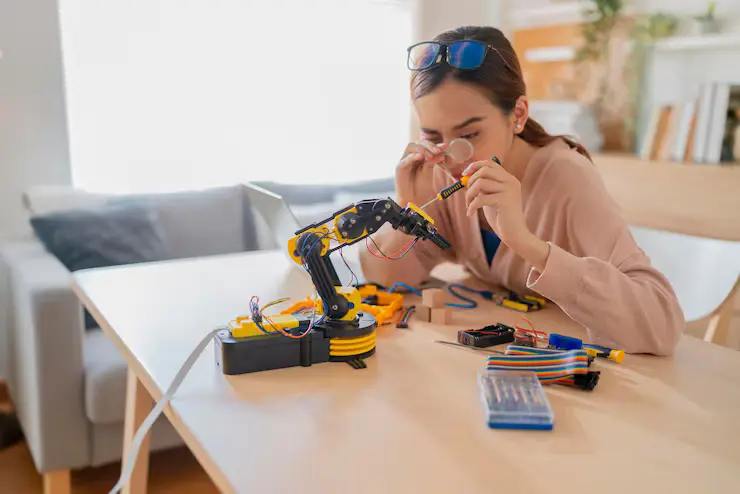
Once you get a grip of the machine, its relevance and the scope of working around it, you surely have to make sure you are well equipped before you apply for a job. Having the exact skill set and expectations that most employers look for can work in your favour. Here are the major concerns of every employer:
- Having some hands-on experience and having your projects documented on GitHub or somewhere online.
- Being well-versed in core electronics and troubleshooting
- Programming skills on point and ability to write clean, logical code
- Knowledge on the basics of ROS2 and how to use it in a real-world robotics application
- Having a solid grasp of sensor integration and motor control fundamentals
New to Robotics? Start from the Basics. Join Now!
Conclusion
Robotics is no longer some far-off fantasy locked away in labs or science fiction movies. It is the real deal, right here in the midst of explosive change that’s already shaking up manufacturing, logistics, package delivery, healthcare and just about every other field imaginable. Once you get a handle on that one core concept, the whole world of robotics suddenly falls into place and becomes a lot more accessible and easier to learn one step at a time.
Start with something simple. Grab an affordable kit. Arduino or Raspberry Pi are good places to start. Then try out some basic robotics projects (like a line-following robot or an obstacle-avoiding rover) before gradually adding in sensors, code, and motors to build something that actually works. And the thing is – you don’t have to be some kind of robotics genius from day one.
Check out structured learning paths to get you moving. You can consider online courses, bootcamps, local maker spaces, all with clear milestones, beginner-friendly robotics projects, and advice on how to build a killer portfolio. These will make you stand out. It’s your actual builds, after all, that are going to speak louder than any amount of theory – opening doors to exciting new robotics careers in India.
Master Robotics and AI!
Ready to build the future? Join our comprehensive robotics course to bridge the gap between complex code and physical motion. You’ll gain hands-on experience giving you the technical edge needed to lead in the age of automation.
Know MoreFrequently Asked Questions
Is robotics only about coding?
No. Robotics includes mechanics, electronics, sensors, motors, and design – coding is one important part, but not the only part.
How do robots “think”?
Robots don’t think like humans. They run programmed logic and algorithms to decide actions based on sensor data.
Does robotics have good scope as a good career in India?
Yes. Robotics and automation adoption is increasingly on demand. Industrial robot installations in India have been growing and include a record year in 2023.
What are the main types of robots?
Common types include industrial robots, service/consumer robots, exploration robots (space/disaster), and hobby/DIY robots.
What is ROS/ROS2 in robotics?
ROS (Robot Operating System) is a widely used framework for building robot software. It is primarily helpful for navigation and mapping with sensors. This also includes modular robotics development.
Which one is a beginner-friendly course in robotics?
A good beginner course should cover fundamentals, hands-on projects, and modern robotics tools like simulation and ROS2. Entri’s Robotics & AI program describes coverage across these areas including ROS2, simulation, SLAM, and a capstone project.
Can I learn robotics without engineering?
You can start the basics without an engineering degree – especially with beginner kits and projects. For advanced robotics roles, structured learning and strong fundamentals help.
What is the best age to start robotics?
There is no perfect age. School students can start with basic kits, and college students/working professionals can start with Arduino, Python, and real projects.
How can I start robotics at home?
Start with an Arduino kit, learn basic coding, build a blinker, then a sensor project, then a small moving robot – progress project-by-project.
What is the average robotics engineer salary in India?
Ranges vary significantly. Some India-focused references cite freshers around ₹4–6 LPA and experienced professionals up to ₹15 LPA+ depending on role and skills.