Table of Contents
The core purpose of Montessori education is to equip children with independence, confidence and help them become naturally curious learners. It is different from the traditional learning practice where children are forced to memorize their lessons. The Montessori approach encourages them to learn, experiment and explore things at their own pace in a mindfully prepared environment.
Unlock your passion for education and shape young minds as a Montessori teacher!
Key Takeaways
- Montessori education really does look at the whole child – not just how well they do in school.
- It’s all about empowering kids to learn and figure out things on their own from a pretty young age.
- Rather than just memorizing stuff, kids learn through actually doing things – grabbing a hands-on material to try and figuring things out in real life.
- And speaking of kids – it’s the teacher’s role to support them and not constantly be telling them what to do.
- Montessori classrooms are designed to be really cool – laid out in a way that makes kids curious and encourages them to explore.
- But modern Montessori isn’t just about that old school stuff. Its also about teaching kids to be mindful, be emotionally intelligent and be good to the planet.
- This way of learning helps kids develop the kinds of skills they really need to succeed in life – like being able to think for themselves, come up with new ideas and roll with the punches.
Introduction
1: What is the primary focus of the first plane of development in the Montessori method?
Developed by Maria Montessori more than a century ago, this educational philosophy focuses on hands-on learning, self-directed activities, and respect for a child’s natural development. Even in 2026, Montessori education continues to evolve by integrating modern needs such as emotional intelligence, digital literacy, and sustainability awareness, while staying true to its core principles.
Today, Montessori classrooms across the world – including India – aim to nurture holistic development by supporting children intellectually, emotionally, socially, and physically.
Get Certified & Start Your Montessori Career
Montessori Teacher Training Course by Entri App: Gain expert skills, earn certification, and kickstart your teaching career.
Join Now!Core Purpose of Montessori Education
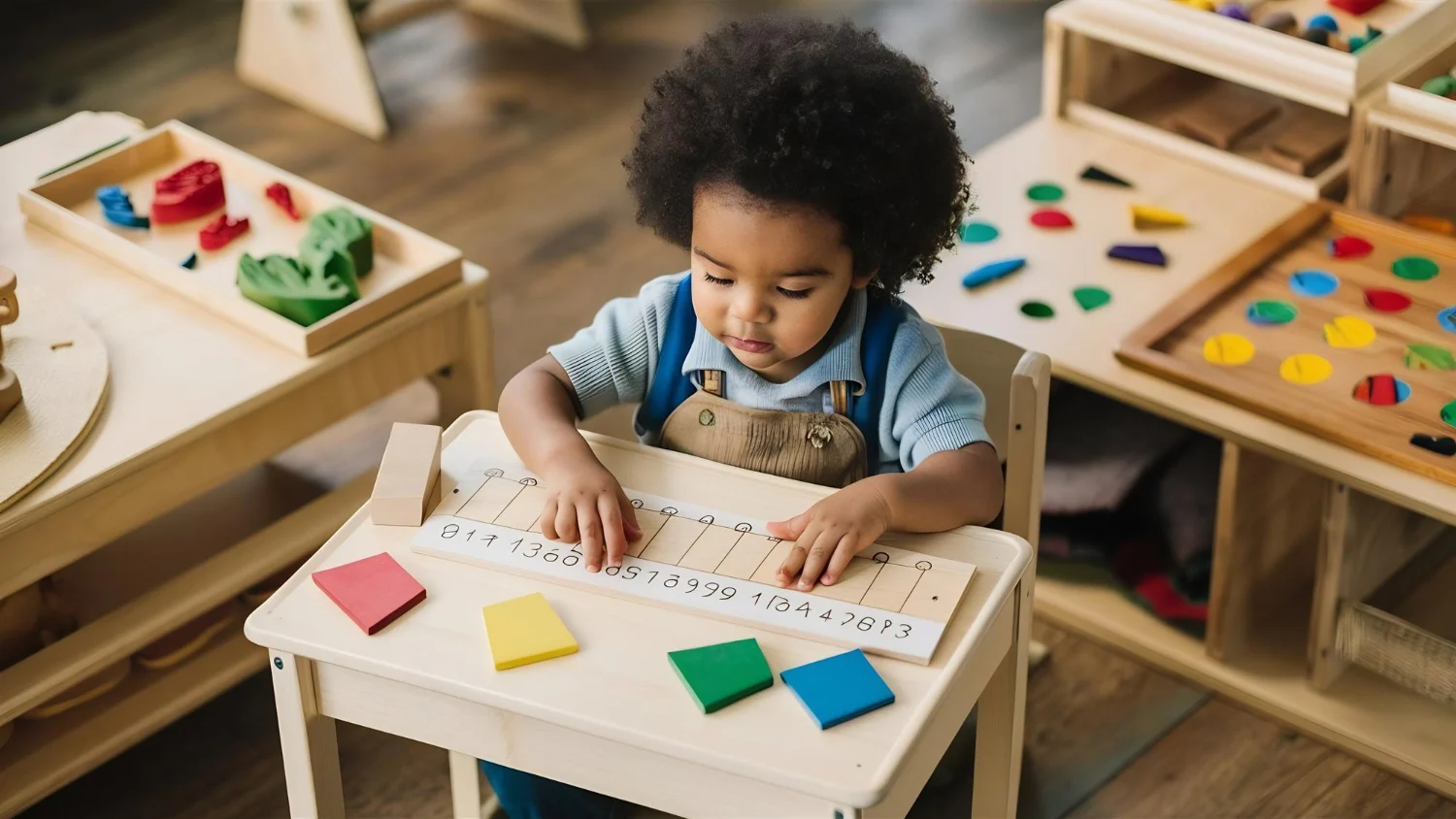
The central purpose of Montessori education is to nurture the whole child. Instead of focusing solely on academic performance, Montessori schools emphasize a balanced development that includes:
- Intellectual growth
- Emotional stability
- Social awareness
- Physical coordination
Children are naturally curious, and the Montessori method taps into this curiosity by providing freedom within structure. This means children can choose activities that interest them while still following an organized learning framework.
For example, a Montessori classroom may include activities like:
- Pouring water into cups to develop motor skills
- Sorting objects by size or color to strengthen cognitive skills
- Practical life exercises such as tying shoelaces or cleaning up materials
These activities aren’t just about learning – they’re about helping kids become more independent and confident, without having to feel like they’re in some kind of competition.
Over time, this approach builds self-discipline, responsibility, and a lifelong love of learning.
How Does Montessori Education Work?
For the Montessori setting to be successful and exciting, deliberate curriculum and lesson design are required. Teachers teach lessons to the children in order to carry out the Montessori curriculum. The resources children require to freely explore, study, and draw connections in order to meet learning objectives are given to them after a lesson. Instructors watch while the kids investigate. This is an opportunity to enable children to learn new skills and information while recording their progress, even when intervention may be required.
Making a Montessori curriculum is the first step towards implementing Montessori techniques in the classroom. Children should be able to study in five main areas: language, cultural studies, mathematics, practical life, and sensory learning.
The carefully chosen and crafted learning tools in Montessori classrooms allow kids to explore and learn at their own speed. Children can identify and learn from their mistakes on their own because to the self-correcting nature of these items. Instead of teaching, a Montessori teacher’s job is to support and encourage learning while fostering a child’s innate desire to learn.
Whether you run a day-care centre or intend to begin home-schooling your children, the effectiveness of your program is influenced by the layout of your classroom. Typical classrooms don’t feel or look like Montessori classrooms. Conventional classrooms can appear disorganized and have an overwhelming amount of vibrant materials and colours. The atmosphere in a Montessori classroom is intended to be soothing, cozy, and perceptive of the needs of the child.
Key Principles of Montessori Education
At the heart of Montessori education is a handful of simple but powerful principles that make all the difference in how a classroom feels.
1. Child-Centred Learning
In a Montessori classroom, the kid is in the driver’s seat – not the teacher. Instead of being told what to do and when, kids get to choose activities that genuinely interest them, and that take into account where they’re at right now in their development.
This promotes:
- Deeper concentration
- Intrinsic motivation
- Active engagement in learning
Because children work on tasks they genuinely enjoy, they develop a strong sense of ownership over their learning journey.
2. Prepared Environment
One of the most distinctive features of Montessori education is the prepared environment. Classrooms are carefully organized to encourage exploration and independence.
Typical Montessori classroom features include:
| Feature | Purpose |
| Low shelves | Allows children to access materials independently |
| Natural learning materials | Encourages sensory exploration |
| Mixed-age groups | Promotes collaboration and peer learning |
| Child-sized furniture | Supports comfort and independence |
This structured yet flexible environment allows children to learn at their own pace without feeling rushed or restricted.
3. Role of the Teacher
In Montessori education, teachers are often referred to as guides rather than instructors.
Their role includes:
- Observing children carefully
- Demonstrating how to use learning materials
- Providing support only when necessary
- Encouraging independence
Instead of delivering constant lectures, teachers help children discover knowledge on their own.
This approach builds self-confidence, responsibility, and critical thinking skills.
Get Certified & Start Your Montessori Career
Montessori Teacher Training Course by Entri App: Gain expert skills, earn certification, and kickstart your teaching career.
Join Now!Montessori vs Traditional Education
The Montessori method differs significantly from conventional classroom models.
| Montessori Education | Traditional Education |
| Child-led learning | Teacher-led instruction |
| Hands-on materials | Textbooks and lectures |
| Mixed-age classrooms | Same-age classrooms |
| Focus on process | Focus on grades and results |
| Self-paced learning | Fixed curriculum pace |
By prioritizing the learning process over academic competition, Montessori education encourages children to become lifelong learners rather than exam-focused students.
Learn the Montessori philosophy, classroom management techniques, and hands-on activities!
Benefits of Montessori Education in 2026
In this crazy fast-paced world, Montessori education has some pretty compelling benefits that just happen to fit right in with what parents are looking for in their kids’ education.
1. Strong Emotional Development
You know what is really impressive about Montessori? Kids in these environments seem to have a handle on their emotions, and understanding empathy and respect comes naturally to them. It’s not just about group discussions and stuff- it’s the actual way of looking at the world.
2. Creativity and Problem-Solving
Because Montessori actually lets kids get hands-on experience, they end up being super innovative and creative thinkers. That’s the kind of kid we want – the kind that can figure out solutions to real problems.
3. Reduced Stress and Anxiety
One thing you won’t find in a Montessori school is a whole lot of pressure to perform on tests. Progress over performance – that’s what it’s all about. Kids are able to learn without the weight of the world on their shoulders.
4. Better Social Skills
The mixed-age classrooms in Montessori schools are a great way for older kids to take on leadership roles and help out the younger ones. Teach them teamwork, role models, the whole thing.
5. Growing Popularity in India
In India, more and more parents are choosing Montessori for their little ones because:
- It lets them figure out how to think for themselves.
- They learn to manage their emotions and be in control of themselves.
- They get to learn life skills that actually matter in the real world.
Montessori Education Trends in 2026
Education is constantly changing, and Montessori schools are right there with it – but still staying true to the core of what Montessori is all about.
Mindfulness and Emotional Intelligence
You see it in a lot of Montessori classrooms now – special spaces where kids can just relax and breathe and be. Not to mention activities that help them build empathy and deal with conflicts.
Digital Literacy Without Screen Overload
Teachers aren’t just dumping a whole lot of screen time at the kids – they’re using tech to help each kid learn at their own pace. And it’s still hands-on.
Sustainability and Environmental Awareness
It’s getting to be a bigger part of Montessori education – teaching kids the importance of taking care of the planet. You know, things like gardening and recycling and just being outside and in touch with nature.
AI-Assisted Personalized Learning
Some Montessori schools are starting to use AI to help teachers track progress and tailor their teaching to each kid. But – and this is a big but – the core of Montessori stays the same – hands-on exploration, not just staring at a screen all day.
Click here to learn more about Entri Elevate Montessori Teachers Training program!
Conclusion
Montessori education is all about taking kids beyond being just book-smart people – it’s more about growing confident, independent and thoughtful individuals who are equipped to tackle whatever comes their way in life. When you put it all together – hands on learning , emotional intelligence, and useful life skills – you get a way of doing education that lets kids progress at their own speed in a very confident way.
Even 20 years from now Montessori ideas are still bang on target & in an education world that is changing fast, Montessori still stands out as a teaching approach that offers the full Monty – creativity, curiosity and a genuine lifelong love of learning.
For parents and teachers too, Montessori is all about bringing up kids who are ready for just about anything that comes down the line, and who will go on to be good citizens of the world.
Get Certified & Start Your Montessori Career
Montessori Teacher Training Course by Entri App: Gain expert skills, earn certification, and kickstart your teaching career.
Join Now!Frequently Asked Questions
What are the benefits of Montessori education?
Independence, critical thinking, problem-solving abilities, and a love of learning are all fostered by a Montessori education. Additionally, by honoring each child’s unique interests and pace, it fosters emotional development and social development through interactions between children of different ages.
How does Montessori education impact a child's development?
Montessori education meets children’s physical, emotional, social, and cognitive requirements in order to promote their complete development. It helps kids grow into self-driven learners, assured problem solvers, and responsible adults.
Can Montessori education be integrated with traditional schooling?
Yes, there is some room for integrating Montessori concepts into traditional education. Within more traditional educational frameworks, parents and educators can integrate experiential learning, respect for the child’s pace, and independence-building.
Are Montessori schools expensive?
Because of the materials utilized and the particular training that teachers receive, Montessori schools can be more expensive than typical schools. However, in order to increase the accessibility of Montessori education, several schools provide financial aid and scholarships.