Table of Contents
Key Takeaways:
- Wind turbine technicians are essential for Germany’s renewable energy revolution.
- The job offers high salaries, excellent benefits, and strong career growth.
- Germany’s wind sector is booming, with thousands of new jobs every year.
- Learning German can significantly boost your career prospects in Germany and Europe.
- The Schengen visa allows for easy migration to other European countries.
Introduction
Imagine standing atop a wind turbine in northern Germany, the North Sea breeze at your back, knowing you’re part of a revolution that’s powering Europe. Wind turbine technicians aren’t just fixing machines—they’re shaping the future of energy. In Germany, the wind sector is booming, and skilled technicians are in high demand. Whether you’re an engineer, a mechanical whiz, or someone looking for a career change, this guide will show you how to ride the wind into a rewarding future.
 What Does a Wind Turbine Technician Do?
 What Does a Wind Turbine Technician Do?
1: How do you say "Good Morning" in German?
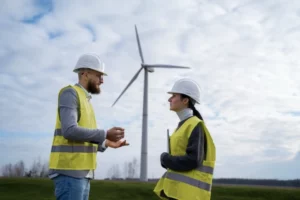
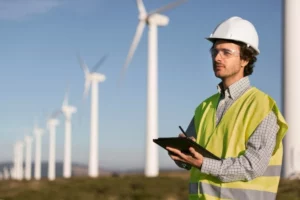
A wind turbine technician is responsible for installing, maintaining, troubleshooting, and repairing wind turbines. Their work ensures these massive machines operate safely and efficiently, providing clean energy for thousands of homes and businesses.
Key Responsibilities
- Routine and preventive maintenance of turbines.
- Diagnosing and fixing faults, including major component replacements.
- Documenting service work and preparing reports.
- Ensuring compliance with health and safety regulations.
- Working at heights and in challenging weather conditions.
Free German A1 Mock Tests – Powered by AI!
Test your skills on our interactive platform. Get instant feedback from our AI to help you communicate better and track your progress. Start your free German mock test now.
Test Your German A1 for FreeWind Energy Industry in Germany: Opportunities Galore
With the energy industry thriving and Germany being Europe’s wind energy leader, with record growth in 2025. The country added 2.2 GW of new wind power capacity and approved a staggering 7.8 GW in the first half of the year alone. By the end of 2025, Germany is projected to add between 4.8 and 5.3 GW of new onshore wind capacity, making it one of the most dynamic markets for wind energy jobs in Europe.[1]
Why Germany?
- Over 28,000 wind turbines are installed, with more being added every year.[2]
- Germany’s wind sector is expanding rapidly, with strong government support and private investment.
- The country is a global hub for green jobs, offering career growth, innovation, and international exposure.[3]
- Germany has recently announced a major increase in their minimum wages. The increase is scheduled to be in effect in two phases – 2026 and 2027.
You might also like: Top Industries and Career Opportunities in Germany
Salary Details: What Can You Earn?
Wind turbine technicians in Germany enjoy competitive salaries, with clear progression as experience grows. Here’s a breakdown of the average annual salaries in 2025:
| Experience Level | Onshore (€) | Offshore (€) | Major Components (€) |
|---|---|---|---|
| Entry-Level | 35,000–45,000 | 40,000–50,000 | 40,000–50,000 |
| Mid-Level (3-5 yrs) | 45,000–60,000 | 55,000–70,000 | 50,000–65,000 |
| Senior (6+ yrs) | 60,000–75,000 | 70,000–85,000 | 65,000–80,000 |
Salaries can be even higher for offshore specialists, with 15–20% more due to the demanding nature of the work.
|
German A2 Exercises – Download Free PDF |
||
Step-by-Step Guide: How to Become a Wind Turbine Technician in Germany
Becoming a wind turbine technician in Germany involves a mix of education, hands-on training, and certifications. Here’s a clear roadmap to follow:
-
Step 1: Complete Relevant Education
- Obtain a vocational qualification in electrical engineering, mechatronics, or industrial mechanics. Many technicians start with an apprenticeship or a technical school program focused on these fields.
- Some employers may accept an associate’s degree in wind energy technology or a related field, but hands-on experience is highly valued.
-
Step 2: Gain Hands-On Experience
- Look for internships, apprenticeships, or entry-level roles in the wind energy sector. Many companies offer structured training programs for new technicians.
- Work on real turbines to build practical skills in maintenance, troubleshooting, and repairs.
-
Step 3: Obtain Required Certifications
- Complete the GWO Basic Safety Training (Working at Heights, First Aid, Fire Awareness, Manual Handling, and Sea Survival for offshore roles).
- Get electrical qualifications such as Elektrofachkraft if you’ll be working on electrical systems.
- Additional certifications for confined space entry, rescue techniques, and manufacturer-specific turbine training are highly recommended.
-
Step 4: Apply for Jobs
- Use specialized job platforms, attend industry events, and connect with German technical schools and wind service companies.
- Highlight your certifications, practical experience, and willingness to travel.
-
Step 5: Continue Professional Development
- Participate in ongoing training and certification updates to stay current with industry standards and new technologies.
- Consider advanced courses in specialized areas like blade repair, high-voltage systems, or offshore wind technology.
Free German A1 Mock Tests – Powered by AI!
Test your skills on our interactive platform. Get instant feedback from our AI to help you communicate better and track your progress. Start your free German mock test now.
Test Your German A1 for FreeEligibility Requirements
To become a wind turbine technician in Germany, you must meet certain eligibility criteria:
-
Educational Qualifications
- Vocational training or technical degree in electrical engineering, mechatronics, or industrial mechanics.
- Some roles may accept an associate’s degree in wind energy technology or related fields.
-
Certifications
- GWO Basic Safety Training (mandatory for all technicians).
- Electrical qualifications (Elektrofachkraft) for work on electrical systems.
- Additional certifications for working at heights, confined spaces, and rescue techniques.
-
Work Experience
- Entry-level roles may accept candidates with internship or apprenticeship experience.
- More advanced roles require several years of hands-on experience in wind turbine maintenance and repairs.
-
Physical Fitness
- Ability to work at heights and in challenging weather conditions.
- Good physical health and stamina are essential for the job.
-
Language Skills
- Basic German is required for communication and safety, but English is often used in technical environments.
- Proficiency in both languages increases employability and career growth opportunities.
Read in detail: What Level of German is Required to work in Germany?
-
Legal Requirements
- EU citizenship or a valid work visa is required to work in Germany.
- A valid driver’s license (Class B or BE) is often needed for travel between sites.
Meeting these requirements will set you on the right path to a successful career as a wind turbine technician in Germany.
|
Goethe 2026 Exam Dates: Multiple Test Centers |
|
| Trivandrum Goethe Exam Dates | Kochi Goethe Exam Dates |
| Chennai Goethe Exam Dates | Coimbatore Goethe Exam Dates |
Lifestyle and Living Conditions in Germany
Germany offers an excellent work-life balance, modern infrastructure, and a high standard of living. Technicians typically enjoy:
- 30 days of annual vacation.
- Comprehensive health and pension insurance.
- Access to ongoing training and career development.
- Company vehicles and mobile allowances.
- Vibrant cities, rich culture, and a welcoming environment for international professionals.
Future Prospects of Wind Turbine Technicians in Germany
- Germany’s wind energy sector is growing rapidly, with a record 7.8 GW of new wind capacity approved in early 2025, leading to thousands of new job opportunities for skilled technicians.
- Entry-level technicians can advance to roles like team leader, site supervisor, or offshore specialist, often within just a few years of experience.
- More experienced professionals can move into project management, technical consulting, or research and development roles as the industry adopts new technologies.
- Continuous training and certification programs are widely available, helping technicians stay up-to-date with the latest industry standards and technologies.
- Career growth is supported by strong industry demand, government investment, and ongoing innovation in wind energy technology.
Migration Opportunities in Germany
- Germany’s Schengen visa allows skilled workers to travel, live, and work freely across most European countries, including Denmark, the Netherlands, France, and Sweden.
- Wind turbine technicians are in high demand across Europe, and German work experience is often highly valued by employers in other EU countries.
- German certifications and hands-on experience make it easier to secure higher-paying and specialized roles in other European markets.
- Proficiency in German and English further enhances employability and opens doors to international assignments and career growth.
- Technicians can leverage their German experience to pursue opportunities not only in Europe but also in other regions with growing renewable energy sectors.
You might also like: Opportunities in Other Countries After Learning German
Entri’s German Language Course: Your Career Booster
Learning German can be a game-changer for your career in Germany. Entri’s online German language course offers:
- Structured training from A1 to C2 levels[web:entri].
- Expert instructors and Goethe exam assistance[web:entri].
- Flexible schedules and interactive sessions[web:entri].
- Practical focus on communication skills for work and daily life[web:entri].
- Affordable tuition and personalized support[web:entri].
Mastering German not only increases your job opportunities but also helps you integrate into German society and culture, making your career transition smoother and more rewarding.
Conclusion
The wind turbine technician role in Germany is more than a job—it’s a chance to be part of a green revolution that’s shaping the future of Europe. With competitive salaries, excellent living conditions, and endless growth opportunities, there’s never been a better time to start your career in wind energy. Whether you’re just starting out or looking to advance, Germany offers a world of possibilities for skilled technicians.
Free German A1 Mock Tests – Powered by AI!
Test your skills on our interactive platform. Get instant feedback from our AI to help you communicate better and track your progress. Start your free German mock test now.
Test Your German A1 for FreeFrequently Asked Questions
What qualifications do I need?
A background in electrical, mechanical, or mechatronics engineering is preferred, along with safety certifications and hands-on experience.
Is German language required?
Yes, basic German is essential for communication and safety, but English is often used in technical environments.
What’s the job outlook for 2026 and beyond?
The outlook is extremely positive, with record growth in wind energy and ongoing demand for skilled technicians.
Can I work in other European countries with a German job?
Yes, a German work experience and Schengen visa make it easier to find jobs in other EU countries.
How can I prepare for the job?
Gain relevant technical training, obtain safety certifications, and consider learning German to boost your career prospects.