Table of Contents
Landing an HR Manager role at Accenture is a significant career opportunity, as the company is known for its strong emphasis on people management and organizational excellence. Whether you’re a seasoned HR professional or an aspiring candidate, preparing for the interview is crucial. Accenture’s interview process often focuses on assessing your HR knowledge, leadership skills, problem-solving abilities, and alignment with the company’s culture and values. In this blog, we have compiled the most common Accenture HR Manager interview questions and answers to help you prepare effectively, boost your confidence, and increase your chances of success.
Is being an HR your dream? Enrol now for our course on Human Resource!
About the HR Manager Role at Accenture
The HR Manager at Accenture plays a critical role in shaping the organization’s workforce, ensuring employee satisfaction, and driving business success. This position is ideal for professionals who are passionate about people management and strategic HR practices.
Key Responsibilities
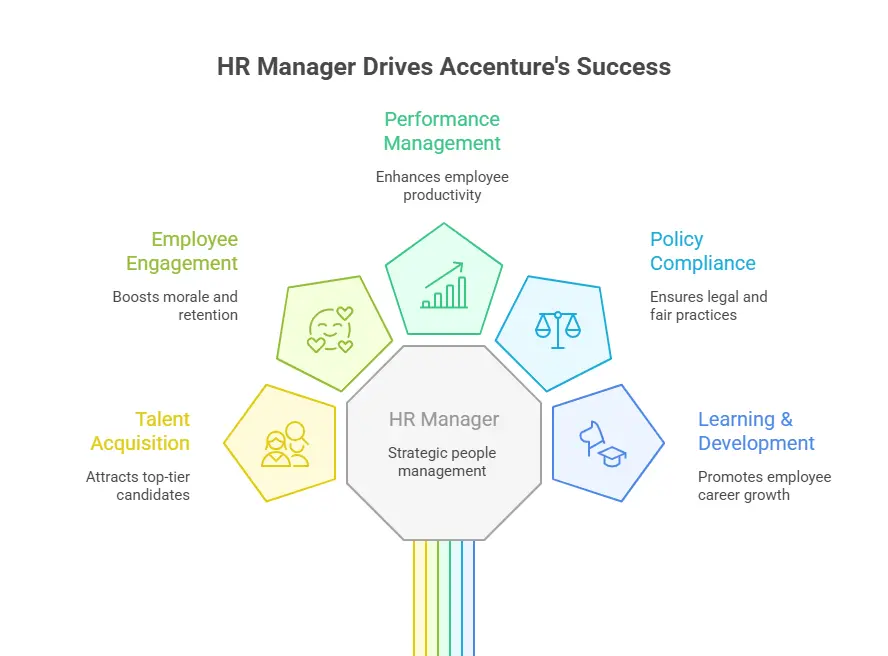
An HR Manager at Accenture is responsible for a wide range of functions, including:
-
Recruitment & Talent Acquisition: Identifying, attracting, and hiring the best talent to meet organizational needs.
-
Employee Engagement: Designing programs to boost morale, retention, and overall employee satisfaction.
-
Performance Management: Overseeing appraisal systems, setting performance goals, and providing constructive feedback to enhance productivity.
-
HR Policies & Compliance: Implementing company policies, ensuring legal compliance, and maintaining a fair and transparent work environment.
-
Learning & Development: Planning training programs, career development initiatives, and succession planning to help employees grow.
Required Skills and Qualifications
To succeed as an HR Manager at Accenture, candidates should possess:
-
Strong communication and interpersonal skills
-
Leadership and decision-making abilities
-
Knowledge of HR laws, policies, and best practices
-
Problem-solving and conflict-resolution skills
-
Experience with HR software and analytics tools
-
A bachelor’s or master’s degree in Human Resources, Business Administration, or related fields
How HR Managers Contribute to Accenture’s Culture and Business Goals
HR Managers at Accenture are more than administrative leaders—they are strategic partners who help align HR practices with business objectives. They:
-
Promote a people-first culture, ensuring employees feel valued and supported
-
Foster diversity, equity, and inclusion in the workplace
-
Enhance organizational efficiency through process improvements
-
Support leadership in making informed talent decisions
-
Drive initiatives that improve employee engagement, retention, and overall business performance
Top Accenture HR Manager Interview Questions and Answers
Preparing for an HR Manager interview at Accenture requires a combination of HR knowledge, leadership skills, and alignment with the company’s values. Below, we have categorized the most common questions along with detailed sample answers.
General HR Questions
Q1. Tell me about yourself.
Answer: “I am an HR professional with X years of experience in recruitment, employee engagement, performance management, and HR policy implementation. I have successfully led initiatives that improved employee retention, engagement, and productivity. I thrive in dynamic environments and am excited about contributing to Accenture’s people-first culture.”
Q2. Why do you want to work at Accenture?
Answer: “Accenture is a global leader in consulting and technology services, known for its culture of innovation, inclusion, and employee development. I want to contribute my HR expertise to support talent growth, enhance engagement, and align HR strategies with business objectives.”
Q3. What motivates you as an HR professional?
Answer: “I am motivated by helping employees grow, fostering a positive work culture, and implementing HR initiatives that drive organizational success. Seeing employees thrive and knowing HR played a part in that success gives me immense satisfaction.”
Q4. What do you know about Accenture’s culture and values?
Answer: “Accenture promotes a culture of innovation, integrity, diversity, and inclusion. The company focuses on employee development, collaboration, and delivering value to clients, which aligns with my approach to HR management.”
Q5. What do you think makes a great HR Manager?
Answer: “A great HR Manager balances organizational goals with employee needs, communicates effectively, demonstrates empathy, ensures compliance, and implements processes that foster engagement and growth.”
Q6. How do you stay updated with HR trends and best practices?
Answer: “I attend webinars, participate in HR forums, read industry publications, and take professional courses to remain current on HR strategies, labor laws, and emerging trends.”
Behavioral Questions
Q7. Describe a time you resolved a workplace conflict.
Answer: “I mediated a conflict between two employees affecting team productivity. I listened to both parties, identified the root cause, facilitated a discussion, and set clear expectations. The conflict was resolved, and collaboration improved.”
Q8. Tell me about a time you implemented an HR initiative successfully.
Answer: “I launched a mentorship program for new hires, pairing them with experienced employees. This initiative increased employee engagement by 20% and reduced first-year attrition significantly.”
Q9. Give an example of handling a difficult employee situation.
Answer: “One employee was underperforming despite feedback. I conducted a performance review, created a development plan, and provided coaching. The employee improved performance within three months, benefiting the team and organization.”
Q10. Describe a situation where you managed multiple HR projects simultaneously.
Answer: “I managed recruitment, employee engagement programs, and compliance audits at the same time. By prioritizing tasks, delegating responsibilities, and maintaining clear communication, all projects were delivered successfully.”
Q11. Tell me about a time you had to give constructive feedback to a senior employee.
Answer: “I approached the conversation respectfully, focused on specific behaviors, and suggested actionable improvements. The employee implemented the changes, which improved team dynamics without affecting morale.”
Recruitment & Talent Management
Q12. How do you attract top talent?
Answer: “I leverage employer branding, social media, employee referrals, and participation in career events. Clear and engaging job descriptions, along with timely communication, help attract quality candidates.”
Q13. How do you manage high employee turnover?
Answer: “I analyze turnover data, identify root causes, and implement retention strategies such as career development programs, recognition initiatives, and competitive compensation. Exit interviews provide insights for improvement.”
Q14. How do you ensure a smooth onboarding process?
Answer: “I design structured onboarding plans including orientation, role-specific training, mentorship, and feedback sessions. Tracking onboarding metrics helps improve the process continuously.”
Q15. What strategies do you use to retain key employees?
Answer: “I implement recognition programs, career growth opportunities, skill development initiatives, and flexible policies to retain high-performing employees.”
Q16. How do you assess whether a candidate is a culture fit?
Answer: “I evaluate the candidate’s values, behavior, and work style through interviews, behavioral questions, and reference checks to ensure alignment with Accenture’s culture.”
Employee Relations
Q17. How do you handle employee grievances?
Answer: “I listen carefully, investigate objectively, and resolve issues fairly while maintaining confidentiality. Clear communication ensures trust and prevents escalation.”
Q18. How do you maintain employee engagement and satisfaction?
Answer: “I conduct surveys, implement recognition programs, provide development opportunities, and maintain open communication channels to understand and meet employee needs.”
Q19. What strategies do you use to improve team collaboration?
Answer: “I encourage cross-functional projects, open communication, team-building activities, and recognition of collaborative achievements.”
Q20. How do you motivate a disengaged employee?
Answer: “I identify the root cause, provide mentoring and skill development, set achievable goals, and offer recognition and feedback to re-engage the employee.”
Leadership & Strategy
Q21. Describe your leadership style.
Answer: “I follow a participative leadership style, encouraging input from team members, while providing guidance, promoting accountability, and supporting continuous learning.”
Q22. How do you align HR strategies with business objectives?
Answer: “I collaborate with leadership to understand business goals, design HR initiatives like workforce planning, training, and performance management, and monitor outcomes to ensure alignment.”
Q23. How do you promote Accenture’s organizational culture?
Answer: “I lead by example, communicate values, implement initiatives reflecting company culture, and support diversity, inclusion, and employee development programs.”
Q24. How do you handle resistance to HR initiatives?
Answer: “I address concerns by explaining benefits, listening to feedback, and adapting initiatives when necessary. Building trust and demonstrating results reduces resistance.”
Q25. Can you provide an example of leading a change management initiative?
Answer: “I rolled out a new performance appraisal system, trained managers, and monitored adoption. The initiative improved transparency and employee satisfaction.”
HR Policies & Compliance
Q26. How do you ensure compliance with labor laws?
Answer: “I stay updated with regulations, conduct regular audits, provide training, and enforce policies proactively to maintain compliance.”
Q27. How do you manage sensitive employee data?
Answer: “I ensure secure storage, restrict access, maintain confidentiality, and comply with data privacy regulations.”
Q28. How do you handle policy violations?
Answer: “I investigate objectively, document findings, take corrective actions, and provide coaching to prevent recurrence.”
Q29. How do you implement HR policies across departments?
Answer: “I conduct training sessions, communicate updates clearly, provide documentation, and monitor adherence through audits and feedback.”
Q30. What steps do you take to maintain ethical practices in HR?
Answer: “I ensure transparency, fairness, and confidentiality. Regular audits, ethical training, and role modeling appropriate behavior reinforce ethical practices.”
Is being an HR your dream? Enrol now for our course on Human Resource!
Become an HR Expert – Enroll in Our HR Management Course Today!
Unlock the secrets to effective Human Resource Management with our expert-led course! Learn recruitment, employee relations, performance management, and more to build a thriving workplace. Start your journey toward a successful HR career today!
Know MoreKey Skills Accenture Looks for in HR Manager Candidates
1. Strong Communication and Interpersonal Skills
An HR Manager at Accenture must communicate effectively across all levels—from executives to employees. This includes:
-
Clear verbal and written communication: Delivering HR policies, updates, and feedback clearly.
-
Active listening: Understanding employee concerns and responding appropriately.
-
Building relationships: Establishing trust and rapport with team members, stakeholders, and candidates.
Example: Conducting town halls or one-on-one sessions to ensure employees feel heard and informed.
2. Emotional Intelligence and Conflict Management
HR Managers deal with sensitive situations, so they need:
-
Self-awareness: Understanding one’s own emotions and their impact on others.
-
Empathy: Recognizing and addressing employees’ feelings and concerns.
-
Conflict resolution skills: Mediating disputes fairly and professionally to maintain a positive work environment.
Example: Resolving disagreements between team members in a way that strengthens collaboration rather than causing resentment.
3. Leadership and Decision-Making
HR Managers must guide teams and make strategic decisions that align with business goals:
-
Leadership skills: Motivating teams, setting goals, and inspiring performance.
-
Strategic thinking: Making decisions that support long-term organizational objectives.
-
Problem-solving: Quickly analyzing issues and implementing effective solutions.
Example: Implementing a new employee engagement initiative that reduces attrition and increases productivity.
4. Recruitment and Talent Development Expertise
Attracting and retaining the right talent is a core responsibility:
-
Recruitment skills: Managing end-to-end hiring, including sourcing, interviewing, and onboarding.
-
Talent development: Identifying high-potential employees and creating growth opportunities.
-
Succession planning: Ensuring critical roles are filled with capable successors.
Example: Designing a mentorship program that accelerates skill development for junior employees.
5. HR Analytics and Process Improvement
Accenture values data-driven HR practices:
-
HR analytics: Using metrics to measure employee engagement, turnover, and performance trends.
-
Process improvement: Streamlining HR operations for efficiency and accuracy.
-
Decision support: Using insights to influence policies and workforce strategies.
Example: Analyzing attrition data to redesign retention strategies for high-performing teams.
6. Knowledge of HR Tools and Software
HR Managers need to leverage technology for effective HR management:
-
HRIS proficiency: Tools like SAP SuccessFactors, Workday, or Oracle HCM.
-
Recruitment platforms: LinkedIn Recruiter, applicant tracking systems (ATS).
-
Performance management software: Monitoring KPIs and employee development.
Example: Automating performance reviews through a digital platform to save time and reduce errors.
What to Expect in the Accenture HR Manager Interview Process
-
Screening Call / HR Round
-
Initial conversation with a recruiter.
-
Focuses on your background, experience, and motivation.
-
Common questions: “Tell me about yourself” or “Why Accenture?”
-
-
Technical or Competency-Based Round
-
Evaluates your HR expertise and problem-solving skills.
-
Topics: Recruitment, talent management, HR policies, analytics.
-
Example question: “How do you measure employee engagement?”
-
-
Managerial or Leadership Round
-
Assesses leadership, decision-making, and team management.
-
Focuses on handling challenges and implementing HR strategies.
-
Example question: “Describe a time you led a successful HR initiative.”
-
-
Behavioral and Situational Questions
-
Uses real scenarios to evaluate your responses.
-
Common questions: “Tell me about a time you resolved a workplace conflict.”
-
STAR method (Situation, Task, Action, Result) is recommended.
-
-
Case Studies or Role-Play Scenarios (if applicable)
-
Tests practical HR skills through exercises or simulations.
-
Examples: Designing a recruitment plan, handling employee grievances, or presenting analytics insights.
-
Tips to Prepare for Accenture HR Manager Interview
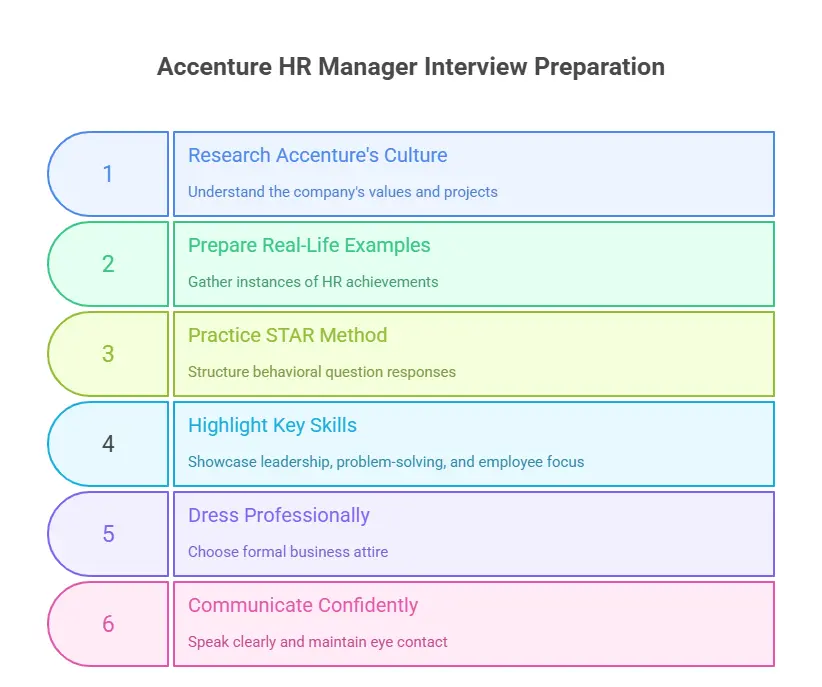
1. Research Accenture’s Culture, Values, and Recent Projects
Understanding the company is crucial to show your alignment with its vision and work style.
-
Culture & Values: Accenture emphasizes innovation, collaboration, inclusivity, and ethical practices. HR Managers should demonstrate these qualities.
-
Recent Projects & Initiatives: Learn about Accenture’s HR programs, diversity initiatives, employee engagement campaigns, and digital transformation projects.
-
Purpose: Shows genuine interest and enables you to answer questions like, “Why do you want to work here?” confidently.
Tip: Check Accenture’s official website, LinkedIn updates, and news articles for the latest initiatives.
2. Prepare Real-Life Examples to Demonstrate HR Achievements
Interviewers want proof of your capabilities, not just claims.
-
Achievements: Think of instances where you successfully handled recruitment drives, conflict resolution, or talent development.
-
Metrics: Include measurable outcomes, e.g., “Reduced attrition by 15% through a mentorship program.”
-
Purpose: Makes your experience tangible and credible during the interview.
Tip: Prepare 5–6 strong examples across recruitment, employee engagement, and leadership.
3. Practice STAR Method for Behavioral Questions
Behavioral questions assess how you handle real situations.
-
STAR:
-
S – Situation: Describe the context.
-
T – Task: Explain your responsibility.
-
A – Action: Detail what you did.
-
R – Result: Share the outcome and impact.
-
-
Example Question: “Tell me about a time you resolved a workplace conflict.”
-
Purpose: Structured answers make your story clear, concise, and impactful.
Tip: Practice STAR responses aloud to gain fluency and confidence.
4. Highlight Leadership, Problem-Solving, and Employee-First Mindset
Accenture expects HR Managers to lead teams effectively and prioritize employee well-being.
-
Leadership: Show how you’ve inspired teams, driven initiatives, or led organizational changes.
-
Problem-Solving: Demonstrate your ability to resolve complex HR issues.
-
Employee-First Mindset: Highlight efforts that enhanced employee satisfaction, engagement, or performance.
Tip: Use examples that combine leadership with empathy and results.
5. Dress Professionally and Communicate Confidently
First impressions matter, even in virtual interviews.
-
Professional Attire: Formal business wear helps convey competence.
-
Confident Communication: Speak clearly, maintain eye contact (or camera focus), and use a positive tone.
-
Body Language: Sit upright, smile, and use gestures naturally to convey engagement.
Tip: Practice mock interviews with a friend or in front of a mirror to refine presentation and confidence.
Is being an HR your dream? Enrol now for our course on Human Resource!
Become an HR Expert – Enroll in Our HR Management Course Today!
Unlock the secrets to effective Human Resource Management with our expert-led course! Learn recruitment, employee relations, performance management, and more to build a thriving workplace. Start your journey toward a successful HR career today!
Know MoreConclusion
Preparation is the key to succeeding in an Accenture HR Manager interview. By researching the company’s culture, values, and recent initiatives, you can align your answers to demonstrate that you are the right fit. Practicing real-life examples and using structured methods like STAR will help you showcase your HR expertise, leadership, and problem-solving skills confidently.
Consistent practice with the suggested questions will not only boost your confidence but also help you present yourself as a strategic, employee-focused, and results-driven HR professional—qualities Accenture values highly.
Become an HR Expert – Enroll in Our HR Management Course Today!
Unlock the secrets to effective Human Resource Management with our expert-led course! Learn recruitment, employee relations, performance management, and more to build a thriving workplace. Start your journey toward a successful HR career today!
Know MoreFrequently Asked Questions
What skills are essential for an HR Manager at Accenture?
An HR Manager at Accenture should have strong leadership, communication, conflict management, recruitment, employee engagement, and HR analytics skills. Knowledge of labor laws and HR software is also important.
How should I prepare for an Accenture HR Manager interview?
Research Accenture’s culture, values, and business goals. Review common HR interview questions, practice behavioral responses using the STAR method, and prepare examples of HR achievements and challenges you’ve handled.
What types of questions are asked in an Accenture HR Manager interview?
Questions are usually categorized as general HR, behavioral, recruitment & talent management, employee relations, leadership & strategy, and HR policies & compliance. Behavioral questions often use the STAR method.
How important is cultural fit in Accenture’s HR interviews?
Very important. Accenture values candidates who align with its culture of innovation, inclusion, integrity, and collaboration. Demonstrating your understanding and experience in promoting organizational culture can improve your chances.
What is the STAR method and how is it used in interviews?
STAR stands for Situation, Task, Action, Result. It is used to structure answers to behavioral questions by explaining the context, your responsibilities, the actions you took, and the outcomes achieved.
How can I demonstrate leadership in an HR Manager interview?
Provide examples of how you led teams, implemented HR initiatives, resolved conflicts, or influenced strategic decisions. Highlight your participative approach, decision-making, and ability to drive organizational goals.
How do I answer questions about handling difficult employees?
Use real-life examples to show how you identified issues, provided guidance, implemented performance improvement plans, and achieved positive outcomes while maintaining professionalism and empathy.
Are there technical or HR software questions in the interview?
Yes. You may be asked about HR software like SAP SuccessFactors, Workday, or payroll/HRIS systems, as well as how you use data and analytics to make HR decisions.
What are Accenture’s expectations from HR Managers?
Accenture expects HR Managers to align HR strategies with business goals, manage talent effectively, foster a people-first culture, ensure compliance, and support organizational growth through leadership and strategic initiatives.
How can I stand out in an Accenture HR Manager interview?
Highlight your strategic HR achievements, leadership experience, ability to drive change, alignment with Accenture’s values, and people-first mindset. Use measurable results and examples from your past HR experience to impress interviewers.