Table of Contents
Introduction
When the latest demo of Boston Dynamics’ electric Atlas robot dropped, the internet didn’t just see a robot doing a backflip – it witnessed a milestone in Physical AI. The new fully electric Atlas executed fast, dynamic flips with fluid motion, real-time balance correction, and zero external support.
This isn’t just a stunt. It’s a signal that humanoid robotics in 2026 has moved from scripted choreography to AI-driven autonomy. Powered by advanced electric actuators, real-time sensor fusion, and reinforcement learning, Atlas is redefining what robots can do in real-world environments.
Let’s explore this robotic scenario with extensive understanding of what happened, what worked out and what is going to happen moving forward. Robotics and AI is a field of study that appears far more dynamic after this feat. Keep reading to know how you can be a part of it. Or are we already?
New to Robotics? Start from the Basics. Join Now!
What Are Atlas Robot Backflips?
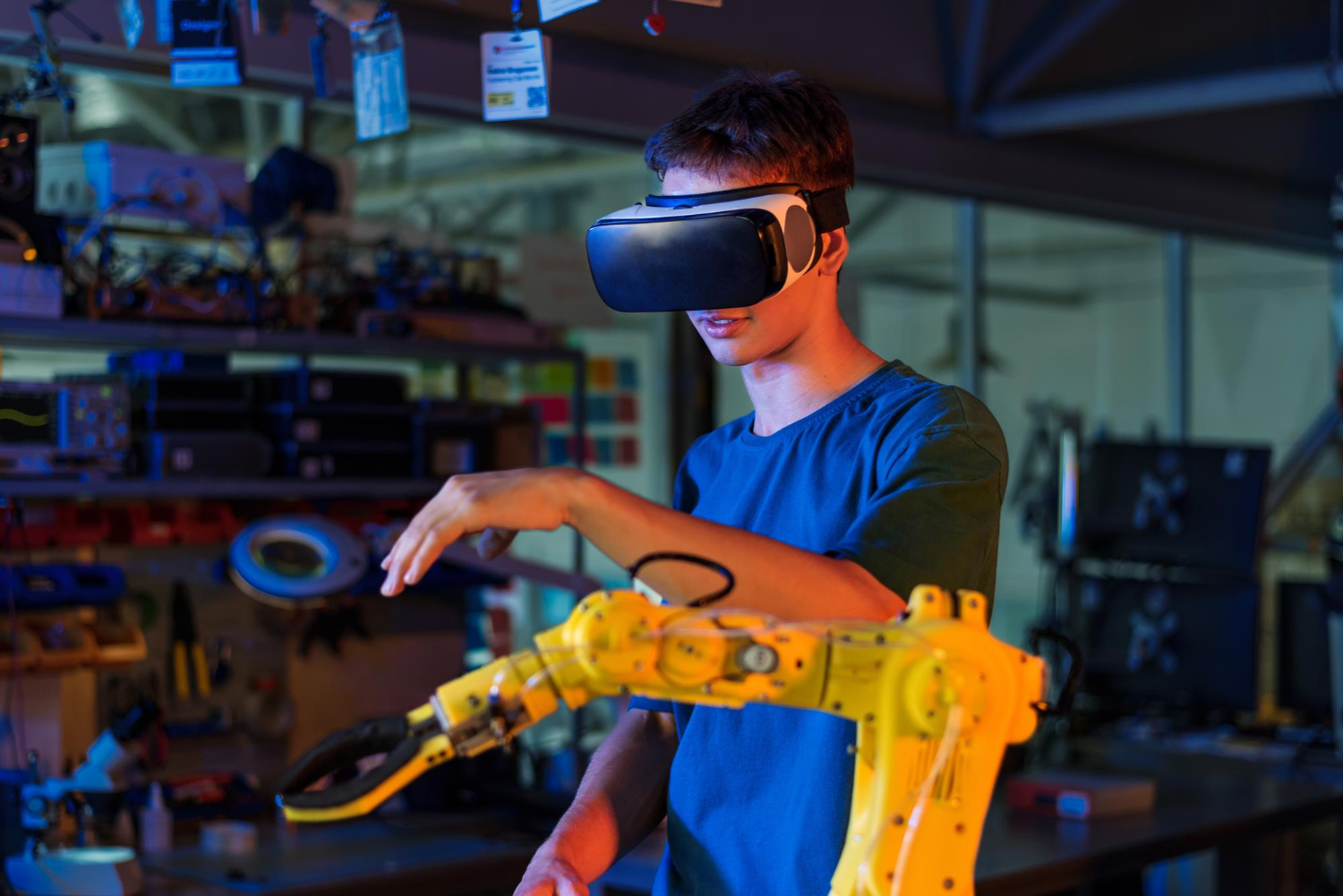
This phrase has a certain tune to it. But what exactly is this? A backflip may look like a gymnastic trick, but in robotics it’s a high-dimensional control problem involving:
- Kinematics: Calculating joint angles and body trajectory mid-air
- Torque control: Delivering precise motor force at the right millisecond
- Dynamic balance: Maintaining center of mass during takeoff and landing
From a robotics engineering perspective, the motion involves solving high-speed kinematic equations while simultaneously running balance algorithms. Any miscalculation – even by a few milliseconds – can cause instability. Atlas’ success shows that AI-driven control has reached a level where robots can handle dynamic, non-linear movement.
Like the first steps of a baby, every AI advancement was cheered among us. But the artificial factor makes it come with a threat at the tail end. Things are programmed into the system and we patiently wait till it works. But unlike pre-programmed industrial robots, Atlas performs flips using closed-loop feedback – constantly adjusting motion based on sensor data. In simple terms, if a robot can control its body while airborne, it can handle unstable factory floors, disaster zones, and complex warehouses. This opens up further possibilities.
Master Robotics and AI!
Ready to build the future? Join our comprehensive robotics course to bridge the gap between complex code and physical motion. You’ll gain hands-on experience giving you the technical edge needed to lead in the age of automation.
Know MoreHow Atlas Achieves Backflips
Again, how it happened needs an explanation and a clear understanding is due. Here’s the engineering stack behind the magic:
1. Electric actuators for explosive power
Atlas uses high-density electric motors capable of delivering 100+ Nm torque with sub-10 millisecond response. This allows:
- Rapid takeoff force
- Controlled mid-air rotation
- Soft, stabilized landing
Electric actuators also improve energy efficiency and reduce maintenance compared to hydraulics.
2. Real-time sensor fusion
Atlas combines data from:
- 360° LiDAR
- 9-axis IMU
- Joint encoders
- Force sensors in the feet
These sensors provide continuous feedback on orientation, velocity, and ground contact, enabling instant correction.
3. AI trajectory planning
Instead of following a fixed motion script, Atlas predicts the optimal path using learned models trained in physics simulations. If the landing surface changes, the robot adapts in real time.
| COMPONENT | FUNCTION | TECH SPECS |
| Actuators | Power flips | 100+ Nm torque, sub-10 ms response |
| Sensors | Balance detection | 360° LiDAR, 9-axis IMU |
| AI Model | Trajectory planning | Vision-Language-Action (VLA) integration |
Electric Atlas replaces the older hydraulic system, making it quieter, more efficient, and far more controllable.
Technical Breakdown: AI Driving the Feats
Atlas backflips are not manually coded motion sequences. They’re learned behaviours refined through physics simulations and neural networks.
Reinforcement Learning (RL)
The robot trains in simulated environments where it attempts thousands of flips. Each failure improves the policy, resulting in a ~95% success rate before real-world deployment.
Inverse Dynamics Models
These models ensure that planned motions obey physical constraints such as joint limits and torque capacities, reducing execution errors by nearly 40%.
Vision-Language-Action (VLA) Models
VLA systems allow Atlas to interpret natural language commands and convert them into physical actions. While still experimental, this is a major step toward general-purpose humanoid robots.
| AI Technique | Role in Backflips | Benefits |
| Reinforcement Learning | Optimize jumps | 95% success rate in trials |
| Inverse Dynamics | Physics validation | Reduces errors by 40% |
| VLA Models | Unscripted tasks | Enables natural language commands |
Compared to the hydraulic Atlas (2013–2020 era), the electric version is:
- More data-driven
- Less script-dependent
- Capable of generalizing movements to new environments
This is the shift from robotics automation → Physical AI.
Why Backflips Matter for AI Development
Backflips are a benchmark for embodied intelligence. If a robot can:
- Control momentum mid-air
- Adapt to uneven landing surfaces
- Recover from perturbations
It can also perform warehouse picking, disaster response, and industrial inspection.
The AI Data Flywheel
Every flip generates terabytes of telemetry:
- Joint torque data
- Contact forces
- Failure modes
This feeds back into training loops, improving future performance – a classic AI data flywheel.
Edge Computing Impact
Atlas runs many models on-device, proving that real-time AI can operate without cloud latency – critical for:
- Manufacturing
- Autonomous construction
- Hazardous environments
Master Robotics and AI!
Ready to build the future? Join our comprehensive robotics course to bridge the gap between complex code and physical motion. You’ll gain hands-on experience giving you the technical edge needed to lead in the age of automation.
Know MoreImpact on Automation and Industry
Atlas isn’t just a lab experiment. It’s a preview of the humanoid workforce.
Logistics
Atlas can handle irregular objects, climb steps, and move through tight warehouse aisles – tasks that are difficult for traditional AGVs.
Construction
Humanoid mobility enables robots to inspect scaffolding, carry tools, and operate in partially completed structures.
MEP and BIM Workflows
Integration with digital twins allows robots to compare physical progress with BIM models in real time, improving quality control.
| Industry | Atlas Use Case | Efficiency Gain |
| Logistics | Dynamic picking | 3× faster than AGVs |
| Construction | Hazardous navigation | 50% risk reduction |
| MEP Engineering | Site inspections | BIM integration ready |
Economic Outlook
Analysts predict humanoid robots could deliver $5/hour equivalent labour by 2030, transforming:
- Warehousing
- Infrastructure inspection
- Smart factories
For Indian industries – especially Make in India robotics hubs – this opens massive opportunities in:
- Robot maintenance engineering
- AI control systems
- Digital twin + BIM robotics integration
Challenges and Future of Humanoid Robots
Despite the hype, real hurdles remain:
Current Limitations
- Battery life: High-power motion drains energy quickly
- Cost: ~$150,000 per unit
- Compute constraints: Onboard AI still limited by thermal budgets
What’s Coming Next
- Fleet learning: Robots sharing data across deployments
- AR/VR training interfaces: Teaching robots through simulation
- Generalist robots: One model, multiple tasks
India’s robotics ecosystem – from start-ups to PSU automation – is poised to benefit if talent pipelines scale fast.
New to Robotics? Start from the Basics. Join Now!
Key Takeaways
- Atlas backflips represent Physical AI, not a stunt.
- Electric actuators with RL and sensor fusion enable dynamic motion.
- Telemetry creates a self-improving AI loop.
- Humanoid robots will transform logistics, construction, and MEP.
- Indian engineers can tap into robotics, AI control, and BIM integration roles.
Conclusion
Atlas is more than a technological showcase – it’s a preview of the future workforce. As AI moves from software into physical systems, the demand for robotics engineers, control system designers, and AI specialists will surge.
Atlas proves that the future of work isn’t just digital – it’s embodied AI. The convergence of robotics, machine learning, and edge computing will define the next decade of automation. For engineering professionals and students, this is the moment to upskill in – Robotics programming, AI for motion control and, Digital twins and industrial automation.
The question isn’t whether robots will join the workforce – it’s whether you’ll be the one building them. Upskill for the Robotics Revolution.
|
RELATED POSTS |
|
|
Skills Needed for a Successful Career in Robotics Engineering |
|
|
What is Robotics? A Beginner’s Guide to Understanding Robotics |
|
Master Robotics and AI!
Ready to build the future? Join our comprehensive robotics course to bridge the gap between complex code and physical motion. You’ll gain hands-on experience giving you the technical edge needed to lead in the age of automation.
Know MoreFrequently Asked Questions
Why are Atlas backflips important?
They demonstrate advanced balance, AI control, and real-time motion planning — key for autonomous robots.
Which AI techniques does Atlas use?
Reinforcement learning, inverse dynamics, and Vision-Language-Action models.
How does Atlas maintain balance mid-air?
Through sensor fusion using LiDAR, IMUs, and real-time feedback loops.
Can Atlas work in industries?
Yes – logistics, construction, inspections, and disaster response.
What is Physical AI?
AI that controls real-world physical systems like robots.
How much does Atlas cost?
Estimated around $150,000 per unit currently.
Will humanoid robots replace jobs?
They will automate hazardous and repetitive tasks while creating new tech roles.
What is fleet learning in robotics?
Multiple robots sharing data to improve performance collectively.
How does Atlas compare to AGVs?
Atlas is more flexible and can navigate complex terrains.
What skills are needed to work in humanoid robotics?
Robotics, AI/ML, control systems, and simulation engineering.