Table of Contents
Content Marketing Trends are important for every business. Online marketing is growing very fast. People want simple and useful content. The way audiences read and watch content is changing. New tools help marketers work better. Brands need fresh ideas to stay relevant. Good content builds strong trust. Smart planning brings better results.
Marketing today needs clear and simple strategies. Creativity helps brands connect with people. Data helps in making better decisions. Stories make content more interesting. Regular posting improves brand presence. Learning new trends is very important. Marketers must adapt to stay successful.
Join Our Online Digital Marketing Course & Learn the Fundamentals!
Introduction
Content marketing is evolving at a very fast pace. Technology is changing the way brands communicate. Audiences now expect smarter and more helpful content. Traditional marketing methods are losing their power. Digital platforms are becoming more competitive. AI tools are supporting content creation in new ways. Data is guiding better marketing decisions. Personalization is becoming a basic requirement. Because of all these changes, 2026 is very significant. It will be a year of major transformation.
In 2026, content will be more focused on experience and trust. Businesses will need clear and strong strategies. Quality will matter more than quantity. Customers will demand relevant and engaging content. Brands that adapt quickly will grow faster. Those who ignore new trends will struggle. The year will bring new opportunities for marketers. It will also bring new challenges. Companies must prepare from now itself.
Why Content Marketing is Evolving
-
Audience behavior is changing daily
-
Mobile users dominate content consumption
-
AI makes content creation easier
-
Video content grows very fast
-
Personalization improves user engagement
-
Search engines demand quality content
-
Competition increases across all platforms
-
Data drives smarter content strategies
Why 2026 is Significant
-
AI tools will become more advanced
-
User experience will define success
-
Trust-based content will rank higher
-
Interactive formats will grow stronger
-
Brands will invest more in storytelling
-
Personalization will become a basic need
-
Multi-channel marketing will be essential
-
Content quality will beat content quantity
Shift in Content Consumption Behavior
1: What is the primary goal of SEO (Search Engine Optimization)?
2: Which of the following is NOT a PPC (Pay-Per-Click) platform?
3: What does PPC mean?
4: What does the term "bounce rate" refer to?
5: Which tool is most commonly used for web traffic analytics?
Ever wondered how much you really know? It's time to put your brain to the test!
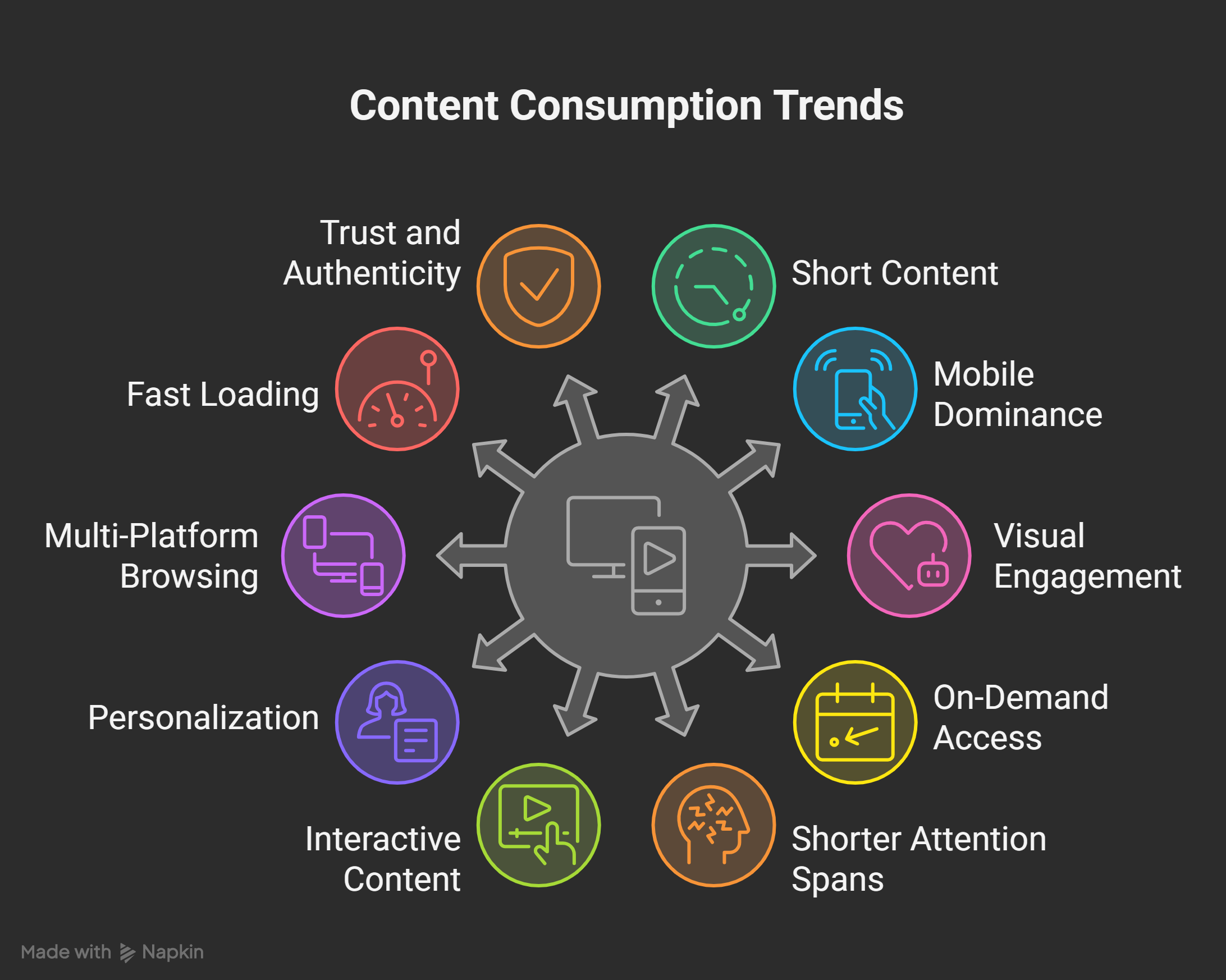
Audience preferences are changing very quickly. People consume content in completely new ways. Attention spans are getting much shorter. Users want fast and simple information. Long and complex content loses interest. Mobile devices have become the main screen. Social media shapes daily reading habits. These changes affect every content strategy today. Brands must understand new user behavior. Without adaptation, engagement will keep falling.
Mobile-First Consumption is the New Normal
Most people now use smartphones daily. Content is read on small screens. Desktop usage is slowly reducing everywhere. Users browse while traveling or relaxing. Scrolling has replaced detailed reading habits. Fast loading content gets more attention. Designs must be simple and clear. Mobile-friendly content is no longer optional. It is now a basic expectation.
Key Trends in Mobile Consumption
-
Phones dominate internet usage
-
Apps replace many websites
-
Vertical videos perform better
-
Short posts get more clicks
-
Quick loading pages win users
Short-Form Content is Winning
Audiences prefer quick and easy formats. Long paragraphs feel boring to many. People want instant answers only. Users mostly scan instead of reading. Headlines and bullet points attract attention. Micro-content fits busy lifestyles perfectly. Short videos explain ideas faster. Brief posts get shared more often.
Most Preferred Short Formats
-
Reels and short videos
-
Quick social media posts
-
Simple infographics
-
Short blogs and summaries
-
One-minute explainers
The demand for short content grows daily.
Video and Visual Content Dominate
Text-only content is losing power. Visuals communicate much more effectively. Video has become the strongest format. People watch more than they read. Images explain ideas within seconds. Live videos build quick connections. Audiences remember visuals better than text.
Why Visual Content Performs Better
-
Easier to understand
-
More engaging and fun
-
Quick to consume anytime
-
Perfect for mobile screens
-
Highly shareable online
Brands must focus more on visuals.
On-Demand Content Expectations
People want content on their time. Fixed schedules feel very old now. Users choose when to watch. Streaming changed audience behavior completely. Flexibility is very important today. Convenience decides what people consume. Content must be available anytime.
Old vs New Consumption Patterns
| Old Habits | New Habits |
|---|---|
| Long articles | Short posts |
| Desktop reading | Mobile scrolling |
| Fixed timing | On-demand access |
| Text-heavy pages | Visual-rich pages |
| Deep reading | Quick scanning |
This shift is very clear today. Brands must follow new habits.
Demand for Personalized Content
Generic content no longer excites users. People want relevant personal experiences. Recommendations guide online decisions now. Data decides what users see. Personalized content feels more meaningful. Users engage more with tailored messages.
Popular Personalization Methods
-
Customized email messages
-
Behavior-based suggestions
-
Location-based content
-
Personalized website experiences
-
Targeted social media ads
Personalization improves trust and engagement.
Multi-Platform Content Consumption
Audiences use many platforms every day. One channel is never enough. Users switch between apps constantly. Content must fit each platform well. The same message needs many formats.
Typical User Journey
-
Discover on social media
-
Search on Google
-
Watch on video platforms
-
Read detailed blogs
-
Engage through email
Brands must plan for many channels.
Interactive Content is Growing
Users no longer like passive reading. They want to participate actively. Interactive content creates strong engagement. Quizzes and polls get quick responses. Games make learning more interesting. Interaction keeps users for longer time.
Examples of Interactive Formats
-
Online quizzes
-
Live polls
-
Clickable stories
-
Interactive calculators
-
Engaging surveys
Interaction increases user involvement.
Trust and Authenticity Matter More
Modern audiences are very careful. They do not trust fake promotions. Honest content gets better results. Real stories build strong connections. Transparency creates long-term loyalty. People follow brands they believe.
Speed and Convenience Drive Choices
Fast content wins user attention. Slow websites lose many visitors. Easy navigation improves experience. Clear design keeps users engaged. Simple language works much better.
What Users Expect Today
-
Fast loading pages
-
Clear simple language
-
Clean visual design
-
Quick direct answers
-
Easy sharing options
What This Means for Marketers
Content strategies must change completely. Brands need to think like users. Understanding behavior is very important. Old methods will not work now. Flexibility is the key to success. Marketers must adapt very quickly. Future growth depends on new habits.
In Short
The shift in consumption is permanent. Audiences control what they watch. They decide how they engage. Brands must follow audience preferences. Adapting to change is absolutely necessary.
Become an AI-powered Digital Marketing Expert
Master AI-Driven Digital Marketing: Learn Core Skills and Tools to Lead the Industry!
Explore CourseAI-Generated vs Human-Led Content
Artificial Intelligence is changing content creation. Many brands now use AI tools. These tools write blogs and social posts. They also create images and videos. AI helps marketers work faster. It reduces time and effort. But AI cannot replace human creativity. Human expertise is still very important. The future belongs to both together.
Role of AI in Content Creation
AI has become a powerful assistant. It can generate content within minutes. Marketers use AI for many tasks. Automation improves speed and productivity. Repetitive work becomes much easier.
What AI Can Do Well
-
Generate basic blog drafts
-
Create social media captions
-
Suggest content ideas
-
Write product descriptions
-
Improve grammar and style
-
Analyze large data sets
-
Translate content quickly
-
Create simple visuals
AI saves a lot of time. It helps small teams perform better. Even beginners can create content easily.
Benefits of AI-Generated Content
AI brings many advantages to marketers. It makes content creation faster. Production costs become much lower. Deadlines become easier to meet. Teams can produce more output.
Main Advantages
-
Faster content production
-
Lower marketing costs
-
Quick research support
-
Easy content editing
-
Better data analysis
-
Consistent publishing schedule
AI works like a smart helper. It supports writers and marketers daily.
Limitations of AI Content
AI is powerful but not perfect. It works based on existing data. It cannot think like humans. Creativity is still a big challenge. Emotional understanding is very limited.
Where AI Struggles
-
Creating original emotions
-
Understanding deep context
-
Building unique brand voice
-
Writing creative stories
-
Handling complex ideas
-
Showing real experiences
-
Making ethical judgments
AI content often feels robotic. It may sound generic and repetitive. Human touch is usually missing.
Need for Human Expertise
Humans bring creativity and emotion. They understand audience feelings better. Real experiences come only from people. Strategic thinking needs human intelligence.
What Humans Do Better
-
Create fresh unique ideas
-
Build strong brand personality
-
Understand audience psychology
-
Add emotions to content
-
Tell powerful stories
-
Handle sensitive topics
-
Make smart creative decisions
Human writers connect with readers. They give life to simple words.
Creativity Requires Human Thinking
Great content needs imagination. AI cannot truly imagine new concepts. Humans can think beyond data. They add humor and empathy. They understand cultural differences.
Readers trust human-written stories more. Authenticity comes from real minds. Creativity cannot be fully automated.
Strategy Needs Human Control
AI can generate content fast. But it cannot plan strategy. Business goals need human planning. Understanding markets needs experience. Decision-making requires human judgment.
Key Strategic Areas
-
Brand positioning
-
Tone of communication
-
Audience targeting
-
Ethical considerations
-
Crisis communication
-
Long-term vision
These tasks need human leadership.
Best Approach is Collaboration
The smartest approach is teamwork. AI and humans must work together. AI handles speed and automation. Humans handle creativity and strategy.
Ideal Working Model
-
AI creates first drafts
-
Humans refine the message
-
AI suggests improvements
-
Humans add personality
-
AI analyzes performance
-
Humans plan next steps
This combination gives best results.
Quality Control Needs Humans
AI can make factual mistakes. It may provide outdated information. Humans must check accuracy. Final approval needs human eyes.
Editing and reviewing are essential. Trustworthy content needs human supervision.
Ethical Use of AI
AI must be used responsibly. Transparency is very important. Content should not mislead users. Human oversight prevents problems.
Marketers must use AI wisely. Ethics should guide all creation.
In Short
AI is a powerful tool. But it is only a tool. Humans remain the real creators. The future is not AI alone. The future is AI plus humans. Balance between both will win. Smart brands will use both strengths.
Content Formats That Perform Best
Content formats decide audience engagement today. Not all formats work equally well. Some formats attract more attention. Others build deeper trust. In 2026, smart brands will mix formats. One style alone will not succeed. Different goals need different formats. Understanding formats is very important. The right format improves results greatly.
Video Content Leads the Way
Video is the most powerful format. People prefer watching over reading. Videos explain ideas very quickly. They create strong emotional connections. Short videos perform especially well.
Why Video Works Best
-
Easy to consume anytime
-
More engaging than text
-
Works well on mobile
-
Highly shareable online
-
Builds better brand recall
Both short and long videos matter. Short videos attract new audiences. Long videos build deeper understanding.
Popular Video Formats
-
Short reels and clips
-
Live streaming sessions
-
Tutorial videos
-
Product demonstrations
-
Customer testimonials
Video will remain the top performer.
Interactive Content Gains Attention
Interactive content involves the audience. Users do not stay passive anymore. They like to participate actively. Interaction increases engagement strongly.
Common Interactive Formats
-
Online quizzes
-
Polls and surveys
-
Interactive infographics
-
Calculators and tools
-
Clickable stories
Interactive formats keep users longer. They make content more memorable. People enjoy taking part. This builds stronger connections.
Immersive Content is Growing Fast
Immersive content creates real experiences. New technologies are changing engagement. Audiences want to feel the content. Virtual and augmented reality are rising.
Types of Immersive Content
-
Virtual reality experiences
-
Augmented reality features
-
360-degree videos
-
Interactive product demos
-
Digital showrooms
Immersive formats are powerful for brands. They help users experience products better. Engagement levels become very high.
Long-Form Content Builds Authority
Short content attracts attention. Long-form content builds real trust. Detailed content shows deep expertise. Search engines favor quality depth.
Benefits of Long-Form Content
-
Explains topics completely
-
Builds brand authority
-
Improves search visibility
-
Educates audiences better
-
Creates lasting value
Guides, reports, and case studies work well. Serious buyers prefer detailed information.
Visual Content Remains Essential
Images and graphics still matter. Visuals simplify complex information. They make content easier to understand.
Important Visual Formats
-
Infographics
-
Carousels
-
Data charts
-
Illustrations
-
Slide presentations
Visuals support every other format. They improve overall engagement.
Audio Content Finds Strong Audience
Audio formats are becoming popular. Many users prefer listening. Podcasts fit busy lifestyles perfectly.
Popular Audio Formats
-
Podcasts
-
Audio blogs
-
Interviews
-
Expert discussions
-
Brand stories
Audio helps reach multitasking users.
Best Format for Each Goal
Different goals need different formats. Smart marketers choose carefully.
| Goal | Best Format |
|---|---|
| Brand awareness | Short videos |
| Education | Long-form blogs |
| Engagement | Interactive content |
| Experience | Immersive content |
| Trust building | Case studies |
| Quick reach | Social posts |
Choosing the right format matters.
Multi-Format Approach Works Best
One format is never enough. Successful brands mix many formats. A single idea needs many versions. Repurposing improves overall reach.
Smart Format Strategy
-
Create a main long content
-
Convert it to video
-
Make short clips
-
Design infographics
-
Post on social media
This approach multiplies impact.
Mobile-Friendly Formats are Crucial
All formats must suit mobile screens. Users mostly browse on phones. Vertical and simple formats perform better.
Easy and fast formats win.
Content success depends on formats. Video, interactive, immersive, and long-form lead. Each format serves a purpose. Smart balance brings best results. Brands must experiment regularly. The right mix creates strong engagement.
Join Our Online Digital Marketing Course & Learn the Fundamentals!
Content Formats That Perform Best
Content formats decide how audiences respond. Every format has a different purpose. Some formats build quick attention. Others create deep understanding. In 2026, smart marketers will mix formats. Relying on one type is risky. Audiences expect variety and value. Choosing the right format matters most. Performance depends on user preference.
Video Content Remains the Leader
Video continues to dominate online platforms. People prefer watching over reading. Video explains ideas very quickly. Emotions connect better through video. Engagement levels are always higher.
Why Video Performs So Well
-
Easy to watch anywhere
-
Works perfectly on mobile
-
Delivers messages very fast
-
Creates strong emotional impact
-
Gets shared more often
Short videos are extremely popular. Long videos build deeper learning. Brands must invest in both.
High-Performing Video Types
-
Short reels and clips
-
Product demonstration videos
-
Customer review videos
-
Live streaming sessions
-
Educational tutorial videos
Video will remain the strongest format.
Interactive Content Drives Engagement
Interactive content involves the audience directly. Users no longer want passive reading. They like to participate and respond. Interaction creates curiosity and excitement.
Popular Interactive Formats
-
Fun online quizzes
-
Quick opinion polls
-
Interactive calculators
-
Clickable infographics
-
Simple online surveys
Interactive content keeps users engaged longer. It increases time spent on pages. Participation improves brand connection. This format works well for leads.
Immersive Content Creates Experiences
Immersive content is the future trend. It allows users to feel involved. Technology makes experiences more realistic. Audiences enjoy deeper digital interactions.
Types of Immersive Formats
-
Virtual reality experiences
-
Augmented reality features
-
360-degree product views
-
Digital showrooms
-
Interactive brand experiences
Immersive content works best for products. It helps customers understand better. Engagement becomes more memorable. This format builds strong impressions.
Long-Form Content Builds Authority
Short content attracts quick attention. Long-form content builds serious trust. Detailed information helps real decision making.
Why Long-Form Still Matters
-
Shows deep subject expertise
-
Explains topics clearly
-
Improves search rankings
-
Builds brand credibility
-
Answers user questions fully
Guides, reports, and case studies perform well. Serious buyers prefer detailed content. Authority grows through long-form writing.
Visual Content Supports Every Format
Images and graphics are always important. Visuals simplify complex information. They make content more attractive.
Important Visual Formats
-
Clear infographics
-
Image carousels
-
Data charts
-
Simple illustrations
-
Slide presentations
Visual elements improve understanding. They support both short and long content.
Audio Content is Rising
Audio formats are gaining popularity. Many users like to listen. Podcasts fit busy daily routines.
Common Audio Formats
-
Educational podcasts
-
Expert interviews
-
Brand storytelling
-
Audio summaries
-
Recorded discussions
Audio helps reach multitasking audiences.
Best Format for Each Goal
Every marketing goal needs a format.
| Goal | Ideal Format |
|---|---|
| Brand awareness | Short videos |
| Education | Long-form articles |
| Engagement | Interactive content |
| Product experience | Immersive content |
| Trust building | Case studies |
| Quick updates | Social posts |
Choosing correctly improves results.
Multi-Format Strategy Works Best
Successful brands never depend on one. They reuse content in many formats. One idea becomes many assets.
Smart Repurposing Method
-
Start with long-form blog
-
Convert into a video
-
Create short clips
-
Design an infographic
-
Share on social media
This approach multiplies reach.
Mobile-Friendly Formats are Essential
Most users browse on phones. All formats must suit mobile screens. Simple and fast formats perform better. Heavy content loses mobile users.
Content success depends on format choice. Video, interactive, immersive, and long-form lead. Each format has unique strengths. A balanced mix brings best results. Brands must experiment and improve. The right format creates real impact.
Become an AI-powered Digital Marketing Expert
Master AI-Driven Digital Marketing: Learn Core Skills and Tools to Lead the Industry!
Explore CourseContent Experience & Storytelling
Great content is more than information. It is about how users feel. Experience decides real engagement. Audiences remember emotions more than facts. Storytelling makes content meaningful. User experience makes it enjoyable. Together they create strong impact. In 2026, experience will matter most. Brands must think beyond plain text.
What is Content Experience
Content experience is how users interact. It includes design and structure. It also includes readability and flow. Good experience keeps users interested. Poor experience drives them away.
Elements of Good Content Experience
-
Simple and clear layout
-
Easy navigation
-
Fast loading pages
-
Mobile-friendly design
-
Attractive visuals
-
Clear call to action
Users judge content within seconds. First impression decides everything.
Why Storytelling is Important
Stories connect with human emotions. People remember stories for long. Facts alone feel boring. Stories make brands more human.
Benefits of Storytelling
-
Builds emotional connection
-
Makes content more relatable
-
Increases audience interest
-
Improves brand recall
-
Creates deeper trust
Good stories turn readers into followers.
Storytelling Makes Content Human
Audiences want real experiences. They like honest brand voices. Storytelling adds personality to content. It shows the human side.
What Good Stories Include
-
Real-life examples
-
Customer experiences
-
Brand journeys
-
Simple language
-
Emotional touch
These elements create strong bonds.
User Experience Decides Engagement
Even good content can fail. Poor experience ruins great writing. Users need smooth interaction.
Key Experience Factors
-
Clean page design
-
Proper headings
-
Short clear paragraphs
-
Helpful visuals
-
Easy reading flow
Better experience keeps users longer.
Balance Between Design and Message
Content needs both style and substance. Design attracts users first. Message keeps them engaged.
Right Balance Includes
-
Clear structure
-
Attractive formatting
-
Meaningful information
-
Logical content flow
-
Simple navigation
Both must work together perfectly.
Mobile Experience is Very Important
Most users read on phones. Content must suit small screens. Long messy pages perform badly.
Mobile Experience Needs
-
Short paragraphs
-
Big readable fonts
-
Fast loading images
-
Simple menus
-
Easy scrolling
Mobile-first design improves satisfaction.
Emotional Connection Through Stories
Buying decisions are emotional. People trust brands they feel. Stories influence those feelings.
How Stories Help Brands
-
Show real value
-
Build credibility
-
Create empathy
-
Explain problems
-
Offer solutions
Emotion drives real engagement.
Personal Touch Improves Experience
Users like personalized content. Generic messages feel boring. Tailored stories work better.
Personalization Methods
-
User-focused examples
-
Relevant case studies
-
Local language style
-
Targeted messages
-
Custom recommendations
Personal touch increases loyalty.
Visuals Improve Storytelling
Images and videos support stories. Visuals make messages clearer. They break monotony of text.
Helpful Visual Elements
-
Infographics
-
Short videos
-
Real photos
-
Simple icons
-
Clear illustrations
Visuals enhance overall experience.
Trust Comes from Good Experience
Trust grows when experience is smooth. Confusing content reduces credibility. Clear stories build confidence.
Users return to easy platforms. Good experience creates loyal audiences.
In Short
Content success depends on experience. Storytelling gives content real life. User experience makes it comfortable. Both are equally important. Brands must focus on feelings. Great stories with great design win. The future belongs to experience-driven content.
SEO, EEAT & Trust-Based Content
SEO is changing in a big way. Rankings depend on more than keywords. Search engines value real quality now. Trust has become a major factor. Authority decides online visibility today. Expertise shapes content performance strongly. Google focuses on user satisfaction. EEAT guides modern SEO strategies. Brands must create reliable content.
What is EEAT
EEAT stands for key quality signals. It means Expertise, Experience, Authority, Trust. These factors decide content credibility. Search engines evaluate them carefully.
Meaning of Each Factor
-
Expertise shows subject knowledge
-
Experience proves real understanding
-
Authority builds brand reputation
-
Trust creates user confidence
Content must reflect all four.
Trust is the Strongest Ranking Factor
Search engines want safe information. Users prefer trustworthy sources. Fake content loses visibility fast. Honest content performs much better.
Ways to Build Trust
-
Provide accurate information
-
Use clear simple language
-
Avoid false promises
-
Show real author details
-
Update content regularly
Trust improves long-term SEO results.
Expertise Improves Content Performance
Expert knowledge adds real value. Shallow content no longer works. Users need correct information.
How to Show Expertise
-
Write detailed explanations
-
Use facts and data
-
Share professional insights
-
Answer user questions
-
Cover topics completely
Expert content ranks higher online.
Experience Makes Content Authentic
Experience shows practical understanding. Real examples build more confidence. Users trust first-hand knowledge.
Ways to Show Experience
-
Share real case studies
-
Include personal insights
-
Explain real-life situations
-
Show actual results
-
Use genuine examples
Experience-based content feels more real.
Authority Builds Long-Term Rankings
Authority grows with consistency. Reputed brands rank more easily. Search engines trust known sources.
How to Build Authority
-
Publish quality content often
-
Earn genuine backlinks
-
Get brand mentions
-
Maintain strong online presence
-
Create helpful resources
Authority strengthens SEO performance.
Quality Content Beats Keyword Stuffing
Old SEO relied on keywords. Modern SEO focuses on value. Overusing keywords harms rankings.
Modern SEO Priorities
-
Helpful information
-
Clear structure
-
User-friendly writing
-
Real problem solving
-
Genuine expertise
Quality matters more than tricks.
User Signals Impact SEO
Search engines track user behavior. Good experience improves rankings.
Important User Signals
-
Time spent on page
-
Low bounce rate
-
Click-through rate
-
User engagement
-
Repeat visitors
Better signals mean better performance.
Content Accuracy is Very Important
Wrong information damages credibility. Fact-checking is essential now.
Best Practices for Accuracy
-
Use reliable sources
-
Update old content
-
Correct mistakes quickly
-
Add proper references
-
Avoid misleading claims
Accuracy builds strong trust.
Transparency Improves Credibility
Users like open and honest brands. Transparency supports EEAT principles.
Transparency Methods
-
Show author names
-
Add contact details
-
Display clear policies
-
Mention data sources
-
Provide real testimonials
Open communication builds confidence.
Local and Niche Authority
Specialized content performs very well. Niche expertise attracts loyal audiences.
Ways to Grow Niche Authority
-
Focus on specific topics
-
Create in-depth guides
-
Solve niche problems
-
Build community trust
-
Share expert opinions
Focused authority beats general content.
In Short
SEO now depends on trust. EEAT guides content success. Expertise and authority are essential. Real experience improves credibility. Brands must focus on quality. Honest content wins long-term rankings. Trust-based strategies create lasting growth.
Personalization in Content Marketing
Personalization is transforming content marketing in 2026. Audiences no longer respond to generic messages. They expect content tailored to their needs. Brands that deliver relevant experiences win attention. Personalized content improves engagement and loyalty. Data and AI make personalization possible. Marketers must understand audience behavior deeply. Segmentation is key to effective personalization.
Why Personalization Matters
Generic content fails to capture attention. Personalized content makes users feel valued. It increases the likelihood of engagement. Audiences respond better to relevant messages. Personalization also improves conversion rates. Customers expect brands to know their preferences. Tailored experiences create emotional connections.
Key Benefits of Personalization
-
Higher engagement and interaction
-
Better customer loyalty
-
Increased click-through rates
-
Stronger emotional connection
-
Improved brand perception
Personalization is no longer optional. It is a core marketing requirement.
Audience Segmentation is the Foundation
Segmentation divides users into smaller groups. Each group shares common traits. This makes targeting more accurate. Segmentation ensures content relevance. It allows marketers to deliver the right message.
Popular Segmentation Criteria
-
Demographics (age, gender, location)
-
Behavior (purchase history, browsing patterns)
-
Interests (hobbies, preferences)
-
Engagement level (active vs passive users)
-
Device or platform usage
Segmented content performs better than one-size-fits-all messages.
Types of Personalized Content
Brands can personalize content in many ways. It can appear in emails, websites, or social media. Personalized content improves the user experience.
Examples of Personalized Content
-
Personalized email campaigns
-
Tailored product recommendations
-
Custom landing pages
-
Dynamic website content
-
Targeted social media ads
The more relevant the content, the higher the engagement.
AI Enables Advanced Personalization
AI analyzes user data efficiently. It predicts preferences and behavior. AI can automate content delivery. Marketers can personalize at scale.
AI-Powered Personalization Techniques
-
Predictive content suggestions
-
Behavior-driven notifications
-
Automated email personalization
-
Dynamic content based on location
-
Real-time product recommendations
AI helps brands create one-to-one experiences for users.
Benefits of Segmentation and Personalization
Personalization and segmentation work together effectively. They reduce irrelevant messaging. They increase customer satisfaction. Brands can target audiences more accurately. Marketing budgets are used efficiently. Engagement rates improve significantly. Personalized content increases trust and loyalty.
Impact Summary
| Benefit | Impact |
|---|---|
| Better engagement | Users interact more |
| Increased conversions | Higher sales and sign-ups |
| Improved retention | Repeat users stay longer |
| Efficient marketing | Less wasted budget |
| Stronger trust | Builds long-term loyalty |
Segmentation ensures every user sees what matters most.
Challenges in Personalization
Despite benefits, personalization has challenges. Collecting and managing data requires care. Privacy concerns are critical. Over-personalization may feel intrusive. Balance is necessary for trust.
Key Considerations
-
Respect user privacy
-
Avoid excessive targeting
-
Use data ethically
-
Focus on meaningful relevance
-
Test personalization strategies
Smart brands personalize without making users uncomfortable.
Best Practices for 2026
Successful personalization requires strategy. Understanding audience behavior is essential. Segmentation must be accurate and flexible. AI and analytics should guide decisions. Content should feel human, not automated. Consistency across channels is important. Regular updates keep content relevant.
Actionable Tips
-
Analyze user data regularly
-
Segment audience effectively
-
Tailor messages for each group
-
Personalize emails, social media, and websites
-
Test and refine strategies frequently
Brands that master personalization gain a competitive edge.
In Short
Personalized content improves engagement and satisfaction. Audience segmentation makes targeting precise and effective. AI enables scalable, one-to-one experiences. Privacy and ethics must guide strategies. Personalized marketing builds loyalty and trust. Relevant content wins attention in 2026. Future marketing will depend on personalization.
Actionable Content Strategies for 2026
Content marketing is evolving rapidly in 2026. Brands must adopt practical strategies to stay relevant. Planning and execution are equally important. Smart strategies improve engagement, reach, and conversions. Marketers need a clear roadmap. Data, technology, and creativity must work together. Strategies must focus on audience needs. Following structured steps ensures better results.
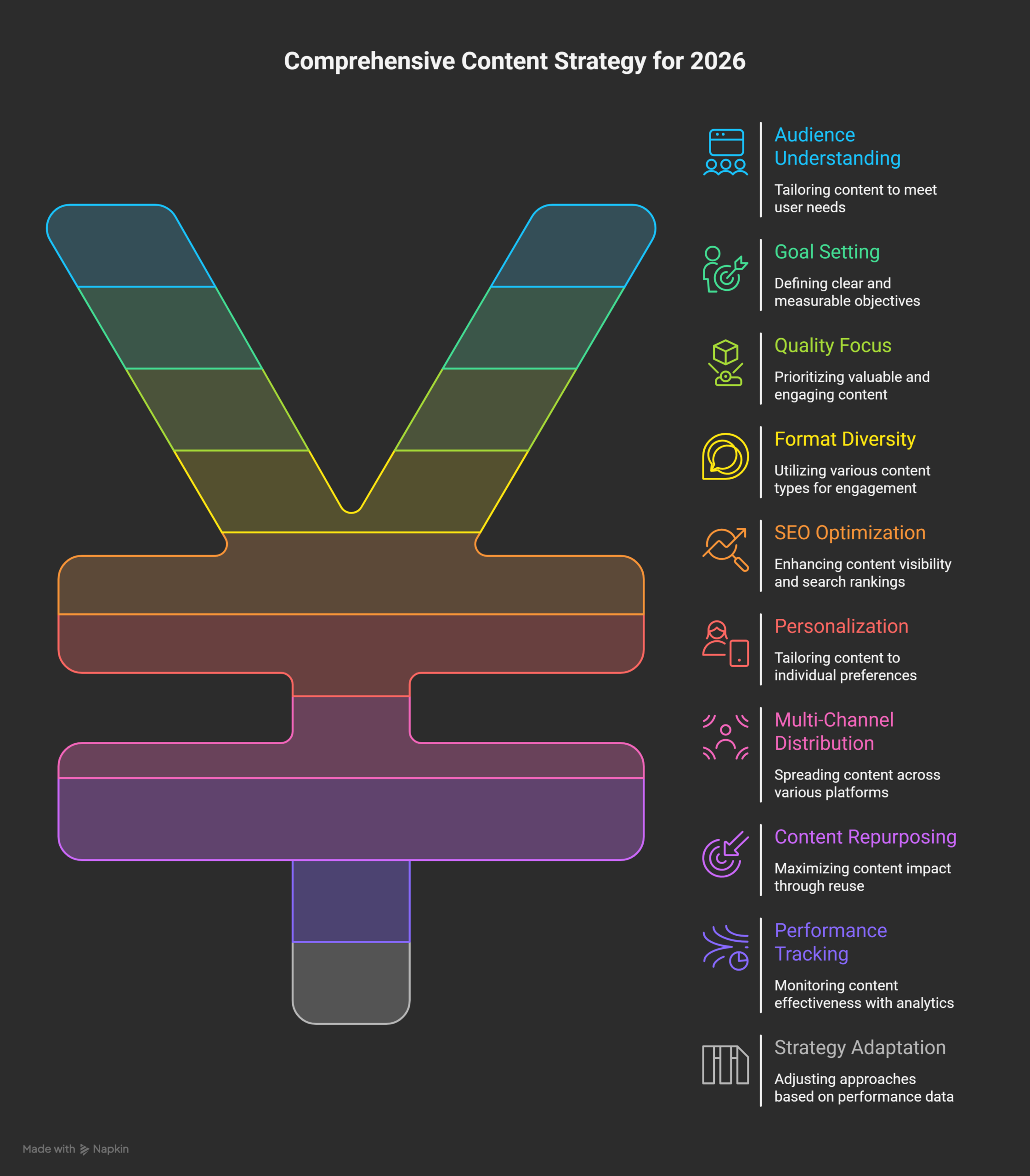
Understand Your Audience Deeply
Knowing your audience is the first step. Without insights, content will miss the mark. Understand demographics, behavior, and interests. Analyze how users consume content. Segment audiences for better targeting. Personalization depends on accurate audience understanding.
Key Steps
-
Conduct surveys and polls
-
Track browsing and purchase behavior
-
Analyze social media engagement
-
Use analytics tools to monitor trends
-
Update audience profiles regularly
Understanding audiences improves relevance and engagement.
Set Clear Goals
Every content campaign needs a goal. Goals define strategy and measure success. They guide content type and format. Without goals, campaigns are unfocused. Goals should be realistic and measurable.
Common Content Goals
-
Increase brand awareness
-
Drive website traffic
-
Generate leads
-
Improve customer retention
-
Boost social media engagement
Clear goals help in planning and reporting.
Focus on Quality and Relevance
Quality content attracts attention and builds trust. Relevant content keeps users engaged. Avoid generic or shallow posts. Content should provide real value.
Quality Content Practices
-
Research topics thoroughly
-
Include verified data and facts
-
Solve user problems effectively
-
Use clear, simple language
-
Keep content original and authentic
High-quality content supports long-term SEO and trust.
Use a Multi-Format Approach
Different content formats reach different audiences. Mix video, interactive, long-form, and visuals. Repurpose content to maximize reach. Formats must fit platform and user preference.
Implementation Tips
-
Create blogs and guides
-
Produce short and long videos
-
Design infographics and slides
-
Use podcasts and audio clips
-
Make interactive tools and quizzes
Multi-format strategies increase engagement and retention.
Optimize for SEO and EEAT
SEO remains crucial in 2026. EEAT principles improve credibility and ranking. Trustworthy, authoritative content performs better.
SEO Best Practices
-
Include relevant keywords naturally
-
Optimize meta titles and descriptions
-
Add internal and external links
-
Focus on expertise, authority, trust
-
Update old content regularly
Optimized content attracts both users and search engines.
Personalize and Segment Content
Personalized content increases relevance. Segmentation helps deliver the right message to the right audience. Use data and AI for guidance.
Practical Personalization Steps
-
Segment audiences by behavior and interests
-
Send targeted emails and messages
-
Customize landing pages for user groups
-
Recommend products based on past activity
-
Test different personalization strategies
Personalization improves engagement and conversion rates.
Distribute Across Multiple Channels
Content must reach users where they are. Multi-channel distribution increases visibility. Share content on social media, email, websites, and apps.
Effective Distribution Methods
-
Schedule posts on relevant platforms
-
Share content in newsletters
-
Repurpose for video and audio
-
Collaborate with influencers
-
Track performance across channels
Distribution ensures maximum reach and impact.
Measure and Refine Performance
Tracking results is essential. Analytics shows what works and what doesn’t. Continuous improvement enhances strategy effectiveness.
Key Metrics to Track
-
Website traffic and page views
-
Engagement rates on posts
-
Conversion and lead generation
-
Bounce rate and session time
-
Social shares and comments
Use data to adjust content types, topics, and formats.
Stay Updated on Trends
Marketing trends change quickly. Keep learning about tools, formats, and audience behavior. Adapt strategies to remain competitive.
Ways to Stay Updated
-
Follow industry blogs and newsletters
-
Join marketing communities
-
Attend webinars and workshops
-
Monitor competitors’ strategies
-
Experiment with new content formats
Being proactive ensures long-term success.
In Short
Content marketing in 2026 requires planning and action. Understand your audience and set clear goals. Focus on quality, personalization, and multi-format strategies. Optimize for SEO and EEAT principles. Distribute content widely and measure results. Adapt to trends continuously for better outcomes. Smart execution creates sustainable growth and engagement.
Conclusion
Content marketing in 2026 is more strategic than ever. Audiences expect personalized, relevant, and engaging content. Video, interactive, immersive, and long-form formats dominate. Storytelling and user experience drive deeper connections. Trust, authority, and expertise determine content performance. AI supports creation, but humans add creativity. Multi-channel distribution ensures wider reach and impact.
Marketers must understand audience behavior clearly. Data, personalization, and segmentation guide smarter strategies. SEO and EEAT principles improve visibility and trust. Continuous measurement and refinement enhance results. Trends change fast, so adaptability is essential. Brands that balance quality, innovation, and user focus will succeed. Strong content strategies will drive growth and loyalty.
Frequently Asked Questions
What are the key content marketing trends in 2026?
The main trends include AI-assisted content, personalized messaging, storytelling, immersive and interactive formats, and SEO focused on trust and expertise.
How does AI impact content marketing?
AI helps create faster drafts, suggests topics, improves SEO, and analyzes performance, but human creativity and strategy are still essential.
Why is storytelling important in content marketing?
Storytelling connects with audiences emotionally, builds trust, makes content memorable, and helps communicate complex ideas simply.
What content formats perform best in 2026?
Video, interactive quizzes, immersive experiences like AR/VR, long-form blogs, and visual content like infographics lead in engagement.
How can brands personalize content effectively?
Brands can segment audiences by behavior, interests, and demographics, then deliver tailored messages through emails, websites, and social media.