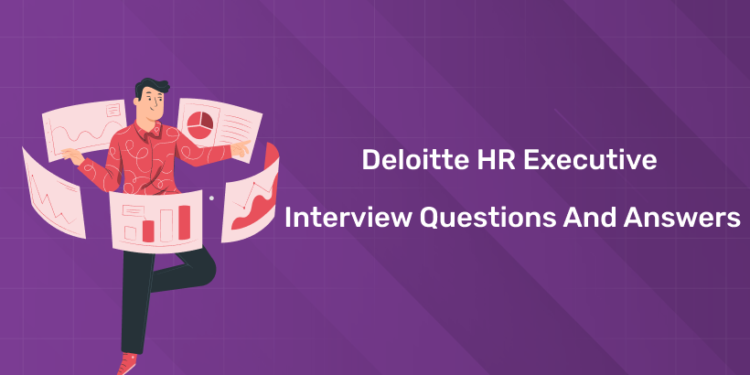
The Deloitte HR Executive interview is often seen as a turning point in a professional’s career. For many, it is a combination of years of training, preparation and ambition: an opportunity to move into a bigger role, work with international clients, and work for one of the world’s most respected professional services firms. And yet, nervousness is utterly normal. As in any interview—whether it’s a person interview or one over a video call—the pressure can be high and expectations high.
Deloitte’s HR Executive interview is different because it goes beyond just knowing a bit about HR. Deloitte isn’t just measuring your knowledge of policies, compliance or processes. They are looking for leaders who could deal with complicated issues of people, who could think strategically about talent and culture, and who could accompany workers and business leaders through turbulent times. Your empathy in keeping with business priorities is as important as technical knowledge.
These questions are designed to show you what you think, what you decide, and how you deal with real life. Interviewers want to know how you can manage conflict, help teams under pressure, influence key stakeholders and contribute to creating a place where people feel supported and motivated to perform at their best. They’re listening for judgment, intelligence, and clarity of thought.
This guide will help you prepare by following the most common questions you will encounter in a Deloitte HR Executive interview. Each question is labeled, with a natural-sounding sample answer in simple, everyday English. These responses are not scripted or overly polished. Rather, they reflect the confidence a confident HR leader would exercise to be candid about their experience, values, and approach. The goal is to help you sound prepared, authentic, and aligned with what Deloitte truly looks for in its HR leaders.
Introduction
In the face of an interview with Deloitte HR Executive, preparation is far more complex than memorizing perfect answers. What matters is where you are in real time. Deloitte interviews are designed to understand who you are as a professional, what you think and how you handle responsibility in difficult situations. The majority of candidates go through multiple rounds; initial HR screening; interviewing top HR leaders, hiring managers, and occasionally partners. Each round produces new expectations and deeper questions.
Expect a mixture of behavioral, technical, situational, and strategic questions. Behavioral questions are about what you already have done and what you did with real problems. Technical questions test your HR fundamentals, policies and processes. Situational questions ask you about your own responses in simulated workplace situations, while strategic and leadership questions ask you about your ability to think long-term and to align people practices with business goals. Interviewers don’t just listen to what you say—they notice how you say it, how confident you sound, and whether your examples are sincere and experience based.
Cultural fit is a key focus for Deloitte. Values such as integrity, collaboration, inclusion and providing valuable value to clients are not just words; they affect the everyday work of teams. Interviewers seek clarity, control and results when answering questions. They want to know that you are aware of what you did and not just what you did.
I have put together 21 realistic interview questions with clear, conversational answers you can adapt to your own journey. Don’t try to memorize them word for word. Instead, practice speaking them loud and reworking them on your own experiences. If you can answer on the spot, when it matters, you will be far more likely to make an impression.
Is being an HR your dream? Enrol now for our course on Human Resource!
Understanding Deloitte’s HR Role
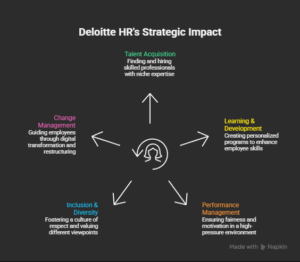
Deloitte is one of the world‘s largest professional services firms, with an unprecedented scale and complexity. It provides auditing, consulting, tax, risk advisory, and financial advisory services to clients in all industries and jurisdictions. Because of this breadth, Deloitte has an experienced workforce who is highly skilled at handling complex, high-stakes work that affects global businesses directly. Human resources, in such a world, is not a support function that operates in the background, it is a strategic driver of the firm’s success.
Deloitte’s human resources management is far beyond traditional people management. They are responsible for finding, cultivating, and maintaining niche talent where skills are limited and competition fierce. These include hiring professionals with deep technical experience, international exposure, and the ability to quickly adapt to changing client needs. Plus, HR plays a key role in creating meaningful, relevant learning and development programs that fit each employee’s needs and career goals.In a rapidly evolving professional services environment, organizations need to conduct regular training to keep up with ever-changing technology stacks and shifting client needs.
It’s a tough job for Deloitte performance management. HR leaders need to promote the success of well-performing teams and ensure fairness, transparency and motivation in an organizational context of pressure. They also oversee inclusion and diversity activities that go beyond a surface level effort to create a culture where different viewpoints truly can be valued and taken on. HR also works with employees and leaders in navigating large-scale change, such as digital transformation, restructuring or mergers while still maintaining trust and engagement.
Deloitte seeks candidates who are aware of this reality in interviews. They look for information that shows you view HR as a business partner rather than a simple administrative function. They want to hear that you align with Deloitte’s core values—integrity, mutual respect, inclusion, and a commitment to delivering exceptional value to clients—and that you can translate those values into meaningful action within a complex, global organization.
Common Behavioral Questions
These questions start with “tell me about a time when…” or “give me an example of…”. They want real stories, not theory. A good way to answer is to quietly think: What happened? What was my job in it? What did I actually do? What was the outcome?
- Tell me about a time when you resolved a conflict between team members.
A few years ago, at my previous firm, two of our strongest performers fought over control of a major client deliverable. What had been an undertow was, in fact, a greater controversy. Meetings became more tense, communication got better, and people started loathing each other. As the tension worsened, it became felt for the rest of the team and the timeline of the project decreased. It was obvious that if it continued, the client relationship and morale of the team would be in danger.
Once they were clear, I gathered them in a neutral setting and turned away from individual positions and back to the client’s goal. We talked about the deliverable itself, what success meant, and mapped each person’s strengths to their own responsibility. This was the clear route and cleared up the doubts about leadership and accountability. We also agreed upon a short weekly meeting in order to reduce tension rather than causing future issues.
The results were immediate and positive. The client was gratified to have the project completed two days earlier, and the two workers worked well together. This experience reinforced an important lesson for me: When you slow down, listen carefully, and focus on a common goal, conflict can transform into collaboration, and better outcomes for everyone involved.
- Give a breakdown of a challenge you encountered while creating a new HR policy.
When we launched our hybrid work policy I was surprised that not everyone was excited. Some senior managers worried that productivity was going to go down and team culture would suffer. I collected actual data, not just policy push numbers, but the internal engagement data, industry benchmarks, and even stories from other companies who had already made the change. I organized smaller group discussions where I asked tough questions and encouraged people to ask questions openly.
We tweaked it in practice based on feedback, played it out in chunks, and checked in. Within 6 months, more than 85% of the organizations had been hybrid working, voluntary turnover had increased somewhat and satisfaction scores had improved. People liked to be heard, and the data helped dissuade doubters to be proponents.
- How have you promoted diversity and inclusion in a role before?
We encountered a leadership team in one organization where everyone shared similar backgrounds, attended the same schools, and belonged to the same networks. I wanted to change the pattern, not just talk about diversity. I revised the job descriptions in order to cut out unnecessary degree requirements and jargon that would otherwise silently filter out the public. I cultivated working relationships with professional groups whose members have been overlooked. I worked with the recruitment team to blind CVs at the first screening. I also offered short practical bias-recognition workshops for interviewees. For the next 18 months we increased mid- to senior level diversity hiring by 28% and employee survey scores on inclusion increased dramatically. This wasn’t magic, it was boring, day-to-day labor.
- Give an example of how you managed a tough employee termination.
One situation still stands out. We had an employee who was missing deadlines repeatedly despite multiple coaching conversations and written warnings. By the time it reached me, the performance gap was clear and documented.
When we had the final meeting, I was direct but calm. I explained the decision based only on facts and policy, not personal feelings. I gave information about severance, benefits continuation, and outplacement support. I made sure the person left the conversation with dignity. There were no legal issues afterward, and the team stayed focused. Those conversations are never easy, but doing them fairly and respectfully makes a big difference.
Technical HR Knowledge Questions

These questions check whether you really understand HR processes and tools.
- How would you carry out a job analysis for a brand-new role?
I always begin by meeting with the hiring manager and a few staff members who will be working closely with the new hire. I ask: What is success, in six months? What kinds of problems will this person solve? I then gather more information – sometimes through short surveys, sometimes just watching roles of the same nature. Once I have all the raw data, I put it together into a job description that includes essential roles, must have skills, nice to have skills and how performance will be measured. For recruiting purposes, the accurate and realistic description is much more difficult.
- What steps do you follow to stay compliant with employment laws?
Compliance is a living thing, I believe, and it changes, you have to keep up. I get legal information, follow trustworthy HR associations, and attend regular training courses. Every year, I review and revisit the process for pay, leave, accommodations, and anti-harassment. I ensure that managers are trained to apply the rules that affect them most. And if something is even a bit ambiguous, I don’t guess—I bring in legal or compliance experts straight away. Staying proactive also saves time later
- How do you build an effective onboarding program for new hires?
I want people to feel included and welcomed from the moment they arrive. I send out a quick welcome email before they even start saying things like where to park, what to bring, who to call if they have questions. On the first day, I do cover the stuff that matters: culture, values, policies and systems, logins, and a brief description of our team. Next, I run short follow-ups every 30 days, 60 days and 90 days to ask: “What’s going on?” Where are you? Good onboarding is more than paperwork, it’s about making someone feel like they belong quickly.
- Tell me about your experience with HR systems like Workday or similar tools.
I’ve had Workday as my primary system for about four years, working on payroll, benefits, performance monitoring, time off requests, reporting, everything. It took some time to learn but once I got it set up correctly it almost eliminated manual errors by 25 per cent and was much faster for managers to see the information they needed. I also ran hands-on training for the team, which meant that people could not remain afraid of the system, but actually use it. No, modern HR systems are perfect, but when you know how to use them correctly, it makes life much easier.
Situational and Hypothetical Questions

These questions put you in a realistic situation and ask what you would do.
- What do you do if someone complains of harassment?
First, I listen—really listen—without interrupting or jumping to conclusions. I take notes and tell the person I will keep my information confidential as long as possible and that retaliation is not permitted. I explain what we will do next: we will investigate promptly, fairly, and thoroughly. I start the case right away – speaking with witnesses, reviewing any messages or records, staying neutral. I do not tell anyone more than I should. And I make sure they know about any resources for support. Only quick, fair, caring handling is in order.
- What would you do if turnover suddenly jumped higher than normal?
I’d treat it like a health check. I would look at exit interview comments, engagement survey results, performance trends, and even workload data to see what’s going on. Is it paid? Managers? Burnout? Are there opportunities for growth? Once I have that picture, I could point to some practical solutions for leadership—maybe better salary benchmarking, more frequent career discussions, better recognition, or workload redistribution. I’d make changes frequently, explain why to people, and monitor what happens every few months to see if things are going well. It is never an option to ignore higher turnover.
- How do you combine HR functions from two firms in a merger?
Mergers are messy, not just for HR. I’d start by putting everything side-by-side: pay structures, benefits, leave policies, performance systems, titles, reporting lines. I’d like fast wins (things we can easily conciliate) and big projects (things that require more time). I would do my best to speak clear and often so that nobody fancies. I’d train people on new systems or processes and check pulse surveys to see how people feel. The goal is to keep the best people and help the new combined organization start strong.
- If budget cuts require layoffs, how do you handle them?
This is one of the hardest aspects of the job. I’d work with leaders to define objective business factors – performance, needed skills, projects – and make sure nothing illegal or discriminatory happens. Once I have a decision, I’d be very careful with writing clear scripts, good severance packages, outplacement help, benefits information. I’d give the news in person, if possible, and in person (or video). I’d also think about those who go—how do we communicate, how do we keep morale alive? At such a time transparency and dignity are so important.
Leadership and Strategy Questions

These questions look at how you think about the bigger picture and lead people.
- How do you foster talent in your organization?
I believe that personal growth should happen. I talk to people often, not just at review time, and I ask them: Where do you want to be in two or three years? What skills would you like to learn? Then we create a simple plan with someone, maybe a course, a stretch project, a mentor or a short-term project pushing them. I check in frequently and change when life changes. People stay longer and perform better when development is real, individualized.
- How do you manage performance?
I have gone beyond report card-based once-a-year reviews. Instead, I set some common goals at the beginning and have more short, regular conversations (maybe monthly or bi-monthly) with them. I get feedback instantly not months later. I also input 360 input when it helps people get a better picture. I celebrate wins in public and private, and when someone needs some help, I work with them on a plan of action and with support and deadlines. Conversations of trust and openness build trust and lead to results
- How do you ensure the HR plans are in line with the company’s primary goals?
Business leaders are constantly asked, “What makes you sleep?” What will we need to win in the next 12–24 months? I then turn those answers into HR priorities—maybe hiring more skilled people, creating new training programs, improving retention in key roles, or address culture issues that slow us down. I always trace HR work back to measurable business outcomes such as revenue, client satisfaction, project delivery speed. When HR and the business are moving in the same direction, everything works better.
- What role does HR play in major changes?
Change makes people anxious. HR works to help people understand what is happening, what it means to them personally, and how they will be supported. That means clear, honest communication – multiple times, in different ways. That means training people in new tools or procedures. That means listening, making suggestions where possible. That means watching to see how people are feeling so that we can intervene early if morale starts to fall. HR can’t remove all the uncertainty, but we can make it far less painful.
Industry-Specific Questions for Deloitte

Because Deloitte is a consulting firm, some questions feel different from traditional corporate HR.
- How do you handle HR in a project?
I put the right people in the right projects based on skills, experience, and existing skills. I watch workloads carefully to avoid burnout. I ensure we review performance at the end of each major interaction so that those who delivered are given credit. And I am flexible—improving the speed of talent moving between projects is a must in this kind of setting.
- What about your experience with global HR?
I have handled international assignments, cross-border hiring, and compliance with other labor laws. I’ve negotiated relocation costs, visas, cultural onboarding, and making pay and benefits more equitable across countries. Global HR teaches you to be very clear about what must remain consistent (ethics and inclusion) and where you need to adjust (local holidays, notice periods, tax rules).
- How do you help yourself cope with high working pressure?
Consulting places high pressure in their consulting work areas. I advocate for meaningful support—as long as possible flexible hours, mental health resources, periodic pulse tests and the real encouragement to take time off. I also try to detect patterns early: overloaded teams, people who haven’t been on leave in months. Small, ongoing actions, managers training, conversations about workloads, recognition help people stay healthy even at the fast pace.
Preparation Tips for the Deloitte HR Executive Interview
Read about Deloitte, their most recent news, their values, important initiatives, sustainability projects and diversity reports. Do not sing; if possible, mash your words out loud. Think of three or four good questions to ask them about your team’s performance, current priorities, or how success is evaluated in your job. Also, take a few mock interviews with someone who will give you honest comments. Most importantly, sleep well the night before.
Common Mistakes to Avoid
Don’t be mean to former employers or your colleagues. Ask questions – it shows you’re serious. And don’t try to sound perfect—real stories with real results are far better than gleeful, generic answers.
Advanced Questions for Senior Roles
- How do you rate the return on investment of HR work?
I use the numbers that matter to the business: cost per hire, time to fill critical roles, voluntary turnover rate, engagement scores, internal promotion rates. I link that with larger goals: low turnover saves money, more involvement improves client delivery, quicker hiring wins new work When leaders perceive HR as an asset, it becomes a strategic partner rather than just a support function.
- What HR trends do you watch out for?
Now I’m interested in how firms are balancing hybrid and flexible work with client expectations. I also want to know how AI is being applied to recruiting and performance feedback, and how employee experience is becoming a more pressing issue. I try to think about what such trends might bring to a firm like Deloitte, where client work is rapidly moving, global and at times extremely demanding.
Is being an HR your dream? Enrol now for our course on Human Resource!
Conclusion
A Deloitte HR Executive interview is not just some long conversation; it’s a test of your own understanding of experience, of what you think and what you put forward confidently. This interview is designed to expand beyond your resume and explore your responses to actual-world situations, how you handle pressure, and how you embody Deloitte’s values and culture. Every question has a purpose, whether it is about your past work, your technical knowledge, or your approach to people and problems.
The questions that you will have will most likely be in a few core areas. You may be asked to share stories about your previous work from which you show problem solving, teamwork, conflict management or leadership. Technical questions ask you to know the basic HR principles rather than just definitions. Scenario-based questions involve what you would do if your situation were a problem or sensitive, and broader questions address your thinking, your flexibility, and your leadership personality. Together these areas help interviewers hear not only what you have done, but also what you think.
But don’t memorize answers just to be sure you are prepared properly. Instead, think about what happened in your real life; what were you struggling with, what did you do, and what was good. Tell us about what you learned, your mistakes and how that experience influenced your professional growth. Practice will allow you to speak fluently and confidently, without overhearding.
Finally, feel like you’ve made your way to the interview. You’ve worked hard, you’ve walked the walk, you’ve learned the knowledge, you’ve learned everything. You can trust that preparation. Be clear in your speech, honest in your answer, and real in your personality. Deloitte needs capable, thoughtful and authentic people. Be yourself; you have something to offer.
Become an HR Expert – Enroll in Our HR Management Course Today!
Unlock the secrets to effective Human Resource Management with our expert-led course! Learn recruitment, employee relations, performance management, and more to build a thriving workplace. Start your journey toward a successful HR career today!
Know MoreFrequently Asked Questions
Tell me about a time you designed and implemented a strategic HR initiative that directly impacted business performance. What was your process, and how did you measure success?
This question is a cornerstone for an HR Executive interview at Deloitte. It separates transactional HR administrators from strategic business partners. The interviewer is probing your ability to diagnose a business need, design a people-centered solution, navigate complex implementation, and, crucially, tie your efforts to tangible, quantitative outcomes that a partner or managing director would care about. They want to see your project management rigor, stakeholder influence, and understanding of how human capital drives commercial success.
Strategic Thinking & What They’re Really Asking:
-
Business Acumen: Did you start with a business problem (e.g., slowing growth, high project overruns, poor client satisfaction) or just an HR “nice-to-have”?
-
Diagnostic Skills: How did you analyze the root cause? Did you use data, interviews, surveys, or benchmark studies?
-
Design & Influence: How did you build the initiative? Did you co-create it with business leaders to ensure buy-in?
-
Execution in Complexity: How did you manage change in a demanding, possibly skeptical environment?
-
Measurement & ROI: Did you establish baseline metrics and track impact? Can you speak in terms of revenue, cost savings, efficiency, or quality?
Sample Answer Framework:
“Certainly. In my previous role at [Company], a strategic review revealed that while we were winning new client projects effectively, our profitability on those projects was eroding. Analysis pointed to frequent budget overruns and scope creep in the delivery phase. Digging deeper with project leaders, I identified a recurring theme: our project managers were exceptional subject matter experts but had inconsistent commercial and client relationship management skills. They were promoted for technical prowess, not leadership or business acumen.
I proposed designing a ‘Commercial Leadership for Project Managers’ program, framing it not as remedial training but as an investment to protect margins and enhance client stickiness. To build the business case, I partnered with Finance to quantify the average cost overrun per project and modeled a conservative 15% reduction target. I then co-designed the curriculum with senior client-facing partners and our learning team. It wasn’t a generic HR program; it included modules on Deloitte-specific financial metrics, change order negotiation simulations using past client scenarios, and advanced stakeholder communication.
Implementation required careful stakeholder management. We piloted it with a group of high-potential PMs, treating them as a leadership cohort. We incorporated their feedback in real-time. Success was measured on three levels: First, the reaction—post-program scores were high, with participants valuing the practical, firm-specific focus. Second, learning—we used pre-and post-assessments on commercial principles. Third and most importantly, business impact. After 12 months, we tracked the pilot cohort’s projects against a control group. Their average project overrun was reduced by 22%, directly contributing to improved project profitability. Additionally, client satisfaction scores for those projects increased by 18%. The program is now a mandatory part of the career path for all project managers. The key for me was starting with the financial pain point, collaborating with the business to build the solution, and relentlessly measuring the outcome in the language of the firm—margins and client satisfaction.”
Deloitte operates in a high-pressure, client-service environment. How would you approach building a sustainable culture of well-being and preventing burnout, without compromising on client delivery excellence?
This question tests your sophistication in balancing two seemingly competing priorities: relentless client service and employee health. It moves beyond offering generic perks like mindfulness apps. Deloitte wants leaders who can structurally and culturally integrate well-being into the operating model of a demanding professional services firm. They are looking for innovation, pragmatism, and an understanding that sustainable performance requires proactive care, not just reactive support.
Strategic Thinking & What They’re Really Asking:
-
Systemic vs. Surface-Level Thinking: Do you see well-being as an EAP program or as a function of workload, leadership behavior, and workflow design?
-
Courage & Influence: Are you prepared to have difficult conversations with powerful partners about workload management and unrealistic deadlines?
-
Data-Driven Insight: How would you identify burnout risks before they lead to attrition? Would you use predictive analytics on workload, email traffic, or time-off patterns?
-
Integration with Business: How do you make well-being a shared leadership accountability, not just an “HR thing”?
-
Practicality: Are your ideas feasible in a billable-hours environment?
Sample Answer Framework:
“This is a critical tension, and the solution isn’t about lowering standards—it’s about working smarter and leading more empathetically. I believe a sustainable culture is built on prevention, not just cure. My approach would be multi-layered, focusing on predict, design, lead, and support.
First, predict and measure. I’d advocate for moving beyond annual engagement surveys to more frequent ‘pulse’ checks focused on workload, autonomy, and support. More strategically, I’d explore data analytics—with appropriate ethics and privacy guards—to identify risk patterns. Are there teams with consistently high after-hours email traffic? Individuals who haven’t taken substantial leave in 18 months? This data allows for targeted, pre-emptive intervention.
Second, design the work. I’d work with project leadership to re-examine how work is assigned and managed. Could we implement more robust project resourcing reviews to avoid chronic under-staffing on long-term engagements? Can we champion the use of ‘protected focus time’ within project plans, where consultants are offline for deep work? I’d also look at policies like mandatory time-off between major projects, not just as a rule, but as a benchmark for leadership to plan around.
Third, equip leaders. The single biggest factor in team burnout is often the immediate project lead. I would develop and mandate training for all people managers on ‘Sustainable Performance Leadership.’ This would cover skills like having realistic career and workload conversations, spotting signs of distress, modeling boundaries themselves (e.g., not sending late-night emails), and effectively pushing back on unrealistic client demands when necessary. We would make metrics on team well-being a component of a leader’s own performance review.
Finally, destigmatize support. Ensure excellent, confidential mental health resources are available and promoted constantly by senior partners. Share stories—anonymously—of leaders who have taken leave for well-being and returned stronger. The goal is to shift the mindset from ‘well-being is for the weak’ to ‘proactive well-being is a hallmark of a high-performance, resilient professional.’ This isn’t soft; it’s strategic. It directly protects our most valuable asset—our talent—and ensures we can deliver exceptional client service consistently, not in bursts that lead to breakdowns.”
Describe your experience with and philosophy on driving Diversity, Equity, and Inclusion (DEI) in a global organization. How do you move from initiatives to measurable, integrated change?
For Deloitte, a global firm serving diverse clients, DEI is a business imperative and a core value. This question assesses whether you see DEI as a series of standalone programs (e.g., heritage month celebrations) or as a comprehensive strategy embedded into every people process. They want evidence of systemic thinking, the ability to handle resistance, and a relentless focus on outcomes over activities.
Strategic Thinking & What They’re Really Asking:
-
System Integration: How do you embed DEI into recruiting, promotion, succession planning, and performance management?
-
Inclusion vs. Diversity: Do you understand that hiring diverse talent is only the first step? What is your strategy for creating an environment where that talent can thrive, lead, and feel they belong?
-
Courage & Conviction: How have you handled pushback from leaders who say they “hire the best person, always” or view DEI as a compliance issue?
-
Global Nuance: How do you adapt a global framework to local cultural and legal contexts?
-
Metrics & Accountability: What do you measure? Representation is a start, but what about retention rates by demographic, promotion parity, pay equity, and inclusion index scores?
Sample Answer Framework:
“My philosophy is that DEI must be woven into the fabric of how the business operates; it cannot be a separate, parallel function. The goal is to move from isolated ‘initiatives’ to an integrated talent strategy where equity is the default. My experience has taught me this requires a three-pillar approach: Accountability, Process Redesign, and Culture Shift.
First, leadership accountability is non-negotiable. I’ve worked to make DEI outcomes a measurable part of leadership scorecards, with clear goals for representation at all levels, not just entry-level. This shifts the responsibility from HR to the business leaders who control hiring, project assignments, and promotions. I facilitate difficult conversations, using data to show gaps in promotion rates or assignment opportunities for underrepresented groups, making the case that this is a talent risk and a commercial loss.
Second, audit and redesign every people process with an equity lens. For example, in recruitment, we moved to structured interviews with skill-based rubrics to reduce unstructured bias. We implemented ‘name-blind’ and ‘university-blind’ resume reviews for early screening. For promotions, I’ve instituted calibration committees where leaders must defend promotion decisions against objective criteria, which surfaces patterns of bias. We conduct annual pay equity analyses not just for legal compliance, but to proactively make adjustments. Each process is a lever for systemic change.
Third, foster inclusive culture through empowerment, not just awareness. Mandatory unconscious bias training has its place, but it’s not enough. I focus on building inclusion skills—like how to run a meeting where introverts and extraverts contribute equally, or how to sponsor high-potential talent from underrepresented groups. We measure culture through detailed inclusion surveys, tracking psychological safety and sense of belonging by team and demographic.
A concrete example: At my last firm, our Asian and Black talent had strong retention at junior levels but a dramatic drop-off at the senior manager/director level. We didn’t just launch a mentorship program. We analyzed the ‘path to partner’ and found a gap in access to high-visibility, global client projects. We worked with the business to create a formal ‘sponsorship program’ where senior partners actively advocated for and placed high-potential diverse talent on those critical engagements. Within two years, we saw a 40% increase in the promotion rate for those cohorts. The key is moving from celebrating diversity to engineering equity in the systems that govern careers.”
How would you approach designing a future-of-work and workforce strategy for a firm like Deloitte, considering trends in AI, the hybrid model, and the evolving skills landscape?
This is a forward-looking, strategic question that tests your ability to be a true HR futurist and internal consultant. Deloitte, as an advisor to clients on these very topics, expects its own HR leaders to be at the cutting edge. They want to see that you can think beyond current policies, anticipate disruptions, and build a flexible, adaptive people strategy.
Strategic Thinking & What They’re Really Asking:
-
Strategic Foresight: Are you aware of major trends (AI, skills-based hiring, fluid work arrangements) and can you articulate their specific implications for professional services?
-
Business Alignment: How do you translate these trends into actionable plans that serve Deloitte’s business model (client service, project-based work, global teams)?
-
Talent Model Innovation: Are you thinking about redefining jobs as collections of skills, leveraging internal talent marketplaces, or alternative career paths?
-
Change Leadership: How would you guide a traditionally office-centric, partner-led firm through this transition?
-
Risk & Governance: Do you consider the ethical, legal, and security implications of new work models and technologies?
Sample Answer Framework:
“Designing a future-of-work strategy for Deloitte requires acknowledging that we are both a subject matter expert on this for clients and a living laboratory for our own ideas. My approach would be centered on building resilience, adaptability, and a skills-centric ecosystem to navigate this uncertainty.
First, I’d initiate a comprehensive ‘Workforce Futures’ analysis, not in isolation, but with our Consulting and Technology practices. We’d model scenarios: What if AI automates 30% of routine audit or tax compliance work in 5 years? What skills are liberated, and what new skills become critical? This isn’t about fear-mongering; it’s about proactive workforce planning. We would map our current skill inventory against future needs, identifying critical gaps in areas like AI prompt engineering, data storytelling, and change management for AI implementation.
Second, the hybrid model is just the tip of the iceberg. For Deloitte, the bigger question is moving from a place-centric or even schedule-centric model to an outcome-centric work model. This requires rethinking how we measure productivity for client-serving professionals. I would advocate for piloting output-based goals for certain roles, supported by clear communication protocols and advanced collaboration technology. The office would be redesigned as a hub for deliberate collaboration, mentorship, and culture-building, not mandatory attendance.
Third, and most critically, we must rebuild our talent architecture around skills, not just jobs. I envision an internal talent marketplace—a sophisticated platform where project managers can post tasks or entire project roles requiring specific skills (e.g., ‘blockchain analysis for a financial services client’), and any employee, regardless of their formal title or home department, can apply. This democratizes opportunity, unlocks latent talent, and builds a more agile, responsive firm. It requires robust skills taxonomies, supportive managers, and a reward system that values enterprise contribution.
Finally, the employee experience would be hyper-personalized. Using ethical AI, we could curate personalized learning journeys, suggest internal mobility opportunities, and provide dynamic career pathing. The strategy’s success would be measured by agility metrics: time to reskill critical talent pools, internal mobility rates, project staffing speed, and of course, employee engagement in this new, dynamic environment. The goal is to build an organization where change is the norm, and our people are equipped and excited to evolve with it.”
Tell me about a time you had to influence a skeptical or resistant senior business leader to adopt an HR policy or program they initially opposed. How did you convince them?
This question probes your political acumen, persuasion skills, and credibility as an executive. At Deloitte, you will be advising powerful, metrics-driven partners and managing directors. They don’t have to say “yes” to HR. The interviewer wants a story that demonstrates your understanding of the business, your persistence, and your ability to win support not by mandate, but by compelling argument and alliance-building.
Strategic Thinking & What They’re Really Asking:
-
Stakeholder Analysis: Did you understand the leader’s motivations, pressures, and objectives?
-
Business Language: Did you frame your argument in terms of their goals (revenue, risk, client satisfaction, efficiency) or in HR terms?
-
Data as a Tool: Did you use data, benchmarks, or pilot results to build an objective case?
-
Alliance Building: Did you find other influential supporters or leverage a pain point they were experiencing?
-
Persistence & Adaptability: Did you take a single “no” as final, or did you refine your approach?
Sample Answer Framework:
“A pivotal moment was when I championed a comprehensive flexible working policy at a previous firm, which was met with strong resistance from the head of our largest business unit—a revenue-driven, traditional leader. His position was clear: “If I can’t see my team, I can’t manage them. Client service will suffer.”
I knew a policy document wouldn’t change his mind. My first step was to seek to understand, not to persuade. I requested a one-on-one meeting not to present my plan, but to ask about his challenges. He spoke about project overruns, difficulty attracting niche tech talent, and client complaints about responsiveness during travel. I listened and took notes.
I then reframed the proposal around his problems. I went back to him two weeks later with a pilot proposal. I said, ‘You mentioned difficulty hiring for your AI team. What if we run a 6-month pilot on your most challenging-to-fill roles, explicitly offering location flexibility as a differentiator? We’ll apply it only to new hires and a few volunteer high-performers on existing teams. We will co-design the success metrics: not just productivity, but project profitability, client satisfaction scores, and attrition rates for that group versus the control group. I will personally manage the communications and provide extra manager training for the pilot leads.’
This shifted the conversation from ideology to a controlled experiment. He agreed to the pilot because the risk was contained, and it addressed his talent shortage. During the pilot, I provided him with bi-weekly data snapshots. The results were compelling: we filled the niche roles 50% faster, the pilot team’s productivity metrics were equal or better, and client satisfaction showed no decline. Most tellingly, attrition in the pilot group was zero, while the broader unit’s was 15%.
At the end of the pilot, I didn’t need to convince him. The data did. He became the policy’s most vocal advocate in the executive committee, speaking about its impact on his bottom line. The lesson was profound: Influence comes from aligning your solution to their problem, speaking their language of data and risk mitigation, and having the patience to prove it through a well-managed experiment.”
In a global firm, how do you ensure consistency in core HR values and processes while allowing for necessary local adaptation? Can you give an example from your experience?
This question gets to the heart of operating in a complex, matrixed organization like Deloitte. It assesses your ability to balance the need for a unified global culture and operational standards with the legal, cultural, and market realities of dozens of different countries. They are looking for a principled, yet pragmatic approach to global governance.
Strategic Thinking & What They’re Really Asking:
-
Global-Local Tension: Do you recognize that a one-size-fits-all approach fails, but complete decentralization creates fragmentation and risk?
-
Principles vs. Prescription: Can you define the non-negotiable global principles and allow local flexibility on implementation?
-
Risk Management: How do you ensure local adaptations don’t violate core ethics, brand, or create legal exposure?
-
Communication & Community: How do you foster connection and shared learning across a dispersed HR function?
-
Governance Model: What mechanisms (councils, approval matrices, playbooks) do you use to manage this balance?
Sample Answer Framework:
“Managing the global-local dynamic is one of the most nuanced aspects of HR leadership. My framework is ‘Globally Consistent, Locally Relevant.’ The key is to distinguish between core principles, which are non-negotiable, and practices, which can be adapted.
For example, when we rolled out a new global performance management philosophy moving from annual reviews to continuous feedback, we established non-negotiable principles: 1) Every employee must have regular, documented career conversations. 2) Ratings, if used, must be calibrated to ensure fairness. 3) The process must be digitized in our global HR system for transparency.
However, the practice of how this happened could vary. In the US and UK, where direct feedback is culturally accepted, we implemented a system of quarterly ‘check-ins’ with real-time feedback tools. In several East Asian countries, where saving face and hierarchical respect are paramount, our local HR leaders proposed a different approach. They trained managers on how to give feedback more indirectly, using more questions and structured frameworks, and piloted initial conversations focused more on employee-led self-assessment. They also adjusted the timing to align with local business cycles.
To manage this, we didn’t just grant blanket autonomy. We established a Global HR Council with representatives from each major region. Local leaders presented their adaptation proposals to this council. We assessed them against the core principles, legal compliance, and risk. This created a peer-review system that fostered buy-in and shared learning. A great idea from Asia on mentorship integration was later adopted in Europe.
The governance was supported by a global ‘playbook’ housed online. It clearly listed the mandatory principles in red, provided multiple ‘how-to’ implementation options in amber (vetted by the council), and offered a repository of local success stories in green. This created clarity without stifling innovation. Regular virtual town halls with the global HR community celebrated these local adaptations, reinforcing that we were one firm with many voices. The outcome was high adoption globally, with local teams feeling ownership over a process that respected their context, while our executive team had confidence in the consistency of our core talent standards worldwide.”
Describe a complex, large-scale organizational change you helped lead (e.g., merger, restructuring, digital transformation). What was HR's role, and what were the key lessons you learned?
This is a classic leadership question scaled for an executive role. Deloitte itself undergoes constant change and advises clients on change management. They want to know if you can be a strategic architect and a steady hand during turbulent times. Your answer should demonstrate process rigor, deep empathy, and an understanding that change is about people, not just new org charts.
Strategic Thinking & What They’re Really Asking:
-
Strategic Partnership: Was HR at the table from the beginning, or brought in to clean up afterward?
-
Change Management Methodology: Do you have a structured approach (e.g., Kotter, ADKAR) or just wing it?
-
Communication Mastery: How did you address uncertainty, fear, and rumors?
-
Supporting the People: How did you handle redundancies, redeployment, retraining, and cultural integration?
-
Resilience & Learning: Can you reflect on what went wrong and what you would do differently?
Sample Answer Framework:
“I led the HR workstream for a post-merger integration of two 5,000-person professional services firms. It was the most challenging period of my career. HR’s role evolved through three phases: Pre-Close Strategist, Day 1 Orchestrator, and Long-Term Culture Integrator.
In the pre-close phase, our role was risk assessment and planning. We conducted a thorough cultural diagnostic of both firms, identifying potential clash points—one was entrepreneurial and bonus-driven, the other was consensus-based and brand-focused. We identified key talent in both organizations who were critical to retention. We co-designed the future leadership structure and a detailed 100-day communication plan with the CEO.
On Day 1, our role shifted to orchestrating clarity and stability. We launched the new brand, held simultaneous all-hands calls, and activated ‘integration ambassadors’ in every team. But the real work was in the messy middle. We set up a ‘Talent War Room’ to manage the complex process of role alignment. For every duplicated function, we used a transparent matrix: skills needed for the future, current performance, and diversity. We offered generous voluntary separation packages first, which helped. For those whose roles were eliminated but were strong performers, we created a dedicated ‘redeployment team’ that worked with them for 3 months to find a new role, often requiring reskilling.
The key lesson was that we underestimated the power of symbolic integration. We focused so much on systems and structures that we missed early opportunities to build social cohesion. Six months in, engagement scores in merged teams were plummeting. We had to pivot quickly. We launched cross-company ‘client challenge hackathons’ where mixed teams solved real business problems. We created simple, peer-nominated awards for ‘Best Collaborator.’ We encouraged leaders to share stories of successful joint client wins. This deliberate social engineering was as important as the structural work.
Another hard lesson was communicating even when you have no news. We stuck to a rigid bi-weekly FAQ update, even if the message was ‘we are still working on it.’ Silence breeds toxic rumor mills. Ultimately, the integration was deemed successful—client retention hit 98%—but it taught me that HR’s role in change is to be the guardian of both the business outcome and the human experience, understanding that the latter drives the former.”
How do you define and measure the success of the HR function itself? What metrics would you prioritize for our HR leadership team dashboard at Deloitte?
This question tests your ability to run HR like a business. It moves the conversation from “what you do” to “what value you create.” Deloitte, being metrics-driven and client-focused, expects its support functions to demonstrate their impact with rigor. They want to see if you think like a CFO of human capital.
Strategic Thinking & What They’re Really Asking:
-
Business Outcomes: Do you link HR metrics to business performance (revenue per FTE, client satisfaction)?
-
Leading vs. Lagging Indicators: Do you track predictive metrics (like engagement or skills readiness) or just historical ones (like turnover)?
-
Talent Pipeline Health: How do you measure the strength and diversity of your future leadership?
-
Efficiency & Effectiveness: Can you demonstrate that HR is both productive (low cost per process) and impactful (high quality of hire)?
-
Storytelling with Data: Can you synthesize metrics into a compelling narrative for the board?
Sample Answer Framework:
“I believe the ultimate measure of HR’s success is its contribution to the firm’s competitive advantage through talent. Therefore, the dashboard should tell a story across four quadrants: Talent Supply, Talent Health, Operational Excellence, and Business Impact.
In Talent Supply, I’d track leading indicators of our pipeline’s health and agility. Key metrics would be: Time-to-Fill for Critical Roles (especially in high-demand areas like AI or cybersecurity), Quality of Hire (measured by performance ratings and retention at the 1-year mark), and the Diversity of our Candidate Slates and Hires at all levels. I’d also include Internal Mobility Rate—are we sourcing from within first?
For Talent Health, we look at engagement and sustainability. The primary metric would be a robust Employee Engagement Index from frequent pulses, sliced by team, demographic, and tenure. But I’d pair that with more diagnostic metrics: Regrettable Attrition Rate (specifically of high performers and in critical roles), Utilization Rate + Well-being Pulse (to spot burnout risk), and Promotion Rate Parity across gender and ethnicity to measure equity.
Operational Excellence proves we run a lean, effective function. Metrics include HR Cost as a Percentage of Revenue, Manager Satisfaction with HR Services, and Process Efficiency (e.g., benefits enrollment cycle time, accuracy of payroll). This shows we steward resources well.
Finally, and most importantly, Business Impact. This is where we connect to the firm’s strategy. I’d work with Finance to track Revenue per Full-Time Equivalent (FTE), linking productivity to our talent strategies. We’d monitor Client Satisfaction Scores on Projects led by teams with high engagement scores, looking for correlation. We’d track Leadership Strength, measuring the percentage of key roles with at least one ready-now, diverse successor. Lastly, I’d include a Strategic Skills Readiness Index—the percentage of our workforce we have assessed as proficient in the skills we’ve identified as critical for our future growth.
This dashboard moves us from reporting on activities (e.g., ‘we ran 20 training programs’) to demonstrating outcomes (‘our investment in commercial training improved project margins by X%’). It positions HR not as a cost center, but as a capital allocator for the firm’s most important asset.”
What is your approach to managing and developing a high-performing HR team of specialists (in recruitment, learning, compensation, etc.) in a complex environment?
This question shifts the lens from your individual leadership to your capability as a leader of leaders. Can you build, inspire, and orchestrate a team of expert practitioners? It assesses your talent development philosophy, your ability to foster collaboration in a siloed function, and your skill in connecting their specialized work to the bigger picture.
Strategic Thinking & What They’re Really Asking:
-
Leadership Philosophy: How do you motivate and develop experts who may know more about their domain than you do?
-
Strategic Alignment: How do you ensure your recruitment, compensation, and learning strategies are not operating in isolation but as an integrated talent system?
-
Breaking Down Silos: How do you get compensation specialists to think like business partners and recruiters to understand learning needs?
-
Developing Future HR Leaders: How are you growing the next generation of HR executives within your team?
-
Delegation & Empowerment: Do you micromanage specialists or set a clear vision and empower them to execute?
Sample Answer Framework:
“My approach is to act as an integrator, coach, and strategist for a team of specialists. I see my primary role as ensuring their deep expertise is channeled to solve the most pressing business problems, not just execute functional tasks.
First, strategic alignment through shared context. I start by ensuring every member of my leadership team, regardless of specialism, understands the business strategy in depth. We don’t just have HR team meetings; we have sessions where a business leader presents their three-year plan, and we brainstorm as a team: ‘What does this mean for Recruiting? For Compensation? For L&D?’ This builds a shared purpose and breaks down silos. The compensation lead starts thinking about incentive structures for new skills, and the L&D lead is already designing curricula.
Second, empowerment within a framework. I hire specialists for their expertise and empower them to be the functional authorities. I don’t dictate how to design a sales compensation plan, but I do set clear guardrails: it must be equitable, legally compliant, aligned to these three business outcomes, and presented with a change management plan. I measure their success on the impact of their work (e.g., reduced turnover in key roles after a comp redesign), not just activity metrics.
Third, forced collaboration on cross-functional projects. To solve complex problems like launching an internal talent marketplace, I would create a project team led by a business partner but with dedicated representatives from recruitment, L&D, compensation, and HR tech. They are accountable together for the outcome. This builds mutual respect and breaks down the ‘not my job’ mentality.
Finally, investment in their growth as future executives. I mandate that my specialists spend time shadowing business partners or even serving as an embedded HR lead on a client project. I encourage them to get business certifications. In one-on-ones, we discuss not just their functional goals but their understanding of P&L, their stakeholder influence skills, and their leadership aspirations. My goal is to develop a team of well-rounded HR leaders who can connect their specialty to the whole business system, because that’s what Deloitte needs from its next generation of HR executives.”
Looking ahead, what do you believe is the single most significant challenge facing HR leadership in global professional services, and how would you begin to address it at Deloitte?
This final question is a true test of your thought leadership and strategic vision. It asks you to synthesize trends, understand the unique context of professional services, and propose a forward-looking, actionable point of view. There’s no single right answer, but there are compelling and less compelling perspectives. They want to see originality, depth, and the ability to think like a future CHRO.
Strategic Thinking & What They’re Really Asking:
-
Insight & Foresight: Are you ahead of the curve? Can you identify a challenge that others might not yet see as acute?
-
Industry Specificity: Does your challenge resonate with the realities of partnership models, client service, and project-based work?
-
Strategic Prioritization: Can you articulate why this challenge is more significant than others?
-
Action Orientation: Do you have a coherent, initial plan of attack, not just vague observations?
-
Vision: Does your answer paint a picture of the future of HR?
Sample Answer Framework:
“I believe the most significant challenge is the rising disconnect between the traditional, linear career model of professional services and the demand for personalization, agility, and skill-based work from the workforce of the future. We are built on an up-or-out pyramid, with a well-defined path from analyst to partner over many years. Meanwhile, the market demands ever-changing skills, and top talent increasingly values flexibility, varied experiences, and purpose over a prescriptive, decades-long climb.
This creates a strategic risk: we could become less attractive to the very agile, digitally-native talent we need to serve our clients’ futures, while also failing to fully utilize the diverse skills of our existing people who may not want—or be suited for—the traditional partner track.
Addressing this requires a fundamental re-imagination of the ‘career currency’ at Deloitte. We need to move from a model where value and progression are tied almost exclusively to seniority and book of business, to one that also recognizes and rewards mastery, impact, and agility.
I would begin by launching a bold initiative: ‘Project Kaleidoscope: Designing Careers in the New World of Work.’ This wouldn’t be an HR policy tweak, but a firm-wide strategic project sponsored by the CEO.
Phase 1 would be research and co-creation. We would conduct deep ethnographic research with our high-potentials, mid-careers, and even those who left. We’d study ‘skill-based’ organizations and tech companies. We would then convene mixed groups of partners, high-performers, and clients to co-design prototypes for new career pathways.
Phase 2 would involve piloting new ‘career currencies.’ For example, we could pilot a ‘Master Track’ for deep technical experts who want to become world-class in AI regulation or sustainable finance, with compensation and prestige equivalent to a partner, but without a people leadership requirement. We could pilot an ‘Impact Track’ where progression is tied to leading critical internal transformation projects or community initiatives. We would also pilot a more robust internal gig platform where employees can build portfolios of project-based work across different service lines.
Phase 3 would be rethinking the total rewards system to support this multi-dimensional model. How do we compensate, recognize, and provide benefits for someone on a non-linear path?
The goal is to build a talent ecosystem where people can craft a Deloitte career that fits their skills and aspirations, making us the most agile and attractive firm for the future of work. This is the challenge—and the opportunity—that will define HR leadership in our industry for the next decade.”