Table of Contents
Introduction
The sound of whirring overhead is no longer anything out of the ordinary. Drones have made the transition from military secrets to everyday tools that are on hand to help us out with deliveries, check the condition of bridges and give farmers a hand with getting the best out of their crops. But here’s a thing that a lot of people tend to miss : not all drones are the same. Buying the wrong drone for your needs is just a waste of time & money that will only leave you frustrated . However, getting the right one opens doors you never even knew existed.
Whether you’re looking to start a business, take some seriously stunning aerial shots or just want to get up to speed on this whole drone thing, knowing your way around different types of drones and what they’re used for is the first step towards getting the outcome you want . And it’s this knowledge that sets apart those who struggle to get the hang of complicated technology from those who can master the skies with confidence.
Key Takeaways
- Drones can basically be split into four main categories: multi-rotor, fixed-wing, single rotor & hybrid VTOL designs.
- Multi-rotor drones dominate the consumer market & are best suited for taking aerial snaps & short distance inspections.
- Fixed-wing drones fly the distance when it comes to mapping, agriculture and surveying with much longer flight times.
- It’s commercial use that’s now driving innovation with drones more than any hobby.
- Knowing your way around drone classifications will help you make a real informed buying decision & avoid some really costly mistakes.
- Each type of drone has its own strengths & weaknesses when it comes to flight time, payload, stability & just how complicated all the tech is.
What Are the Main Types of Drones?
Drones basically get classified mainly by what they look like & how they generate lift. And this classification is pretty important because each design has got a pretty specific purpose. There are four main types – multi-rotor, fixed-wing, single rotor helicopter & hybrid vertical takeoff and landing (VTOL) drones.
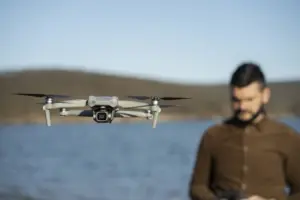
Multi-rotor drones are probably what most people are most familiar with. They’ve got lots of arms with propellers spinning round & doing their thing in a coordinated kind of pattern. These drones are great for photography & inspections because they’re so stable & can hover in place.
Fixed-wing drones look just like tiny planes. They’ve got rigid wings & a single propeller. Unlike multi-rotor drones though, they can’t just hover there. They’ve got to keep moving forward or they’ll come crashing down. This design makes sense for flying over long distances & getting the job done when you need to cover a lot of ground.
Start learning robotics today! Build strong fundamentals with expert-led training.
Multi-Rotor Drones: The Most Popular Choice
Multi -rotor drones pretty much dominate the market for good reasons. They’re relatively simple to put together, dead easy to control and they offer a level of stability that’s really hard to beat. Most common configurations include quadcopters (four rotors), hexacopters (six rotors), and octocopters (eight rotors) – the more rotors the better, as it happens.
Quadcopters are the standard choice for all you beginners and hobbyists out there. Their four-rotor design strikes a nice balance between cost, stability, and general all round manoeuvrability. Most of the consumer drones from DJI – like the Mini and Mavic series – fall into this category. These tend to fly for anything up from 20 to 30 minutes on a single charge, and usually come with lightweight cameras.
Primary Uses for Multi-Rotor Drones
Aerial photography and videography is by far the biggest use case for multi-rotor drones. Real estate agents love ’em for showing off properties from all sorts of angles. Wedding photographers use ’em to capture moments that would’ve been impossible even a decade ago. Travel content creators use ’em to produce footage that can compete with professional productions.
Inspection work is another area where multi-rotor drones really come into their own. Inspectors use ’em to check out bridges, cell towers, power lines and building roofs from up high – all without needing to risk life and limb to climb up there. And it saves the expense of scaffolding too.
Limitations to Keep in Mind
Flight time is probably the biggest limitation. Most multi-rotor drones fly for anything up from 20 to 40 minutes before you need to swap the battery out. That restricts their use for any tasks that need an extended aerial presence.
And then there’s the weather sensitivity to consider. Strong winds can really make ’em wobble and rain can damage the electronics. Professional operators often carry spares and wait for the weather to clear.
Payload capacity is also limited compared to other drone types. If you try to carry too much gear, it really cuts into the flight time.
Fixed-Wing Drones: Long Distance Specialists
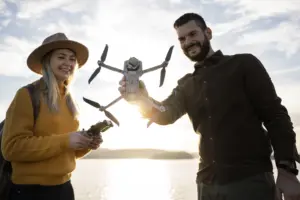
Fixed-wing drones work on pretty much the same principles as a proper plane. The wings produce lift as the drone moves forward, and a single propeller provides thrust. These drones can’t hover, but they make up for it by being really great at covering massive areas efficiently.
How Fixed-Wing Drones Differ
Fixed-wing drones are launched in a variety of ways . Some models are good enough for hand launching -just a good strong throw is all you need to get them airborne. Others need catapult systems or even just a small runway to get them going. When its time to land, they can use parachute recovery, belly slide in or even just your standard landing gear.
The Main Uses for Fixed-Wing Drones
Agriculture is probably the biggest market for fixed-wing drones. They let farmers quickly scan thousands of acres and get a good idea of what’s going on with their crops. Many of these drones come equipped with multispectral cameras that can give farmers a pretty good idea of any issues they need to be aware of – like irrigation problems or pest infestations. This helps them figure out what to do to get their yields up and reduce the amount of chemicals they need to use.
Land surveyors and mapping professionals use fixed-wing drones as much as possible. These teams can use them to create a detailed topographical map and 3D model of terrain. Construction companies use them to keep track of how a project is going as it moves across a large site. Mining operations can track the volume of their stockpiles and make sure they are being safe.
The Drawbacks to Keep in Mind
The main limitation of fixed-wing drones is that they can’t hover . You can’t just stop and have a good look at what you are interested in. You have to fly around in circles or patterns to go back to a spot you want to see again.
It also takes a bit of space to launch and recover fixed-wing drones – you need a bit of room to get them airborne and then get them back down again. Hand launching can be a bit tricky in small areas but a parachute recover system adds weight and complexity.
Single-Rotor Helicopter Drones: Power and Precision
Single rotor drones bear a strong resemblance to traditional helicopters, boasting a large main rotor and a smaller tail rotor to keep things stable. This layout offers a range of advantages that make them a real asset in specific use cases.
Design Advantages
The single large rotor in these drones delivers way more lift per unit of power compared to multi rotor designs. This efficiency means they can carry heavier payloads and still have reasonable flight times, with some models flying for 60 minutes or more even with a decent load.
Primary Uses for Single Rotor Drones
For heavy lifting tasks, single rotor drones are the way to go. Industrial users can rely on them to transport gear and equipment to hard to reach places. And with some models able to carry payloads of over 20 pounds, they’re more than suitable for delivery applications where weight is a big issue.
Specialised surveying is another area where single rotor drones prove really useful. They can carry larger sensors and more advanced kit, making them ideal for detailed geological surveys and mineral exploration. Mining companies use them to map out their underground operations and check out blast sites.
Limitations to Consider
The main challenge here is complexity. Single rotor drones have a lot more moving parts than multi rotors, which makes them a bit of a maintenance nightmare and increases the risk of mechanical failure. You’ll need to train operators to a higher standard and have them with a basic mechanical knowledge to keep them going.
Safety is also a major concern – the large spinning rotor can be a real injury risk. Professional pilots take these things with a grain of salt and follow strict safety protocols to the letter.
Cost is another factor – quality single rotor drones cost more than comparable multi rotor models. Put the higher purchase price and increased maintenance together and they’re really only suitable for commercial use with the right budget.
Hybrid VTOL Drones – The Best of Both Worlds
Hybrid VTOL (Vertical Takeoff and Landing) drones are right at the cutting edge of drone tech. These clever aircraft manage to bring vertical takeoff capability and efficient fixed wing forwarded flight together in one neat package.
How Hybrid VTOL Technology Works
Most hybrid VTOL drones use a multi rotor config for takeoff and landing – just a bunch of motors pointing upwards to lift the drone off the ground. Once airborne, the drone tilts its motors or uses separate forward facing propellers to get into horizontal flight.
Once it’s in horizontal flight, the drone behaves just like a fixed wing aircraft – wings provide the lift and forward propulsion comes from dedicated motors. This makes it possible to get rid of the need for runways or catapults and still enjoy the long flight times and range of fixed wing designs.
Primary Uses for Hybrid VTOL Drones
Military and defence applications were a major driver behind the development of early hybrid VTOLs. Drones can launch from just about anywhere – ships, vehicles, or even from cramped spaces without all the fuss of needing infrastructure. They then fly for hours, conducting surveillance missions, before winging their way back to where they started.
Large-scale mapping projects rely heavily on the capabilities of hybrid VTOLs. Surveyors can cover huge areas – hundreds of square km – all in a single flight. And the fact that these drones can take off from just about anywhere, without needing some fancy runway, really expands their possible uses.
When disaster strikes, hybrid VTOL drones are often called in to assess the damage in areas where the infrastructure has been devastated. They can launch from the rubble-strewn streets or from damaged buildings, then take off into the skies to search out survivors and hazards.
Things to Bear in Mind
The main problem holding back these hybrid VTOL drones is that they are still relatively complex and expensive. The price tag is higher than simpler drones because they need super-sophisticated flight controllers and a bunch of motor systems all working together. And let’s not forget the transition mechanism, which adds both weight and the potential for parts to fail.
Getting the best out of those batteries during vertical flight is a real challenge too. Vertical takeoff is power-hungry, which means that your overall flight time suffers compared to drones that just have fixed wings. But of course, advances in battery tech are slowly starting to address this.
Commercial Drones vs. Consumer Drones: Understanding the Big Difference
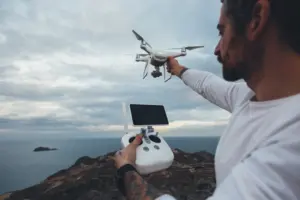
The distinction between commercial and consumer drones is a big one – both for buyers and operators. Each kind of drone is designed to meet different needs and operates under very different rules.
Consumer Drones
These are the kinds of drones that enthusiasts and hobbyists love to use. They’re usually under 250 grams or sub-2 kilogram, and the emphasis is all on ease of use, portability and decent image quality. They are often just a joy to fly, and prices range from around $50 for a basic toy model to $2,000 for advanced models like the DJI Mavic 3 series.
Commercial Drones
On the other side of the divide are commercial drones – the kind that businesses use for real-world applications. They’ve got a much more industrial ethos about them, with enhanced durability, redundant systems and compatibility with really specialized payloads. You’ll see industrial sensors, thermal cameras, multispectral imaging systems and lidar scanners all being used in this way.
Prices for these models start around $3,000 for the basic units, and professional models can cost upwards of $50,000. They often come with a comprehensive support package, warranty and training to help you get the most out of your new drone. Commercial operators need to jump through a few more hoops – the US requires FAA Part 107 certification, for example, and insurance requirements are much higher too.
How to Choose the Right Drone for Your Needs
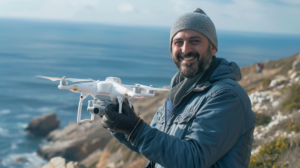
Getting the Right Drone: It’s All About Your Needs
Before you start looking for a drone, take some time to think about how you plan to use it. Answer these questions before making a purchase to get the drone that suits you best:
What are you are planning to capture or inspect with your drone? For photography or inspecting a small area, a multi-rotor drone will give you the stable hovering platform you need. If you’ve got a need to cover a lot of ground, a fixed wing drone will give you the endurance you need to get the job done.
How much can you afford to spend? Don’t just think about the drone itself – make sure you factor in the cost of extra batteries, a good case, software, and any training you might need. Believe it or not, these extras will often add up to cost more than the drone itself.
The Future of Drone Tech – and How it’s Already Changing Everything
Drone tech is evolving fast, and some of the trends we’re seeing are going to change the game in the years to come:
- Autonomous operations are getting more and more common – we’re seeing drones do complex missions without any human interference. Automated charging stations are making it possible for drones to keep running non-stop in industrial settings.
- Swarm tech is taking off too – groups of drones are now able to coordinate their actions to get the job done faster. Search and rescue teams are using swarms to cover huge areas, and entertainment production companies are using them to put on spectacular light shows using hundreds of coordinated drones.
- Beyond visual line of sight (BVLOS) operations are expanding too – regulatory changes are making it possible for drones to fly further away from the pilot, which is opening up all sorts of new applications, from delivery services to pipeline inspections.
Start learning robotics today! Build strong fundamentals with expert-led training.
Conclusion
The world of drones is full of amazing opportunities for hobbyists, entrepreneurs, and professionals alike. Multi-rotor drones give you incredible imaging capabilities, fixed-wing drones let you cover vast territories efficiently, and single-rotor helicopters can handle demanding jobs. And with hybrid VTOL designs, you can get a bit of both worlds – versatility and endurance for specialized missions.
So, to make a success of drone flying, you need to find the right tech for your needs. Take your time to figure out what you want to do with your drone. Don’t forget to factor in the cost of all the supporting equipment and training you’ll need. And make sure you understand the regulations that apply to your intended operations.
Frequently Asked Questions
What are the main types of drones by design?
The primary types include multi-rotor, fixed-wing, single-rotor, and hybrid VTOL drones. Multi-rotor models use several blades for lift. Fixed-wing ones act like small planes. Single-rotor copies helicopter design. Hybrid combines both for flexible flight.
Which drone type is best for aerial photography and video?
Multi-rotor drones lead here. They hover steadily in place. This gives smooth shots and precise framing. Most consumer and pro camera drones fall in this group. Flight time reaches 20 to 40 minutes on average.
Why choose fixed-wing drones for large-area tasks?
Fixed-wing drones fly longer and cover more ground. Some stay airborne for hours. They handle wind well and carry heavier sensors. Mapping, farm monitoring, and line inspections benefit most from this efficiency.
What makes single-rotor drones useful for heavy jobs?
Single-rotor drones lift big payloads with ease. Gas power extends flight time. They suit tasks like LiDAR scanning or heavy spraying. The main blade provides strong lift similar to helicopters.
How do hybrid VTOL drones work in mixed missions?
Hybrid VTOL drones take off vertically like multi-rotors. They switch to fixed-wing mode for speed and range. This setup fits search operations, delivery tests, and surveys that need both close views and wide coverage.
Does drone size affect its main uses?
Yes. Small drones under one foot suit hobbies or indoor checks. Medium sizes handle most pro photos and inspections. Large drones over four feet manage delivery, big farm work, or heavy loads. Rules often tighten with bigger sizes.
Which drone type works well for farming in 2026?
Both multi-rotor and fixed-wing see heavy use. Multi-rotors spray small fields precisely. Fixed-wing models scan vast crops for health data. Hybrid types grow popular for combined tasks. Over 30 percent of large farms fly drones daily now.
Can one drone type handle every possible job?
No single type does it all. Each excels in specific areas. Multi-rotors offer control but short range. Fixed-wing provides distance but no hover. Pick based on your top need like time, payload, or space.
What limits flight time across drone types?
Battery life caps most electric models. Multi-rotors last 20 to 60 minutes. Fixed-wing reaches hours with efficient design. Gas-powered single-rotor extends further. Wind, weight, and speed also cut time.
Are delivery drones mostly one type in current use?
Hybrid VTOL and larger multi-rotor models lead delivery now. They drop packages fast over short distances. Fixed-wing helps longer routes in tests. Companies push for quick, safe urban flights under six miles.