Table of Contents
You just bought a drone. It is time to fly it!
The rules of drone licensing in India are simple: if your drone weighs more than 250 grams, you need to register it on Digital Sky with a Unique Identification Number (UIN). For commercial flights or drones above 2 kg, you need a Remote Pilot Certificate from a DGCA-approved training organization. Flying without the certificate can result in a fine of up to 1 lakh, confiscation of your drone, or even criminal charges.
This guide will tell you everything you need to know about the drone license rules in India. You’ll learn about registration, pilot certification, airspace zones, penalties, and how to stay compliant by 2026.
KEY TAKEAWAYS
- Registration on the Digital Sky platform is mandatory for all drones weighing above 250 grams .
- The Remote Pilot Certificate (RPC) is required for commercial drone operations and for all drones above 2 kilograms .
- India’s airspace is divided into Green, Yellow, and Red zones. Flying in Red zones without permission is illegal .
- The maximum legal flying height is 120 meters (400 feet) above ground level for all drones .
- NPNT (No Permission, No Take-off) is a mandatory digital clearance system for every flight .
- Penalties for violations range from ₹25,000 to ₹1 lakh, plus drone confiscation and possible legal action .
Start learning robotics today! Build strong fundamentals with expert-led training.
Who Regulates Drones in India?
The Directorate General of Civil Aviation (DGCA) is India’s primary drone regulator. It operates under the Ministry of Civil Aviation .
The current legal framework is the Drone Rules, 2021. These rules replaced the older, stricter UAS Rules and introduced a more trust-based approach to drone governance .
All compliance activities happen through one platform: the Digital Sky Portal (digitalsky.dgca.gov.in). This is where you register drones, apply for permissions, and manage pilot licenses .
In September 2025, the Ministry of Civil Aviation released the draft Civil Drone (Promotion and Regulation) Bill, 2025. Once enacted, this will replace the existing rules and introduce stricter penalties and enforcement powers . Until then, the Drone Rules, 2021 remain in force.
Drone Categories Based on Weight
Your drone’s weight determines everything. The DGCA classifies drones into five categories based on Maximum All-Up Weight (MAUW). This includes the drone, battery, and any payload .
| Category | Weight Range | Registration Required? | RPC Required? |
| Nano | Up to 250g | No | No |
| Micro | 250g – 2kg | Yes (UIN) | For commercial use only |
| Small | 2kg – 25kg | Yes (UIN) | Yes (for all operations) |
| Medium | 25kg – 150kg | Yes (UIN) | Yes (with type rating) |
| Large | Above 150kg | Yes (UIN) | Yes (with full approvals) |
Most consumer drones fall into the Nano or Micro categories. The DJI Mini series, for example, weighs under 250g and does not require registration . However, a typical 5-inch FPV racing quad weighs 500–700g and falls firmly in the Micro category, requiring registration .
Drone Registration Process on Digital Sky
If your drone weighs above 250 grams, registration is not optional. It is the law.
Step-by-Step Registration Guide
Step 1: Create an Account
Visit digitalsky.dgca.gov.in and register using your mobile number and email. Complete Aadhaar-based e-KYC verification .
Step 2: Register Your Drone
Click “Register Drone” and enter the following details :
- Manufacturer name and model
- Serial number
- Maximum All-Up Weight (MAUW)
- Drone category (Micro, Small, etc.)
- Color and specifications
Step 3: Upload Documents
You will need :
- Purchase invoice or procurement order
- Photo of the drone
- OEM certificate or serial number proof
- Identity proof (Aadhaar or PAN)
For custom-built drones, you register as the manufacturer. Select “Others” as the drone type and provide a self-declaration of specifications .
Step 4: Pay the Fee
Registration fees vary by category :
- Micro drones: ₹100
- Small drones: ₹1,000
- Medium drones: ₹5,000
- Large drones: ₹10,000
Payment is made through BharatKosh.
Step 5: Receive UIN
Once approved, you receive a Unique Identification Number (UIN). Approval typically takes 1 to 7 working days .
Step 6: Display the UIN
The UIN must be physically marked on the drone body. Use a permanent marker or engraved plate with a minimum font size of 25mm . Carry a digital copy of the registration certificate during all flights.
Remote Pilot Certificate: Who Needs It and How to Get It
The Remote Pilot Certificate (RPC) is your official qualification to fly drones in India. Think of it as a driving license for drone pilots .
Who Needs an RPC?
| Scenario | RPC Required? |
| Nano drones (under 250g), any purpose | No |
| Micro drones, recreational use | No |
| Micro drones, commercial use | Yes |
| Small drones and above, any purpose | Yes |
How to Get an RPC
Step 1: Enroll in a DGCA-Approved Training Organization
There are over 60 DGCA-approved Remote Pilot Training Organizations (RPTOs) across India in cities like Mumbai, Delhi, Bengaluru, Hyderabad, and Pune .
Step 2: Complete Training
Training includes :
- Ground theory: meteorology, air regulations, navigation
- Practical flying hours
- Safety protocols and emergency procedures
Course duration is typically 5 to 7 days.
Step 3: Pass the DGCA Examination
The exam includes both theory and practical components. Theory is computer-based at DGCA exam centers. Practical tests are conducted at the training organization .
Step 4: Obtain Medical Certificate
You need a Class 2 medical certificate from a DGCA-approved physician .
Step 5: Apply on Digital Sky
Submit your training certificate, medical certificate, and exam score. The RPC is issued through the Digital Sky platform.
Validity and Cost
- RPC validity: 5 to 10 years (renewable)
- Training cost: ₹15,000 to ₹40,000 depending on the drone category
NPNT: No Permission, No Take-off
India enforces a strict digital permission system called NPNT (No Permission, No Take-off). This means your drone must receive digital clearance before it can take off .
How NPNT Works
- You submit a flight plan through Digital Sky. This includes location, altitude, and time window.
- Digital Sky verifies your airspace zone and issues a digitally signed Permission Artefact (PA).
- Your NPNT-compliant flight controller validates the PA.
- The drone arms only if the permission is valid .
NPNT Status in 2026
DGCA has mandated NPNT compliance for all new drones sold after January 2024. Existing hobbyist drones are in a grace period, but compliance is expected .
For hobbyist flights in Green zones, a simple mission declaration on Digital Sky is often sufficient. For Yellow and Red zones, prior permission is required .
Start learning robotics today! Build strong fundamentals with expert-led training.
Airspace Zones: Green, Yellow, and Red
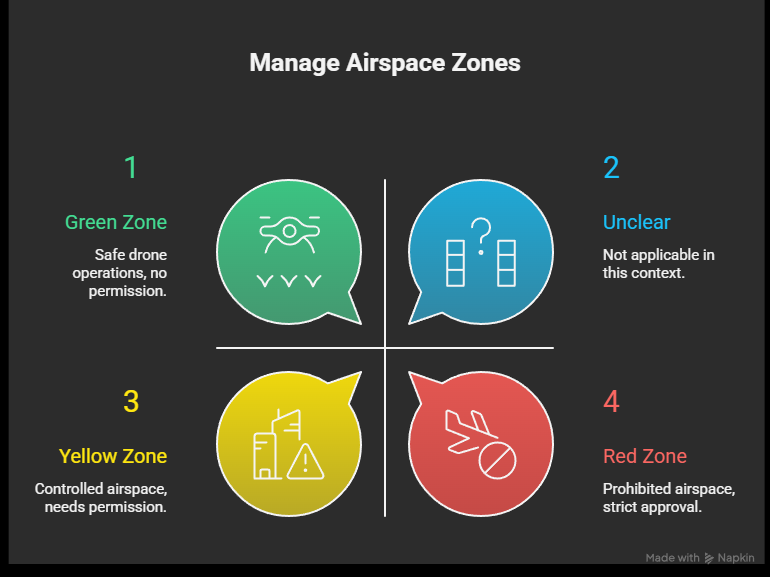
India divides its airspace into three color-coded zones. You must check the Digital Sky map before every flight .
Green Zone
What it means: Safe for drone operations without prior permission.
Altitude limit: Up to 120 meters (400 feet) above ground level .
Requirements: Valid UIN for Micro and above. No flight plan needed for routine hobby flights.
Coverage: Most rural and semi-urban areas away from airports and restricted zones.
Yellow Zone
What it means: Controlled airspace requiring prior permission.
Altitude limit: Usually below 120 meters, varies by location.
Requirements: Apply for permission through Digital Sky. Approval typically takes 1 working day.
Coverage: Areas within 8–12 km of airport boundaries, some urban areas .
Red Zone
What it means: Strictly prohibited airspace.
Altitude limit: No flights permitted.
Requirements: Central government approval required for any operation.
Coverage: Within 5 km of airports, military installations, international borders, Parliament, Rashtrapati Bhavan, nuclear plants, and high-security government zones .
Important: Airspace zones can change. A previously Green area may become temporarily Red during VIP movements, elections, or national events like Republic Day and Independence Day .
Height and Operational Limits
Maximum Altitude
The maximum legal flying height in India is 120 meters (400 feet) above ground level .
This limit applies to all drones regardless of weight. It is measured from the takeoff point, not from sea level. If you take off from a hilltop or building, the 120-meter limit is calculated from that takeoff position .
The 120-meter rule ensures drones remain below manned aircraft operations, creating a safety buffer and reducing collision risk .
Operational Rules
All drone pilots must follow these rules at all times :
- Visual Line of Sight (VLOS): You must always see your drone with your own eyes. Using FPV goggles requires a spotter to maintain visual contact.
- Daytime Only: Fly only between civil twilight and civil twilight unless you have night operations approval.
- No Flying Over Crowds: Never fly over gatherings of people, markets, festivals, or sports events.
- No Flying Near Moving Vehicles: Avoid highways, railways, and busy roads.
- Privacy Compliance: Do not photograph or video private property without consent.
- No Payload Without Approval: Carrying cameras or other payloads may require additional permissions.
- Insurance: Third-party insurance is mandatory for Micro drones used commercially and for Small drones and above .
Insurance Requirements
Third-party liability insurance is mandatory for certain drone categories .
| Category | Insurance Required? | Minimum Coverage |
| Nano | No | Not applicable |
| Micro (hobby) | No | Not applicable |
| Micro (commercial) | Yes | ₹5 lakh |
| Small | Yes | ₹50 lakh |
| Medium/Large | Yes | ₹1 crore |
Insurance must be active at the time of flight. Proof must be available on demand by DGCA inspectors .
Annual premiums for Micro hobby drones range from ₹1,500 to ₹3,000. Insurers offering drone policies include New India Assurance, United India, IFFCO-Tokio, and Bajaj Allianz .
Penalties for Violating Drone Rules
Non-compliance with drone license rules in India carries serious consequences .
| Violation | Penalty |
| Flying without UIN (Micro and above) | Up to ₹1 lakh fine + drone seizure |
| Flying in Red zone without authorization | Up to ₹10 lakh fine + criminal charges under Aircraft Act |
| Flying without RPC (where required) | Fine as prescribed by DGCA |
| Flying without NPNT permission | Regulatory action, fine, possible confiscation |
| Endangering aircraft or persons | Criminal prosecution under IPC and Aircraft Act |
With the proposed Civil Drone Bill 2025, penalties may increase further. The bill gives authorities power to detain drones for up to 3 days on mere suspicion of violation .
Enforcement has increased significantly. Police departments in major cities actively patrol for illegal drone flying, especially near airports, political events, and religious gatherings .
Special Rules for FPV Drones and Hobbyists
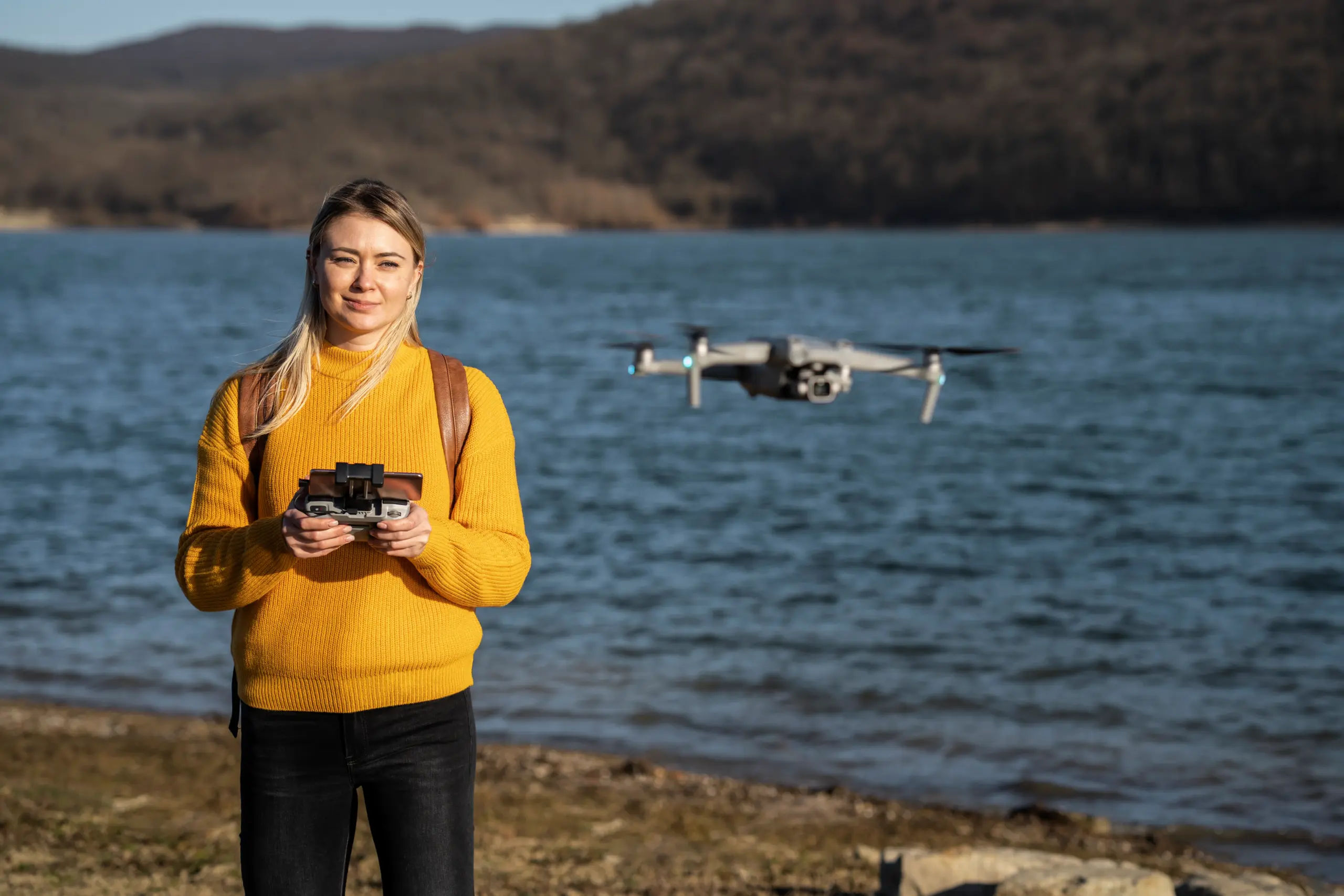
FPV (First Person View) Drones
FPV flying presents a unique regulatory challenge because wearing goggles means you cannot maintain visual line of sight .
How to fly FPV legally in India:
- Always fly with a spotter who maintains visual contact with the drone
- Stay within Green zones
- Keep altitude under 120 meters
- Register your drone if it weighs over 250g
The common community practice is to have a spotter. While FPV flying has not been explicitly legalized, this approach is generally tolerated for hobby purposes .
FPV racing events organized by registered clubs can apply for a Temporary Segregated Area (TSA) through the local ATC, allowing racing within a defined volume with possible altitude waivers .
Hobbyist Checklist
If you fly purely for recreation, here is what applies to you :
You must:
- Register on Digital Sky if your drone weighs over 250g
- Display UIN on the drone
- Fly only in Green zones (or get Yellow zone permission)
- Stay within visual line of sight
- Fly below 120 meters
- Fly only during daytime
You must not:
- Fly over people or moving vehicles
- Fly within 500 meters of international borders
- Carry weapons or hazardous materials
- Conduct surveillance without consent
- Fly under the influence of alcohol or drugs
Agricultural Drones: Special Rules
India has created a simplified regulatory pathway for agricultural drones to accelerate adoption .
Kisan Drone Category: A simplified certification track for drones used exclusively for agricultural spraying. Reduced documentation and faster approval timelines .
PM Kisan Drone Yojana: Government subsidy of up to 50% (up to ₹5 lakh) for farmer-producer organization (FPO) owned agricultural drones .
Type Certification: Agricultural spray drones must have DGCA Type Certificate. Several Indian manufacturers including Garuda Aerospace and IdeaForge have type-certified models available .
Operator Training: Spray drone operators need certification from an RPTO. Some state governments have their own approved training programs .
Commercial Drone Operations
If you use a drone for any commercial purpose, additional requirements apply .
Commercial purposes include:
- Photography and videography for payment
- Surveying and inspection services
- Real estate photography
- Wedding videography
- Delivery services
Requirements for commercial operations:
- UIN registration (mandatory for drones above 250g)
- Remote Pilot Certificate (mandatory for Micro commercial use and all Small+ drones)
- UAS Operator Permit (UAOP) from DGCA for Small and above
- Third-party liability insurance
- NPNT compliance for every flight
For Micro category commercial operations (such as wedding photography), UIN is mandatory. UAOP requirements may vary based on specific DGCA notifications .
13. Common Mistakes Drone Pilots Make
Even experienced pilots get tripped up by these :
- Assuming lightweight drones don’t need registration: Any drone above 250g needs UIN.
- Thinking recreational flying is exempt: It is not. Above 250g, registration applies.
- Not checking airspace before flying in a new location: Zones can change. Always check.
- Flying near airports without realizing the restriction: The Red zone extends 5 km from airport boundaries.
- Assuming NPNT only applies to commercial drones: It applies to all registered drones.
- Not carrying documentation during flights: You must carry your UIN certificate and RPC if applicable.
- Flying without a spotter while using FPV goggles: This is technically BVLOS and requires special permission.
Pre-Flight Safety Checklist
Before every flight, run through this checklist :
Battery health: Ensure battery is fully charged and not damaged.
Propeller inspection: Check for cracks, chips, or dirt. Ensure screws are tight.
Firmware updates: Update drone and controller firmware before flying.
GPS and compass: Wait for solid GPS lock. Perform compass calibration if needed.
Environmental scan: Survey for obstacles like trees, wires, buildings, and crowds.
Weather check: Avoid high winds, rain, or fog.
Return to Home settings: Confirm home point is correctly set.
NPNT permission: Ensure flight permission is active on Digital Sky.
What Is Changing: The 2025 Civil Drone Bill
In September 2025, the Ministry of Civil Aviation released the draft Civil Drone (Promotion and Regulation) Bill, 2025 .
Key Changes Proposed
Stricter type certification: Every drone model must receive DGCA type certification before it can be manufactured, sold, or operated in India. Fewer exemptions than before .
Tougher penalties: Several violations have been criminalized. Police can investigate, detain drones, and make arrests without a magistrate’s order. Fines can go up to ₹1 lakh, with possible imprisonment .
Drone detention powers: Authorities can seize any drone for up to 3 days on mere suspicion of violation, even before guilt is established .
Expanded liability: The definition of ‘accident’ now includes property damage, not just physical injury .
The Bill is still in draft form as of early 2026. The Drone Rules, 2021 remain enforceable. But drone operators should be aware that stricter compliance is coming .
Quick Reference Summary
Here is your fast-reference guide to drone license rules in India :
| Requirement | Nano (<250g) | Micro (250g–2kg) | Small (2kg–25kg) |
| Registration | Not required | Required (UIN) | Required (UIN) |
| RPC | Not required | Commercial only | Required |
| Max altitude | 15m (50 ft) | 120m (400 ft) | 120m (400 ft) |
| Insurance | Not required | Commercial only | Required |
| NPNT | Not required | Required | Required |
| Daytime only | Yes | Yes | Yes |
| VLOS required | Yes | Yes | Yes |
Start learning robotics today! Build strong fundamentals with expert-led training.
CONCLUSION
The Drone license regulations in India are all about keeping our skies safe, making sure people’s privacy is respected, and helping the drone business grow in a responsible way. The DGCA has gone out of their way to make it easy to comply with the rules through the Digital Sky platform. So the main things you need to know to fly a drone legally are registration, pilot certification and a good understanding of what airspace you can use.
Whether you fly just for fun or are running a business with drones, knowing those rules before you lift off can make all the difference between being a confident pilot and being the one who ends up with a fine and having their drone taken away. So as you get ready to fly, check your drone’s weight, see if you need to register it, and maybe get yourself certified – and before every flight always double check where you’re allowed to fly using Digital Sky.
India’s got big plans to become a top destination for drone makers and enthusiasts. By flying your drone in a way that’s both safe and legal you’ll be helping India achieve its aims – and at the same time you’ll be protecting yourself from getting hit with a big fine. So here’s a good motto to stick to – Fly smart, Fly safe, Fly a drone legally.
Frequently Asked Questions
Do I need a license to fly a drone in India for hobby purposes?
No license is required for nano drones weighing under 250 grams. For micro drones between 250 grams and 2 kilograms used for recreation, you need registration (UIN) but not a Remote Pilot Certificate. Drones above 2 kilograms require both registration and RPC regardless of purpose.
How long does DGCA drone registration take through Digital Sky?
Most registration applications are processed within 48 to 72 hours. The maximum processing time is 7 working days. Delays typically occur due to incomplete documentation or discrepancies in the information provided.
What are the penalties for flying a drone without registration?
Flying an unregistered drone attracts fines up to ₹1 lakh. Authorities may confiscate your drone. In cases involving airspace violations or endangering aircraft, criminal charges may be filed under the Aircraft Act.
Can I fly my drone in a residential area or near my home?
Check the Digital Sky airspace map before flying. Many residential areas fall under Green zones where flying up to 120 meters is permitted. However, if your location is within 5 kilometers of an airport, military installation, or government building, it becomes a Red or Yellow zone with restrictions or prohibitions.
Is insurance mandatory for drone operations?
Insurance requirements depend on drone category. Commercial micro drones need third-party coverage of at least ₹5 lakh. Small drones require ₹50 lakh coverage. Medium and large drones need ₹1 crore coverage. Nano drones and hobby micro drones do not require insurance.
What is NPNT and how does it work?
NPNT stands for No Permission, No Takeoff. It is a digital clearance system enforced by DGCA. You submit a flight plan on Digital Sky. The system verifies your airspace zone and issues digital permission. Your drone will not take off without this clearance if it is NPNT-compliant.
Can I fly my drone at night in India?
Night flying is not permitted for recreational drone operations. Commercial operators may apply for special night flying permissions on a case-by-case basis. Such permissions require additional safety equipment including anti-collision lights and enhanced pilot training.
What documents should I carry while flying my drone?
Always carry your drone registration certificate (UIN) and Remote Pilot Certificate if applicable. Keep digital copies on your mobile device or physical copies with your drone kit. You may be asked to produce these documents by DGCA officials or local police during routine checks.
Are foreign nationals allowed to fly drones in India?
Foreign nationals can fly drones in India but must follow all applicable rules. They need to register their drones on Digital Sky and obtain UIN. Remote Pilot Certificate requirements apply based on drone category. Additional clearances may be required for flights near sensitive areas.
What is the maximum altitude allowed for drone flights?
The maximum permissible altitude is 120 meters (400 feet) above ground level in Green zones. This applies to all drone categories. Yellow zones may have lower altitude restrictions. Red zones prohibit any drone flight regardless of altitude.