Table of Contents
Online shopping is changing faster. Customer habits are shifting across digital platforms. Brands must keep up with new online expectations. Technology now shapes every buying decision. Personal experiences matter more than simple promotions. In 2026, e-commerce marketing trends guide business growth. Knowing these trends helps brands stay competitive. Early understanding leads to better long-term success.
This blog explains key changes in online marketing. It covers AI and smarter product suggestions. You will learn about social shopping and live sales. Voice and image search trends are clearly explained. New payment and quick checkout methods are discussed. Customer loyalty and subscription growth are explored. The blog also highlights challenges and future opportunities.
Join Our Online Digital Marketing Course & Learn the Fundamentals!
Introduction: Why 2026 Is a Turning Point for E-Commerce Marketing
Digital shopping is changing quicker than before. Customer requirements are growing and becoming more specific. Buyers expect smooth, quick, and personal shopping experiences. Old marketing methods are slowly losing impact. Brands must change how they sell online.
Technology now drives every stage of online buying. Data helps brands understand customer choices better. AI supports smarter product suggestions and offers. Social media now supports direct product purchases. Search habits go beyond typing simple words.
In 2026, brands must focus on long-term growth. Customer trust is more important than low prices. Retention matters more than finding new buyers. Simple and fast experiences increase customer satisfaction. Prepared brands can stay ahead of competitors.
This blog covers the following key areas:
-
Big changes shaping e-commerce marketing in 2026
-
Use of AI for better personalization
-
Growth of social commerce and live selling
-
Role of voice and visual search
-
Faster checkout and modern payment methods
-
Retention, loyalty, and subscription growth
-
Main challenges and future opportunities
AI-Powered Personalization & Recommendations
Why AI Personalization Matters in 2026
AI personalization is essential for e-commerce growth. Customers expect brands to understand their needs clearly. Shoppers prefer relevant products over random suggestions. Generic shopping experiences reduce interest and trust. Personalized journeys causes engagement and buying confidence.
In 2026, customer data is growing rapidly. Manual analysis cannot manage such large data volumes. AI tools analyze data faster and more accurately. This enables instant personalization across digital platforms. Every shopper experiences a tailored buying journey.
How AI Understands Customer Behaviour
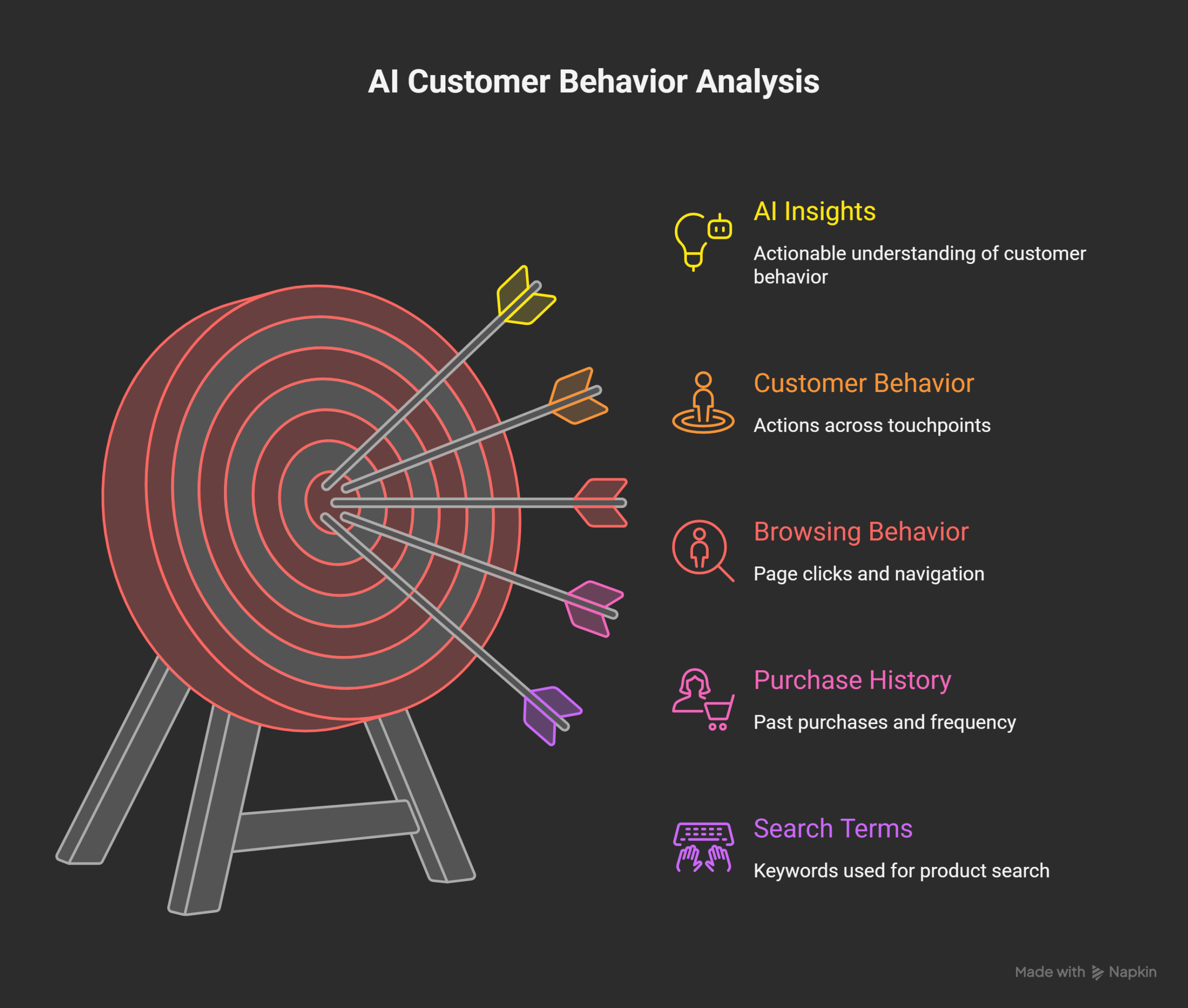
AI studies customer actions across multiple touchpoints. It connects behavior from websites, apps, and devices. This helps identify patterns and buying intent.
Main data sources used by AI include:
-
Browsing behavior and page clicks
-
Purchase history and order frequency
-
Search terms and viewed products
-
Time spent on specific pages
-
Location, device type, and timing
AI combines this data into useful insights. Insights improve with every new interaction. The system learns without manual input.
AI-Powered Product Recommendations
Product recommendations are now highly advanced. AI suggests items before customers actively search. This reduces effort and improves product discovery.
Main types of AI recommendations include:
-
Behaviour-based recommendations
-
Based on browsing and viewing patterns
-
Adjust instantly with customer actions
-
-
Purchase-based recommendations
-
Based on previous buying behaviour
-
Encourage repeat and planned purchases
-
-
Context-based recommendations
-
Adapt by location and time
-
Change offers by season or event
-
These recommendations reduce choice overload. Customers feel guided during shopping decisions.
Personalized Content Throughout the Customer Journey
AI personalizes content beyond product listings. It adapts messaging across every interaction.
Examples of AI-powered content personalization include:
-
Customized homepages for returning shoppers
-
Personalized email offers and subject lines
-
Dynamic banners matching user interests
-
Tailored product descriptions and visuals
Each message feels relevant and timely. This builds stronger emotional brand connections. Customers stay longer and explore more products.
Role of AI Chatbots and Virtual Assistants
AI chatbots improve personalized customer support. They respond instantly without waiting times. Modern chatbots understand context and intent.
Common chatbot personalization features include:
-
Product suggestions through natural conversation
-
Order updates and delivery tracking
-
Answers based on customer history
-
Cross-selling through guided product options
Chatbots increase engagement and satisfaction. They also reduce customer service workload. Support remains active throughout the day.
Benefits of AI Personalization for Businesses
AI personalization delivers strong business benefits. It improves efficiency and revenue growth.
| Benefit | Business Impact |
|---|---|
| Higher conversion rates | Better buying decisions |
| Increased order value | Smarter product bundling |
| Better customer retention | Stronger brand loyalty |
| Reduced marketing waste | Improved campaign targeting |
| Faster optimization | Real-time performance improvement |
These benefits support long-term scalability. Brands gain stronger competitive positioning.
Challenges in AI-Powered Personalization
AI personalization also has key challenges. Poor data quality affects recommendation accuracy. Privacy concerns require careful data handling.
Common challenges faced by brands include:
-
Secure storage of customer data
-
Avoiding uncomfortable over-personalization
-
Clear communication about data usage
-
Integrating AI with existing systems
Addressing these challenges builds user trust. Ethical personalization strengthens brand reputation.
Future Outlook for AI Recommendations
AI personalization will become more predictive. Systems will anticipate needs earlier. Emotion-aware personalization may gradually develop.
Brands investing early gain long-term advantages. Simple and relevant experiences will win customers. AI personalization will shape future e-commerce success.
Social Commerce & Live Shopping Trends
1: What is the primary goal of SEO (Search Engine Optimization)?
Why Social Commerce Matters in 2026
It is reshaping online shopping experiences. Customers now shop from social platforms. Discovery and purchase happen within the same space. This reduces steps and improves buying convenience. Brands gain access to engaged audiences.
In 2026, social platforms act as digital storefronts. Users trust creators and peers. Visual content influences buying. Social proof increases confidence and purchase intent. Brands must meet customers where they already spend time.
Growth of Social Shopping Platforms
Social platforms continue expanding shopping features. They integrate catalogues, payments, and customer support. This creates a complete in-app shopping experience.
Popular social commerce platforms include:
-
Instagram Shops and Reels shopping
-
Facebook Marketplace and in-app stores
-
TikTok Shop and short video commerce
-
YouTube Shopping and live product links
These platforms shorten the customer buying journey. Users browse, interact, and purchase seamlessly.
Live Shopping as a Sales Channel
Live shopping combines entertainment with real-time selling. It mirrors in-store experiences within digital environments. Hosts demonstrate products while viewers interact instantly.
Key features of live shopping include:
-
Real-time product demonstrations
-
Live chat and audience questions
-
Limited-time discounts and offers
-
Direct purchase links during streams
This format builds urgency and excitement. Customers feel involved in the buying process.
Role of Influencers and Creators
Influencers play a central role in social commerce. Audiences trust creators more than traditional advertisements. Creators provide honest product demonstrations and reviews.
Benefits of influencer-led shopping include:
-
Higher engagement and reach
-
Authentic product storytelling
-
Stronger emotional audience connections
-
Increased conversion through trust
Micro-influencers drive niche community engagement. Their recommendations feel personal and relatable.
User-Generated Content and Community Trust
User-generated content strengthens social commerce credibility. Customers trust real experiences from other buyers. Reviews, comments, and shared posts influence decisions.
Common user-generated content formats include:
-
Product review videos
-
Customer photos and testimonials
-
Unboxing clips and reactions
-
Community posts and feedback
This content builds transparency and brand trust. It also reduces buyer hesitation.
Personalization in Social Commerce
AI enhances personalization within social shopping. Feeds display products matching user interests. Ads feel relevant rather than disruptive.
Personalization methods include:
-
Interest-based product recommendations
-
Retargeting based on viewing behaviour
-
Personalized offers during live streams
-
Dynamic content based on engagement
This increases interaction and purchase likelihood. Customers feel understood and valued.
Benefits of Social Commerce for Brands
Social commerce offers strong business advantages. It blends marketing and sales efficiently.
| Benefit | Brand Impact |
|---|---|
| Shorter buying journeys | Faster conversions |
| Higher engagement rates | Better brand visibility |
| Improved customer trust | Stronger loyalty |
| Mobile-first experiences | Increased accessibility |
| Real-time feedback | Faster optimization |
These benefits support scalable digital growth.
Challenges in Social and Live Commerce
Social commerce also presents key challenges. Platform rules and algorithms change frequently. Brands risk over-dependence on third-party platforms.
Common challenges include:
-
Managing influencer partnerships effectively
-
Measuring direct return on investment
-
Handling live stream technical issues
-
Maintaining consistent brand messaging
Proper planning helps reduce these risks. Balanced channel strategies improve stability.
Future Outlook for Social Commerce
Social commerce will continue rapid expansion. Live shopping formats will become more interactive. AR and immersive tools may enhance live streams.
Brands embracing authenticity will perform better. Community-driven shopping will dominate future growth.
Become an AI-powered Digital Marketing Expert
Master AI-Driven Digital Marketing: Learn Core Skills and Tools to Lead the Industry!
Explore CourseVoice & Visual Search in E-Commerce
Why Voice and Visual Search Matter in 2026
Search behaviour is changing faster than before. Typing is no longer the only search method. Customers prefer faster and easier discovery options. Voice and images reduce effort during product search. These tools improve convenience and accessibility.
In 2026, smart devices are widely used. Voice assistants support daily shopping decisions. Cameras help users search using real-world images. This shift changes how brands optimize product discovery. Search now feels more natural and intuitive.
Understanding Voice Search in E-Commerce
Voice search uses spoken commands for discovery. Customers ask questions instead of typing keywords. Queries sound more conversational and specific.
Common voice search examples include:
-
Find black running shoes under budget
-
Order organic coffee beans again
-
Show best deals near me
-
Track my recent order status
Voice searches often show strong purchase intent. Users expect quick and accurate responses.
Optimizing for Voice Search
Voice search optimization requires content changes. Brands must focus on natural language patterns. Short answers work better for voice results.
Key voice optimization strategies include:
-
Use conversational keywords and phrases
-
Answer common customer questions clearly
-
Optimize product descriptions for spoken queries
-
Improve local search and store information
Clear structure improves voice assistant understanding. Better optimization improves search visibility.
Understanding Visual Search in E-Commerce
Visual search allows image-based product discovery. Users upload photos instead of typing descriptions. AI matches images with similar products instantly.
Visual search helps when words are unclear. It supports faster discovery for fashion and decor. Customers find exact matches or close alternatives.
This reduces frustration during product searches. Discovery becomes more engaging and accurate.
How Visual Search Works
Visual search uses image recognition technology. AI analyzes shapes, colours, and patterns. It compares uploaded images with product databases.
Visual search process includes:
-
User uploads or scans an image
-
AI analyzes visual features
-
System finds similar or matching products
-
Results appear with purchase options
Accuracy improves with better image data. High-quality images improve matching results.
Use Cases of Visual Search
Visual search supports multiple shopping scenarios. It works best for visual-driven categories.
Common visual search use cases include:
-
Finding clothing from social media photos
-
Identifying home decor styles
-
Matching furniture and accessories
-
Discovering products seen offline
This bridges online and offline shopping. Discovery feels faster and more intuitive.
Role of AI in Voice and Visual Search
AI plays a central role in search accuracy. It understands intent behind voice queries. It recognizes complex visual patterns quickly.
AI improves search by:
-
Learning from past user behaviour
-
Improving response accuracy over time
-
Adapting to language and accent variations
-
Enhancing image recognition capabilities
Smarter AI delivers better shopping experiences.
Benefits of Voice and Visual Search
These search tools offer strong advantages. They simplify product discovery significantly.
| Benefit | Customer Impact |
|---|---|
| Faster searches | Reduced effort |
| Better accuracy | Improved satisfaction |
| Natural interaction | Higher engagement |
| Mobile-friendly usage | Greater convenience |
| Inclusive access | Wider user reach |
These benefits increase conversion potential.
Challenges in Voice and Visual Search
Voice and visual search present challenges. Accuracy depends on data quality. Language diversity affects voice recognition.
Common challenges include:
-
Misinterpretation of voice commands
-
Poor image quality uploads
-
Limited product data tagging
-
High implementation costs
Continuous optimization helps overcome limitations. Testing improves long-term performance.
Future Outlook for Search in E-Commerce
Voice and visual search adoption will grow. Search will become more predictive. AR may enhance visual discovery experiences.
Brands investing early gain search advantages. Easy discovery will drive future conversions.
Join Our Online Digital Marketing Course & Learn the Fundamentals!
Zero-Click Checkout & Payment Innovations
Why Checkout Experience Matters in 2026
Checkout experience directly affects conversion rates. Slow checkouts cause customers to abandon carts. Shoppers expect fast, simple, and secure payments. Any extra step increases frustration and drop-offs. Zero-click checkout removes unnecessary buying friction.
In 2026, convenience drives customer loyalty. Mobile shopping dominates most online purchases. Customers prefer instant confirmation and minimal input. Payment speed influences overall brand perception. Checkout innovation becomes a competitive advantage.
What Is Zero-Click Checkout
Zero-click checkout enables instant purchase completion. It removes repeated form filling and confirmations. Payments happen automatically using saved preferences.
Customers authorize purchases with minimal interaction. Biometrics or stored credentials confirm identity. The process feels smooth and almost invisible.
This model reduces effort and decision delays. It works best for repeat customers.
How Zero-Click Checkout Works
Zero-click checkout relies on stored customer data. Payment details are securely saved after first purchase. Shipping preferences are also stored safely.
Key components of zero-click checkout include:
-
Saved payment methods and addresses
-
Secure authentication systems
-
Device or biometric verification
-
Trusted account-based purchasing
Once enabled, purchases complete instantly. Customers receive immediate order confirmation.
Biometric and Authentication Innovations
Biometric payments improve security and speed. They replace passwords with physical verification.
Common biometric payment methods include:
-
Fingerprint authentication
-
Facial recognition systems
-
Voice-based identity verification
These methods reduce fraud risks significantly. They also improve user confidence. Authentication becomes faster and safer.
Role of Digital Wallets
Digital wallets power modern checkout experiences. They store payment details securely in one place. Wallets reduce manual entry during purchases.
Popular digital wallet features include:
-
One-tap payments across platforms
-
Secure tokenized transactions
-
Multi-device payment access
-
Integrated loyalty and offers
Wallet usage increases mobile checkout success. Customers trust well-known wallet providers.
Buy Now, Pay Later Innovations
Buy Now, Pay Later options continue growing. They provide flexible payment alternatives. Customers spread costs without credit cards.
Key BNPL benefits include:
-
Increased affordability for customers
-
Higher average order values
-
Reduced purchase hesitation
-
Flexible installment options
BNPL integrates directly into checkout flows. Approval happens instantly for eligible users.
Embedded and Invisible Payments
Embedded payments blend checkout into experiences. Customers pay without leaving the platform. The process feels natural and uninterrupted.
Examples of embedded payments include:
-
In-app purchases on social platforms
-
Payments during live shopping streams
-
Voice-activated assistant purchases
-
Subscription renewals without prompts
Invisible payments reduce friction dramatically. They support impulse and repeat purchases.
Subscription-Based Payment Automation
Subscriptions rely heavily on automated payments. Zero-click systems support recurring billing smoothly. Customers enjoy uninterrupted service access.
Subscription payment advantages include:
-
Predictable revenue for brands
-
Convenience for returning customers
-
Reduced churn through seamless renewals
-
Automated billing and invoicing
Clear communication builds trust in subscriptions. Transparency prevents billing-related dissatisfaction.
Security and Trust in Payments
Security remains critical in payment innovation. Customers expect strong protection for financial data. Trust influences willingness to save payment details.
Key security measures include:
-
End-to-end encryption systems
-
Tokenization of payment information
-
Multi-factor authentication methods
-
Fraud detection powered by AI
Strong security builds long-term customer confidence.
Benefits of Zero-Click Checkout for Businesses
Zero-click checkout offers measurable advantages. It improves performance across key metrics.
| Benefit | Business Impact |
|---|---|
| Faster checkout | Higher conversions |
| Lower cart abandonment | Increased completed orders |
| Better mobile experience | Higher mobile sales |
| Repeat purchase growth | Stronger customer retention |
| Reduced checkout errors | Improved customer satisfaction |
These benefits support scalable growth.
Challenges in Zero-Click Checkout Adoption
Zero-click checkout also presents challenges. Data privacy regulations require strict compliance. Customers may fear accidental purchases.
Common challenges include:
-
Managing secure data storage
-
Gaining initial customer trust
-
Handling refunds and disputes
-
Integrating multiple payment systems
Clear controls reduce accidental purchase risks. User education improves acceptance rates.
Future Outlook for Checkout Innovations
Checkout experiences will become fully invisible. Payments will blend into daily digital actions. Voice and wearable payments may expand further.
Brands investing early gain long-term advantages. Fast, simple payments will define customer loyalty.
Retention, Loyalty & Subscription-Based Growth
Why Retention Matters More in 2026
Customer retention is now a top business priority. Acquiring new customers costs more than retaining existing ones. Repeat buyers generate stable and predictable revenue. Loyal customers trust brands and spend more. Retention strategies support long-term business sustainability.
In 2026, competition is intense across all categories. Customers switch brands easily with many choices. Strong retention reduces dependency on paid advertising. Loyalty creates emotional connections with customers. Retention-focused brands achieve better profitability.
Understanding Customer Retention in E-Commerce
Retention focuses on encouraging repeat purchases. It builds relationships beyond one-time transactions. Consistent experiences increase customer satisfaction.
Retention depends on trust and reliability. Customers return when expectations are met consistently. Personalized communication strengthens these relationships.
Retention also supports better customer lifetime value. Long-term customers cost less to serve.
Role of Loyalty Programs in 2026
Loyalty programs reward repeat customer behaviour. They encourage continued engagement with brands. Modern programs go beyond simple point systems.
Common loyalty program types include:
-
Points earned per purchase
-
Tier-based membership levels
-
Cashback or wallet credits
-
Exclusive access and early offers
Gamified rewards increase participation and excitement. Customers feel valued and recognized.
Personalization in Loyalty Experiences
AI personalizes loyalty rewards effectively. Rewards match customer preferences and habits. Personalization increases program relevance.
Examples of personalized loyalty features include:
-
Customized reward recommendations
-
Birthday or anniversary benefits
-
Behaviour-based bonus points
-
Personalized redemption options
Relevant rewards improve customer engagement. Customers stay active within loyalty programs.
Subscription-Based Growth Models
Subscriptions provide recurring revenue streams. They ensure predictable income for businesses. Customers enjoy convenience and regular deliveries.
Subscription models work across multiple industries. They support products, services, and digital content. Subscriptions reduce purchase effort for customers.
Types of E-Commerce Subscriptions
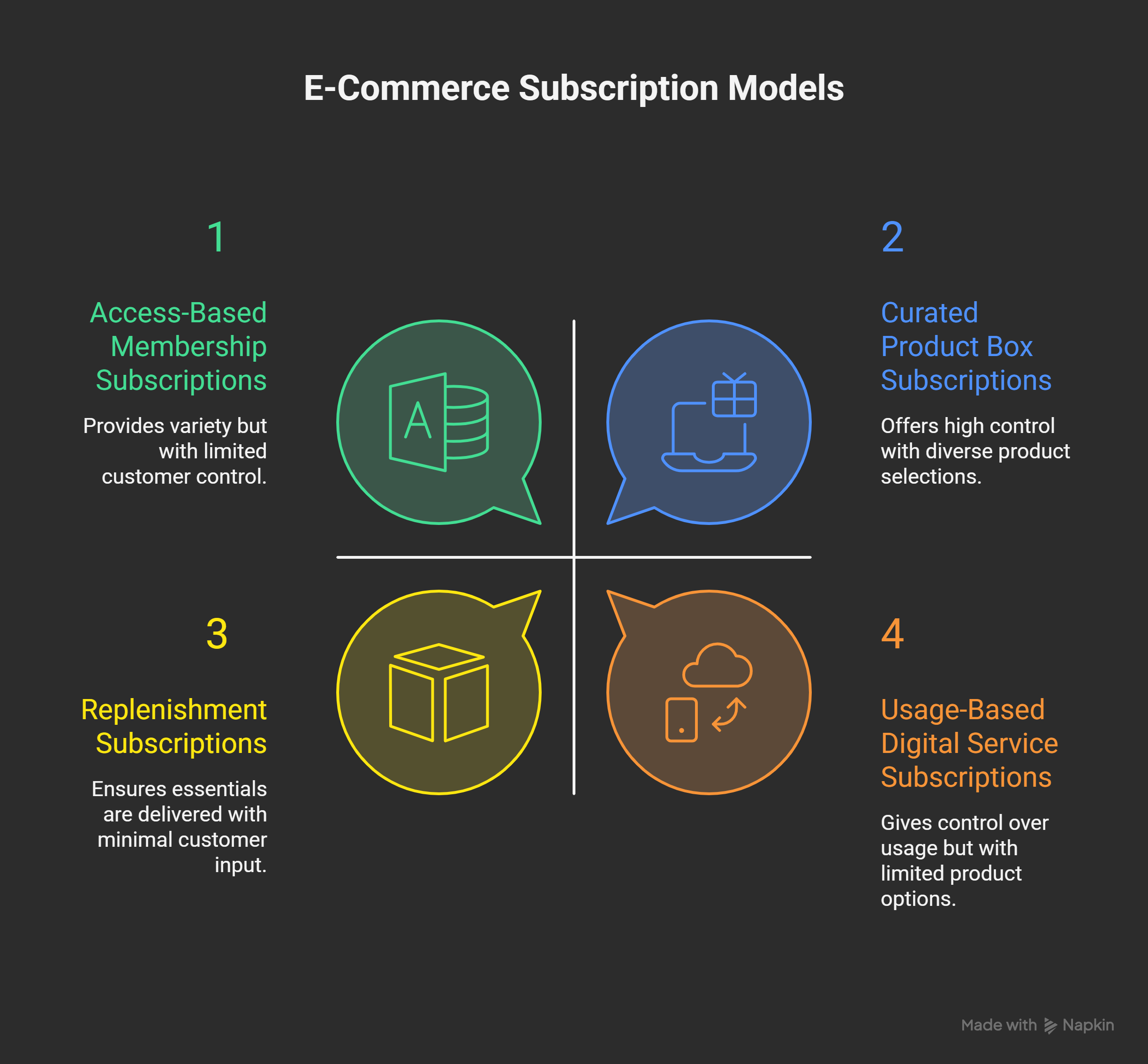
Different subscription models serve varied customer needs. Brands often combine multiple subscription types.
Common subscription models include:
-
Replenishment subscriptions for essentials
-
Curated product box subscriptions
-
Access-based membership subscriptions
-
Usage-based digital service subscriptions
Flexibility improves subscription adoption rates. Customers prefer control over frequency and pricing.
Benefits of Subscription-Based Growth
Subscriptions offer strong advantages for businesses. They support sustainable and scalable growth.
| Benefit | Business Impact |
|---|---|
| Predictable revenue | Better financial planning |
| Higher customer lifetime value | Long-term profitability |
| Reduced marketing costs | Lower acquisition spend |
| Improved customer retention | Stronger brand loyalty |
| Better demand forecasting | Efficient inventory planning |
These benefits improve operational efficiency.
Retention Through Post-Purchase Engagement
Post-purchase engagement strengthens customer relationships. It continues communication after the sale. Follow-ups show care beyond transactions.
Effective post-purchase strategies include:
-
Order updates and delivery notifications
-
Product usage tips and guides
-
Review and feedback requests
-
Personalized reorder reminders
These touchpoints keep brands memorable. Customers feel supported and appreciated.
Reducing Churn in Subscriptions
Churn reduction is critical for subscription success. Customers cancel due to lack of perceived value. Proactive engagement prevents unnecessary cancellations.
Common churn reduction strategies include:
-
Flexible pause or skip options
-
Easy plan customization
-
Timely renewal reminders
-
Personalized retention offers
Transparency builds trust and reduces dissatisfaction.
Challenges in Retention and Subscription Growth
Retention strategies face several challenges. Customer expectations continue rising. Poor experiences quickly lead to churn.
Common challenges include:
-
Maintaining consistent service quality
-
Managing reward program costs
-
Preventing subscription fatigue
-
Balancing incentives and profitability
Data-driven decisions help manage these challenges. Continuous improvement supports long-term success.
Future Outlook for Retention and Loyalty
Retention strategies will become more predictive. AI will identify churn risks earlier. Loyalty programs will feel more experiential.
Subscriptions will focus on flexibility and value. Retention will define future e-commerce leaders.
Become an AI-powered Digital Marketing Expert
Master AI-Driven Digital Marketing: Learn Core Skills and Tools to Lead the Industry!
Explore CourseChallenges & Opportunities in 2026
Changing Digital Business Environment
The digital market is becoming more complex. Businesses face constant change across online ecosystems. Technology adoption speeds continue increasing rapidly. Customer expectations evolve faster than business readiness. Market uncertainty affects long-term planning decisions.
In 2026, adaptability becomes a survival skill. Rigid strategies struggle in dynamic environments. Brands must monitor trends continuously. Quick response determines competitive positioning. Flexibility separates leaders from laggards.
Data Privacy and Regulatory Challenges
Data regulations are tightening across global markets. Governments demand stronger consumer data protection. Compliance requirements vary across regions.
Businesses must handle customer data responsibly. Non-compliance risks heavy penalties and reputational damage. Consent management becomes more complex.
Key regulatory challenges include:
-
Managing cross-border data transfer laws
-
Ensuring transparent data usage policies
-
Updating systems for compliance changes
-
Training teams on privacy standards
Strong governance reduces legal and trust risks.
Rising Customer Expectations
Customers expect flawless digital experiences. Any service failure impacts brand perception. Patience for errors is decreasing.
Speed, clarity, and reliability are expected standards. Support response delays frustrate customers quickly. Consistency across platforms becomes essential.
Meeting expectations requires continuous improvement. Brands must listen actively to customer feedback.
Market Saturation and Competition
Online markets are becoming overcrowded. New brands launch faster than ever. Price competition reduces profit margins.
Standing out becomes increasingly difficult. Differentiation requires clear value propositions. Copycat offerings flood popular categories.
Competitive challenges include:
-
Rising advertising costs
-
Limited attention spans
-
Reduced brand loyalty
-
Faster trend imitation
Strategic positioning creates growth opportunities.
Operational and Supply Chain Pressures
Supply chains face ongoing disruptions. Global events impact sourcing and delivery timelines. Costs fluctuate unpredictably.
Inventory management becomes more challenging. Overstocking increases financial risk. Understocking leads to lost sales.
Operational challenges include:
-
Managing supplier reliability
-
Handling cross-border logistics
-
Reducing delivery delays
-
Controlling operational costs
Operational efficiency becomes a growth driver.
Talent and Skill Gaps
Digital skill demand continues rising. Qualified professionals remain in short supply. Hiring competition increases across industries.
Teams require constant upskilling. Technology changes make skills outdated quickly. Training budgets strain smaller businesses.
Skill-related challenges include:
-
Finding experienced digital talent
-
Retaining skilled employees
-
Managing remote teams effectively
-
Keeping pace with tool changes
Investment in people creates long-term advantages.
Infrastructure and Technology Readiness
Not all businesses have modern infrastructure. Legacy systems limit scalability and innovation. Integration challenges slow digital transformation.
System downtime impacts customer trust. Technology upgrades require significant investment. Poor implementation increases operational risk.
Reliable infrastructure supports sustainable growth.
Sustainability and Ethical Expectations
Sustainability expectations are rising steadily. Customers prefer responsible business practices. Environmental impact influences buying decisions.
Brands face pressure to reduce waste. Ethical sourcing gains greater importance. Transparency builds credibility with conscious consumers.
Sustainability challenges include:
-
Measuring environmental impact accurately
-
Managing sustainable sourcing costs
-
Communicating efforts transparently
-
Avoiding misleading sustainability claims
Responsible practices create long-term brand value.
Opportunities Through First-Party Data
First-party data becomes increasingly valuable. It offers direct customer insights. Dependency on external platforms decreases.
Brands can build stronger customer relationships. Direct feedback improves product decisions. Controlled data improves strategic planning.
Data ownership supports long-term independence.
Expansion into Emerging Markets
Emerging markets offer strong growth potential. Internet access continues expanding globally. Digital adoption rises in developing regions.
Local customization becomes a key success factor. Understanding regional behaviour drives market entry success. Strategic expansion increases revenue diversification.
Innovation Through Collaboration
Partnerships unlock new growth opportunities. Collaborations reduce development risks. Shared resources increase operational efficiency.
Brands can enter new segments faster. Innovation accelerates through shared expertise. Strategic alliances improve competitive positioning.
Future Outlook for 2026
Challenges will continue shaping digital strategies. Opportunities reward adaptable and prepared businesses. Success depends on balanced decision-making.
Brands must plan with long-term vision. Continuous learning supports sustainable progress. Prepared businesses will thrive in 2026.
Conclusion
The year 2026 demands smarter and flexible business thinking. Digital change will not slow down anytime soon. Brands must stay alert to shifting market conditions. Customer expectations will continue rising steadily. Prepared businesses can handle challenges with confidence. Clear strategies help reduce risk and uncertainty. Adaptability becomes the strongest competitive advantage.
Opportunities in 2026 reward innovation and responsibility. Data ownership supports better long-term decisions. Emerging markets offer strong growth potential. Ethical and sustainable practices build customer trust. Skilled teams drive consistent digital performance. Collaboration opens doors to faster innovation. Future success favours brands ready to evolve.
Frequently Asked Questions
Why is 2026 a turning point for e-commerce marketing?
2026 marks a major shift because customer expectations, technology, and competition are evolving together. Buyers now expect fast, personalized, and seamless shopping experiences across all platforms. Traditional marketing methods are losing effectiveness, while AI, social commerce, advanced search, and frictionless payments are becoming essential. Brands that adapt early gain long-term growth, trust, and competitive advantage.
How does AI-powered personalization improve online shopping experiences?
AI personalization uses customer data to deliver relevant products, content, and offers in real time. Instead of generic experiences, shoppers see recommendations based on their behavior, preferences, and past purchases. This reduces decision fatigue, increases engagement, and builds confidence. Over time, AI systems learn continuously, making personalization more accurate and valuable.
What customer data is used for AI personalization, and how is privacy protected?
AI uses first-party data such as browsing activity, purchase history, search behavior, device type, and location. Privacy is protected through encryption, tokenization, and strict data access controls. In 2026, brands must comply with data regulations and clearly explain how customer data is used. Transparency and ethical practices are critical for maintaining trust.
What is social commerce, and why is it growing rapidly?
Social commerce allows customers to discover and purchase products directly on social media platforms. It is growing because it combines convenience, trust, and engagement in one place. Visual content, creator recommendations, and social proof strongly influence buying decisions. Fewer steps between discovery and purchase increase conversion rates.
How does live shopping impact customer purchasing decisions?
Live shopping creates interactive, real-time experiences similar to in-store shopping. Customers can watch product demonstrations, ask questions, and access limited-time offers instantly. This builds urgency, trust, and emotional connection. As a result, live shopping often delivers higher engagement and faster conversions.
Why are voice and visual search important for e-commerce in 2026?
Voice and visual search offer faster and more natural product discovery. Voice search supports conversational queries through smart devices, while visual search lets users find products using images. These methods improve accessibility, reduce effort, and enhance customer satisfaction. Brands that optimize for these searches improve visibility and relevance.
What is zero-click checkout, and how does it reduce cart abandonment?
Zero-click checkout allows customers to complete purchases instantly using saved payment and shipping details. By removing extra steps, it reduces frustration and cart abandonment. Secure authentication methods ensure safety while maintaining speed. This checkout model is especially effective for repeat customers.
How do digital wallets and Buy Now, Pay Later options influence sales?
Digital wallets enable fast, one-tap payments, while Buy Now, Pay Later options offer flexible payment schedules. These methods reduce purchase hesitation and increase average order value. They also improve mobile shopping experiences. Offering multiple payment options is essential for meeting diverse customer preferences.
Why is customer retention more important than acquisition in 2026?
Customer retention is more cost-effective than acquiring new customers in competitive markets. Repeat buyers generate stable revenue, have higher lifetime value, and require less marketing spend. Loyalty programs, personalization, and subscriptions strengthen long-term relationships. Retention-focused strategies improve profitability and sustainability.
What are the key challenges and opportunities for e-commerce businesses in 2026?
Challenges include data privacy regulations, rising customer expectations, intense competition, and operational pressures. However, opportunities exist in first-party data ownership, emerging markets, ethical practices, and strategic partnerships. Businesses that stay adaptable and customer-focused can turn challenges into long-term growth advantages.