Table of Contents
Key Takeaways:
Early childhood education programs in India play a vital role in shaping a child’s early learning and development. Designed for children between the ages of 3 and 6, these programs focus on building a strong foundation through play-based learning, basic literacy, and social skills. From private preschools to government-supported Anganwadi centers, India offers a wide range of early education options. With growing awareness and the support of the National Education Policy (NEP) 2020, the focus on quality early childhood care and education (ECCE) has become stronger than ever, helping children prepare for a smooth and confident start to formal schooling.
Register for the Entri Elevate Montessori Teacher Training Program! Join Now!
What is Early Childhood Education?
Early Childhood Education (ECE) refers to the learning and development of children from birth to around 6 years of age. This stage is very important because it builds the foundation for a child’s future learning, behavior, and overall growth. During these early years, children learn quickly through play, exploration, and everyday experiences.
ECE is not just about teaching reading or writing. It focuses on the overall development of a child, including their thinking skills, emotions, social behavior, and physical growth. The goal is to help children become confident, curious, and ready for school.
1. Learning Through Play
One of the key parts of early childhood education is play-based learning. Children learn best when they are playing, exploring, and having fun. Activities like games, storytelling, drawing, and music help children understand new ideas in a natural way.
2. Building Basic Skills
ECE helps children develop basic skills such as recognizing letters, numbers, colors, and shapes. It also improves language skills, listening, and communication, which are important for future learning.
3. Social and Emotional Development
Children learn how to interact with others, share, take turns, and express their feelings. This helps them build friendships and develop emotional confidence.
4. Encouraging Curiosity and Creativity
Early education encourages children to ask questions, explore their surroundings, and think creatively. This builds a love for learning from a young age.
5. Preparing for School
ECE helps children get used to routines, following instructions, and being part of a classroom. This makes the transition to formal schooling much easier.
Structure of Early Childhood Education Programs
Early Childhood Education (ECE) programs are carefully designed to support the overall growth of young children in a simple, engaging, and age-appropriate way. The structure usually focuses on creating a balance between learning, play, and daily routines so children feel comfortable and happy while learning.
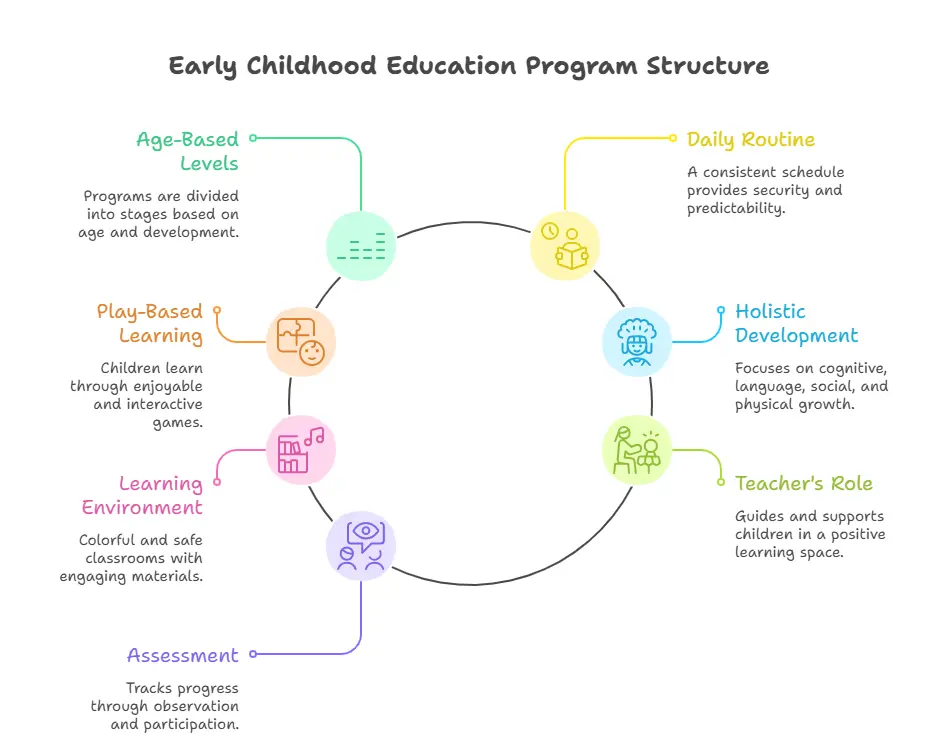
1. Age-Based Levels
ECE programs are divided into different levels based on the child’s age and development. Common stages include:
- Nursery (3–4 years)
- LKG – Lower Kindergarten (4–5 years)
- UKG – Upper Kindergarten (5–6 years)
Each level introduces slightly more advanced skills while keeping activities fun and simple.
2. Daily Routine and Schedule
A typical day in an early education program follows a gentle routine. This may include:
- Welcome time and free play
- Circle time (songs, rhymes, storytelling)
- Activity time (art, puzzles, games)
- Snack and break time
- Outdoor play
- Closing activities
Having a routine helps children feel secure and understand what to expect each day.
3. Play-Based Learning Approach
Most ECE programs use a play-based approach. Children learn through activities like games, role play, music, and creative tasks. This makes learning enjoyable and helps children understand concepts naturally.
4. Focus on Holistic Development
The structure of ECE programs is designed to support all areas of a child’s growth:
- Cognitive development (thinking and problem-solving)
- Language development (speaking and listening)
- Social and emotional development (sharing, expressing feelings)
- Physical development (movement and coordination)
5. Learning Materials and Environment
Classrooms are colorful, safe, and filled with learning materials like toys, books, charts, and activity kits. These materials are designed to encourage exploration and hands-on learning.
6. Teacher’s Role
Teachers in ECE act as guides and caregivers. They support children, encourage participation, and create a positive and safe learning environment. They also observe each child’s progress and provide gentle guidance.
7. Assessment and Progress Tracking
Instead of formal exams, children are assessed through observation, activities, and participation. Teachers track development and share feedback with parents regularly.
Types of Preschool Programs in India
In India, preschool education offers a variety of programs designed to meet the different needs of children and families. Each type follows a unique approach to help children learn, grow, and prepare for formal schooling in a comfortable and engaging way.
1. Play Schools
Play schools are often the first step in a child’s learning journey. These programs focus on helping children adjust to a school environment through fun activities like games, music, storytelling, and free play. The main aim is to develop social skills, confidence, and basic communication in a relaxed setting.
2. Montessori Schools
Montessori preschools follow a child-centered approach where children learn independently at their own pace. Classrooms are designed with special learning materials that encourage hands-on activities. Teachers act as guides, helping children explore and discover rather than giving direct instructions. This method builds independence, focus, and problem-solving skills.
3. Kindergarten (LKG & UKG)
Kindergarten programs are more structured and focus on preparing children for primary school. They include activities related to reading, writing, numbers, and general knowledge. Children follow a fixed daily routine, which helps them develop discipline, listening skills, and the ability to follow instructions.
4. Anganwadi Centers (Government Programs)
Anganwadi centers are part of the Indian government’s ICDS (Integrated Child Development Services) program. These centers provide early education along with nutrition and healthcare support, especially for children in rural and low-income communities. They play a key role in improving access to early education across the country.
5. Waldorf (Steiner) Schools
Waldorf preschools focus on creativity, imagination, and emotional development. Children engage in activities like storytelling, art, music, and role play. There is less emphasis on early academics and more focus on natural learning and creative expression.
6. Reggio Emilia Approach
This approach encourages children to express themselves through art, communication, and exploration. Learning is based on children’s interests, and teachers support them in discovering new ideas. It promotes creativity, teamwork, and critical thinking.
7. Daycare-Based Preschool Programs
Some daycare centers combine childcare with early education. These programs are especially helpful for working parents, as they provide a safe environment along with structured learning activities throughout the day.
Montessori vs Traditional Preschool Programs
Montessori and traditional preschool programs are two popular early education options, but they differ in how children are taught and how classrooms are managed.
In a Montessori preschool, learning is mostly led by the child. Children are free to choose activities based on their interests and work at their own pace. The classroom is calm, organized, and filled with special materials that encourage hands-on learning. Teachers do not constantly instruct but instead observe and guide when needed. This approach helps children become independent, confident, and more responsible for their own learning.
In contrast, traditional preschool programs follow a more structured and teacher-led approach. The teacher plans daily lessons and leads the entire class through activities such as storytelling, writing, counting, and group play. Children follow a fixed routine, which helps them understand discipline and time management. This system is designed to prepare children for formal schooling, where structure and schedules are important.
Another key difference is how children interact. In Montessori classrooms, children of different ages learn together, which encourages peer learning and cooperation. In traditional preschools, children are grouped by age, which helps them connect with peers at a similar developmental level.
The learning style also varies. Montessori focuses on learning by doing, using real-life activities and materials. Traditional preschools rely more on books, worksheets, and teacher explanations to teach basic concepts.
Both methods have their advantages. Montessori supports creativity, independence, and self-paced learning. Traditional preschool builds strong academic basics, social skills, and readiness for a school routine.
Curriculum Used in Early Childhood Education
The curriculum in Early Childhood Education (ECE) is designed to help young children learn in a fun, simple, and natural way. At this stage, the focus is not only on academics but also on the overall development of the child, including social, emotional, language, and physical growth. The curriculum is flexible and activity-based, allowing children to explore and learn through everyday experiences.
1. Play-Based Learning
Play is the most important part of early learning. Children learn through games, storytelling, music, art, and role play. These activities make learning enjoyable and help children understand concepts without stress or pressure.
2. Basic Academic Skills
The curriculum introduces simple concepts such as letters, numbers, colors, and shapes. These are taught using fun and interactive methods like flashcards, toys, puzzles, and activities, making it easier for children to understand and remember.
3. Language Development
Children are encouraged to speak, listen, and express their ideas. Activities like rhymes, storytelling, and group discussions help improve vocabulary, pronunciation, and communication skills.
4. Social and Emotional Development
Children learn how to share, take turns, follow instructions, and express their feelings. This helps them build friendships, understand emotions, and develop confidence in social situations.
5. Physical Development
Physical activities such as running, jumping, dancing, and outdoor play are an important part of the curriculum. These activities help improve motor skills, balance, coordination, and overall health.
6. Activity-Based and Theme-Based Learning
Many ECE programs use themes like animals, seasons, or family to teach different topics in a connected way. This approach makes learning more interesting and helps children relate to real-life situations.
7. Based on Educational Guidelines (NEP 2020)
In India, most early childhood programs follow NEP 2020 guidelines, which promote flexible, child-friendly, and activity-based learning. The focus is on building strong foundations rather than pushing academic pressure.
Benefits of Early Childhood Education Programs
Early Childhood Education (ECE) programs are very important for a child’s early growth and development. These programs are designed to support not just academic learning, but also social, emotional, and physical development. They help children build a strong foundation that supports their future learning and overall personality.
1. Builds Strong Learning Foundation
ECE introduces children to basic concepts like letters, numbers, colors, and shapes. These are taught in fun and simple ways, making it easier for children to understand and remember. This strong base helps them perform better in later stages of education.
2. Improves Social Skills
Children learn how to interact with others in a group setting. They practice sharing, taking turns, and working together. These skills help them build friendships and adjust easily to school life.
3. Enhances Communication and Language Skills
Through storytelling, rhymes, and conversations, children learn to express their thoughts and ideas clearly. This improves their vocabulary, speaking, and listening skills.
4. Supports Emotional Development
ECE programs help children understand and manage their emotions. They learn to express feelings, handle small challenges, and build self-confidence in a safe environment.
5. Encourages Physical Development
Activities like running, jumping, dancing, and outdoor play help children improve their motor skills, coordination, and overall physical health.
6. Develops Curiosity and Creativity
Children are encouraged to explore, ask questions, and try new things. Creative activities like drawing, music, and role play help develop imagination and a love for learning.
7. Prepares for Formal Schooling
ECE programs introduce children to classroom routines, following instructions, and structured learning. This makes the transition to primary school smoother and less stressful.
8. Promotes Independence and Confidence
Children learn to do small tasks on their own, make choices, and solve simple problems. This builds independence and boosts their confidence.
9. Supports Holistic Development
ECE focuses on all areas of development—cognitive, social, emotional, and physical—ensuring balanced growth of the child.
Register for the Entri Elevate Montessori Teacher Training Program! Join Now!
Conclusion
Get Certified & Start Your Montessori Career
Montessori Teacher Training Course by Entri App: Gain expert skills, earn certification, and kickstart your teaching career.
Join Now!Frequently Asked Questions
What is early childhood education in India?
Early childhood education in India refers to learning programs designed for children between the ages of 3 and 6. These programs focus on overall development, including basic academics, social skills, emotional growth, and physical activities through play-based learning.
What are the different types of early childhood education programs in India?
India offers various programs such as play schools, Montessori schools, kindergarten (LKG & UKG), Anganwadi centers, Waldorf schools, and daycare-based preschools. Each follows a different teaching style and approach.
What is the right age to start preschool in India?
Most children start preschool between the ages of 2.5 and 3 years. At this stage, they are ready to explore, interact with others, and begin basic learning activities.
What is the role of NEP 2020 in early childhood education?
The National Education Policy (NEP) 2020 highlights the importance of Early Childhood Care and Education (ECCE). It promotes play-based, activity-based, and child-friendly learning methods to improve the quality of early education in India.
Are Anganwadi centers effective for early education?
Yes, Anganwadi centers play an important role, especially in rural and low-income areas. They provide basic early education along with nutrition and health support, helping children develop essential skills.