Table of Contents
Choosing the right early education for your child can feel confusing, especially with so many options available. Two of the most common choices are Montessori and traditional Kindergarten, and while both help children learn and grow, they do so in very different ways.
Montessori specializes in independence and mastery of a child’s individual pace while kindergarten simultaneously follows an extra grounded, teacher-led approach. In this blog, we will explain the skills and benefits of each that will help you determine which could best for your child.
Key Takeaways:
- While Montessori and kindergarten are each excellent, they practice in different ways.
- Montessori, we children should explore at their own pace and become more accurate.
- Kindergarten prepares young people for regular school by following a regular routine.
- Montessori classrooms are gestural, while kindergarten is extra dependent.
Register for the Entri Elevate Montessori Teacher Training Program! Join Now!
Introduction
Choosing the right early school for a child is very important. Many parents often get confused between Montessori and Kindergarten methods. Both are popular ways of early learning, but they follow different teaching styles.
Montessori education focuses on self-learning, where children learn by doing activities on their own. Kindergarten focuses more on group learning, play, and teacher-led activities.
Both systems help children grow in knowledge, skills, and confidence, but in different ways. In this blog, we will look at the key features and benefits of Montessori and Kindergarten to understand which one may suit a child better.
Montessori Education
- Children learn by doing activities
- They learn at their own speed
- Children choose what they want to learn
- Focus on independence and hands-on learning
Kindergarten Education
- Follows a fixed daily routine
- Teacher guides all lessons
- Helps children get ready for school
Main Difference
- Montessori = child-led learning
- Kindergarten = teacher-led learning
Why This Matters
- Both methods help children learn and grow
- But every child is different
- Some children like freedom
- Some children need structure and guidance
What is Montessori Education?
Montessori education is a simple and natural way of teaching children. It helps children learn at their own speed and in their own style. It was created by Dr. Maria Montessori. She believed that children learn best when they are free to explore and do things by themselves.
Main Idea
- Children are not forced to learn in one fixed way
- They are allowed to explore, choose, and learn by doing
- Teacher acts like a guide, not only someone who gives lessons
Classroom Style
- Classroom is calm, clean, and well-organized
- Children can move freely and choose activities
- Different learning materials are placed in the classroom
- Examples: blocks, beads, puzzles, letters, and number tools
Learning Method
- Children learn by doing activities, not just listening
- Helps them understand things better
- Makes learning more fun and interesting
- Supports thinking, problem-solving, and creativity
Mixed Age Learning
- Children of different ages study together
- Younger children learn by watching older children
- Older children learn leadership by helping younger ones
- Builds teamwork and respect
Life Skills
Montessori is not only about studies. It also teaches life skills like:
- Cleaning up after work
- Keeping things organized
- Taking care of surroundings
- Learning responsibility
Benefits of Montessori
- Builds independence in children
- Improves confidence
- Encourages curiosity and interest in learning
- Helps children make their own choices
- Develops focus and concentration
Simple Meaning
- Montessori education means learning through freedom, activity, and experience
- It helps children become independent, confident, and responsible learners
What is Kindergarten Education?
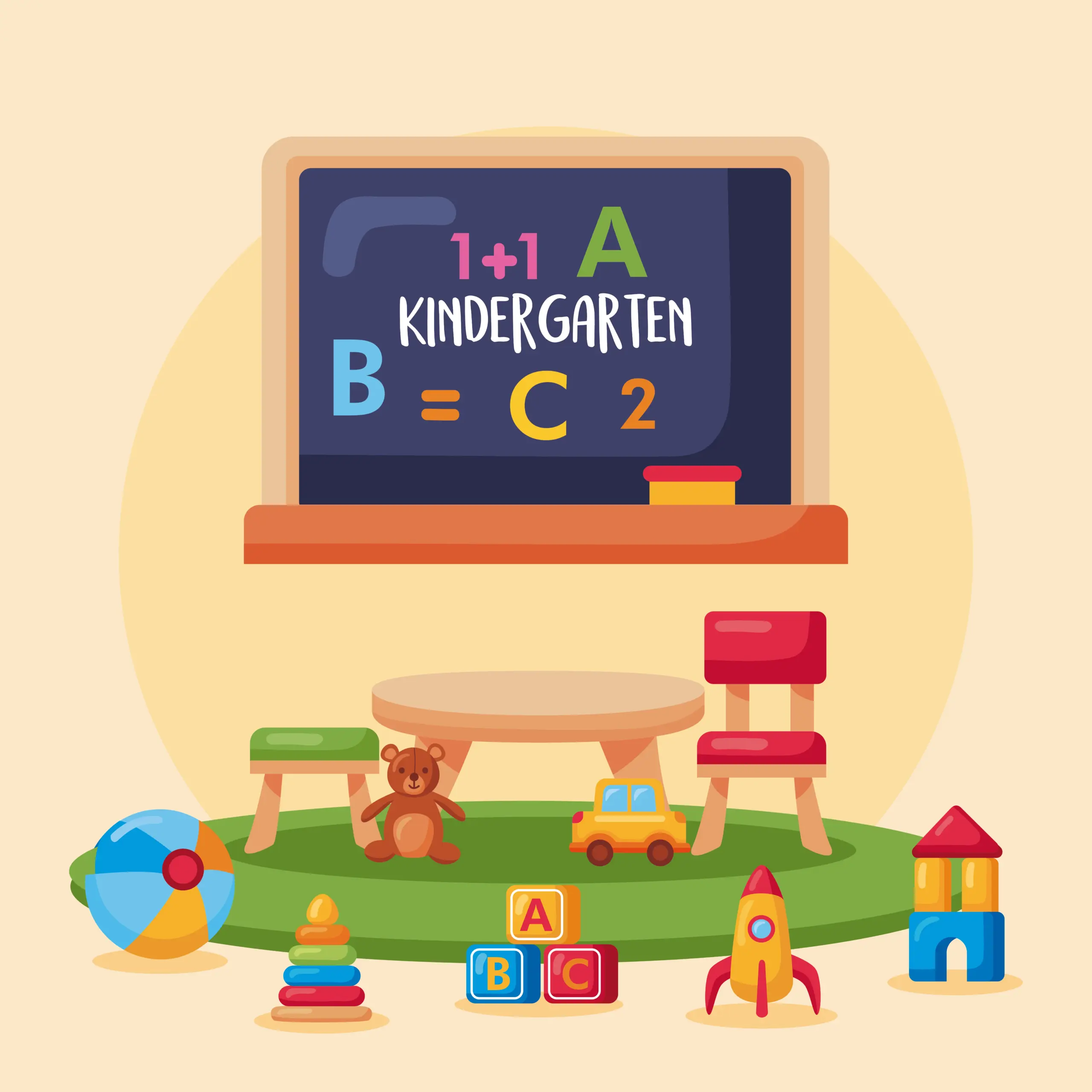
Kindergarten is an easy and traditional way to teach young children. It is generally for children between the ages of four and six. Kindergarten is the first stage of formal schooling. This makes it easier for young people to research their main skills and prepare for primary school.
Classroom Style
- Teacher leads the class and teaches lessons
- Children follow a fixed daily routine
- Activities are planned and organized
What Children Learn
In Kindergarten, children learn basic skills like:
- Reading simple words
- Writing letters and numbers
- Basic math (counting, addition)
- Drawing and coloring
- Storytelling and songs
Teacher Role
- Teacher gives instructions and explains lessons
- Children listen and follow the teacher
- Teacher helps children complete tasks step by step
Group Learning
- Children are grouped by the same age
- They learn and play together
- Activities are done in groups
- Helps children build friendship and teamwork
Social Skills
Kindergarten helps children learn how to:
- Share with others
- Take turns while playing
- Listen to teachers and friends
- Work and play in groups
- Build good behavior with others
Learning Style
- Follows a planned curriculum
- Each lesson has a learning goal
- Children are guided in a structured way
- Progress is checked through activities and simple tests
Benefits of Kindergarten
- Builds strong basic learning skills
- Helps children adjust to school life
- Teaches discipline and routine
- Improves communication and social skills
- Prepares children for primary education
Key Differences Between Montessori and Kindergarten
| Aspect | Montessori Education | Kindergarten Education |
|---|---|---|
| Teaching Style | Child learns by themselves; teacher helps | Teacher teaches and leads the class |
| Learning Speed | Each child learns at their own speed | All children learn at the same pace |
| Classroom | Flexible and free environment | Fixed timetable and routine |
| Curriculum | Based on child’s interest | Fixed lessons and syllabus |
| Environment | Calm and organized | Active with group activities |
| Age Group | Mixed ages together | Same age children together |
| Learning Method | Learning by doing activities | Learning from teacher and books |
| Teacher Role | Guide and helper | Instructor and leader |
| Freedom | More freedom to choose work | Less freedom, follows schedule |
| Assessment | Observation and progress check | Tests and assignments |
| Focus | Independence and life skills | Basic academic learning |
| Social Learning | Learn from different ages | Learn with same-age friends |
| Discipline | Self-discipline | Teacher-set rules |
| Materials | Special hands-on tools | Books, worksheets, toys |
| Goal | Build independent learners | Prepare for school education |
Benefits of Montessori Education
Montessori allows children to learn naturally and fairly.
1. Builds Independence
- Children learn to do things by themselves
- They choose activities and manage their work
- Builds confidence and responsibility
2. Learn at Own Speed
- Every child learns at their own pace
- No pressure to rush or compete
- Helps better understanding
3. Encourages Curiosity
- Children choose what they want to learn
- Makes learning fun and interesting
- Builds love for learning
4. Hands-on Learning
- Children learn by doing activities
- They use learning materials instead of only listening
- Helps better understanding and memory
5. Problem-Solving Skills
- Learn through practice and mistakes
- Improves thinking skills
6. Social Skills
- Different age groups learn together
- Older children help younger ones
- Builds teamwork and respect
7. Real-Life Skills
- Activities like cleaning and organizing are taught
8. Focus and Concentration
- Children get time to finish tasks peacefully
- Improves attention and patience
9. Confidence Building
- Children feel proud when they complete tasks
- Builds self-confidence and positive attitude
Register for the Entri Elevate Montessori Teacher Training Program! Join Now!
Benefits of Traditional Kindergarten
The kindergarten provides children with a structured and guided learning environment.
1. Fixed Daily Routine
- Children follow a regular timetable every day
- This helps them feel safe, secure, and comfortable
2. Prepares for School
- Helps children get ready for primary school
- Teaches them how to sit in class and follow rules
- Helps them adjust to school life easily
3. Basic Learning Skills
- Introduces reading, writing, counting, and simple math
- Builds a strong foundation for future studies
4. Social Skills
- Children learn with same-age classmates
- Helps them make friends, share, and take turns
- Encourages group play and interaction
5. Listening Skills
- Children learn to listen to teachers carefully
- Helps them follow instructions properly
6. Group Activities
- Activities like games, drawing, and storytelling are done together
- Builds teamwork and cooperation
7. Progress Checking
- Teachers observe and track child’s learning
- Helps parents know how the child is performing
8. Time Management
- Fixed schedule teaches children how to manage time
- They learn to move from one activity to another smoothly
9. Confidence Building
- Speaking in class and joining activities builds confidence
- Helps children feel comfortable in group settings
How to Choose the Right Option for Your Child
Choosing between Montessori and kindergarten is not nearly so much better. It is ready to suit your child. Every child learns in a unique way, so just choose the one that best suits your child’s needs and comfort.
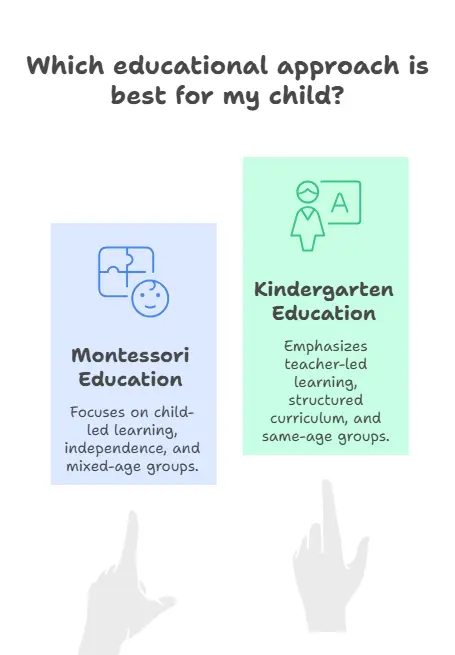
1. Understand Your Child
- If your child likes doing things alone and exploring → Montessori is good
- If your child likes guidance and group activities → Kindergarten is better
2. Learning Style
- Some children learn by doing things themselves
- Some children learn better with teacher help
- Montessori = independent learning
- Kindergarten = guided learning
3. Structure or Freedom
- Montessori = more freedom, child chooses activities
- Kindergarten = fixed timetable and routine
- Choose what your child is comfortable with
4. Social Skills
- Montessori = mixed-age children, learning together
- Kindergarten = same-age classmates, group learning
- Choose based on your child’s comfort with friends
5. Visit Schools
- Visit both schools
- See classrooms, teachers, and children
- Choose where your child looks happy
6. Talk to Teachers
- Ask about teaching methods and daily routine
- Understand how they help children learn
7. Future Learning
- Kindergarten helps with regular school system
- Montessori builds independence and confidence
Conclusion
Get Certified & Start Your Montessori Career
Montessori Teacher Training Course by Entri App: Gain expert skills, earn certification, and kickstart your teaching career.
Join Now!Frequently Asked Questions
Is Montessori better than traditional Kindergarten?
There is no one “better” option. Montessori is great for children who enjoy independence and self-paced learning, while Kindergarten is ideal for those who do well with structure and teacher guidance. The best choice depends on your child’s needs and personality.
What age is best for Montessori vs Kindergarten?
Montessori programs usually start as early as 2.5–3 years and include mixed-age groups up to 6 years. Kindergarten typically starts around age 4–5 and is designed as a step before primary school.
Will my child learn enough academics in Montessori?
Yes, Montessori covers all essential subjects like reading, writing, and math. However, the learning is more hands-on and self-paced rather than structured and test-focused.
Do Montessori students adjust well to traditional schools later?
Most Montessori students adjust well when they move to traditional schools. They often bring strong independence, confidence, and problem-solving skills, though they may need a little time to adapt to structured routines.
Which option is better for shy or introverted children?
Montessori can be helpful for shy children because it allows them to learn at their own pace without pressure. However, Kindergarten can also support them by encouraging social interaction and group participation. It depends on what makes the child feel more comfortable.
How are children assessed in Montessori vs Kindergarten?
In Montessori, teachers observe children and track their progress over time without formal tests. In Kindergarten, children are usually assessed through assignments, activities, and simple tests to measure their learning.
Is Montessori more expensive than Kindergarten?
In many cases, Montessori schools can be more expensive due to specialized materials and teaching methods. However, costs vary depending on the school and location.
How can parents decide which option is right?
Parents should observe their child’s behavior, visit schools, talk to teachers, and consider their child’s comfort level. The right choice is where the child feels happy, supported, and excited to learn.