The four stages of cybersecurity protect systems step by step. They include Prevention, Detection, Response, and Recovery stages. Each stage plays a role in handling security risks. They work together to protect systems from cyber threats. This blog explains each stage in simple terms. It shows how these stages work in real situations. You will learn tools and methods used in each stage. It also explains why each stage is important. Examples help you understand the process clearly. This guide makes cybersecurity stages easy to understand.
Cyber risks are growing in today’s digital world. People and companies depend heavily on online systems. This makes security more important than ever before. Hackers target data using different attack methods daily. Systems without protection become easy targets quickly. Strong security planning helps reduce these risks effectively.
Cybersecurity is not just installing tools once. It requires a proper process and continuous monitoring. A structured approach helps manage threats better. Security works best when handled in clear stages. Each stage focuses on a specific part of protection. Together, they create a complete defense system.
❓ Why Is a Structured Approach Important?
Helps manage risks in a simple way
Improves planning and decision making
Reduces confusion during security incidents
Makes protection more organized and effective
🎯 What Will You Understand Here?
Learn how cybersecurity follows a clear process
Understand how risks are handled step by step
See how structured stages improve system safety
Get clarity on managing threats more effectively
This guide helps you understand cybersecurity in a simple way.
2. What Are the Four Stages of Cyber Security?
Cybersecurity works through a clear and structured process. This process is divided into four important stages. Each stage helps protect systems in a different way.
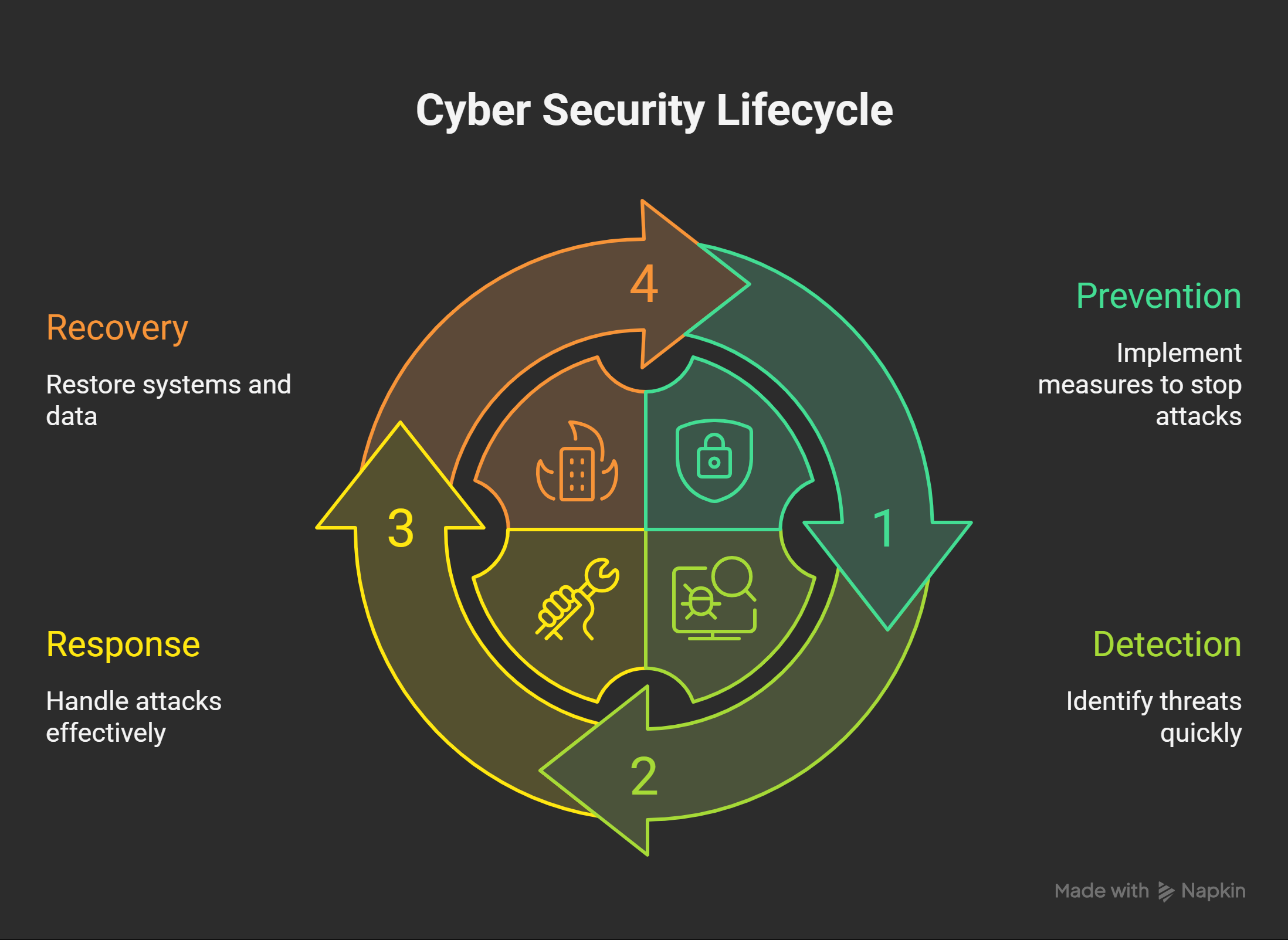
These stages work together to handle security risks effectively. They form a continuous cycle for better protection.
🔐 The Four Stages
Prevention
Focuses on stopping attacks before they happen
Protects systems using security measures and controls
Detection
Identifies threats and suspicious activities quickly
Helps find issues before they cause major damage
Response
Handles and controls attacks during incidents
Reduces damage and protects affected systems
Recovery
Restores systems and data after an attack
Helps return operations to normal safely
📌 Why These Stages Matter
Each stage plays a specific role in protection
Together, they create a strong security system
Continuous use improves safety over time
Understanding these stages makes cybersecurity easier to follow.
3. Stage 1: Prevention
Prevention is the first stage of cybersecurity protection. It focuses on stopping attacks before they happen. This stage builds a strong base for system security.
Preventing threats is easier than fixing damage later. It reduces risks and protects important data early.
🔒 What is Prevention?
Prevention includes steps to block attacks in advance. It protects systems from common vulnerabilities and risks.
Goal of Prevention
Stop threats before they affect systems
Reduce chances of successful attacks
🛠️ Key Techniques Used
Different methods are used to strengthen system security.
Firewalls
Block unauthorized access to networks
Control incoming and outgoing traffic
Encryption
Protect sensitive data from unauthorized users
Keep information secure during transmission
Security Updates
Fix system weaknesses regularly
Reduce risk of known vulnerabilities
User Awareness
Train users to identify suspicious activities
Prevent common attacks like phishing
📌 Why Prevention Matters
Prevention plays an important role in cybersecurity strategy.
Risk Reduction
Lowers chances of cyber attacks
Protects systems before threats occur
Cost Saving
Reduces expenses from damage and recovery
Avoids downtime and business losses
💡 Example Scenario
Employees receive training on phishing emails. They learn to avoid clicking unknown links. This prevents attackers from accessing company systems.
4. Stage 2: Detection
Detection is the second stage of cybersecurity protection. It focuses on identifying threats as early as possible. Early detection helps reduce damage and system impact.
Cyber attacks may still bypass prevention controls sometimes. Detection helps catch these threats before they spread further.
🔍 What is Detection?
Detection means identifying suspicious activities in systems. It involves monitoring networks, systems, and user behavior. The goal is to find threats before major damage occurs.
📌 Why Is Detection Important?
Early Threat Identification
Detect attacks before they become serious
Reduce impact on systems and data
Improves Response Speed
Helps teams act quickly during incidents
Minimizes downtime and disruption
Supports Better Security Monitoring
Tracks system activity continuously
Identifies unusual patterns and behaviors
🛠️ Tools Used in Detection
SIEM Tools
Collect and analyze security event data
Provide alerts for suspicious activities
IDS (Intrusion Detection Systems)
Monitor network traffic for unusual behavior
Detect possible attacks and security violations
💡 Example Scenario
Unusual Login Activity
Multiple failed login attempts are detected
System alerts the security team immediately
Quick Action Triggered
Account access is monitored and restricted
Further investigation is performed
Detection helps identify threats before they cause major damage.
5. Stage 3: Response
Response is the third stage of cybersecurity protection. It focuses on handling attacks during active incidents. This stage aims to control damage and stop threats quickly.
When a threat is detected, quick action is required. Response helps reduce impact and protect systems further.
🚨 What is Response?
Response means taking action after detecting a threat. It involves managing and controlling security incidents. The goal is to limit damage and stop attacks.
📌 Why Is Response Important?
Limits Damage Quickly
Stops attacks from spreading across systems
Reduces data loss and system impact
Protects Critical Systems
Keeps important systems safe during incidents
Prevents complete system failure
Improves Recovery Process
Makes system restoration faster and easier
Reduces downtime and business disruption
⚙️ Key Response Actions
Identify the Threat
Find the source and type of attack
Understand how systems are affected
Contain the Attack
Isolate infected systems immediately
Block access to prevent further spread
Remove the Threat
Eliminate malware or unauthorized access
Secure systems after cleanup
💡 Example: Ransomware Attack
Initial Action
Disconnect infected systems from the network
Stop the attack from spreading further
Control Measures
Remove malicious files and secure systems
Prepare for data recovery and system restoration
Response helps control threats and reduce overall damage.
6. Stage 4: Recovery
Recovery is the final stage of cybersecurity protection. It focuses on restoring systems after a security incident. This stage ensures normal operations continue smoothly.
After an attack, systems may become damaged or unavailable. Recovery helps bring systems back to working condition.
🔄 What is Recovery?
Recovery means restoring systems, data, and operations. It involves fixing issues caused by security incidents. The goal is to return systems to normal safely.
Cybersecurity works as a continuous and connected process. It is not limited to a single step or action. Each stage supports and strengthens the next stage.
This lifecycle helps manage threats in an organized way. It improves overall system protection over time.
🔄 How the Lifecycle Works
The four stages work together in a continuous cycle. They repeat to improve security and reduce risks.
Step-by-Step Flow
Prevention reduces risks before attacks happen
Detection identifies threats during early stages
Response controls and manages active incidents
Recovery restores systems after damage occurs
🔗 Why the Stages Are Connected
Continuous Protection
Each stage depends on the previous stage
Weakness in one stage affects the whole system
Ongoing Improvement
Lessons from incidents improve future prevention
Security measures become stronger over time
⚙️ Continuous Monitoring
Systems are monitored regularly for unusual activity
Feedback from each stage improves future actions
Security policies are updated based on new threats
📊 Lifecycle Summary
Stage
Role in Lifecycle
Prevention
Reduces risks early
Detection
Identifies threats quickly
Response
Controls and limits damage
Recovery
Restores systems and improves
This lifecycle ensures continuous and effective cybersecurity.
8. Real-World Example of All 4 Stages
Understanding stages becomes easier with a real example. Consider a company facing a phishing email attack. This example shows how each stage works together.
📧 Attack Scenario Overview
An employee receives a fake email from attackers. The email asks for login details or sensitive information. The employee clicks the link and enters credentials.
🔒 Stage 1: Prevention
Security Awareness
Employees are trained to identify suspicious emails
Email filters block many phishing attempts
Outcome
Some attacks are stopped before reaching users
🔍 Stage 2: Detection
Unusual Activity Detected
System detects login from unknown location
Multiple login attempts trigger alerts
Action Taken
Security team is notified immediately
Suspicious account activity is monitored
🚨 Stage 3: Response
Immediate Control
Compromised account access is blocked
Passwords are reset quickly
Threat Removal
Malicious links are identified and removed
Systems are secured from further misuse
🔄 Stage 4: Recovery
System Restoration
Accounts are restored with new credentials
Data is checked for any changes or loss
Future Improvement
Additional training is provided to employees
Security measures are updated for better protection
This example shows how all stages work together effectively.
9. Why Understanding These Stages Matters
Understanding these stages helps improve overall security awareness. It gives a clear idea of how protection works step by step. This knowledge helps reduce risks and prevent major damage.
🏢 For Businesses
Helps build strong and organized security systems
Reduces financial loss and operational risks
👤 For Individuals
Protects personal data and online accounts
Improves awareness of common cyber threats
📈 For Career Growth
Builds strong cybersecurity knowledge and understanding
Helps prepare for real-world job roles
Knowing these stages makes security more effective and reliable.
10. Tools Used Across Each Stage
Different tools support each stage of cybersecurity protection. They help manage threats and improve system security effectively.
🛠️ Prevention Tools
Antivirus software to block harmful programs
Firewalls to control network access
🔍 Detection Tools
SIEM tools to monitor system activities
IDS systems to detect unusual behavior
🚨 Response Tools
Incident response platforms for handling attacks
Threat management tools to control security issues
🔄 Recovery Tools
Backup tools to restore lost data
Disaster recovery systems for system restoration
Using the right tools improves security at every stage.
11. Conclusion
Cybersecurity is a continuous process that needs careful planning. Each stage plays an important role in system protection. Understanding these stages helps manage threats more effectively. It also improves response during real security incidents. A structured approach makes security simple and organized. Both individuals and businesses benefit from this knowledge. It helps reduce risks and protect important data.
Building strong security requires regular effort and updates. New threats appear as technology continues to grow. Staying aware and prepared helps prevent major problems. Using the right tools improves overall protection. Learning these stages builds confidence in handling threats. Start applying these steps to improve your security today.
Famida is an experienced educator with over a decade of teaching experience, specializing in grades 8 to 12, business management (BBM), and electronics engineering. Holding a Master's degree in Electronics and Communication Engineering, she has also trained interns in IoT. For the past four years, Famida has been writing articles for Entri, focusing on exam preparation tips, question papers, and study plans. She also creates practice questions for the Entri app and provides support to users. Additionally, Famida's writing skills extend to parenting and personal blogs, as well as curriculum development.