Table of Contents
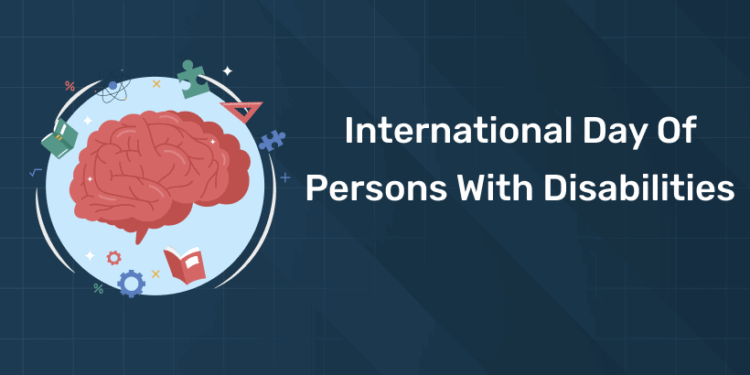
The International Day of Persons with Disabilities is a global observance dedicated to promoting the rights, dignity, and inclusion of persons with disabilities. It encourages people around the world to understand the challenges faced by individuals with disabilities and recognize their contributions to society. The day also highlights the need for equal opportunities in education, employment, healthcare, and public life. By focusing on accessibility and inclusion, the observance reminds communities to remove barriers that limit participation. It serves as a powerful reminder that every individual deserves respect and independence.
This day also helps governments, organizations, and communities strengthen their commitment to disability rights. It supports conversations on policy improvements that can make environments more inclusive and accessible. The observance inspires individuals to challenge stereotypes and promote empathy. It further encourages the use of assistive technologies that enhance independence and daily functioning. Overall, the day promotes a more equitable world where everyone can participate fully.
International Day of Person with Disabilities 2025 Date – December 3
In this article readers can get a glimpse on
- Observance and Importance of International Day of Person with Disabilities
- International Day of Person with Disabilities Theme 2025
- International Day of Person with Disabilities Quiz
How to Observe International Day of Person with Disabilities?
1: Who was the first woman President of India?
- Become an advocate for those with disabilities: Take a look at your neighbourhood and the locations you frequent. Ask the store owner, mall management, or your elected authorities to add accommodations if there aren’t any already. The rule applies.
- Help out where you can: Ask the nurses at an outpatient clinic if they are aware of someone who needs assistance, or inquire at your neighbourhood senior centre or housing. Offer to assist. Sometimes, basic actions for you delivering a prescription, dropping off the mail, or picking up a few groceries would mean the world to someone with a disability.
- Be kind to one another: You are aware that you occasionally have a short fuse when you are tired, stressed, or in a hurry. Avoid yelling at or verbally abusing someone who is holding you up. It’s possible that they have a disability. If that’s the case, their issues are generally temporary whereas their lives are always that way. Similarly, don’t let any inappropriate humor they display ruin your day. When this happens, a smile can make everything better.
Free UPSKILLING Courses!
Take your first step toward mastering in-demand skills, acing interviews, and securing top-tier jobs with Entri's free upskilling courses.
Start Learning!International Day of Person with Disabilities: Importance
- It increases understanding of those with disabilities: In our culture, people with impairments occasionally feel invisible. People barely notice them as they rush past them during their daily activities. Today, make an effort to look them in the eye, smile, and make yourself available to help if they seem to be having trouble.
- We are more aware of the challenges faced by those with disabilities: The prized parking spot in front of the pharmacy, the sloped curbs at intersections with the textured mats in place so people with vision impairments can feel the curb end, the buttons to open doors automatically, even the elevators on the Subway — all of these features are there to make a difficult life for a person with disabilities a little bit easier. Today, take note of these accommodations, and then take note of how few there are.
- It’s more than just a day; it’s the law: In order for businesses and governments to abide by the law, the Americans with Disabilities Act was designed to outline the rights of individuals with disabilities and the design requirements that must be met. Anyone would benefit from familiarity with the ADA because it is quite clear about the requirements that must be met.
International Day of Person with Disabilities Theme 2025
The theme for the International Day of Persons with Disabilities (IDPD) 2025, observed annually on December 3rd, is: “Fostering disability inclusive societies for advancing social progress”
This theme is chosen by the United Nations to focus global attention on the importance of the full and equal participation of persons with disabilities in all aspects of life and development, recognizing that their inclusion is fundamental to achieving the Sustainable Development Goals (SDGs).
Core Pillars of the 2025 Theme
-
Inclusion as a Catalyst for Progress: The theme highlights the essential role that disability inclusion plays in driving broader social progress. It asserts that a society that fails to include its members with disabilities cannot realize its full potential for economic, political, and social advancement.
-
Whole-of-Society Approach: It calls for collective action across all sectors—governments, civil society, the private sector, and media—to implement policies and initiatives that actively dismantle barriers to participation.
-
Focus on Universal Design: A key aspect of “fostering inclusive societies” is the promotion of Universal Design, ensuring that the physical environment, technology, information, and communication are accessible to everyone, including persons with diverse impairments.
-
Amplifying Leadership: The theme stresses the necessity of listening to, learning from, and actively promoting the leadership and expertise of persons with disabilities in policy-making and development processes.
-
Ratifying the CRDP: It serves as a reminder to all nations to uphold and fully implement the Convention on the Rights of Persons with Disabilities (CRPD), making its principles a tangible reality at the local and national levels.
In essence, the 2025 theme is a powerful acknowledgment that genuine progress is not just about development for people with disabilities, but about ensuring development is built with and by people with disabilities.
International Day of Person with Disabilities Previous Themes
The International Day of Persons with Disabilities (IDPD) is observed annually on December 3rd. It is a United Nations observance focused on promoting an understanding of disability issues and mobilizing support for the dignity, rights, and well-being of persons with disabilities.
Here are the official themes proclaimed by the United Nations for IDPD:
-
2025: Fostering disability-inclusive societies for advancing social progress
-
2024: Amplifying the leadership of persons with disabilities for an inclusive and sustainable future
-
2023: United in action to rescue and achieve the SDGs for, with and by persons with disabilities
-
2022: Transformative solutions for inclusive development: the role of innovation in fuelling an accessible and equitable world
-
2021: Leadership and participation of persons with disabilities toward an inclusive, accessible and sustainable post-COVID-19 world
-
2020: Building Back Better: toward a disability-inclusive, accessible and sustainable post-COVID-19 World
-
2019: Promoting the participation of persons with disabilities and their leadership: taking action on the 2030 Development Agenda
-
2018: Empowering persons with disabilities and ensuring inclusiveness and equality
-
2017: Transformation towards sustainable and resilient society for all
-
2016: Achieving 17 Goals for the Future We Want (Referencing the Sustainable Development Goals)
-
2015: Inclusion matters: access and empowerment of people of all abilities
-
2014: Sustainable Development: The Promise of Technology
The themes consistently align with the principles of the Convention on the Rights of Persons with Disabilities (CRPD), which the UN aims to fully implement globally .
Free UPSKILLING Courses!
Take your first step toward mastering in-demand skills, acing interviews, and securing top-tier jobs with Entri's free upskilling courses.
Start Learning!How to Celebrate International Day of Person with Disabilities in the Workplace?
Host a Training Session
The greatest method to start real change in your business is to arrange a training session on disabilities. Anyone can experience a disability, so it’s crucial to make sure every employee is aware of its significance in order to foster an inclusive workplace.
- Enhance Customer Service: Employees who are aware of various ailments would be able to better assist clients who might be suffering from such disorders.
- Understanding the Law’s Requirements Educate yourself on the Equality Act of 2010 to lessen the possibility of legal repercussions or unfair treatment.
- Encourage Open Communication: Since people with disabilities must deal with their conditions on a daily basis, training can help people’s wellbeing by encouraging open communication.
- Transform Perceptions: Through an educational training session that educates your able-bodied personnel, you can lessen unconscious bias and misinformation.
- Verify Disability of Staff: A training session demonstrates to disabled employees the legitimacy of their sentiments, problems, and experiences.
Recognize Neurodiversity
Neurodiversity is one of the most prevalent invisible disabilities, thus it’s crucial to acknowledge it at work. These folks have a distinct perspective on the world because of the way their brains are wired in comparison to their able-bodied peers. Speakers with expertise in neurodiversity frequently appear at business gatherings to promote the field’s many benefits and eliminate stereotypes.
Examples of neurodiversity include:
- ADHD
- Autism
- Dyspraxia
- Dyslexia
- Dyscalculia
- Dysgraphia
- Tourette’s Syndrome
Natural differences in the human brain that affect cognitive and intellectual functions are referred to as neurodiversity.
Invest in a Speaker for the International Day of the Disabled
Hire a speaker for World Disability Day who will raise awareness of disabilities and whose life experiences will connect with your staff. These motivating individuals overcome obstacles both physical and mental to succeed in their respective fields, making for incredibly compelling speeches at business gatherings.
Improve Accessibility & Inclusion
Several typical obstacles in the workplace can make it difficult for impaired personnel to give their best job. It’s critical to accommodate employees of all abilities and take into account how a disabled person can be impacted by your workplace. This includes providing wheelchair ramps, screen readers, braille signage, and accessible restrooms. On this International Day of Disabled Persons, make your workplace accessible to all team members.
Examples of Accessibility in the Workplace
- Wheelchair Ramps/Lifts
- Quiet Rooms for Noise Sensitivity
- Braille Signage
- Adaptive Desks & Chairs
- Invest in Digital Accessibility Tools
International Day of Person with Disabilities Quiz 2025
A) WHO
B) UNICEF
C) United Nations
3. What percentage of the global population is estimated to experience significant disability?
A) 8%
B) 12%
C) 16%
A) Mobility disability
B) Hearing disability
C) Cognitive disability
5. How many countries have ratified the Convention on the Rights of Persons with Disabilities (CRPD)?
A) Over 100
B) Over 150
C) Over 180
A) Morse code
B) Braille
C) SignScript
A) Wheelchair
B) White cane
C) Hearing aid
A) Racism
B) Ableism
C) Sexism
A) 500 million
B) 1 billion
C) 2.5 billion
Want More Engaging Questions?
Download our FREE PDF packed with insightful quiz questions to test your knowledge!
🔽 Click below to get your free copy now! 🔽
International Day of Person with Disabilities Quiz 2025 PDF
The International Day of Persons with Disabilities reminds the world that true progress depends on inclusion, accessibility, and equal opportunities for everyone. It encourages societies to remove physical, social, and digital barriers that prevent persons with disabilities from fully participating in daily life. By promoting awareness and understanding, this day supports a more compassionate world where dignity and independence are respected. It also motivates governments and organizations to strengthen disability-friendly policies that create long-term positive impact.
As the observance continues each year, it inspires individuals and communities to take practical steps toward building inclusive environments. Small acts—such as using respectful language, offering assistance, and designing accessible spaces—create meaningful change. The day also emphasizes the importance of empowering persons with disabilities through education, employment, and technology. When societies commit to inclusion, they not only uplift individuals but also strengthen collective growth. This spirit of unity and understanding helps shape a world where everyone can thrive.
Free UPSKILLING Courses!
Take your first step toward mastering in-demand skills, acing interviews, and securing top-tier jobs with Entri's free upskilling courses.
Start Learning!Frequently Asked Questions
What is the International Day of Persons with Disabilities?
It is a global observance dedicated to promoting disability rights. The day highlights issues affecting persons with disabilities. It encourages inclusion in all areas of society. It also spreads awareness about accessibility. It is observed every year on 3 December.
Why is this day important?
It brings global attention to disability inclusion. It encourages governments to improve policies. It promotes equal opportunities for persons with disabilities. It also helps reduce stigma through awareness. It reminds society to prioritize accessibility.
What does disability inclusion mean?
Disability inclusion ensures everyone can participate fully. It removes barriers that limit access. It focuses on equal opportunities in education and employment. It also supports accessible environments. It aims to respect dignity and independence.
What is the Convention on the Rights of Persons with Disabilities (CRPD)?
CRPD is an international treaty for disability rights. It protects the dignity of persons with disabilities. It encourages governments to ensure equal participation. It promotes inclusion across all sectors. It helps guide global disability policies.
What are some common types of disabilities?
Disabilities can be physical or sensory. They may affect movement, vision, or hearing. Some disabilities involve cognitive challenges. Others relate to mental health conditions. Disabilities can also be invisible or long-term.
What is ableism?
Ableism refers to discrimination against persons with disabilities. It includes negative attitudes or assumptions. It creates unfair barriers in society. It limits opportunities in daily life. It challenges equal participation and respect.
How can we support persons with disabilities?
We can promote accessibility in public spaces. We can encourage inclusive attitudes. We can support equal education and jobs. We can reduce stigma through awareness. We can listen to disability voices respectfully.
What is assistive technology?
Assistive technology helps individuals overcome limitations. It includes devices like wheelchairs and hearing aids. It supports communication and mobility needs. It also enhances independence at home or work. It improves overall quality of life.
Why is accessibility important?
Accessibility ensures everyone can use services. It removes physical and digital barriers. It supports equal participation in society. It promotes independence and dignity. It benefits people of all abilities.
How is this day observed worldwide?
Countries hold awareness events and campaigns. Schools conduct discussions on disability inclusion. Governments highlight policy improvements. Organizations promote accessible practices. Communities encourage respect and understanding.