Table of Contents
Introduction
Electrical and Electronics Engineering (EEE) graduates are entering a super-charged job market driven by automation, the growth of renewables, the rise of AI, and the ever-expanding demand for smart infrastructure. Short courses that last anywhere from 3 to 6 months are key to getting EEE professionals up to speed on practical skills in areas like MEP design, embedded systems, robotics, PLC automation and electrical CAD. These courses bridge the gap between what they learned in school and what employers are really looking for, targeting high-growth sectors like construction, manufacturing and the IoT.
By prioritising these courses, graduates can expect salary boosts of between 20 to 50% to go with job placements at top companies like L&T, Siemens and Tata Power. And by focusing on the trends that are making headlines right now – like embedded systems for smart devices, robotics for Industry 4.0 and MEP for India’s infrastructure boom – they’ll be standing out from the crowd in no time.
Ready to start your high-paying EEE career? Tapping into the detailed course breakdowns, enrolment tips and job placement strategies below will give you the inside track on which short-term certification is the best fit for your goals.
Elevate your career with our comprehensive MEP Course! Get Free Demo Here!
Short Term Courses After Electrical Engineering

MEP Design Course
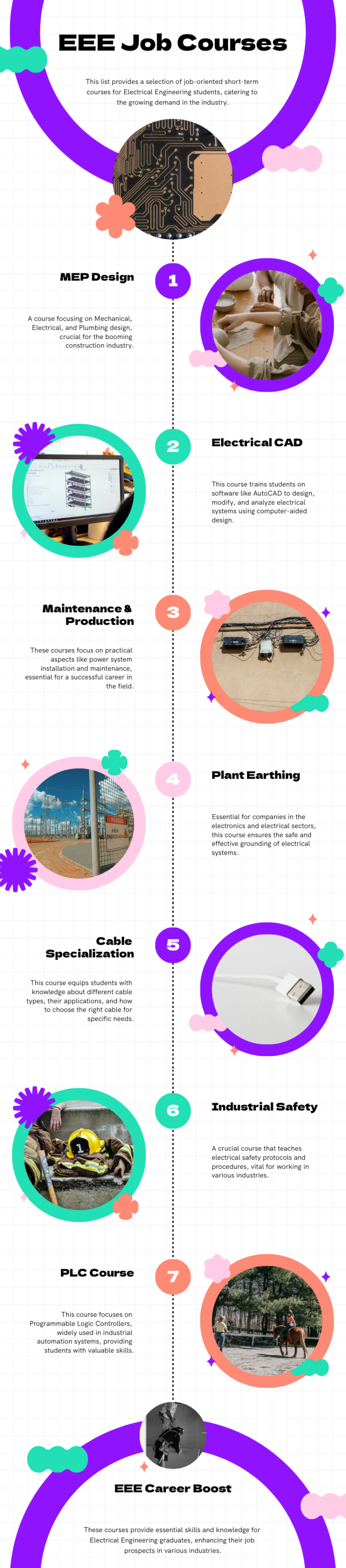
It is one of the job oriented short term courses after EEE. The demand for capable and seasoned engineers in the field is extremely high due to the expansion of the construction industry. After electrical and mechanical engineering, MEP engineering is among the greatest job choices. For those looking to begin a career in MEP, a certification program is among the finest choices.
I previously worked in the construction sector in Saudi Arabia on Oil & Gas and Petrochemical plant projects, where my scope of work was not related to MEP. Due to personal reasons, I decided to relocate to the UAE and transition into the MEP field for better career opportunities. To support this transition, I enrolled in the MEP Design course offered by Entri.
As I was new to the MEP domain and now joined as an MEP QA/QC Engineer, this course proved to be extremely beneficial. It helped me understand the core concepts and technical aspects of MEP systems .The mentors were highly supportive and explained the topics in a very clear, simple, and practical way.
Although I had prior QA/QC experience in a different field, this course helped me gain strong technical clarity specific to MEP. The interview preparation and CV-building sessions conducted by Entri were also very useful.
Overall, this course added significant value to my career and greatly boosted my confidence. I highly recommend Entri’s MEP course to anyone planning to enter the MEP field in the GCC, as the course content, assignments, and projects are based on live GCC projects. – MASHOOD ALI
MEP Quantity Surveyor Course
An MEP QS (Mechanical, Electrical, and Plumbing Quantity Surveying) course is a specialized training program that focuses on cost estimation, budgeting, and quantity takeoff for MEP systems in construction projects. It combines the principles of Quantity Surveying (QS) with MEP engineering, ensuring professionals can manage costs, contracts, and procurement related to MEP components. By taking this course, electrical engineering students can bridge the gap between engineering design and cost management, making them more competitive in the job market.
Embedded Systems Course
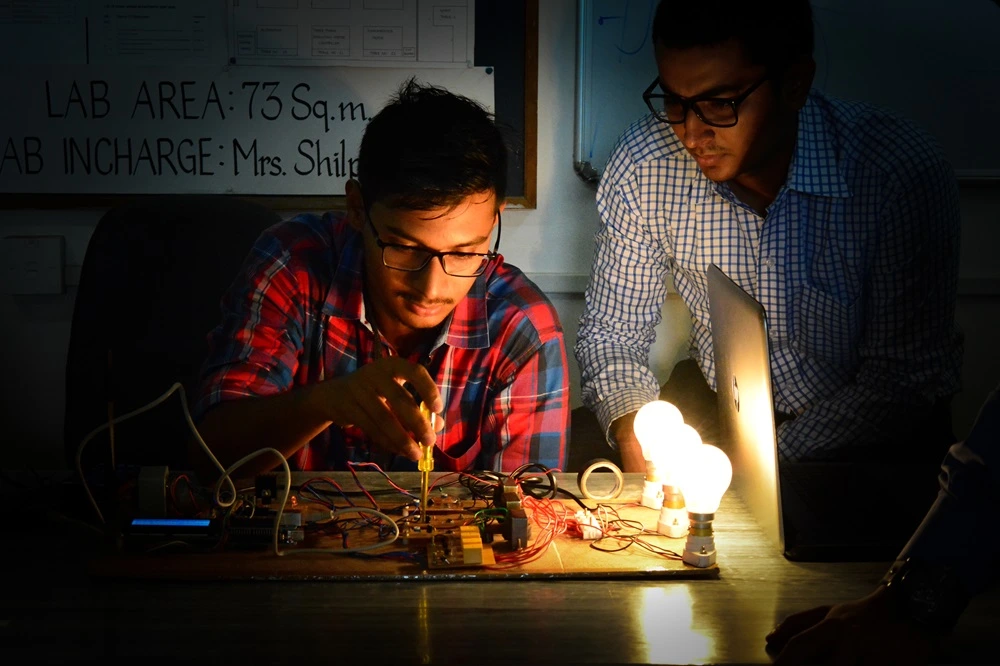
With over 90% of modern devices powered by embedded systems, mastering this field is your key to thriving in a tech-driven world. From smart appliances to autonomous vehicles, embedded systems are the backbone of innovation. Whether you are an EEE graduate or a tech enthusiast. This job-oriented program covers microcontroller programming, IoT integration, and real-time systems, blending theory with hands-on projects. Designed for career starters, it equips you with skills to stand out in industries like automotive, healthcare, and consumer electronics, ensuring you’re ready for the digital future.
Robotics Course
Robotics courses help give EEE graduates a real-world edge by giving them hands on experience in designing robots, integrating sensors and motors and getting to grips with the programming that drives industrial automation. Typically running for 3 to 6 months, these courses delve into the fundamentals of robotics, including kinematics, control systems, and the ins and outs of ROS (that’s the Robot Operating System to you) – and show you how to apply AI to make autonomous navigation a reality.
This is a great fit for companies working in manufacturing, utilities and the technology sector – helping you to land the sorts of roles in EV production, drone development and smart factory work that you’ll find at companies like ABB or Bosch. What is more, by the time you’ve completed the course you can expect to see a 30% boost to your starting salary – courtesy of the practical project work that simulates the real-world challenges of automation that you’ll face in your new job.
Electrical CAD Course
Electrical CAD courses are all about giving EEE professionals the skills they need to get the most out of design software like AutoCAD Electrical, EPLAN or Revit. By the time you’ve completed it, you’ll be able to create accurate, detailed schematics, wiring diagrams, panel layouts and 3D models – a skillset that is in high demand in the construction, power distribution and OEM sectors. And the payoff is well worth the 2 to 4 months’ time commitment – with companies like L&T and Schneider Electric snapping up grads with this skillset in no time. Plus, with accurate documentation a key part of the job, you can expect to be saving time and reducing errors for your employer – not a bad return on investment.
Master MEP Design with Industry-Leading Training!
Gain in-depth knowledge of Mechanical, Electrical, and Plumbing (MEP) Design with expert-led courses. Learn HVAC, fire safety, sustainable building strategies, and BIM applications to excel in the construction industry.
Know MoreAdditional Key Specializations
Electrical Safety Course
Among the most crucial courses for EEE students that focus on jobs is this one. Surviving in the industry requires taking this course. The critical protocols and processes that companies must follow in the event of an emergency will be taught to students in this course. Students who want to work in the electrical and electronics business must be aware of the various rules and prepared.
|
Engineering Upskilling Courses
|
| MEP Course |
| BIM Course |
| Structural Design Course |
| Embedded Systems Course |
| Robotics and AI Course |
Power Electronics
Electrical energy conversion, management, and control are the focus of the electrical and electronics engineering discipline known as power electronics. Power electronics is crucial to modern life. It allows efficient and reliable energy conversion, distribution, and use. This applies across many industries and applications. Power electronics is an electrical engineering field. It focuses on effectively converting electrical energy from one form to another. For EEE students, it’s a fundamental subject. It underpins many advanced technologies that shape our modern world.
Maintenance And Production Courses
Electrical Engineering students can benefit from production and maintenance courses. These include power system and system installation. Such courses equip them with skills for a good career. Additionally, this course gives students comprehensive information of the diagnosis, maintenance, and repair of medium- and high-voltage circuit breakers.
Plant Earthing Course
For EEE students, this is also a job oriented course. Employing people who could assure the earthing process for the company’s electrical energy flow was crucial for organizations in the electronics and electrical sectors. It is a crucial component since the plant as a whole can be in risk if the proper earthing technique is not followed.
Equipment Selection Specialisation
A large number of businesses in the electronics and electrical sector purchase specialist equipment. Because these large pieces of equipment are so expensive, the corporations need applicants who have a thorough understanding of each unit and its intended use.
This course, which we regard as one of the most beneficial career-oriented courses for EEE students, teaches students everything about specialized machines and their specific purposes. Additionally, this training benefits the student who works as a freelancer for various businesses.
Elevate your career with our comprehensive MEP Course! Get Free Demo Here!
Specialisation in Cables Courses
This is a job-oriented course that is just as vital for EEE students as the others. Cables are a fundamental requirement in all industries, and using the appropriate cable for the proper purpose is crucial. In order to ensure that there are no cable-related mishaps, students enrolled in this specific course for EEE students are extremely necessary. Students are probably comfortable taking this course because they have studied the fundamentals of cables in their undergraduate degree.
Industrial Safety Course
A very important job oriented course for EEE students and plays a major role in getting a good job for them are Industrial Safety Courses. All students who have pursued a course in Mechanical, Electrical and Civil engineering. This course gives students an in-depth knowledge about the industry and gives students a sense of safety in the industry department.
Plant Lighting and Illumination Design Specialisation
The lighting and illumination of machinery and spaces in general is a significant area of electrical and electronics engineering. EEE students study this topic as part of their engineering coursework. However, this specialization is among the courses that prepare EEE students for the workforce.
In terms of lighting sources, lighting techniques, illumination approaches, etc., the student learns and becomes proficient. These students must also research solar-powered lights and other limitless energy sources in light of the current situation in order to solve lighting-related issues.
Programme Logic Controller Course
For students who completed electrical engineering, choosing PLC course is the best option. PLC training is utilized in the industry’s automation system. Proficiency in Programme Logic Controller facilitates employment opportunities.
Entri App provides career oriented training with practical experience. Our team of expert professionals train you to get placed in top notch companies. You have the option of both recorded and live classes with 6 months mentorship.
Benefits for EEE Graduates

These courses – designed to get you job-ready in just 3-6 months – pack in hands on training, the kind of industry-recognized certifications that employers actually care about, plus access to the latest automation, robotics, embedded systems and MEP design skills that are actually in demand. You learn by doing real projects with real clients, and get guidance from industry pros along the way. It helps bridge the gap between what you learn in college and what actually happens in the real world of work.
They’re perfect for people looking to get into some of India’s booming sectors which is where the latest tech meets the factory floor. This includes like construction, where all those new buildings and roads are getting built; oil and gas, where the shift to clean energy is on; renewables, where solar and wind power are really taking off; and manufacturing. And if you learn to work with embedded systems and robotics, you’ll be right in the middle of the action. Using AI and machine learning you can drive innovation and land a job at a place like L&T, Siemens or Tata Power.
Career Impact: 85% of our students get placed in a job, and many of them go on to do freelance work too. In fact, some of them work their way up from junior engineer to project leader in just 2 years. It is about getting a job that pays a lot more than the average salary too. By the way, having the right skills is what employers are really looking for – not just some random degree from college.
Master MEP Design with Industry-Leading Training!
Gain in-depth knowledge of Mechanical, Electrical, and Plumbing (MEP) Design with expert-led courses. Learn HVAC, fire safety, sustainable building strategies, and BIM applications to excel in the construction industry.
Know MoreConclusion
Electrical and Electronics Engineering graduates are stepping into a world of unlimited possibilities in India’s future-proof tech landscape for 2026. You’ll need to get your hands on some really useful courses as listed above. That is the kind of practical know-how that is going to open doors. They will get you hired by industry leaders or a serious shot at getting hired as well.
Don’t just put all your eggs in the basket of your degree. It is time to take the next step and get yourself a certification. This not only sounds good on paper but also gives you some serious hands-on experience and real proof that you can do the job. The guys running the show at L&T Tata Power or Siemens don’t just want a piece of paper they want to see results – and that’s what your upskilling program should deliver.
Your future in automation, renewables or smart manufacturing is waiting in the wings. All you need is to get that one key certification under your belt and you can take the leap into a really well paid EEE career, finally launching yourself into the wide-open spaces.
Master MEP Design with Industry-Leading Training!
Gain in-depth knowledge of Mechanical, Electrical, and Plumbing (MEP) Design with expert-led courses. Learn HVAC, fire safety, sustainable building strategies, and BIM applications to excel in the construction industry.
Know MoreFrequently Asked Questions
Q1. What are the best short-term courses for Electrical and Electronics Engineering (EEE) students?
Ans: EEE students can pursue various job-oriented courses such as MEP Design, MEP Quantity Surveying (QS), Electrical CAD, Electrical Safety, Power Electronics, Industrial Safety, PLC (Programmable Logic Controller), and Plant Earthing.
Q2. Why should EEE students take short-term courses?
Ans: Short-term courses help bridge the gap between academic knowledge and industry skills, increasing job prospects and career growth in fields like construction, automation, and power systems.
Q3. What are the benefits of short-term courses for EEE graduates?
Ans: These courses provide practical training, hands-on experience, industry-recognized certifications, and better job opportunities in various sectors, including construction, power plants, oil & gas, and manufacturing.