Table of Contents
Electrical engineering graduates who complete a focused 2 to 6 month certification in MEP design, PLC automation, embedded systems, EV technology, or data-centre electrical work typically secure faster job offers and better starting pay.
Recruiters now prioritize hands-on skills in tools like Revit, PLC ladder logic, and battery management systems. Competencies are often under covered in four-year curricula but listed as baseline requirements. Short, project-based certifications are the quickest path to a job-ready engineering role.
Master EV architecture with Hands-On Training at Entri App. Join Now!
Key Takeaways
- Short-term certifications (2 to 6 months) in MEP, BIM-Revit, PLC/SCADA, embedded systems, or EV technology quickly bridge the EEE degree–employer gap.
- MEP design, BIM-Revit, and data-centre electrical skills are in high demand due to India’s construction and data-centre boom.
- Course fees range ₹10,000 to ₹90,000. Post-certification pay varies by employer, city, and experience. Treat the salary figures as indicative.
- Choose a course based on your target industry, not popularity.
- Practical, project-based learning matters more for hiring than the certificate itself.
Short Term Courses After Electrical Engineering

1. MEP Design Course
Duration: 3 to 4 months
Typical fees: ₹40,000 to ₹60,000
It is one of the job oriented short term courses after EEE. The demand for capable and seasoned engineers in the field is extremely high due to the expansion of the construction industry. After electrical and mechanical engineering, MEP engineering is among the greatest job choices. For those looking to begin a career in MEP, a certification program is among the finest choices.
I previously worked in the construction sector in Saudi Arabia on Oil & Gas and Petrochemical plant projects, where my scope of work was not related to MEP. Due to personal reasons, I decided to relocate to the UAE and transition into the MEP field for better career opportunities. To support this transition, I enrolled in the MEP Design course offered by Entri.
As I was new to the MEP domain and now joined as an MEP QA/QC Engineer, this course proved to be extremely beneficial. It helped me understand the core concepts and technical aspects of MEP systems .The mentors were highly supportive and explained the topics in a very clear, simple, and practical way.
Although I had prior QA/QC experience in a different field, this course helped me gain strong technical clarity specific to MEP. The interview preparation and CV-building sessions conducted by Entri were also very useful.
Overall, this course added significant value to my career and greatly boosted my confidence. I highly recommend Entri’s MEP course to anyone planning to enter the MEP field in the GCC, as the course content, assignments, and projects are based on live GCC projects. – MASHOOD ALI
2. BIM-Revit MEP
Duration: 4 to 5 months
Typical fees: ₹45,000 to ₹80,000
Building Information Modelling with Revit MEP has become close to mandatory for large-scale construction and data-centre projects. The course usually covers 3D modelling of electrical systems, clash detection with Navisworks, and BIM 360 collaboration workflows. It leads toward roles such as BIM Engineer or MEP BIM Coordinator, and pay tends to scale meaningfully with the size and complexity of projects an engineer has handled.
3. PLC and SCADA Automation
Duration: 3 to 4 months
Typical fees: ₹15,000 to ₹45,000
Industrial automation underpins manufacturing, oil and gas, pharmaceuticals, and food processing. Course content generally includes ladder logic programming on platforms like Siemens or Allen-Bradley, HMI design, SCADA systems, and industrial communication protocols such as Modbus. Graduates typically move into Automation Engineer, PLC Programmer, or Instrumentation Engineer roles, with large industrial automation and electrical-equipment manufacturers among the biggest recruiters.
4. Embedded Systems and IoT
Duration: 4 to 6 months
Typical fees: ₹30,000 to ₹60,000
With the overwhelming majority of modern devices running on embedded systems, this course targets EV, consumer electronics, healthcare, and industrial IoT applications. Skills covered usually include microcontroller programming (ARM, AVR, ESP32), sensor integration, real-time operating systems, and basic PCB design. It opens doors to Embedded Systems Engineer, IoT Developer, and Firmware Engineer roles across electronics and semiconductor companies.
5. Electric Vehicle (EV) Technology
Duration: 3 to 6 months
Typical fees: ₹35,000 to ₹75,000
India’s EV push has created a fast-growing need for electrical engineers who understand Battery Management Systems (BMS), power electronics, motor drives, and EV charging infrastructure design. MATLAB/Simulink modelling is often part of the curriculum for simulating EV systems.
Career paths include EV Design Engineer, BMS Specialist, and Charging Infrastructure Engineer, with electric-vehicle manufacturers and charging-infrastructure companies actively hiring for these skills.
6. Electrical CAD (AutoCAD Electrical, EPLAN)
Duration: 2 to 3 months
Typical fees: ₹20,000 to ₹35,000
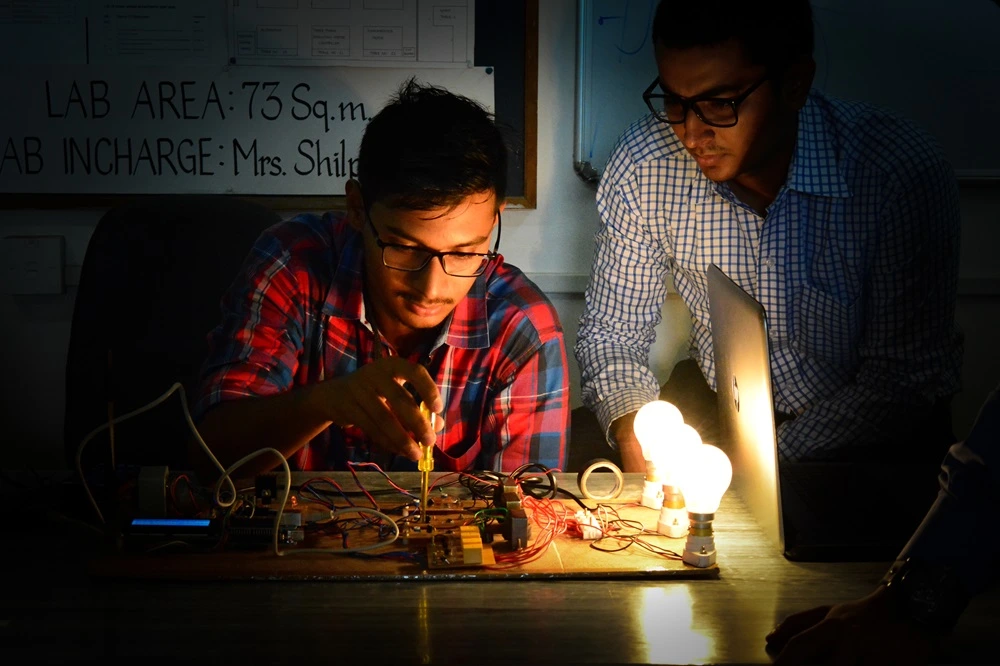
This is one of the shortest and most accessible certifications, essential for panel design, wiring diagrams, and documentation work at OEMs and EPC companies. It covers schematic design, panel layout, bill-of-materials generation, and integration with Revit for BIM workflows. It’s a practical entry point into roles like Electrical Design Engineer or Panel Design Engineer.
7. Data Centre Electrical Design and Commissioning
Duration: 3 to 4 months
Typical fees: ₹50,000 to ₹90,000
Data centre construction is expanding rapidly across Indian metros and the Gulf, creating steady demand for engineers who understand power redundancy (N+1, 2N, UPS systems), cooling fundamentals, and commissioning test scripts.
This course is often paired with MEP or BIM training, since data-centre electrical work overlaps heavily with both, and leads toward roles like Data Centre Electrical Engineer or Commissioning Engineer.
8. Electrical Safety and Industrial Safety
Duration: 1 to 2 months
Typical fees: ₹10,000 to ₹25,000
Often mandatory rather than optional for plant, oil and gas, and construction roles, this shorter course covers standards like NFPA 70E, Lockout-Tagout (LOTO) procedures, arc flash hazard analysis, and PPE selection. It’s frequently taken alongside a technical specialisation like MEP or PLC to make a candidate’s profile more complete for site-based roles.
|
Engineering Upskilling Courses
|
| MEP Course |
| BIM Course |
| Structural Design Course |
| Embedded Systems Course |
| Robotics and AI Course |
Master MEP Design with Industry-Leading Training!
Gain in-depth knowledge of Mechanical, Electrical, and Plumbing (MEP) Design with expert-led courses. Learn HVAC, fire safety, sustainable building strategies, and BIM applications to excel in the construction industry.
Know MoreAdditional Key Specializations
Power Electronics
Electrical energy conversion, management, and control are the focus of the electrical and electronics engineering discipline known as power electronics.
Power electronics is crucial to modern life. It allows efficient and reliable energy conversion, distribution, and use. This applies across many industries and applications. Power electronics is an electrical engineering field.
It focuses on effectively converting electrical energy from one form to another. For EEE students, it’s a fundamental subject. It underpins many advanced technologies that shape our modern world.
Maintenance and Production Courses
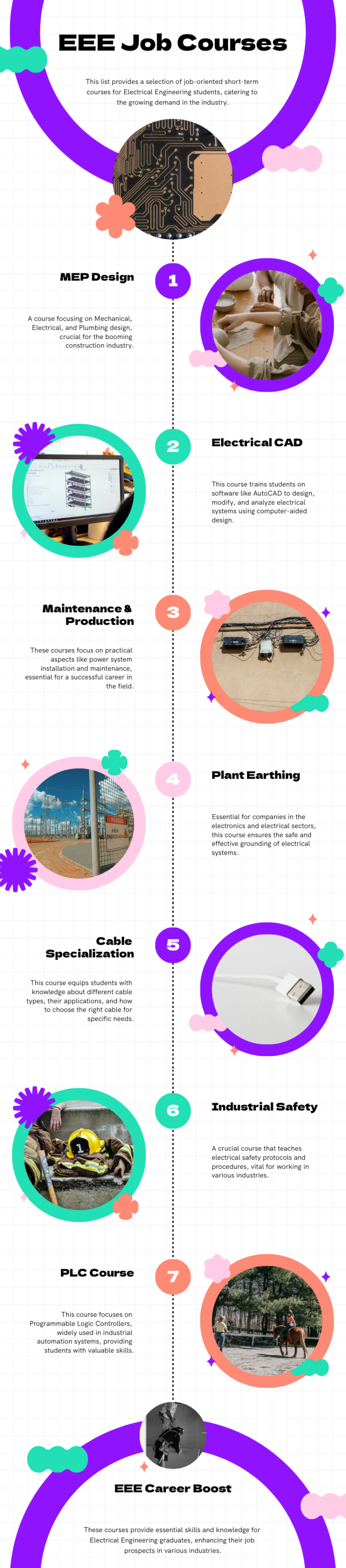
Electrical Engineering students can benefit from production and maintenance courses. These include power system and system installation. Such courses equip them with skills for a good career.
Additionally, this course gives students comprehensive information of the diagnosis, maintenance, and repair of medium- and high-voltage circuit breakers.
Plant Earthing Course
For EEE students, this is also a job oriented course. Employing people who could assure the earthing process for the company’s electrical energy flow was crucial for organizations in the electronics and electrical sectors. It is a crucial component since the plant as a whole can be in risk if the proper earthing technique is not followed.
Equipment Selection Specialization
A large number of businesses in the electronics and electrical sector purchase specialist equipment. Because these large pieces of equipment are so expensive, the corporations need applicants who have a thorough understanding of each unit and its intended use.
This course, which we regard as one of the most beneficial career-oriented courses for EEE students, teaches students everything about specialized machines and their specific purposes. Additionally, this training benefits the student who works as a freelancer for various businesses.
Specialization in Cables Courses
This is a job-oriented course that is just as vital for EEE students as the others. Cables are a fundamental requirement in all industries, and using the appropriate cable for the proper purpose is crucial.
In order to ensure that there are no cable-related mishaps, students enrolled in this specific course for EEE students are extremely necessary.
Students are probably comfortable taking this course because they have studied the fundamentals of cables in their undergraduate degree.
Industrial Safety Course
A very important job oriented course for EEE students and plays a major role in getting a good job for them are Industrial Safety Courses.
All students who have pursued a course in Mechanical, Electrical and Civil engineering. This course gives students an in-depth knowledge about the industry and gives students a sense of safety in the industry department.
Plant Lighting and Illumination Design Specialisation
The lighting and illumination of machinery and spaces in general is a significant area of electrical and electronics engineering. EEE students study this topic as part of their engineering coursework. However, this specialization is among the courses that prepare EEE students for the workforce.
In terms of lighting sources, lighting techniques, illumination approaches, etc., the student learns and becomes proficient. These students must also research solar-powered lights and other limitless energy sources in light of the current situation in order to solve lighting-related issues.
Programme Logic Controller Course
For students who completed electrical engineering, choosing PLC course is the best option. PLC training is utilized in the industry’s automation system. Proficiency in Programme Logic Controller facilitates employment opportunities.
Entri App provides career oriented training with practical experience. Our team of expert professionals train you to get placed in top notch companies. You have the option of both recorded and live classes with 6 months mentorship.
Quick Comparison: Short-Term Courses for Electrical Engineers
| Course | Duration | Typical Fees (₹) | Best For |
| MEP Design | 3–4 months | 40,000–60,000 | Construction, infrastructure, Gulf projects |
| BIM-Revit MEP | 4–5 months | 45,000–80,000 | Large infrastructure, BIM coordination |
| PLC & SCADA | 3–4 months | 15,000–45,000 | Manufacturing, automation, oil & gas |
| Embedded Systems + IoT | 4–6 months | 30,000–60,000 | EV, consumer electronics, IoT |
| EV Technology | 3–6 months | 35,000–75,000 | EV OEMs, charging infrastructure, BMS |
| Electrical CAD | 2–3 months | 20,000–35,000 | Panel design, OEMs, documentation |
| Data Centre Electrical | 3–4 months | 50,000–90,000 | Hyperscale data centres, commissioning |
| Electrical Safety | 1–2 months | 10,000–25,000 | Plants, oil & gas, construction safety |
Master MEP Design with Industry-Leading Training!
Gain in-depth knowledge of Mechanical, Electrical, and Plumbing (MEP) Design with expert-led courses. Learn HVAC, fire safety, sustainable building strategies, and BIM applications to excel in the construction industry.
Know MoreBenefits for EEE Graduates

These courses – designed to get you job-ready in just 3-6 months – pack in hands on training, the kind of industry-recognized certifications that employers actually care about, plus access to the latest automation, robotics, embedded systems and MEP design skills that are actually in demand. You learn by doing real projects with real clients, and get guidance from industry pros along the way. It helps bridge the gap between what you learn in college and what actually happens in the real world of work.
They’re perfect for people looking to get into some of India’s booming sectors which is where the latest tech meets the factory floor. This includes like construction, where all those new buildings and roads are getting built; oil and gas, where the shift to clean energy is on; renewables, where solar and wind power are really taking off; and manufacturing. And if you learn to work with embedded systems and robotics, you’ll be right in the middle of the action. Using AI and machine learning you can drive innovation and land a job at a place like L&T, Siemens or Tata Power.
Career Impact:
85% of our students get placed in a job, and many of them go on to do freelance work too. In fact, some of them work their way up from junior engineer to project leader in just 2 years. It is about getting a job that pays a lot more than the average salary too. By the way, having the right skills is what employers are really looking for – not just some random degree from college.
Elevate your career with our comprehensive MEP Course! Get Free Demo Here!
How to Choose the Right Course for Your Goals
- Aiming for Gulf or Middle East construction jobs:
MEP Design plus Electrical Safety is the strongest combination.
- Prefer core electrical or R&D work:
EV Technology and power-electronics-focused coursework fit better than construction-oriented tracks.
- Targeting automation or manufacturing:
PLC and SCADA training, ideally paired with an industrial safety course.
- Interested in IT-adjacent or product roles:
Embedded Systems and IoT, since it overlaps with both hardware and software hiring.
- Drawn to infrastructure and large-scale construction:
MEP Design combined with BIM-Revit and, eventually, data-centre electrical training.
Conclusion
Electrical engineering in 2026 rewards specificity. A general degree gets you in the door, but a focused short-term course – in MEP, automation, embedded systems, or EV technology – is usually what gets you the interview and, eventually, the offer.
The right choice isn’t the most popular course on the list; it’s the one that lines up with the industry you actually want to work in, whether that’s construction, manufacturing, or the electric mobility space.
Treat the certificate as a means to build something real – a design, a working prototype, a documented project. This is exactly what employers are actually evaluating when they look at your resume.
Master MEP Design with Industry-Leading Training!
Gain in-depth knowledge of Mechanical, Electrical, and Plumbing (MEP) Design with expert-led courses. Learn HVAC, fire safety, sustainable building strategies, and BIM applications to excel in the construction industry.
Know MoreFrequently Asked Questions
Q1. What are the best short-term courses for Electrical and Electronics Engineering (EEE) students?
Ans: EEE students can pursue various job-oriented courses such as MEP Design, MEP Quantity Surveying (QS), Electrical CAD, Electrical Safety, Power Electronics, Industrial Safety, PLC (Programmable Logic Controller), and Plant Earthing.
Q2. Why should EEE students take short-term courses?
Ans: Short-term courses help bridge the gap between academic knowledge and industry skills, increasing job prospects and career growth in fields like construction, automation, and power systems.
Q3. What are the benefits of short-term courses for EEE graduates?
Ans: These courses provide practical training, hands-on experience, industry-recognized certifications, and better job opportunities in various sectors, including construction, power plants, oil & gas, and manufacturing.