Table of Contents
Dr Maria Montessori introduced the child-focused learning approach in the history of education. Maria Montessori was a famous Italian physician, educator, innovator and instructor who worked for the sake of innovative learning methodologies. Are you not curious enough to know the contributions of Dr Maria Montessori to the world educational sector? Read the article to know more about the Maria Montessori and her legacy.
Montessori classrooms are way different from the normal classrooms. This sense of uniqueness makes the Montessori education even more interesting. The learning materials and methodologies are completely different and the students are equipped to be involved in group activities and discussions to bring out their productivity. Self-motivated growth is the main goal of Montessori education. The emotional, physical, mental and cognitive growth and development will happen once you enroll yourself to be part of Montessori education.
Unlock your passion for education and shape young minds as a Montessori teacher!
Maria Montessori: A Brief Biography
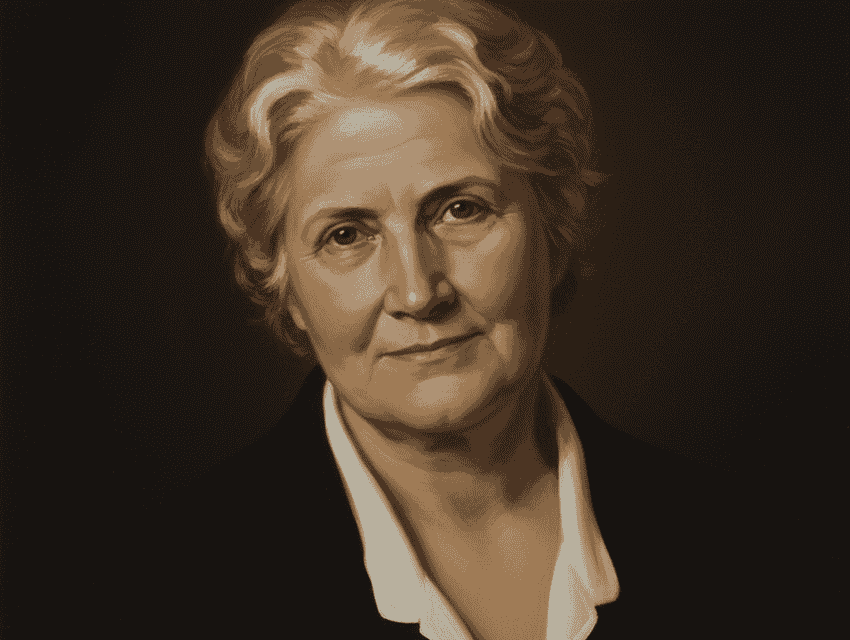
Dr Maria Montessori is known for her greatest contribution to the world. She is the one who opened the first school for Montessori education in Rome. The first Montessori school was opened on 6, January 1907. The Montessori school is named The Casa dei Bambini otherwise termed as Children’s House.
Dr Maria Montessori has a fame for travelling across the world to establish a new style of education that gathered the attention of too many people. She wrote extensively on the Montessori education. The new style of education created waves in the history of education. In today’s world, there are more than thousands of schools where learning is flexible and paced.
Maria Montessori was born in Italy which is the provisional town of Chiaravalle, on 31, August 1870. Her unquenchable thirst for knowledge sprouted out from her mother who was an ardent reader. Her father was a financial manager who supported her daughter. The educational system of Montessori bears her name as a result of the numerous attempts in the field of education.
Maria was famous as a woman who was not ready to succumb to the traditional roles of a woman. A woman of that age in Italy was not supposed to read and write. In that era, she stood out as someone who was really ambitious and brilliantly focused. She joined the all-boys technical institute at the age of 13 to learn the nuances of engineering. Later she changed her decision to become a doctor.
She applied to the medical program offered at Rome but was rejected mercilessly. Her unwavering mind and commitment forced her to join other courses to prepare and study for the medical entrance program. She was admitted to the medical school which was a grand victory for the women of that era in Italy. Through her, a wide vista of opportunities opened up in front of many women of the age.
In 1896, she graduated from medical school and became the first female physician in Italy. She showed a tremendous amount of courage and dedication which paved the way for this female to outshine in a male-dominated society. Pushing through the boundaries with her perseverance, she made a historic impact in the field of social, economic and educational sector.
Maria Montessori: Her Contributions to the World
1: What is the primary focus of the first plane of development in the Montessori method?
Psychiatry was the first field in which she worked and created a massive movement. She was deeply involved in the educational sector. She found that a change in the traditional style of learning is important for uplifting our society. Children with intellectual and developmental disabilities can be cured with the proper dedication, this is what helped her to experiment with new teaching-learning methodologies.
She was appointed in 1900 as the co-director of the special education teachers’ training institute. Dr Maria was keenly observing the teaching-learning methods that are executed with her scientific knowledge. She approached the problem scientifically. She carefully observed the importance of the teaching-learning methodologies adopted in traditional classrooms. The program was considered a huge success as many students achieved remarkable results.
In San Lorenzo, she opened a full-day child care centre. The first set of students were between the age of 3-7 and were given their own devices to learn while they were left alone in the absence of their parents. This centre later on developed itself as the first Montessori school.
Unlock your passion for education and shape young minds as a Montessori teacher!
Get Certified & Start Your Montessori Career
Montessori Teacher Training Course by Entri App: Gain expert skills, earn certification, and kickstart your teaching career.
Join Now!Montessori Education
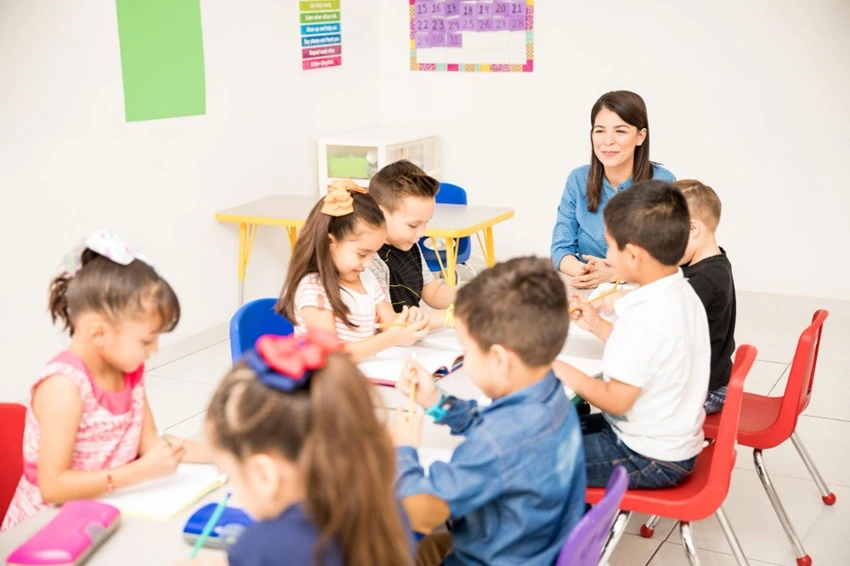
Montessori education is the most effective self-paced learning facilitated to create and disseminate knowledge. It is the student-led learning strategy that is proven to be effective. The students in Montessori education will be guided properly by the teachers backed by peer learning.
Montessori education is famous for its nurturing space and novel learning methodologies. The Montessori classrooms provide equal opportunities for multi-age groups to develop new learning experiences, opportunities and skills. The multi-age classrooms offer new possibilities for the growth of an individual from childhood to adulthood.
The passions are being nurtured in the classroom through multi-sensory learning techniques. The students are driven with passionate energy and enthusiasm to work, learn and develop their curiosity at their own deserved pace. The students in a Montessori academy can select their own pace of growth. They can meet their learning goals after completely comprehending the core concepts and values.
Unlock your passion for education and shape young minds as a Montessori teacher!
Montessori Education: A Brief History
Montessori students learn by questioning assumptions and exploring their environment. Known as self-directed learners, they take responsibility for themselves and their community. This approach fosters integrity, respect, and a practical, confident attitude toward life.
Dr Maria Montessori’s careful observations revealed children’s natural desire to learn. Early pupils—initially skeptical—rapidly engaged with riddles, puzzles and hands-on materials, absorbing lessons from their surroundings and progressing at their own pace. Her methods emphasised concentration, independence and learning through choice, which led to focused, effective study.
Montessori education spread quickly as educators recognised its success. The first Montessori school in America opened in New York in 1911, and today Montessori schools exist worldwide. Dr Montessori became an influential advocate for child-centred learning and women’s rights, lecturing and writing widely. Even during wartime exile she continued to promote her ideas, and she received Nobel Peace Prize nominations in 1949–1951. She died in 1952, leaving a legacy continued by her son Mario and a global Montessori movement.
Many prominent figures studied in Montessori settings, examples include Julia Child, Stephen Curry, Larry Page and Sergey Brin, showing how Montessori education can nurture lifelong strengths and success.
Core Features of Montessori Education
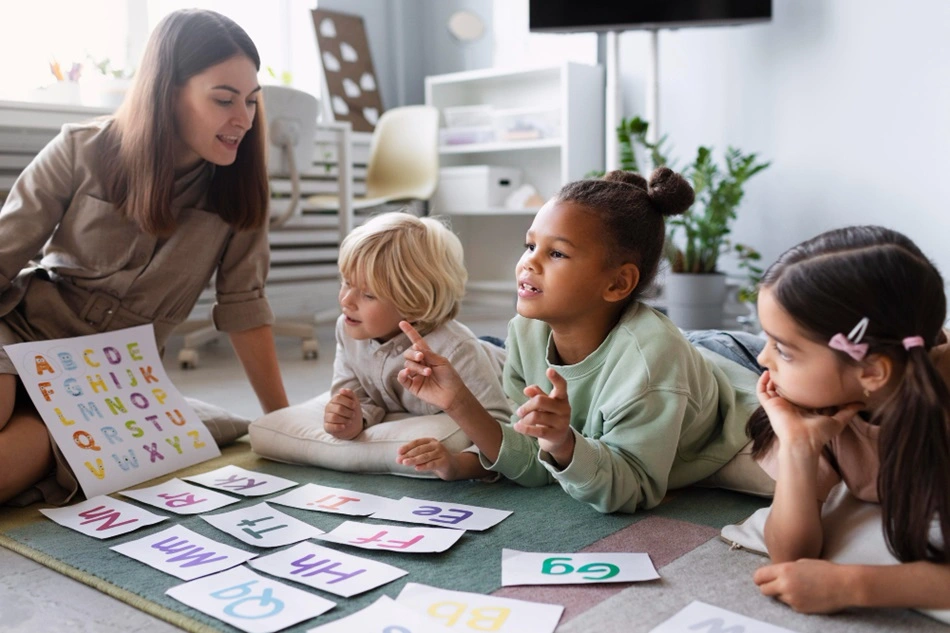
Montessori’s central idea is “freedom within limits.” Students choose their learning path within a structured environment, fostering self-direction and broad intellectual growth. Unlike traditional instruction, Montessori emphasises how to think, not what to think, prioritising critical thinking, creativity, and problem-solving over rote memorisation.
Key elements include:
-
Purposeful, tactile materials that guide self-correction and discovery.
-
Emphasis on breath-and-mind coordination, concentration and imagination.
-
Multi-age classrooms where children stay together for about three years, learning collaboration, mentorship and respect for different abilities.
-
Progress measured by observation and mastery rather than standard tests.
This method nurtures language development, independent study habits, and sustained curiosity. Carefully designed materials and activities create a clear structure that supports steady growth and development.
Inclusion, Adaptation & Global Relevance
Montessori classrooms adapt well across cultures and needs. Bilingual, faith-based or community-focused variants exist, and the approach can include children with language or learning differences. Its cross-cultural design encourages global awareness and connections, helping students interact beyond local boundaries.
Get Certified & Start Your Montessori Career
Montessori Teacher Training Course by Entri App: Gain expert skills, earn certification, and kickstart your teaching career.
Join Now!Final thoughts – Montessori, the way it was meant to be lived
Montessori’s legacy isn’t some dusty relic of a bygone era – it’s a living, breathing approach that grew out of Maria’s hands-on, real-world experimentation & problem-solving. Today, the challenge for educators is to keep that spirit alive and well – sticking to the core values however that looks like in your classroom (for us, that’s still respect for the child, a prepared environment, & the self-directed learning kids need to thrive) – while also being open to the needs of your community, making space for kids who need a little extra support, & being honest about the latest research.
If you’re a wannabe Montessori teacher, don’t just pick up some certification & call it a day – put in the work & invest in a training program that’ll actually teach you the ropes, get you in the classroom & give you some real guidance, and make sure they’re using the latest techniques & tools to help you teach. Because when you use the Montessori approach thoughtfully, you can give kids the space to get curious, concentrate, and just genuinely love learning – and those are the things we need more than ever.
| Also Read | |
| Montessori Learning Materials | |
| Practical Life Tools Creation Project | |
| Montessori Pink Tower Making | |
| Knobbed Cylinders in Montessori | |
Get Certified & Start Your Montessori Career
Montessori Teacher Training Course by Entri App: Gain expert skills, earn certification, and kickstart your teaching career.
Join Now!Frequently Asked Questions
Who was Maria Montessori?
Maria Montessori was an Italian physician and educator who developed the Montessori Method, a child-centred approach based on observation, independence and hands-on learning.
When did Montessori education begin?
Montessori education began in 1907 with the opening of the first Casa dei Bambini (Children’s House) in the San Lorenzo district of Rome.
What makes the Montessori method different from traditional teaching?
Montessori emphasises independence, self-directed learning, multi-age classrooms, practical life skills, and specially designed materials that allow children to learn at their own pace.
What are Montessori “sensitive periods”?
Sensitive periods are developmental windows when children are especially receptive to skills such as language, order, movement and sensorial exploration.
Is Montessori education suitable for all children?
Yes. Montessori classrooms are designed to support diverse learners, including children with language delays or special educational needs.
How do I become a Montessori teacher?
You need to complete a certified Montessori Teacher Training Course (TTC) that covers philosophy, materials, practicum and classroom observation. Entri provides an online Montessori TTC with international certification, live classes, practicum guidance and personalised learning support for aspiring Montessori teachers.