Table of Contents
Marriott International stands as one of the world’s most respected hospitality brands, known for its global presence, strong service culture, and commitment to people. At the heart of each hotel’s success is the HR Manager—an essential leader who shapes the team, drives employee engagement, and ensures smooth daily operations.
Because Marriott uses a competency-based interview approach, candidates must be well-prepared to demonstrate their skills, experiences, and alignment with the company’s values. Understanding what to expect can make all the difference in securing this vital role. This guide will help you understand what to expect in Marriott’s HR Manager interview process and how to confidently prepare for each competency-based question.
Is being an HR your dream? Enrol now for our course on Human Resource!
About the HR Manager Role at Marriott International
The HR Manager at Marriott International plays a central role in shaping a positive workplace, supporting hotel operations, and ensuring that every team member is equipped to deliver exceptional guest service. Acting as both a strategic leader and an employee advocate, the HR Manager helps maintain Marriott’s reputation for people-first hospitality.
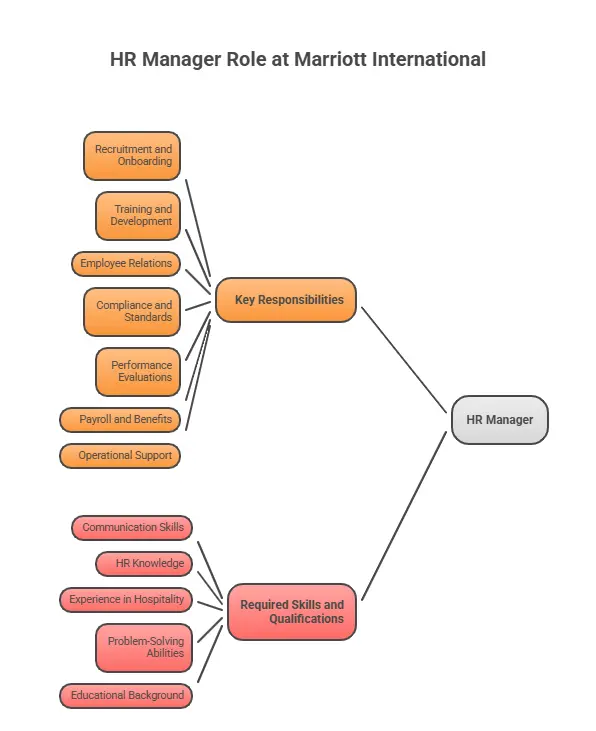
Key Responsibilities
-
Managing recruitment, selection, and onboarding processes
-
Coordinating training and development programs for staff
-
Overseeing employee relations and resolving workplace concerns
-
Ensuring compliance with labor laws, policies, and brand standards
-
Leading performance evaluations and supporting career growth
-
Handling payroll, benefits, and employee documentation
-
Supporting department heads in staffing and operational needs
Required Skills and Qualifications
-
Strong communication and interpersonal abilities
-
Solid understanding of HR policies, labor laws, and hospitality standards
-
Experience in talent acquisition and employee relations
-
Ability to handle sensitive information with discretion
-
Strong problem-solving and conflict-resolution skills
-
Bachelor’s degree in Human Resources or a related field (HR certifications are an advantage)
-
Prior HR experience in the hospitality sector is highly preferred
HR Manager’s Contribution to Employee Experience, Culture, and Service Excellence
HR Managers at Marriott play a vital role in cultivating a supportive, inclusive, and high-performing work environment. By promoting Marriott’s core values, guiding employee development, and ensuring staff feel recognized and empowered, they directly influence team morale and guest satisfaction. Their leadership helps maintain a strong service culture—creating the foundation for memorable guest experiences across every Marriott property.
Marriott’s Interview Style & Hiring Approach
Marriott International follows a structured and thoughtful hiring process designed to identify candidates who not only have strong HR expertise but also embody the company’s people-centered culture. Understanding this approach helps candidates prepare more confidently and present their experiences in a way that aligns with Marriott’s expectations.
Behavioral-Based Interview Technique (STAR Method)
Marriott commonly uses behavioral interview questions to understand how candidates handled real situations in previous roles.
The STAR method helps structure your response:
-
S – Situation: Provide context
-
T – Task: Explain your responsibility
-
A – Action: Describe the steps you took
-
R – Result: Share the measurable or meaningful outcome
This approach helps Marriott assess problem-solving skills, leadership qualities, and alignment with their service philosophy.
Marriott Culture and Values
Marriott’s interview process strongly reflects its core values, which guide all aspects of its operations:
-
Putting People First
-
Pursuing Excellence
-
Acting With Integrity
-
Embracing Change
-
Serving Our World
These values shape both employee behavior and guest experiences, so candidates must show they can support and model them in daily operations.
What Recruiters Look for in HR Manager Candidates
Marriott recruiters seek HR leaders who:
-
Demonstrate strong interpersonal and communication skills
-
Can resolve conflicts with fairness and empathy
-
Uphold ethical standards and confidentiality
-
Understand hospitality operations
-
Support team development and engagement
-
Maintain a people-first approach in decision-making
-
Show adaptability in a fast-paced environment
Become an HR Expert – Enroll in Our HR Management Course Today!
Unlock the secrets to effective Human Resource Management with our expert-led course! Learn recruitment, employee relations, performance management, and more to build a thriving workplace. Start your journey toward a successful HR career today!
Know MoreTop Marriott International HR Manager Interview Questions & Answers
General HR Manager Questions
Q1. Tell me about yourself.
Answer: I have ___ years of HR experience in hospitality-driven environments, where I’ve managed recruitment, employee relations, learning & development, and HR compliance. I enjoy building strong teams, supporting leaders, and creating a workplace where employees feel valued — which aligns with Marriott’s “Putting People First” culture.
Q2. What makes you a strong fit for Marriott International?
Answer: My people-first approach, experience in hotel operations, and strong foundation in employee relations align directly with Marriott’s values. I’ve successfully improved engagement, reduced turnover, and strengthened service culture — all priorities in the Marriott HR Manager role.
Q3. How do you handle pressure in a fast-paced hospitality environment?
Answer: I stay organized, prioritize by urgency and impact, and maintain clear communication with department leaders. In hospitality, pressure is constant, so I focus on supporting the team and ensuring HR processes run smoothly even during peak operations.
Behavioral Questions (STAR Method)
Q4. Describe a time you resolved a conflict between two employees.
Answer:
- Situation: Two supervisors disagreed on shift leadership.
- Task: Restore communication and team harmony.
- Action: I held one-on-ones, facilitated a mediated conversation, clarified responsibilities, and reinforced expectations.
- Result: Collaboration improved and guest satisfaction scores on their shift rose.
Q5. Tell me about a situation where you improved an HR process.
Answer:
- S: Onboarding was inconsistent across departments.
- T: Standardize it across the hotel.
- A: I created a structured 3-day orientation, standardized checklists, and added culture-focused training.
- R: New-hire satisfaction improved and time-to-productivity shortened.
Q6. Give an example of when you led a successful team initiative.
Answer:
- S: Engagement scores dipped during peak workload.
- T: Boost morale.
- A: Launched recognition programs, cross-department bonding sessions, and manager coaching.
- R: Engagement increased and turnover reduced within one quarter.
Employee Relations Questions
Q7. How do you handle grievances or disputes?
Answer: I listen objectively, gather facts from all sides, and apply policies fairly. I ensure confidentiality and work toward solutions that support both the employee and operational needs.
Q8. How do you ensure employee engagement in a hotel setting?
Answer: I focus on open communication, timely recognition, feedback channels, and development opportunities. Engagement grows when employees feel heard, supported, and connected to Marriott’s mission.
Q9. How do you support employees during organizational change?
Answer: I provide transparent communication, reinforce Marriott’s culture, and ensure employees receive guidance and training to adapt comfortably.
Recruitment & Training Questions
Q10. How do you ensure quality hiring in hospitality roles?
Answer: I evaluate both skills and culture fit, use behavioral interviewing, and collaborate closely with hiring managers to understand role expectations, service standards, and long-term operational needs.
Q11. Explain your approach to onboarding and training hotel staff.
Answer: I prioritize Marriott culture, service Expectations, and brand standards in onboarding. Training includes job shadowing, departmental orientation, and continuous coaching to set new hires up for success.
Q12. What strategies do you use to reduce turnover?
Answer: Consistent recognition, career-pathing, strong coaching for leaders, and regular employee touchpoints. Understanding root causes helps me build targeted retention plans.
Leadership & Culture-Fit Questions
Q13. How do you promote Marriott’s culture in your teams?
Answer: By integrating culture into daily operations — recognizing behaviors that reflect Marriott values, communicating expectations clearly, and reinforcing people-first leadership.
Q14. Describe your leadership style.
Answer: I lead with empathy, transparency, and accountability. I coach rather than instruct, and I aim to empower employees so they can deliver exceptional service.
Q15. How do you build strong relationships with department leaders?
Answer: Through partnership, reliability, and consistent communication. I support their staffing needs, provide HR guidance, and collaborate on engagement and performance goals.
HR Policy & Compliance Questions
Q16. How do you maintain compliance with labor laws?
Answer: I stay updated on legal changes, audit scheduling and documentation practices, and train managers to ensure consistent and lawful HR operations.
Q17. How do you manage sensitive employee data?
Answer: By following strict confidentiality guidelines, ensuring secure storage, limiting access, and complying with data protection standards.
Q18. How do you approach investigations into misconduct?
Answer: I remain neutral, collect all relevant facts, document thoroughly, and ensure decisions align with both Marriott policy and legal requirements.
Q19. How do you ensure employees understand HR policies?
Answer: By conducting training, providing clear documentation, and reinforcing expectations through reminders, meetings, and coaching.
Q20. How do you handle a high-performing employee who violates policy?
Answer: I remain consistent and fair, applying the policy objectively while also coaching the employee on expectations and corrective measures.
Additional JD-Aligned Questions
Q21. How do you support a diverse and inclusive workplace?
Answer: By promoting fair hiring, running inclusion training, ensuring equal opportunity practices, and creating a culture where all associates feel respected.
Q22. Describe a time you managed staffing shortages.
Answer: I partnered with leaders to adjust schedules, cross-trained employees, and fast-tracked recruitment — maintaining service quality throughout.
Q23. What HR metrics do you track regularly?
Answer: Turnover, time-to-hire, engagement scores, training completion, disciplinary trends, and attendance metrics — all aligned with Marriott’s operational goals.
Q24. How do you handle underperforming employees?
Answer: Through coaching, clear performance expectations, and structured improvement plans. If improvement doesn’t follow, I take action based on policy.
Q25. Why do you want to be an HR Manager in hospitality — specifically at Marriott?
Answer: I love hospitality’s people-driven nature, and Marriott stands out for its culture, global reputation, and commitment to employee development. Supporting teams who directly impact guest experiences is deeply motivating to me.
Is being an HR your dream? Enrol now for our course on Human Resource!
What to Expect in the Interview Process
Marriott International follows a structured, people-first, competency-based hiring approach. As a candidate for the HR Manager role, you can expect a multi-step interview experience designed to assess your technical HR expertise, leadership qualities, cultural alignment, and ability to support a fast-paced hospitality environment.
Below is a detailed breakdown of each stage:
1. Screening Call
The hiring journey typically begins with a brief screening call from a recruiter or HR representative.
What to expect:
-
A quick review of your background and experience
-
Basic questions about your HR skills and hospitality knowledge
-
Confirmation of job expectations, availability, and salary range
-
A chance to ask initial questions about the role or property
Purpose:
To determine whether your profile matches Marriott’s minimum requirements before moving forward.
2. HR Round
This stage is usually conducted by a corporate recruiter or property-level HR team member.
What to expect:
-
A deeper discussion about your HR experience
-
Questions on employee relations, compliance, and conflict resolution
-
Insights into Marriott’s values and service culture
-
Evaluation of your communication style and professionalism
Purpose:
To assess your HR capability, people-first mindset, and alignment with Marriott’s commitment to employee care and service excellence.
3. Hiring Manager Round
The third stage typically involves the Hotel HR Director, Area HR Leader, or Department Head you will be supporting.
What to expect:
-
Scenario-based questions related to hotel operations
-
Discussions about staffing challenges, turnover, and employee engagement
-
Questions assessing your ability to partner with department heads
-
Real examples from your past experience
Purpose:
To evaluate your hands-on problem-solving skills, leadership impact, and ability to manage daily HR operations in a hospitality setting.
4. Behavioral and Situational Questions
Marriott uses a behavioral-based interview style, often guided by the STAR method (Situation, Task, Action, Result).
What to expect:
-
“Tell me about a time…” questions
-
Situational scenarios like handling a staff dispute, managing peak-season turnover, or resolving guest-related employee issues
-
Questions about past leadership behavior, adaptability, and values alignment
Purpose:
To predict future performance by understanding how you handled real-world challenges in the past.
5. Case Study or Role-Play Scenarios (Optional)
Some Marriott locations may include a practical component, especially for senior HR Manager roles.
Possible scenarios:
-
Mediating a conflict between two department supervisors
-
Handling an urgent staffing crisis
-
Coaching a manager on performance issues
-
Designing an action plan to improve engagement scores
Purpose:
To see how you think on your feet, communicate under pressure, and apply HR expertise in real-time.
6. Culture-Fit Evaluation
Marriott places strong emphasis on its core values: Putting People First, Pursuing Excellence, Acting With Integrity, Embracing Change, and Serving Our World.
What to expect:
-
Questions about your leadership philosophy
-
Examples of how you support culture-building in previous roles
-
How you’ve created positive employee experiences
-
How you handle diversity, change, and ethical dilemmas
Purpose:
To gauge whether you embody Marriott’s people-centric leadership approach and can contribute positively to its service-driven culture.
Tips to Prepare for the Marriott International HR Manager Interview
Preparing thoroughly for your interview is essential, especially for a people-centric brand like Marriott International. Here are key tips to help you present yourself confidently and align your experience with Marriott’s expectations:
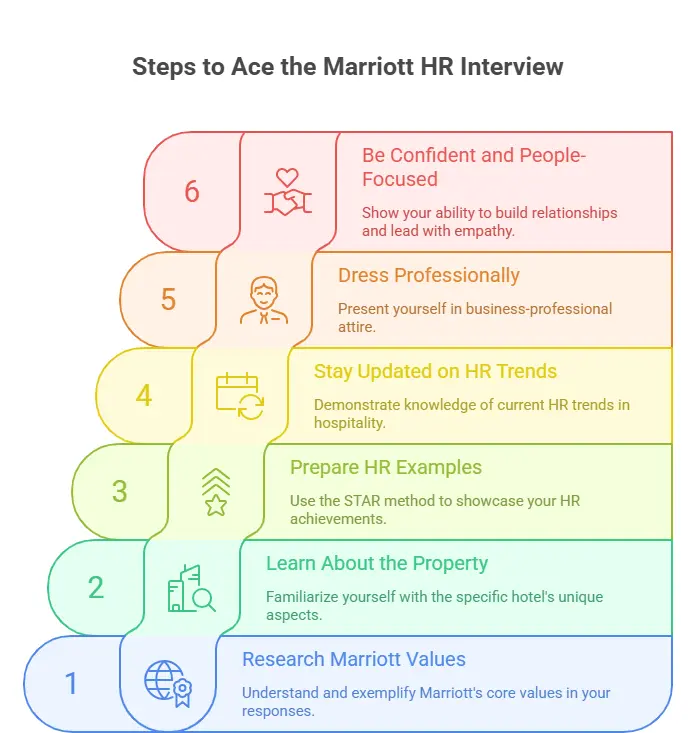
1. Research Marriott’s Values, Culture, and Service Philosophy
Marriott’s culture is built on strong principles such as Putting People First, Pursuing Excellence, Acting With Integrity, Embracing Change, and Serving Our World.
To stand out:
-
Understand how these values influence daily operations
-
Use examples that show you live these values
-
Be ready to explain how you’ll strengthen Marriott’s people-first workplace culture
2. Learn About the Specific Hotel Property
Every Marriott property has unique strengths, staffing needs, guest demographics, and operational challenges.
Do your homework by exploring:
-
The property’s size and departments
-
Its reputation and guest experience focus
-
Any awards, reviews, or service highlights
This knowledge shows genuine interest and allows you to tailor your answers to the property’s real needs.
3. Prepare Examples of Your HR Achievements
Marriott uses the STAR method, making strong examples essential.
Prepare stories that highlight:
-
Conflict resolution
-
Employee relations improvements
-
Engagement or retention success
-
Policy implementation
-
Training or onboarding enhancements
-
Collaboration with department leaders
Show measurable outcomes whenever possible.
4. Stay Updated on HR Trends in Hospitality
Hospitality HR evolves quickly, especially in areas like:
-
Talent shortages
-
Employee engagement strategies
-
Cross-training and skill development
-
Diversity and inclusion in service teams
-
Technology adoption in HR systems
Demonstrating up-to-date knowledge shows you’re proactive and ready to support modern hotel operations.
5. Dress Professionally
Marriott maintains a polished, service-oriented environment. Wear business-professional attire that reflects the brand’s standards of elegance, cleanliness, and professionalism. First impressions matter in hospitality.
6. Be Confident and People-Focused
As an HR Manager at Marriott, your ability to build relationships, inspire trust, and lead with empathy is crucial.
During the interview:
-
Maintain positive body language
-
Listen actively
-
Speak with warmth and clarity
-
Demonstrate genuine care for employee wellbeing
Marriott hires HR leaders who elevate both staff experience and guest experience.
Is being an HR your dream? Enrol now for our course on Human Resource!
Become an HR Expert – Enroll in Our HR Management Course Today!
Unlock the secrets to effective Human Resource Management with our expert-led course! Learn recruitment, employee relations, performance management, and more to build a thriving workplace. Start your journey toward a successful HR career today!
Know MoreConclusion
Preparing thoroughly for a Marriott International HR Manager interview is essential, especially for a brand that places such a strong emphasis on people, culture, and service excellence. Understanding Marriott’s values, knowing what to expect in the interview stages, and practicing competency-based answers will help you present yourself as a confident, capable, and people-focused HR leader.
Use the questions and insights provided in this guide to strengthen your responses, reflect on your HR achievements, and demonstrate how you can contribute to Marriott’s world-class employee experience and guest service culture. With the right preparation and mindset, you’ll be ready to make a strong impression and take your next step toward a rewarding HR career at Marriott International.
Become an HR Expert – Enroll in Our HR Management Course Today!
Unlock the secrets to effective Human Resource Management with our expert-led course! Learn recruitment, employee relations, performance management, and more to build a thriving workplace. Start your journey toward a successful HR career today!
Know MoreFrequently Asked Questions
What skills do Marriott HR Managers need?
Marriott HR Managers need strong communication skills, employee relations expertise, problem-solving ability, knowledge of labor laws, leadership capability, and a people-first mindset. Experience in hospitality HR is highly preferred.
How do I prepare for a Marriott HR Manager interview?
Study Marriott’s culture and core values, review the job description, prepare STAR-based examples from your HR experience, and understand key hospitality HR trends. Practicing behavioral questions will significantly improve your confidence.
What kind of behavioral questions does Marriott ask?
Marriott commonly uses STAR-based questions such as:
-
“Tell me about a time you resolved a conflict at work.”
-
“Describe a situation where you improved an HR process.”
-
“Give an example of when you led a successful team initiative.”
These questions help assess leadership, problem-solving, and cultural fit.
Is the HR Manager role at Marriott demanding? Answer: Yes, the role can be demanding due to the fast-paced nature of hotel operations. HR Managers handle staffing needs, employee relations, compliance, and engagement initiatives. However, Marriott’s supportive culture and strong HR structure help make the role manageable and rewarding. 5. What is the salary range for HR Managers at Marriott? Answer: Salary varies by country, hotel size, and experience level. Typically, Marriott HR Managers earn a competitive package that may include base salary, bonuses, and benefits. Candidates should check local job listings for accurate regional salary information.
Yes, the role can be demanding due to the fast-paced nature of hotel operations. HR Managers handle staffing needs, employee relations, compliance, and engagement initiatives. However, Marriott’s supportive culture and strong HR structure help make the role manageable and rewarding.
What is the salary range for HR Managers at Marriott?
Salary varies by country, hotel size, and experience level. Typically, Marriott HR Managers earn a competitive package that may include base salary, bonuses, and benefits. Candidates should check local job listings for accurate regional salary information.
Does Marriott use the STAR method in interviews?
Yes. Marriott relies heavily on the STAR (Situation, Task, Action, Result) method to assess how candidates have handled real workplace situations. Expect many behavioral and situational questions.
How important is cultural fit at Marriott?
Cultural fit is extremely important. Marriott values empathy, integrity, teamwork, and a people-first approach. Interviewers look for HR professionals who can uphold and nurture this culture.
What does an HR Manager at Marriott do daily?
Daily responsibilities include managing recruitment, supporting employee relations, training staff, coaching managers, ensuring compliance, monitoring performance, and strengthening the hotel’s work culture.
Do I need hospitality experience for the HR Manager role?
Hospitality experience is highly preferred because hotel operations require quick problem-solving, strong teamwork, and an understanding of service standards. However, strong HR leadership experience in similar fast-paced industries can also be valuable.
What qualities does Marriott look for in an HR Manager?
Marriott looks for leaders who are empathetic, ethical, culturally aligned, results-focused, and excellent communicators. The ability to support employees, partner with leaders, and contribute to service excellence is key.