Table of Contents
Introduction
Modern buildings depend on advanced systems to operate effectively. MEP engineers design and oversee these essential systems. They manage mechanical components such as heating, ventilation, and air conditioning. These engineers handle electrical elements including lighting, power supply, and safety features. They also take care of plumbing aspects like water distribution, drainage, and fire suppression. Their expertise guarantees comfort, safety, and operational efficiency in residential homes, commercial offices, medical facilities, and industrial plants. Germany experiences ongoing requirements for qualified MEP engineers. The nation constructs new structures while modernizing existing ones. This situation produces consistent job vacancies. Specialists in this area receive attractive compensation that enables comfortable lifestyles.
Recent information indicates that MEP engineers in Germany obtain appealing pay packages. Beginners typically start with around €48,000 annually. Experienced individuals frequently achieve €85,000 or higher. These numbers represent gross earnings before deductions. Employers commonly include extra advantages that enhance overall rewards. The pay system recognizes professional development. Engineers increase their income as they acquire more abilities and accept greater duties. Geographic location plays an important role. Urban centers with robust industries deliver higher compensation. Munich and Stuttgart stand at the forefront. Smaller communities present reduced living expenses while still supplying respectable salaries.
Germany emphasizes superior engineering standards. MEP professionals participate in environmentally responsible initiatives. They contribute to structures that conserve energy and incorporate renewable technologies. This involvement delivers fulfillment that extends past financial compensation. Demand keeps growing steadily. Germany pursues carbon neutrality by 2045. This ambitious objective necessitates specialists capable of implementing intelligent heating, cooling, and electrical networks. MEP engineers hold a crucial position in reaching these environmental targets.
Join our MEP Course Online and Build a Successful Career!
What Is an MEP Engineer?
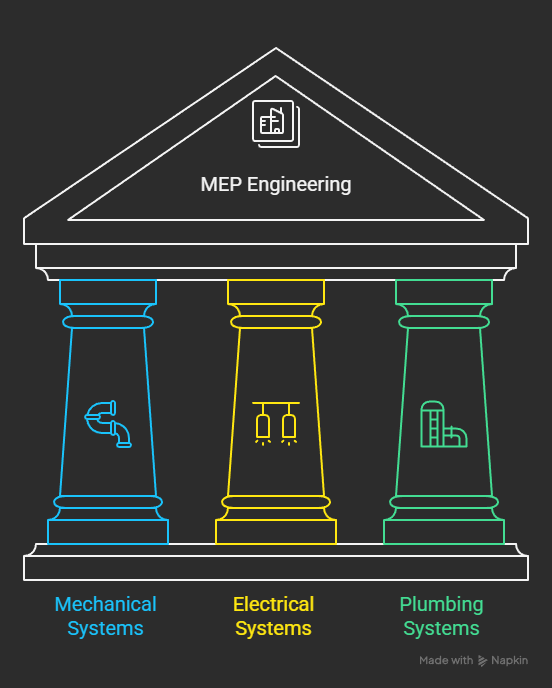
MEP engineers concentrate on essential building services. They address three primary domains in their work. Mechanical systems encompass heating, ventilation, and air conditioning installations. Electrical systems cover lighting arrangements, power distribution networks, and emergency safety equipment. Plumbing systems manage fresh water supply, wastewater removal, and fire protection measures.
These experts engage in projects from initial planning through final delivery. They develop designs that satisfy client requirements and comply with regulations. They coordinate closely with architects and fellow engineers to achieve seamless system integration. Their efforts prevent clashes between different building components during construction phases.
Routine responsibilities change according to project progress. Initial stages involve detailed calculations and technical drawings. Advanced stages require on-site examinations and solution development. MEP engineers conduct performance tests to verify systems function correctly. They suggest modifications that improve energy conservation and operational reliability.
Required competencies include deep technical knowledge combined with careful precision. Advanced software assists with three-dimensional modelling and performance simulation. Effective communication supports teamwork across disciplines. Strong analytical abilities help overcome on-site difficulties efficiently.
MEP engineers find employment in consulting offices, general contractors, and property management groups. Certain specialists focus on healthcare facilities where strict cleanliness rules apply. Others dedicate attention to data processing centres that demand exact temperature control. Industrial assignments often involve integration of large-scale machinery.
The profession requires constant skill updates. Emerging technologies appear frequently in the market. Energy-saving innovations and intelligent control systems transform traditional design methods. Professionals maintain relevance through specialized courses and industry gatherings.
Germany places high value on certified MEP engineers. Official qualifications unlock access to superior roles. Degrees earned abroad frequently undergo formal assessment for recognition. Supplementary credentials strengthen professional standing significantly.
Average MEP Engineer Salary in Germany
The average German MEP engineer earns €62,000 a year. This amount reflects gross annual income before taxes. Actual figures may differ depending on multiple factors. Most professionals earn between €52,000 and €78,000 a year. Young engineers start at €48,000 – €55,000 a year. This is a bracket for those with less than three years of practical experience. Employers often provide structured training to develop relevant skills at work. Mid-career professionals with five to ten years of background earn between €65,000 and €75,000 on average. They are responsible for complex tasks and mentor less experienced colleagues. Their knowledge makes up for high compensation.
Senior MEP engineers maintain annual incomes over €80,000. Individuals of over fifteen years are more likely to earn €90,000 or more. Leadership responsibilities include performance incentives and perks. MEP-related work is paid a fixed salary of €32 an hour. The traditional 40-hour week is the usual structure for full-time work. Additional wages apply when working on projects with longer periods of time.
Total pay packages go beyond basic wages. Many employers offer achievement based bonuses. These increase between 10% and 15% of the annual earnings. The use of company cars and subsidized public transportation lower personal expenses by substantial amounts. Another important benefit is the compulsory pension contribution. This is in line with the German law which requires employers to pay for retirement accounts. It creates significant financial security during the career. German MEP engineers are still paying close attention to other technical fields. Electrical engineers pay the same average. Civil engineers generally earn less than that. MEP specialization is important to the building services industry.
Salary by Experience Level
Professional experience influences MEP engineer salary in Germany to a considerable degree. Recent graduates enter the field at modest starting rates. Each additional year opens pathways to salary increases and elevated positions. Individuals with one to two years of practice earn around €53,000 annually. They concentrate on mastering organizational procedures and standard workflows. Fundamental design responsibilities constitute their primary contributions. Experienced mentors provide direction during this formative phase.
Professionals possessing three to five years of experience average €60,000. Engineers assume increased accountability at this stage. They direct smaller-scale projects and instruct newer team members. Developing niche competencies begin to attract higher compensation. Six to ten years of background designates mid-level status. Salaries reach approximately €69,800 on average. Handling sophisticated system coordination becomes standard practice. Project oversight duties frequently emerge during this period.
Eleven to fifteen years of accumulated experience produces a median of €76,000. Senior engineers supervise groups and evaluate technical submissions. Regular client interactions occur. Their recommendations shape important project outcomes. Sixteen to twenty years pushes compensation toward €85,000. Specialists at this level engage in strategic oversight. They establish departmental protocols and prepare future supervisors. Independent consulting arrangements sometimes supplement main income sources.
More than twenty years of service often exceeds €90,000. Department heads or principal engineers occupy these positions. Their judgments impact broad organizational directions. Executive-level incentives contribute meaningful additional sums. Ongoing education accelerates salary progression. Credentials in sustainable architecture or leadership management prove advantageous. Mastery of contemporary design software facilitates quicker advancement. Career transitions occasionally adjust experience valuation partially. Moving to larger organizations commonly yields immediate pay improvements. Global project exposure enhances market value considerably.
Salary by City in Germany
Geographic location exerts noticeable effects on MEP engineer salary in Germany. Regions with concentrated industrial activity offer elevated compensation to secure qualified personnel. Variations in living expenses accompany these pay differences.
Munich delivers the highest typical salaries at approximately €70,000 per year. The city accommodates numerous high-technology enterprises. Automotive manufacturing and aerospace industries generate substantial demand. Elevated housing costs correspond with these premium rates.
Stuttgart provides close competition with averages around €74,785 in engineering positions. Vehicle production companies dominate local employment. MEP engineers support factory infrastructure and research environments. Superior salaries reflect this strategic economic importance.
Frankfurt averages €71,840 annually. Financial institutions require sophisticated building technologies. Data processing facilities and corporate headquarters demand expert MEP planning. Multinational corporations concentrate in this area.
Berlin records engineering averages near €62,731. Entrepreneurial environments foster creative developments. Public administration buildings and cultural institutions present varied assignments. Salaries advance rapidly with demonstrated capability.
Hamburg achieves €67,700 on average. Maritime operations and ship construction necessitate specialized MEP knowledge. Renewable power initiatives expand available roles. Expertise in port-related systems attracts additional compensation.
Düsseldorf offers €64,112 typically. Manufacturing and business developments maintain consistent workloads. Close proximity to neighbouring countries broadens project possibilities. Multilingual proficiency benefits cross-border activities.
Smaller urban centres deliver lower base pay yet provide distinct benefits. Reduced housing expenses enhance daily living standards. Leipzig and Dresden average below €56,500. Project quality continues to meet high standards.
Remote and hybrid working arrangements gain increasing acceptance. Certain employers permit flexible location choices. This option enables professionals to select economical residences while maintaining metropolitan compensation levels.
Salary by Industry Sector
Various industry sectors present distinct MEP engineer salary in Germany patterns. Consulting firms in building services deliver reliable base compensation. Heavy industrial applications frequently incorporate completion bonuses.
Building services consultancies average around €60,000 annually. Commercial properties and residential developments form core business activities. Energy optimization advisory roles command specialized premiums.
Automotive manufacturing rewards technical proficiency generously. Production facility MEP systems demand exceptional accuracy. Salaries readily reach €65,000. Facilities focused on electric vehicle assembly offer particularly attractive rates.
Energy sector organizations prioritize sustainable implementations. Renewable source installations require proficient MEP coordination. Base pay averages €60,000 while project success incentives occur regularly.
Healthcare and research laboratory environments enforce rigorous compliance standards. Compensation exceeds €68,000 because of inherent complexity. Expertise in controlled environment design generates further increases.
Data centre construction represents rapidly expanding demand. Precision cooling infrastructure proves vital for reliability. Specialists regularly earn €75,000 or above in this niche.
Public sector employment emphasizes long-term stability. Government-funded initiatives average approximately €58,000 yet deliver exceptional supplementary benefits. Retirement provisions stand out as especially advantageous.
Manufacturing operations display wide variation. Major corporations surpass smaller operations in compensation. Knowledge of automated process integration elevates earnings within factories.
Factors That Influence MEP Engineer Salary
Multiple elements determine final MEP engineer salary in Germany amounts. Educational attainment establishes initial positioning. Advanced master’s qualifications enable superior entry-level placements compared to bachelor’s degrees.
Employer scale impacts compensation significantly. Large multinational corporations exceed smaller enterprises in pay offerings. They maintain defined progression tracks and superior technical resources. Mid-sized companies balance attractive salaries with personalized development attention.
Specialized certifications enhance market value considerably. Proficiency in building information modelling attracts higher rates. Credentials in green construction appeal to eco-focused developments. Competence with industry-standard software such as Revit or AutoCAD provides advantages.
Language capabilities contribute meaningfully. Strong German proficiency broadens position availability. English suffices within many international project teams. Knowledge of additional languages supports dealings with diverse international clients.
Assignment complexity directly affects compensation. Medical facilities and scientific laboratories offer elevated pay due to stringent requirements. Heavy industrial settings with extensive machinery integration increase earning potential.
Effective negotiation techniques influence starting offers substantially. Thorough awareness of prevailing market standards strengthens bargaining positions. Clear presentation of pertinent prior achievements supports requests for improved terms.
Broader economic patterns affect overall salary movements. Periods of vigorous construction activity elevate compensation industry-wide. Economic slowdowns moderate growth rates although outright reductions remain uncommon.
Union affiliation supplies protective safeguards. Collective bargaining agreements define minimum compensation floors. Periodic revisions sustain competitive positioning against market changes.
Job Market and Demand for MEP Engineers in Germany
Germany currently requires additional MEP engineers to meet infrastructure needs. Persistent skilled worker shortages delay project schedules in construction. National policies promote both domestic training programs and qualified immigration.
Ambitious renewable energy objectives generate fresh employment positions. Wind farms and solar installations necessitate effective MEP system incorporation. Existing building upgrades focused on energy performance create reliable workloads.
Modernization of transportation infrastructure sustains demand. Railway terminals and airport facilities undergo extensive system enhancements. Smart urban development concepts integrate progressive building management technologies.
An aging professional demographic produces natural vacancies. Numerous seasoned engineers near retirement age. Emerging talent encounters accelerated promotion opportunities as a result.
Cross-border project involvement broadens professional horizons. German companies execute assignments throughout Europe and further afield. MEP engineers acquire familiarity with varied regulatory frameworks and environmental conditions.
Experienced practitioners explore independent consulting possibilities. Advisory services permit greater schedule autonomy. Hourly rates frequently reach €80 for recognized specialists.
Online recruitment platforms display hundreds of monthly vacancies. Principal metropolitan areas contain the highest concentration of listings. Regional locations present reduced applicant competition.
Dedicated educational pathways address capability requirements. Technical universities and vocational institutions prepare incoming professionals. Corporate apprenticeship schemes deliver practical field training.
Projections indicate sustained sector expansion through 2030. Advancements in digital systems and environmental priorities reinforce positive outlook. MEP engineer salary in Germany mirrors persistent market requirements.
How to Become an MEP Engineer in Germany
Begin with appropriate academic preparation. A bachelor’s degree in mechanical engineering or electrical engineering supplies fundamental knowledge. Master’s level studies enable focused expertise in building services engineering. Secure recognition for qualifications obtained outside Germany through authorized procedures. Official degree assessments confirm comparability to local standards. Supplementary coursework occasionally completes necessary equivalencies. Accumulate hands-on experience via internship placements. Construction environments offer invaluable practical exposure. Design offices teach essential software applications and compliance standards. Develop German language proficiency to at least intermediate B1 level. Technical terminology facilitates everyday professional interactions. Initial recruitment discussions often proceed in English within international settings.
Acquire required professional certifications. Training in applicable building regulations proves fundamental. Occupational safety qualifications demonstrate commitment to standards. Compile a comprehensive portfolio showcasing completed work. Include technical drawings, engineering calculations, and resolved challenges. This collection effectively demonstrates applied competence to prospective employers. Participate in professional networking activities. Engineering societies organize regular gatherings and conferences. Digital communities connect specialists nationwide.
Submit applications tailored to current capability levels. Introductory positions emphasize supportive responsibilities. Demonstrated performance enables steady progression. Explore appropriate visa pathways for non-EU candidates. The EU Blue Card accommodates qualified technical specialists. Designated minimum salary criteria apply to this residence permit. Commit to lifelong learning to preserve competitiveness. Brief specialized courses maintain awareness of evolving regulations and technological developments.
Benefits Beyond Salary
MEP engineer salary in Germany accompanies substantial supplementary advantages. Employment contracts guarantee a minimum of 30 paid vacation days each year. Official public holidays provide additional rest periods. Statutory health insurance delivers extensive medical coverage. Employer contributions significantly lower individual expenses. Supplementary dental and optical care plans frequently feature in packages.
Retirement provision receives regular employer matching contributions. These allocations accumulate considerable funds across decades. Favourable tax treatment enhances this long-term benefit. Allocated professional development funds support continued education. Organizations cover expenses for relevant training programs and industry conferences. Designated study leave accommodates participation. Employment stability ranks among the highest in Europe. Legal protections require substantial justification for contract termination. Extended notice periods facilitate orderly career transitions.
Flexible scheduling arrangements appear in numerous agreements. Defined core working hours maintain team synchronization. Remote work provisions decrease daily commuting burdens. Transportation subsidies reduce routine personal costs. Subsidized public transit passes generate meaningful savings. Parking allowances assist those using private vehicles. Family-oriented policies encompass generous parental leave entitlements and childcare support measures. These provisions assist professionals in maintaining balanced personal and professional lives.
Tips to Maximize Your Salary as an MEP Engineer
Concentrate efforts on high-demand specialization areas. Expertise in sustainable building design attracts premium compensation. Proficiency in data centre infrastructure grows increasingly valuable. Pursue formal leadership development opportunities. Project management credentials unlock senior-level responsibilities. Demonstrated team supervision experience hastens career elevation.
Select geographic locations strategically for employment. Major economic centres deliver higher base pay although accompanied by elevated costs. Calculate actual disposable income following local expense deductions. Negotiate comprehensive benefit packages alongside base compensation. Extended vacation allowances or structured bonus programs add substantial value. Flexible remote arrangements decrease transportation and time expenditures. Cultivate extensive professional relationships within the industry. Personal recommendations frequently lead to superior positions. Established contacts supply current market intelligence.
Maintain detailed records of professional accomplishments. Performance evaluations benefit from specific quantifiable examples. Clear documentation of project contributions strengthens advancement cases. Explore independent consulting pathways after sufficient experience accumulation. Self-employed rates commonly surpass traditional employee compensation. Development of business management capabilities becomes essential.
Remain informed about emerging technological developments. Knowledge of automated building management systems distinguishes candidates. Integration expertise with intelligent infrastructure attracts strong employer interest. Conduct regular compensation reviews against prevailing standards. Market conditions evolve with economic cycles. Prepared professionals capitalize effectively on favourable shifts.
Comparison with Other Countries
MEP engineer salary in Germany demonstrates favourable positioning relative to numerous international markets. The United States presents higher nominal base figures yet provides fewer comprehensive benefits. Substantial cost-of-living variations narrow the effective difference.
The United Kingdom delivers comparable average compensation accompanied by higher taxation rates. Standard working hours frequently exceed German norms. Annual leave entitlements fall considerably shorter. Switzerland consistently offers the highest European compensation levels. Living expenses align closely with these elevated salaries. Overall quality of life maintains exceptional standards. Australia combines attractive pay with appealing outdoor-oriented lifestyles. Geographic distance from Europe influences family relocation decisions. Construction sector cycles affect employment continuity.
Several Asian markets provide lower base compensation yet exhibit rapid growth trajectories. Singapore approaches European standards for seasoned professionals. Language expectations differ markedly across regions. Eastern European countries generally offer reduced salaries offset by accelerated career advancement potential. Lower regional living costs enhance net financial outcomes.
Germany achieves a balanced equilibrium between compensation and comprehensive lifestyle advantages. Robust social welfare frameworks deliver security. Established work-life integration supports sustained personal satisfaction.
Join our MEP Course Online and Build a Successful Career!
Conclusion
MEP engineer salary in Germany establishes a strong financial foundation that supports comfortable living standards. Compensation ranges extend from approximately €48,000 for entry-level positions to over €90,000 for senior specialists. Experience accumulation, geographic placement, and technical specialization substantially shape individual outcomes. The profession delivers notable stability together with clear advancement pathways. Persistent market demand ensures reliable employment security. Continuous infrastructure investments and sustainability commitments generate expanding opportunities.
Individuals contemplating entry into this field encounter meaningful and rewarding professional engagement. Technical complexity combines effectively with direct societal impact. Germany extends welcoming conditions to capable engineers through competitive total compensation structures. Practitioners currently active within the sector possess multiple avenues for earnings optimization. Strategic specialization decisions and persistent skill development yield significant returns. The MEP discipline maintains promising prospects for committed professionals.
Germany sustains substantial investment in construction quality and operational efficiency. MEP engineers lead these essential improvements. Their specialized knowledge shapes tomorrow’s built environment nationwide. Career planning should incorporate complete consideration of available factors. Base salary constitutes an important component while comprehensive benefits and lifestyle quality contribute equally. MEP engineer salary in Germany effectively supports both financial objectives and personal fulfilment. The field remains open to motivated new entrants. Anticipated requirements suggest continued growth in the coming years. Professionals who invest in thorough preparation discover outstanding opportunities within Germany.
Master MEP Design with Industry-Leading Training!
Gain in-depth knowledge of Mechanical, Electrical, and Plumbing (MEP) Design with expert-led courses. Learn HVAC, fire safety, sustainable building strategies, and BIM applications to excel in the construction industry.
Know MoreFrequently Asked Questions
What does an MEP Engineer in Germany actually do, and why is the role so critical to modern construction?
An MEP (Mechanical, Electrical, and Plumbing) Engineer in Germany is the specialist responsible for the “brain and nervous system” of any building. Their role is not singular but a holistic integration of three essential life-safety and functionality domains. Mechanically, they design and oversee Heating, Ventilation, and Air Conditioning (HVAC) systems that ensure optimal indoor air quality, thermal comfort, and energy efficiency—a critical concern given Germany’s climate and stringent energy codes (EnEV). Electrically, they handle everything from power distribution grids and lighting design to complex safety systems like fire alarms and emergency power, ensuring reliability and compliance with the VDE regulations. In plumbing, they manage potable water supply, waste and rainwater drainage, and crucially, fire suppression systems like sprinklers.
Their work spans the entire project lifecycle: from initial conceptual design and 3D BIM (Building Information Modeling) coordination with architects to prevent structural clashes, through on-site supervision, commissioning, and performance testing. In Germany, their expertise is paramount for achieving Energieeffizienz (energy efficiency) targets, integrating renewable technologies like heat pumps or photovoltaic systems, and ensuring buildings meet the highest standards of safety, sustainability, and occupant comfort mandated by national codes like DIN and international benchmarks.
How does the salary for an MEP Engineer in Germany progress from entry-level to senior positions?
The salary progression for an MEP Engineer in Germany reflects a clear and rewarding career ladder tied directly to experience, responsibility, and specialized expertise. Entry-level engineers (less than 3 years of experience) typically start with an annual gross salary between €48,000 and €55,000</strong>. At this stage, focus is on mastering standard workflows, software tools (like Revit, AutoCAD), and supporting senior engineers on design calculations and drawings.
With 3 to 5 years of experience, salaries average around €60,000. Engineers begin taking ownership of smaller project segments, mentoring juniors, and developing niche skills, such as in sustainable design. The mid-career stage (6-10 years), where professionals often become project leaders, sees salaries rise to an average of €65,000 – €75,000. Here, responsibilities shift to full project coordination, client liaison, and complex system integration.
Senior engineers and specialists (11-20+ years) command salaries from €76,000 to well over €90,000. These roles involve strategic oversight, team leadership, technical audits, and shaping departmental standards. Principal engineers or department heads, especially those with over 20 years of experience and a strong portfolio in high-demand sectors like data centers or healthcare, can exceed €100,000, particularly when performance bonuses and leadership incentives are included.
Which cities in Germany offer the highest salaries for MEP Engineers, and how does cost of living factor in?
Salary levels for MEP Engineers are strongly influenced by regional economic strength and industrial concentration. The top-paying cities are typically in southern Germany, known for their robust automotive and high-tech industries:
-
- <l
i>
Munich & Stuttgart: These lead
the market, with average salaries ranging from €70,000 to €75,000+.<li
-
- >
Frankfurt: As a financial hub with many corporate HQs and data centers, averages sit around €71,000.
-
Hamburg & Düsseldorf: Strong maritime, trade, and industrial sectors support averages of €67,000 – €68,000.
-
Berlin: Offers a dynamic market with a slightly lower average of €62,000 – €65,000, balanced by a vibrant cultural scene and startup ecosystem.
The critical factor is the cost-of-living adjustment. While Munich offers the highest gross salaries, it also has the highest housing costs in Germany. A salary of €75,000 in Stuttgart or Frankfurt may provide a similar or even better disposable income than €78,000 in Munich after accounting for rent, utilities, and general expenses. Conversely, cities in eastern Germany like Leipzig or Dresden offer lower average salaries (around €55,000 – €58,000) but significantly lower living costs, which can result in a very high quality of life. The growing acceptance of remote and hybrid work models is a game-changer, allowing engineers to potentially earn a metropolitan salary while living in a more affordable region.
Beyond the base salary, what are the comprehensive benefits and "hidden" compensation for MEP Engineers in Germany?
The German employment model is renowned for its comprehensive benefits package, which forms a substantial part of the total compensation (Gesamtvergütung). Beyond the competitive base salary, MEP engineers typically enjoy:
-
- <li
>
Generous Time Off: A minimum of <st
-
- r
ong>30 paid vacation days is standard, plus 9-14 public holidays, ensuring significant
- work-life balance.
-
Strong Social Security: Mandatory health insurance, where the employer covers half the premium, provides extensive coverage. Contributions to the state pension scheme are also shared.
-
Performance Bonuses: Many companies offer annual bonuses tied to company or project performance, typically adding 5-15% to the gross salary.
-
Mobility Benefits: Company cars (Dienstwagen), subsidized public transit passes (Jobticket), or fuel allowances are common, especially for roles requiring site visits.
-
Professional Development: Employers often fund further training, certifications (e.g., in BIM, LEED, or German building law), and conference attendance.
-
Job Security & Family Support: German labor law provides strong protection against dismissal. Family-friendly policies include generous paid parental leave (Elternzeit) and often childcare subsidies.
-
Retirement Supplement: Many companies offer occupational pension schemes (betriebliche Altersvorsorge/bAV) with employer contributions, significantly enhancing long-term financial security.
What specific industries or specializations within MEP command the highest salaries?
Specialization is a key driver for premium salaries. While general building services consultancies offer stable pay (avg. ~€60,000), the following high-complexity or high-demand sectors offer significant premiums:
-
Data Centers & Mission-Critical Facilities: Expertise in precision cooling, redundant power systems, and security commands top rates, often <strong>€75,000+ for experienced engineers.
-
Healthcare & Laboratories: Designing HVAC for sterile environments, specialized plumbing for medical gases, and compliance with strict hygiene standards (DIN 1946-4) leads to salaries averaging €68,000+.
-
Automotive & Advanced Manufacturing: Supporting production facilities, clean rooms, and R&D centers for industries like electric vehicle battery production offers salaries around €65,000+.
-
Energy & Sustainability Consulting: Specialists focused on energy audits, implementing renewable systems, and achieving green building certifications (DGNB, LEED) are increasingly valued as Germany pushes for climate neutrality, with commensurate pay.
Is there a strong demand for MEP Engineers in Germany, and what is the long-term career outlook?
Yes, demand is strong and projected to remain so. Germany faces a significant Fachkräftemangel (skilled worker shortage) in engineering fields. This demand is fueled by multiple concurrent trends: the need to modernize aging infrastructure and building stock (Gebäudesanierung), ambitious national goals for carbon neutrality by 2045 driving energy retrofit projects, sustained investment in transportation (rail, airports), and the growth of smart building technologies. Furthermore, an aging workforce means many experienced engineers are retiring, creating natural progression opportunities for younger professionals. The long-term outlook is exceptionally positive, with the role evolving from traditional system design to that of an integrator for smart, connected, and sustainable building ecosystems.
As a non-EU citizen, what are the pathways to work as an MEP Engineer in Germany?
Germany has established clear pathways to attract qualified professionals. The primary route is the EU Blue Card. To qualify, you need:
-
A recognized university degree equ
ivalent to a German degree (assessed by bodies like the ZAB).
-
A concrete job offer from a German employer.
-
A salary meeting the annual threshold (for 2024, it’s €45,300 for in-demand professions like engineering, which is well below standard MEP starting salaries).
The process involves getting your degree recognized, securing a job contract, applying for the Blue Card at the German embassy, and then registering in Germany. Strong German language skills, while not always mandatory for the initial Blue Card (especially in international companies), are crucial for long-term integration, dealing with authorities, regulations (like Baurecht), and maximizing career opportunities. Reaching at least a B1 level in German is highly recommended.
How does the salary and work culture for MEP Engineers in Germany compare to other countries like the USA, UK, or Switzerland?
Germany offers a uniquely balanced proposition:
-
vs. USA: U.S. salaries can be higher nominally (e.g., $80,000+), but this is offset by vastly higher costs for healthcare, education, and less generous vacation entitlements (often 10-15 days). German benefits and job security are generally superior.
-
vs. UK:</strong> Salaries in the UK (£40,000-£60,000) can be slightly lower on average. German salaries are competitive, and the 30+ days of vacation in Germany far exceed the UK standard of 20-25 days. German labor protections are also stronger.
-
vs. Switzerland: Swiss salaries (CHF 100,000+) are the highest in Europe, but the cost of living—especially housing in cities like Zurich—is proportionally extreme. Germany offers a more accessible and balanced cost-of-living equation with high security and social benefits.
-
Work Culture: Germany emphasizes work-life balance (Arbeitsleben-Balance), efficiency during defined working hours (usually 38-40 hours/week), and clear separation between work and personal time, which many professionals find highly desirable.
What are the most important skills and qualifications needed to succeed and earn a high salary as an MEP Engineer in Germany?
To maximize earning potential, a combination of technical, regulatory, and soft skills is essential:
-
Core Technical Expertise: Deep knowledge of HVAC, electrical, and plumbing systems design and German standards (DIN, VDI, VDE).
-
BIM & Software Proficiency: Mastery of tools like Autodesk Revit, AutoCAD MEP, and Navisworks for 3D coordination is non-negotiable and commands a salary premium.
-
Regulatory Knowledge: Understanding of the Energieeinsparverordnung (EnEV), building codes (Landesbauordnung), and sustainability certifications (DGNB).
-
Language Skills: Professional German (B2/C1 level) is critical for client interaction, understanding regulations, and site communication. Business English is a must for international projects.
-
Soft Skills: Project management, interdisciplinary coordination, analytical problem-solving, and clear communication are vital for advancing to leadership roles with higher pay.
What actionable steps can I take to increase my salary and advance my career as an MEP Engineer in Germany?
Career advancement requires a proactive strategy:
-
Specialize Strategically: Target high-value niches like data center design, healthcare engineering, or deep energy retrofit consultancy.
-
Invest in Certifications: Pursue credentials such as Project Management Professional (PMP), Certified Passive House Designer, or specific BIM Manager certifications. These formally validate your expertise.
-
Master German: Advance beyond conversational to technical German. This opens doors to local firms, public sector projects, and leadership roles where client interaction is in German.
-
Seek High-Impact Projects: Voluntarily take on complex assignments or roles that involve client management, budgeting, or mentoring. Quantify your contributions (e.g., “optimized system to achieve 15% energy savings”).
-
Network Actively: Join professional associations like VDI (Association of German Engineers) or Ingenieurkammer (State Chamber of Engineers). Networking leads to unadvertised opportunities and insider knowledge on salary benchmarks.
-
Negotiate Comprehensively: When changing roles or during performance reviews, negotiate the entire package—base salary, bonus structure, vacation days, training budget, and mobility benefits—using your documented achievements and market data as leverage.