Table of Contents
Dropshipping in 2026 still works. The model is simple. You sell products online. A supplier ships them. You keep the margin.
But here’s the real picture:
- Average dropshipping profit margins sit around 15–30%.
- The global dropshipping market crossed $365 billion in 2024 and is projected to grow over 20% annually till 2030.
- Many stores fail not because of the model, but because of weak marketing and zero data discipline.
You don’t beat that competition with a random Shopify theme and hope.
You win with SEO, Ads and Analytics working together.
If you are a beginner, a side-hustler or an aspiring digital marketer, this guide shows you exactly why these three pillars matter, how they connect, and how you can build skills that pay.
Why marketing, not suppliers, now decides dropshipping success
The old dream was simple:
Find a product on AliExpress → launch a store → run a few cheap Facebook ads → print money.
2026 looks different:
- Ad platforms matured. CAC (Customer Acquisition Cost) went up.
- Customers became more sceptical of generic stores and long shipping times.
- Competitors can copy product links in hours.
Research on dropshipping failures keeps showing the same reasons: poor marketing, wrong niche, weak site optimisation, bad suppliers and no data-driven decisions.
The model still has healthy margins (15–30% average; more if you pick strong niches and brand well).
But your SEO, Ads and Analytics now decide whether you keep those margins or burn them on blind experiments.
So let’s break down each pillar.
SEO: Your always-on traffic engine
1: What is the primary goal of SEO (Search Engine Optimization)?
What SEO does for a dropshipping store
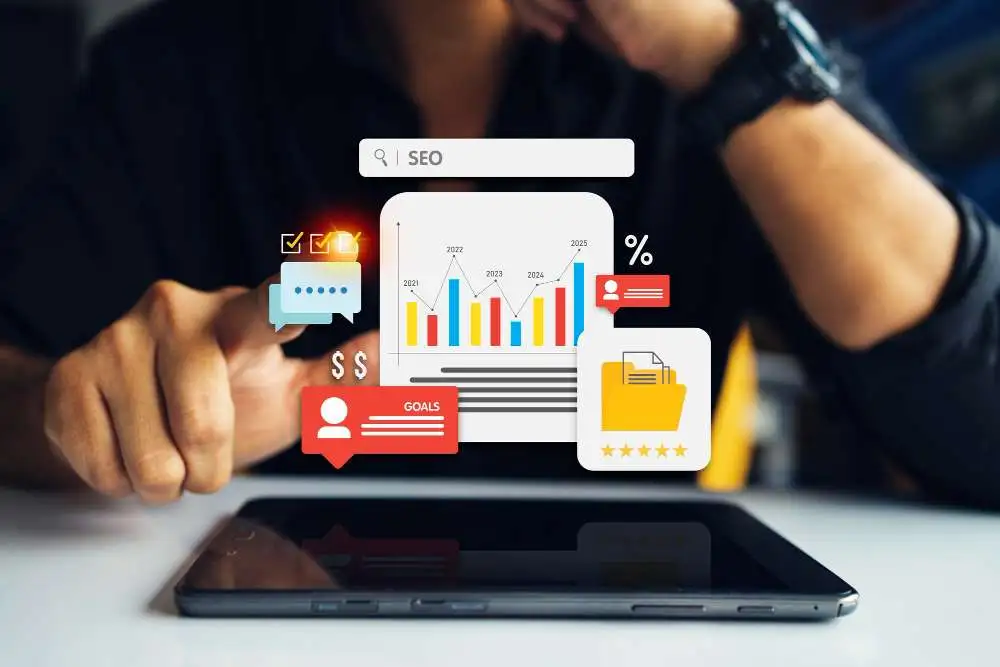
SEO (Search Engine Optimization) makes your store visible in Google and other search engines. When people search for “adjustable laptop stand India” or “pet hair remover roller”, you want your product pages and blogs to show up.
E-commerce SEO is simple in goal: it increases your store’s visibility on search results, which brings more qualified visitors and more sales.
SEO matters because:
- Organic traffic does not charge you per click.
- Searchers already show intent (“buy”, “best”, “review”, “discount”).
- Good rankings reinforce trust, users trust top results more.
In a high-CAC world, SEO acts as your compounding asset.
Core SEO tasks for dropshippers
You don’t need advanced tricks. You need consistent basics:
- Keyword research for buyers
- Target “buying” phrases: best posture corrector in India, wireless car vacuum review, where to buy X online.
- Use these in titles, meta descriptions and content.
- Target “buying” phrases: best posture corrector in India, wireless car vacuum review, where to buy X online.
- On-page optimisation
- Clear product titles with main keyword + key benefit.
- Descriptions that describe benefits, not only specs.
- Proper H1/H2 headings, alt text on images, internal links.
- Clear product titles with main keyword + key benefit.
- Technical SEO and speed
- Fast-loading site. Studies show slow sites kill trust and conversions.
- Mobile responsiveness.
- Clean URLs and no broken pages.
- Fast-loading site. Studies show slow sites kill trust and conversions.
- Content marketing
- Blog posts answering pre-purchase questions:
- “How to choose the right…?”
- “X mistakes to avoid when using…”
- “How to choose the right…?”
- Comparison posts: “Product A vs Product B, which is better for [use case]?”
- Blog posts answering pre-purchase questions:
- SEO analytics
- SEO tools show what people search, how they behave and where your pages drop off. This lets you refine pages, improve copy and decide which topics to grow.
- SEO tools show what people search, how they behave and where your pages drop off. This lets you refine pages, improve copy and decide which topics to grow.
GEO angle: SEO for Indian or local markets
If you target India or specific regions:
- Optimise for local keywords: add “India”, city names, “Cash on Delivery”, “UPI”.
- Write content that uses local language and examples (festivals, climate, lifestyle).
- If relevant, use local SEO (Google Business Profile for your brand, even if you’re purely online).
How Entri’s AI-Powered Digital Marketers Course helps with SEO
A structured course saves you from random blog hopping. In an AI-powered digital marketing course like Entri’s, you:
- Learn keyword research workflows that tie directly to e-commerce and dropshipping.
- Use AI tools to draft SEO-optimised outlines and content, then refine them manually.
- Understand how to read Search Console and analytics so you don’t guess what works.
You turn SEO from a buzzword into a daily habit.
Join Our Online Digital Marketing Course & Learn the Fundamentals!
Become an AI-powered Digital Marketing Expert
Master AI-Driven Digital Marketing: Learn Core Skills and Tools to Lead the Industry!
Explore CourseAds: The accelerator that validates and scales
SEO is your long game. Ads are your fast game.
1. Why paid ads still matter for dropshipping
Search and social platforms remain the main discovery channels for online products. Guides on dropshipping success still emphasise social media, paid ads and SEO as core marketing pillars.
You use ads to:
- Validate a product quickly
- Bring predictable traffic on demand
- Test angles, offers and creatives in days, not months
Platforms that matter in 2026:
- Meta Ads (Facebook + Instagram)
- TikTok Ads / short-video networks
- Google Ads (Search, Shopping, Performance Max)
- Regional platforms where relevant
2. The key idea: ad strategy, not “boosting posts”
Most beginners lose money because they treat ads like lottery tickets. “Boost post”, pray, refresh.
Effective dropshipping ads follow a simple structure:
- Clear objective
- Prospecting (new people)
- Retargeting (visitors and engagers)
- Prospecting (new people)
- Multiple creatives and angles
- Pain-point angle
- Transformation angle
- Social proof angle
- Offer/urgency angle
- Pain-point angle
- Targeted audiences
- Interest or lookalike audiences for prospecting
- Website visitors / add-to-cart / viewed content for retargeting
- Interest or lookalike audiences for prospecting
- Tight feedback loop
- You pause losers and scale winners based on data, not feeling.
- You pause losers and scale winners based on data, not feeling.
Your ads must match your funnel
SEO brings searchers. Ads bring scrollers.
You send them to:
- A focused product page with one main CTA, or
- A landing page designed for that ad angle.
Analytics (we’ll get to that) tells you if:
- People click but don’t add to cart → ad fine, page broken.
- People add to cart but don’t purchase → checkout or trust issue.
- People don’t click → your creative or targeting is off.
Creative testing and AI
Ad success in 2026 is heavily creative-driven.
You win when you:
- Test multiple hooks quickly
- Use UGC-style videos (even simple mobile recordings with sample products)
- Use AI tools to generate variations of copy and concepts, then filter with human judgment
Digital marketing resources highlight that analytics and experimentation let you run ROI-positive campaigns and cut waste.
A course like Entri’s AI-Powered Digital Marketers Course helps you build these workflows step by step:
- Set up campaigns
- Use AI to generate concepts
- Read the numbers
- Decide when to scale or kill
Analytics: The control centre of your dropshipping business
SEO and Ads attract attention. Analytics tells you what that attention is worth.
1. What “analytics” means for a dropshipper
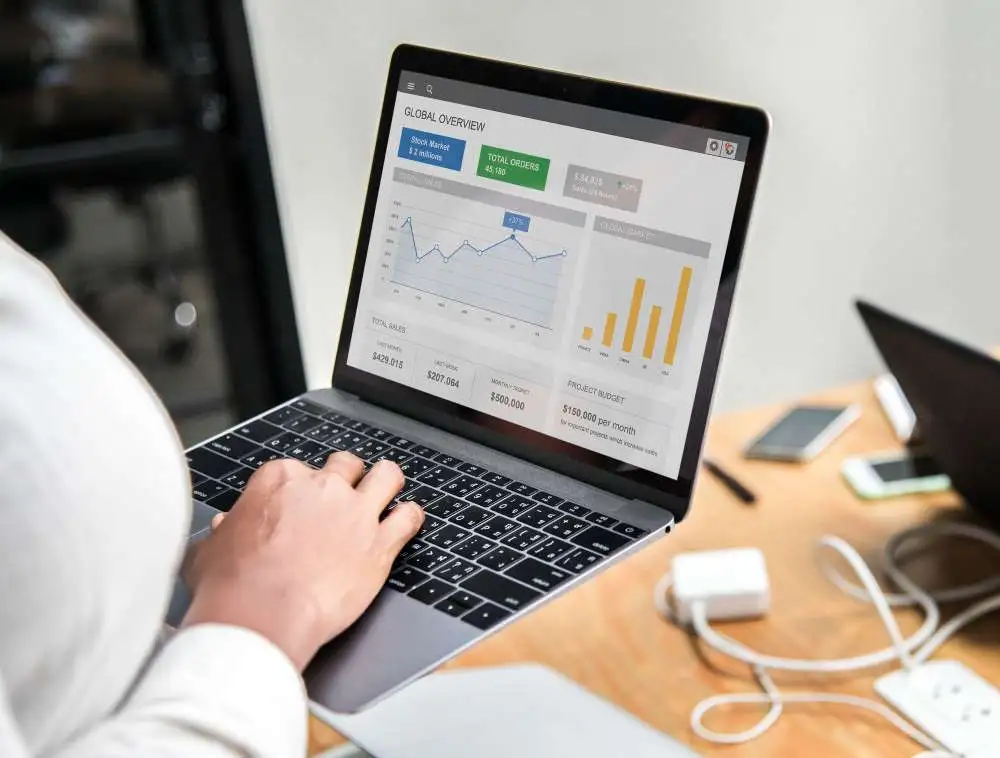
E-commerce analytics is the process of collecting and analysing data from your online store so you can understand visitors, measure performance and make better decisions.
You don’t just look at revenue. You watch:
- Traffic sources (SEO, Meta ads, TikTok, influencers)
- Conversion rate (how many visitors buy)
- Average Order Value (AOV)
- Customer Acquisition Cost (CAC) per channel
- Return on Ad Spend (ROAS)
- Customer Lifetime Value (LTV)
- Refund and return rates
Analytics is not optional anymore. Data analysis in e-commerce drives business growth, pricing, product selection, customer satisfaction and personalisation.
2. The 5 numbers every dropshipper must track
You keep your stack simple but disciplined.
- Conversion Rate (CVR)
- Orders ÷ Sessions.
- Low CVR → page, offer or trust issue.
- Orders ÷ Sessions.
- Average Order Value (AOV)
- Revenue ÷ Orders.
- Low AOV → add bundles, upsells, volume discounts.
- Revenue ÷ Orders.
- CAC (Customer Acquisition Cost)
- Ad spend ÷ New customers.
- High CAC → creative/targeting problem or bad offer.
- Ad spend ÷ New customers.
- Net Profit Margin
- (Revenue − All costs) ÷ Revenue.
- Include product, shipping, payment fees, apps, ads, refunds.
- (Revenue − All costs) ÷ Revenue.
- LTV (Customer Lifetime Value)
- Total gross profit from a customer over time.
- Low LTV → no retention systems; you rely on one-time buyers.
- Total gross profit from a customer over time.
Average dropshipping profit margins (15–30%) only mean something if CAC and returns don’t crush you.
3. How analytics guides smarter moves
With analytics you:
- See which channels actually make money, not just clicks.
- Discover which products carry your store and which drain cash.
- Learn what customer segments respond to which offers.
- Decide where to invest next month’s budget.
Without analytics you guess. With analytics you adjust.
4. Analytics and Entri’s course
Many founders feel afraid of numbers. A good digital marketing course solves this. You:
- Learn the basics of GA4 / platform analytics in simple language.
- Understand funnels, attribution and cohorts through examples.
- Practice reading dashboards and answering clear questions:
- “Which ad set brought profitable orders?”
- “Which page leaks the most users?”
- “Which ad set brought profitable orders?”
That confidence lets you behave like a data-driven marketer, not a gambler.
Join Our Online Digital Marketing Course & Learn the Fundamentals!
How SEO, Ads & Analytics work together
Think of your dropshipping business as a loop, not a straight line.
- SEO brings steady, intent-driven visitors.
- Ads bring fast, targeted traffic for tests and scaling.
- Analytics shows how both behave and where money is made or lost.
- You improve pages, offers and creatives based on data.
- Those improvements boost SEO rankings, ad performance and conversion rates.
- Profit increases. You reinvest in more SEO content and smarter ads.
You build a self-improving system.
You stop saying “let’s try this random product” and start saying “let’s design an experiment and measure the result.”
Become an AI-powered Digital Marketing Expert
Master AI-Driven Digital Marketing: Learn Core Skills and Tools to Lead the Industry!
Explore CourseKey takeaways: how you actually win at dropshipping
Let’s summarise the essentials in direct, actionable points:
- Dropshipping still works. Margins of 15–30% are realistic if you pick smart products and control costs.
- Most failures come from bad marketing and zero analytics, not from the model itself.
- SEO gives you compounding, intent-driven traffic and builds trust over time.
- Ads validate products fast and scale winners, but only when you treat them as structured experiments, not boosted posts.
- Analytics turns revenue into a clear story: which channels, products and audiences actually produce profit.
- These three pillars feed each other. Together they create a growth loop that separates real brands from short-lived stores.
- Upskilling with something like Entri’s AI-Powered Digital Marketers Course gives you a shortcut: you learn SEO, ads and analytics with AI workflows, so each rupee of ad spend and each hour of content creation becomes smarter.
You don’t need magic products.
You need skills, systems and data.
Start with one niche, one product page, one channel, and one analytics dashboard. Layer SEO, Ads and Analytics step by step. Your dropshipping business will stop feeling like a gamble and start behaving like a controlled, optimised engine.
Frequently Asked Questions
Can I start dropshipping with just Ads and skip SEO?
Yes, many beginners do. Ads can bring instant sales. But without SEO, you rely on continuous ad spend. That can be costly and fragile. SEO builds long-term visibility and reduces dependency on paid ads.
How long does SEO take to show results for a dropshipping store?
It depends, but usually several weeks to months. Dropshipping SEO can be harder because many stores offer similar products. Consistent efforts (optimized content, good structure, backlinks) are needed for stable, long-term growth.
Do I need to hire an agency?
Not necessarily. With some learning and tools, you can implement SEO and analytics yourself, especially when starting small. As you scale, agencies or freelancers can help.
What if I don't have technical skills?
Focus first on fundamentals: good product descriptions, clear store structure, content that adds value, attention to user experience. As you grow, you can learn or outsource technical SEO.
How does data analytics help with supplier/stock changes?
Analytics helps you spot which products sell well and which don’t. You can then scale up promotion for the winners, drop or replace underperformers, or test new ones. This optimizes your revenue per effort.